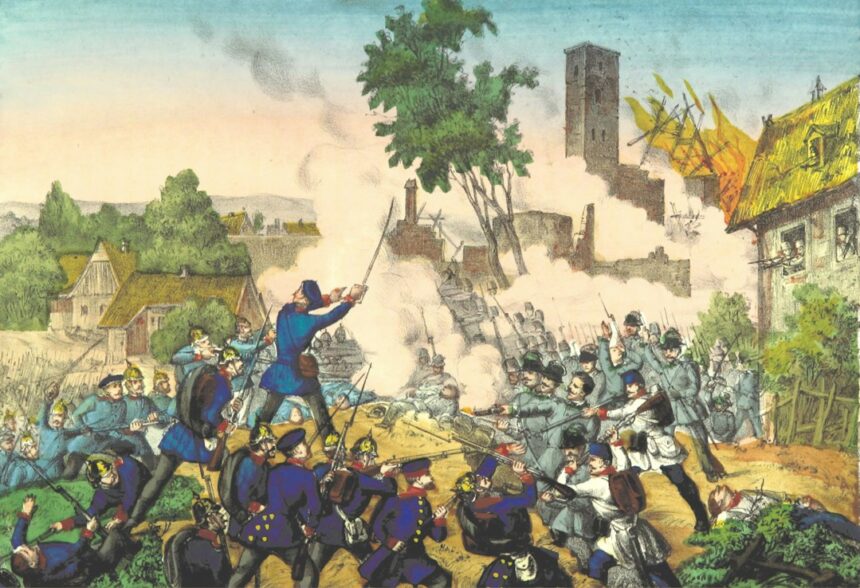
The annals of human history are indelibly marked by the clash of arms. Military operations, from the earliest skirmishes to the most technologically advanced conflicts, have not merely been episodes of violence but pivotal moments that have irrevocably altered the course of civilizations. These engagements, often born of complex political, economic, and social pressures, have dictated the rise and fall of empires, redrawn borders, and shaped the very ideologies that govern societies. Understanding these historic military operations is not simply an academic exercise; it is an essential key to comprehending the world we inhabit today, its triumphs, its tragedies, and its enduring lessons. This exploration delves into some of the most consequential battles and campaigns, dissecting their strategic intricacies, their tactical innovations, and, most importantly, their profound and lasting impact on the global stage.
The Crucible of Ancient Warfare: Forging Empires and Ideals
The foundations of organized warfare were laid in antiquity, a period where the very concept of statehood was being forged through conquest and defense. These early conflicts, though lacking the sophisticated weaponry of later eras, were no less decisive, demonstrating fundamental principles of strategy and leadership that still resonate. The discipline of phalanxes, the devastating effectiveness of cavalry charges, and the strategic importance of naval supremacy were all tested and refined in the crucible of ancient battlefields. These operations were not just about military might; they were often ideological contests, pitting different worldviews and ways of life against each other, with the victor dictating the cultural and political trajectory of vast regions.
The Persian Wars: A Clash of Civilizations on Greek Soil
The invasions of Greece by the Achaemenid Empire, beginning in the early 5th century BCE, represent a seminal moment in Western history. The vast Persian Empire, under rulers like Darius the Great and Xerxes I, sought to subjugate the nascent Greek city-states. The Greeks, though divided and often at odds with each other, found a common cause in defending their independence and their unique way of life.
Marathon: The Triumph of the Athenian Citizen-Soldier
The Battle of Marathon in 490 BCE stands as a testament to the power of strategic innovation and the courage of the underdog. Facing a numerically superior Persian force, the Athenian general Miltiades employed a daring tactic. He thinned his center and strengthened his flanks, drawing the Persian army forward. As the Persians advanced, the Athenian hoplites on the wings enveloped them, crushing the enemy in a pincer movement. This victory, against seemingly insurmountable odds, boosted Greek morale immeasurably and demonstrated the effectiveness of the heavily armored Greek hoplite fighting in formation. It preserved Athenian democracy and allowed Greek culture to flourish, laying the groundwork for its profound influence on Western civilization.
Thermopylae: The Sacrifice of the Few for the Many
The Battle of Thermopylae in 480 BCE, though a tactical defeat for the Greeks, became a legendary symbol of heroic resistance. A small force of Greek allies, famously led by King Leonidas of Sparta, held a narrow pass against Xerxes’ massive army for three days. Their sacrifice, allowing the bulk of the Greek forces to regroup and prepare for subsequent battles, bought invaluable time. It exemplified the Spartan ethos of unwavering duty and self-sacrifice, inspiring subsequent generations and demonstrating that even in defeat, a strategic objective can be achieved through resolute defense.
Salamis and Plataea: The Turning of the Tide
The naval Battle of Salamis in 480 BCE proved to be the decisive engagement of the second Persian invasion. Themistocles, the Athenian strategist, lured the Persian fleet into the narrow straits of Salamis, where their superior numbers were neutralized by the cramped conditions. The smaller, more agile Greek triremes outmaneuvered and destroyed a significant portion of the Persian navy. This victory crippled Persian supply lines and morale. The subsequent land Battle of Plataea in 479 BCE, where a united Greek army decisively defeated the remaining Persian land forces, cemented Greek independence and marked the end of the Persian threat to mainland Greece. These victories secured the future of Greek culture and its philosophical, artistic, and democratic contributions to the world.
The Punic Wars: Rome’s Ascent to Mediterranean Hegemony
The Punic Wars, a series of three conflicts fought between Rome and Carthage from 264 to 146 BCE, were a titanic struggle for dominance of the Western Mediterranean. Carthage, a powerful Phoenician trading empire, and Rome, a burgeoning republic, represented two distinct and competing models of civilization. The outcome of these wars fundamentally reshaped the political map of the ancient world, establishing Rome as the preeminent power.
Cannae: Hannibal’s Masterpiece of Tactical Genius
The Battle of Cannae in 216 BCE, fought during the Second Punic War, is widely considered one of the greatest tactical victories in military history. Hannibal Barca, the Carthaginian general, faced a larger Roman army. He employed a brilliant strategy of a deliberately weakened center that gave way under Roman pressure, luring them into a trap. As the Romans advanced, Hannibal’s seasoned cavalry, having routed the Roman cavalry on the flanks, wheeled around to attack their rear, while his infantry closed in from the sides, creating a complete encirclement. The result was the annihilation of the Roman army. Despite this catastrophic defeat, Rome’s resilience and its vast manpower reserves prevented Carthage from achieving ultimate victory, showcasing the strategic depth of Roman society.
Zama: The End of a Legend and the Dawn of an Empire
The final engagement of the Second Punic War, the Battle of Zama in 202 BCE, saw Scipio Africanus, the Roman general, face Hannibal on Carthaginian soil. Scipio, having learned from Hannibal’s tactics, countered Hannibal’s famous war elephants and employed superior cavalry. He successfully broke the Carthaginian lines and ultimately defeated Hannibal’s army, ending Carthage’s threat to Rome. The Third Punic War, a more one-sided affair, culminated in the complete destruction of Carthage in 146 BCE, paving the way for Rome’s unchallenged control of the Mediterranean and its subsequent transformation into an empire.
For those interested in a deeper understanding of historical military operations, the article titled “The Evolution of Warfare: Key Military Strategies Through the Ages” provides an insightful analysis of how tactics and strategies have transformed over time. This piece complements the exploration of significant military campaigns and their impact on modern warfare. You can read more about it by visiting this link: The Evolution of Warfare.
The Medieval and Early Modern Eras: Knights, Cannons, and the Shifting Sands of Power
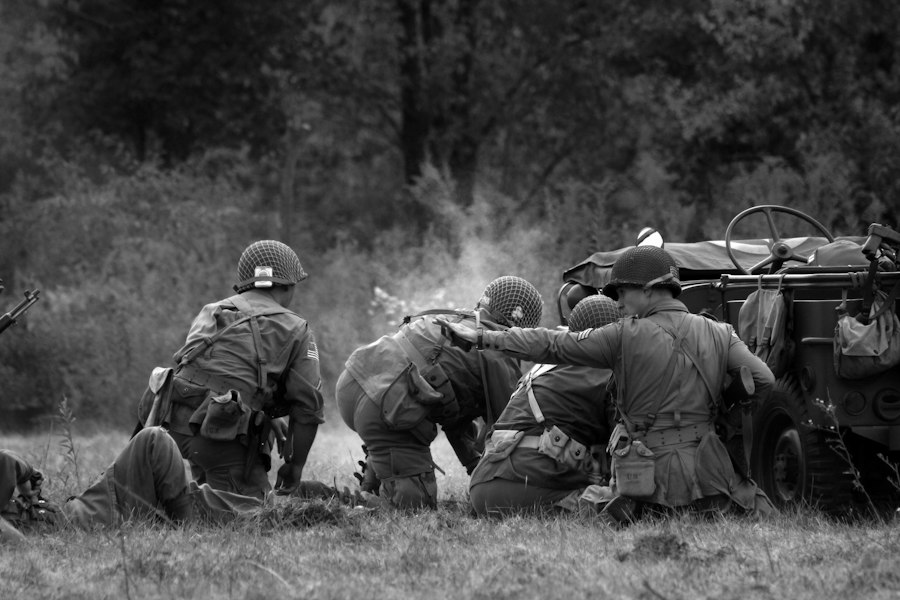
The subsequent centuries witnessed a transformation in warfare, from the disciplined charges of medieval knights to the burgeoning power of gunpowder. The rise of feudalism, the impact of religious fervor, and the early stages of nation-state formation all contributed to a dynamic military landscape. These periods saw the development of new military technologies and strategies, often driven by the need to overcome established fortifications and engage increasingly organized armies.
The Crusades: Faith, Conquest, and Cultural Exchange
The Crusades, a series of religious wars initiated by Latin Christian Europe in the 11th century, primarily aimed at recovering the Holy Land from Muslim rule. These campaigns, spanning nearly two centuries, involved massive movements of armies, complex logistics, and encounters with diverse cultures. While often characterized by religious zeal and brutal conflict, the Crusades also fostered significant cultural and economic exchange between East and West.
Hattin: Saladin’s Devastating Victory and the Fall of Jerusalem
The Battle of Hattin in 1187 was a catastrophic defeat for the Crusader states. Saladin, the Sultan of Egypt and Syria, brilliantly outmaneuvered and destroyed the Crusader army under King Guy of Jerusalem. He lured the Christian forces into the arid heat of the Jordan Valley, depriving them of water and exhausting their troops. The subsequent capture of Jerusalem by Saladin marked a turning point in the Crusades, significantly diminishing Christian control in the region.
The Wars of the Roses: Dynastic Struggle and the End of Feudal Might
The Wars of the Roses, a series of civil wars fought in England between the House of Lancaster and the House of York from 1455 to 1487, were fundamentally a dynastic struggle for the English throne. While ostensibly a conflict between noble houses, the wars also represented the twilight of feudal chivalry and the rise of more organized, paid armies.
Bosworth Field: The Climax of a Bloody Struggle
The Battle of Bosworth Field in 1485 was the decisive engagement of the Wars of the Roses. Richard III, the reigning monarch and a Yorkist, was defeated and killed by Henry Tudor, who claimed the throne as Henry VII, marking the beginning of the Tudor dynasty. This battle effectively ended the prolonged period of internal conflict and ushered in a new era of centralized royal authority, fundamentally altering the political landscape of England.
The Italian Wars: The Dawn of Gunpowder Warfare
The Italian Wars, a series of conflicts fought between the major European powers from the late 15th to the mid-16th century, primarily over control of the Italian peninsula, were a crucial testing ground for the new military technology of gunpowder artillery. These wars saw the decline of medieval castles and fortifications as increasingly effective siege cannons could reduce even the strongest defenses.
Pavia: The Impact of Artillery on Renaissance Warfare
The Battle of Pavia in 1525, fought between the forces of Emperor Charles V and King Francis I of France, was a pivotal moment demonstrating the devastating effectiveness of field artillery. The Imperial army, utilizing well-positioned cannons and disciplined infantry, shattered the French cavalry charges, which were still a dominant force in earlier medieval warfare. This victory, leading to the capture of Francis I, had significant political ramifications, reinforcing Charles V’s dominance in Italy and influencing military tactics across Europe for decades to come, marking a clear transition to gunpowder-centric warfare.
The Age of Revolution and Nationalism: Mass Armies and Ideological Warfare

The 18th and 19th centuries witnessed seismic shifts in political thought, leading to the rise of nationalism and the concept of the citizen-soldier. Revolutions, both political and industrial, reshaped societies and provided the tools for unprecedented military mobilization. Wars became not just contests between monarchs, but struggles between nations, often fueled by potent ideologies and the desire for self-determination or imperial expansion.
The Napoleonic Wars: The Reshaping of Europe Through Conquest
The Napoleonic Wars (1803-1815) represent a period of immense upheaval and transformation across Europe. Napoleon Bonaparte, through his military genius and ambitious vision, revolutionized warfare by employing large conscript armies, innovative tactics, and a highly mobile artillery. His campaigns redrew the map of Europe multiple times, disseminating revolutionary ideals while simultaneously sparking nationalist resistance.
Austerlitz: Napoleon’s “Sun of Austerlitz” and Tactical Perfection
The Battle of Austerlitz in 1805 is widely regarded as Napoleon’s greatest masterpiece. Facing a combined Russian and Austrian army, Napoleon feigned weakness, drawing his enemies onto strategically chosen ground. He then launched a devastating flanking attack, splitting their army and achieving a decisive victory. This triumph, often referred to as the “Battle of the Three Emperors,” solidified French dominance and showcased Napoleon’s unparalleled understanding of battlefield psychology and maneuver.
Waterloo: The End of an Era and the Concert of Europe
The Battle of Waterloo in 1815 marked the final defeat of Napoleon. After his return from exile, Napoleon faced a coalition of British, Dutch, Belgian, and German forces under the Duke of Wellington, and a Prussian army led by Gebhard von Blücher. Despite initial French successes, Wellington’s steadfast defense and the timely arrival of the Prussians proved decisive. Waterloo ended Napoleon’s reign, leading to a period of relative peace and the establishment of the “Concert of Europe,” a balance of power system designed to prevent future widespread conflicts.
The American Civil War: Industrial Warfare and the Nature of Total Conflict
The American Civil War (1861-1865) was a watershed moment in military history, marking the transition to industrial-scale warfare. The conflict between the Union and the Confederacy saw the widespread use of new technologies such as rifled muskets, railroads, and telegraphs, leading to unprecedented casualties and foreshadowing the nature of modern total war.
Gettysburg: The High-Water Mark of the Confederacy
The Battle of Gettysburg in 1863 is often considered the turning point of the American Civil War. General Robert E. Lee’s Confederate Army of Northern Virginia, having achieved significant victories, launched an invasion of the North. The three-day battle resulted in a Union victory, inflicting heavy losses on the Confederacy from which it never fully recovered. Pickett’s Charge, a desperate and ultimately failed Confederate assault on the Union center, became a symbol of the immense cost of the battle.
The Siege of Vicksburg: Controlling the Mississippi and Dividing the Confederacy
The Siege of Vicksburg, which concluded on July 4, 1863, the day after the Union victory at Gettysburg, was strategically vital. The Union capture of Vicksburg, Mississippi, gave them complete control of the Mississippi River, effectively splitting the Confederacy in two and severing crucial supply lines. This success, achieved through a prolonged siege and masterful generalship by Ulysses S. Grant, significantly weakened the Confederate war effort and paved the way for eventual Union victory.
The World Wars: Global Cataclysms and the Dawn of Modern Total War
The 20th century was dominated by two cataclysmic global conflicts that dwarfed all previous wars in scale, scope, and destructive power. The industrial revolution had reached its zenith, providing humanity with the capacity for unprecedented violence. These wars saw the mobilization of entire nations, the development of new and terrifying weapons, and a profound reordering of the global political landscape.
World War I: The Great War and the Trenches of Despair
The First World War (1914-1918) was triggered by a complex web of alliances, imperial ambitions, and nationalist tensions. The war quickly devolved into a brutal war of attrition on the Western Front, characterized by trench warfare, machine guns, artillery barrages, and the introduction of poison gas.
The Battle of the Somme: A Symbol of Futility and Loss
The Battle of the Somme (July-November 1916) was one of the bloodiest battles in human history, with over a million casualties. Launched by the British and French to relieve pressure on the French at Verdun, the offensive resulted in massive losses for minimal territorial gains. The first day alone saw nearly 60,000 British casualties. The Somme became a potent symbol of the futility and horrific cost of the war, highlighting the deadly stalemate of trench warfare.
The Second Battle of the Marne: The Tide Turns and the German Offensive Falters
The Second Battle of the Marne (July-August 1918) was the last major German offensive of World War I. Following initial successes, the German advance was halted and then pushed back by a determined Allied counteroffensive, spearheaded by American forces. This decisive Allied victory marked the beginning of the Hundred Days Offensive, which ultimately led to the collapse of the German army and the armistice. It demonstrated the growing strength and effectiveness of the Allied forces, particularly with the infusion of American troops.
World War II: The Second Global Conflict and the Holocaust
The Second World War (1939-1945) was an even more devastating global conflict, characterized by ideological extremism, mechanized warfare, and the systematic genocide of the Holocaust. The war saw the rise of totalitarian regimes and the use of new and devastating technologies, culminating in the atomic bombing of Japan.
The Battle of Stalingrad: The Eastern Front’s Turning Point
The Battle of Stalingrad (August 1942 – February 1943) was a brutal and pivotal battle on the Eastern Front. The Soviet Union’s tenacious defense of the city, coupled with a massive counteroffensive, resulted in the encirclement and destruction of the German Sixth Army. This victory was a turning point in the war, marking the beginning of the Soviet advance into Eastern Europe and a crippling blow to Nazi Germany.
D-Day and the Normandy Landings: The Opening of the Western Front
The D-Day landings on June 6, 1944, were the culmination of years of planning and a crucial turning point in the European theater. The Allied invasion of Normandy, codenamed Operation Overlord, involved the largest seaborne invasion in history. Despite fierce German resistance, the Allies established a foothold in France, opening a crucial second front that would ultimately lead to the liberation of Western Europe and the defeat of Nazi Germany. The strategic objective was to liberate France and then drive towards Germany, effectively dividing the Axis forces.
The Battle of Midway: The Pacific’s Turning Point
The Battle of Midway (June 1942) was a decisive naval battle in the Pacific Theater of World War II. The U.S. Navy inflicted a devastating blow on the Japanese fleet, sinking four of its aircraft carriers. This victory crippled Japan’s naval air power, halting its eastward expansion and marking a critical turning point in the Pacific War, allowing the Allies to go on the offensive.
For those interested in delving deeper into the intricacies of historical military operations, a fascinating article can be found on the subject at In The War Room. This resource provides a comprehensive analysis of various strategies and tactics employed throughout history, shedding light on the complexities and decisions that shaped significant battles. Exploring such articles can enhance one’s understanding of military history and its lasting impact on modern warfare.
Post-War Conflicts and the Shadow of the Nuclear Age: Cold War Confrontations and Asymmetric Warfare
| Operation Name | Year | Location | Objective | Outcome | Significance |
|---|---|---|---|---|---|
| Operation Overlord | 1944 | Normandy, France | Allied invasion to liberate Western Europe from Nazi control | Successful Allied landing and establishment of a Western front | Turning point in WWII, leading to the defeat of Nazi Germany |
| Operation Barbarossa | 1941 | Soviet Union | Nazi Germany’s invasion of the Soviet Union | Initial German advances, eventual Soviet counteroffensive | Marked the largest military invasion in history and shifted WWII dynamics |
| Operation Desert Storm | 1991 | Persian Gulf | Expel Iraqi forces from Kuwait | Coalition victory, liberation of Kuwait | Demonstrated advanced coalition warfare and technology |
| Operation Market Garden | 1944 | Netherlands | Allied attempt to secure key bridges and enter Germany | Partial failure, heavy Allied casualties | Highlighted challenges of airborne operations and intelligence failures |
| Operation Rolling Thunder | 1965-1968 | Vietnam | US sustained bombing campaign against North Vietnam | Limited success, failed to break enemy morale | Illustrated limits of air power in asymmetric warfare |
The aftermath of World War II ushered in a new era defined by ideological rivalry between the United States and the Soviet Union, the Cold War. This period, characterized by proxy conflicts and the ever-present threat of nuclear annihilation, saw the development of new forms of warfare, including the rise of nuclear deterrence, the escalation of guerrilla warfare, and the increasing importance of intelligence operations.
The Korean War: A Proxy Conflict in the Shadow of the Bomb
The Korean War (1950-1953) was one of the first major proxy wars of the Cold War. The conflict began when North Korea, supported by the Soviet Union and later China, invaded South Korea, which was defended by United Nations forces led by the United States. The war, fought to a stalemate, demonstrated the dangers of direct confrontation between nuclear-armed superpowers and the potential for prolonged, devastating conflicts in divided nations.
The Vietnam War: A Protracted Struggle and the Challenges of Counterinsurgency
The Vietnam War (1955-1975) was a deeply divisive and protracted conflict. The United States intervened to support South Vietnam against the communist North Vietnamese and Viet Cong insurgency, employing overwhelming firepower but struggling with the complexities of guerrilla warfare and a hostile local population. The war ended with a communist victory, highlighting the limitations of conventional military power against determined insurgent forces and profoundly impacting American foreign policy and public opinion. The strategic goal for the US was to prevent the spread of communism in Southeast Asia, a policy known as containment.
The Gulf War: The Dawn of the Information Age in Warfare
The First Gulf War (1990-1991) saw a U.S.-led coalition liberate Kuwait from Iraqi occupation. This conflict was notable for its swift and decisive victory, achieved through the application of advanced military technology, precision-guided munitions, and sophisticated intelligence gathering. The war showcased the effectiveness of air power and the emergence of “information warfare” as a significant component of modern military operations, setting a precedent for future interventions.
In conclusion, the study of historic military operations provides an invaluable lens through which to understand the evolution of human civilization. From the disciplined phalanxes of ancient Greece to the sophisticated cyber warfare of the 21st century, each era has brought forth new technologies, strategies, and ideologies that have irrevocably shaped our world. These battles, often born of immense struggle and sacrifice, are not merely tales of conflict but foundational narratives that continue to inform our present and guide our future. By dissecting their causes, their conduct, and their consequences, we gain a deeper appreciation for the forces that have sculpted our collective destiny and the enduring lessons that war, in all its complexity, offers.

A 3-Year Drought Hit the Hittite Empire. Did It Cause the Collapse?
FAQs
What were some key historical military operations?
Some key historical military operations include the D-Day invasion during World War II, the Battle of Stalingrad, the Siege of Leningrad, the Battle of Gettysburg during the American Civil War, and the Battle of Marathon in ancient Greece.
How did military strategies evolve over time?
Military strategies evolved over time as technology advanced and tactics were refined. For example, ancient civilizations relied on infantry and cavalry, while modern militaries incorporate air and naval forces into their strategies.
What role did intelligence play in historical military operations?
Intelligence played a crucial role in historical military operations by providing valuable information about enemy movements, strengths, and weaknesses. This information helped military leaders make informed decisions and plan effective strategies.
How did historical military operations impact the course of history?
Historical military operations have had a significant impact on the course of history by shaping political boundaries, influencing cultural developments, and determining the outcomes of wars and conflicts. They have also played a role in the rise and fall of empires and civilizations.
What lessons can be learned from studying historical military operations?
Studying historical military operations can provide valuable insights into the importance of strategy, leadership, logistics, and intelligence in warfare. It can also help us understand the consequences of military decisions and the impact of conflicts on societies and nations.