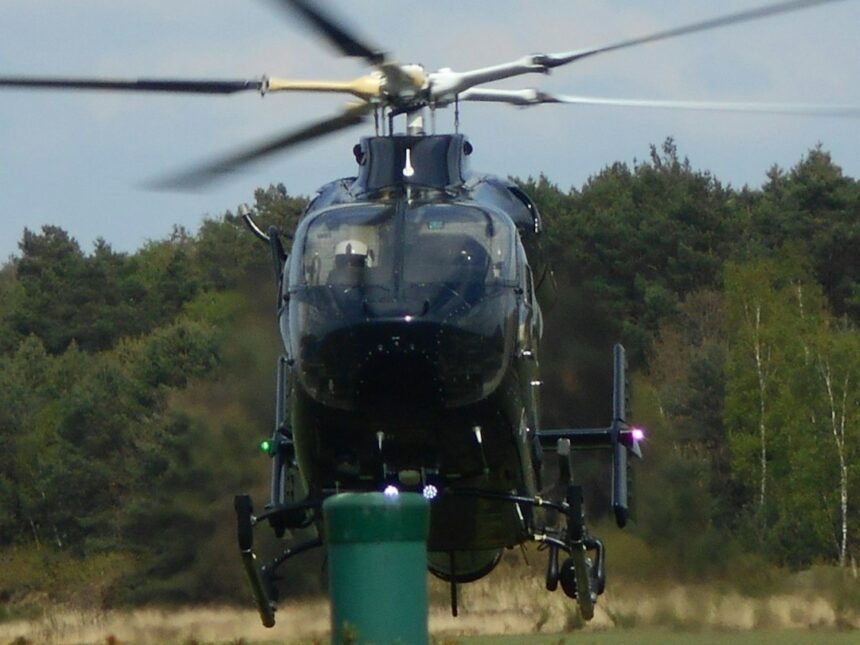
A recent investigation into a concerning aviation incident has revealed a complex interplay between a critical radar system failure and an underlying hydraulic problem. The incident, which occurred during a routine flight, led to a temporary loss of essential situational awareness for the flight crew and prompted an immediate precautionary landing. While no injuries were reported and the aircraft sustained no significant damage, the event has triggered a thorough review of the helicopter’s maintenance records and operational procedures, with a particular focus on the reliability of its sophisticated electronic systems and the robustness of its hydraulic power.
The Onset of a Challenging Flight
The flight, conducted by a civilian utility helicopter, began under clear skies and with all systems appearing nominal. The crew, experienced and well-trained, were undertaking a standard survey mission in a remote, mountainous region. Approximately an hour into their flight, as they navigated through a moderately complex airspace, the primary radar display, a crucial component for detecting terrain, other aircraft, and weather, began to exhibit erratic behavior. Initially, the anomalies were subtle, manifesting as intermittent flickering and brief periods of signal loss. However, the problem rapidly escalated.
Initial Indications and Crew Response
The flight crew first noticed the radar’s peculiar behavior when the weather radar returned began to appear fragmented and unreliable. This was followed by a complete loss of the traffic advisory system (TAS) display, which normally provides vital information about nearby aircraft. The pilot in command (PIC) immediately queried the co-pilot about the status of the radar system. Initial checks by the crew confirmed that the primary displays were no longer functioning as expected. They attempted a system reset, a standard procedure for rectifying minor electronic glitches, but this proved ineffective. The intermittent nature of the problem, coupled with the gradual deterioration of the radar’s performance, indicated a more systemic issue rather than a simple software anomaly. The crew’s primary concern was the potential for encountering unforecasted weather or other airborne traffic in an area where visual contact could be challenging due to terrain.
Escalation of the Malfunction
As the radar system continued to degrade, the flight crew found themselves increasingly reliant on visual cues and secondary navigation systems. The inability to accurately assess weather conditions or detect potential traffic posed a significant risk. The radar’s failure was not isolated; it appeared to be impacting multiple functions of the integrated avionics suite. The terrain proximity warning system, which also relies on radar data, began to issue spurious alerts, adding to the crew’s confusion and increasing their workload. The situation was further complicated by the fact that the helicopter was operating in an area with limited communication facilities, making it difficult to immediately seek ground support or further technical advice. The crew understood the gravity of the situation and began to formulate contingency plans for an emergency landing.
In recent discussions surrounding aviation safety, the topic of hydraulic failure in helicopters has gained significant attention, particularly in relation to radar systems that monitor these critical components. A related article that delves deeper into the implications of such failures and their impact on flight operations can be found at this link: Hydraulic Failure and Helicopter Radar Systems. This piece provides valuable insights into the challenges faced by pilots and engineers in ensuring the reliability of helicopter systems during flight.
Unraveling the Hydraulic Connection
The investigation into the radar malfunction soon pointed towards an unexpected culprit: a concurrent issue within the helicopter’s hydraulic system. While the radar itself is an electronic system, its operation and the data it processes are often influenced by various onboard systems, including power distribution and sensor inputs, which can be indirectly affected by hydraulic performance. The initial suspicion was a power supply issue to the radar unit, but further diagnostic testing revealed a more intricate problem.
Anomalies in Hydraulic Pressure Readings
During the post-incident analysis of flight data recorders, investigators noted subtle but persistent fluctuations in hydraulic pressure readings for several key systems. These fluctuations were not severe enough to trigger immediate warnings or emergency procedures during the flight, but they were consistent enough to warrant closer examination. The hydraulic system is responsible for powering a multitude of critical functions on a helicopter, including flight controls, landing gear actuation, and rotor pitch control. A degradation in hydraulic pressure, even a slight one, could potentially lead to instability in various onboard systems that rely on a stable power source.
The Unexpected Linkage
The crucial breakthrough came when investigators cross-referenced the timing of the radar malfunction with specific events in the hydraulic system’s performance logs. They discovered that the initial onset of the radar anomalies coincided with a period of minor, yet unusual, pressure drops in the primary hydraulic accumulator. While the hydraulic system was still functioning within its operational limits, the subtle instability appears to have created ripple effects throughout the aircraft’s complex electronic architecture. It is theorized that the fluctuations in hydraulic pressure, though not directly affecting the radar’s core components, may have caused minute vibrations or electrical noise within the aircraft’s wiring harness, or perhaps momentarily disrupted the stable power supply to the radar’s processing unit. This hypothesis gained traction as further tests demonstrated that a simulated disturbance in the hydraulic system could indeed induce similar erratic behavior in the radar unit.
Root Cause Analysis: A Cascade of Failures
The investigation meticulously pieced together a timeline of events, revealing a cascade of interconnected failures that led to the radar malfunction. It was not a single component failure but rather a sequence of events, where an underlying mechanical issue subtly propagated to impact a critical electronic system.
The Hydraulic Pump’s Subtle Degradation
The primary hydraulic pump, a component subjected to continuous operational stress, was found to have a minor internal leak. This leak, while not catastrophic, led to a gradual and almost imperceptible reduction in its efficiency over time. This meant that the pump was working harder to maintain the required hydraulic pressure, and during periods of high demand, such as during maneuvers or when multiple hydraulic systems were engaged, the pressure would dip slightly below its optimal operating range. This subtle degradation was initially masked by the system’s redundancy and the overall robustness of the hydraulic design.
Impact on Power Stability
The slight, intermittent pressure drops in the hydraulic system had a knock-on effect on the aircraft’s electrical power distribution. The hydraulic pumps are often driven by the aircraft’s engines, and fluctuations in their performance can lead to minor variations in the load on the generators. These variations, in turn, could manifest as subtle, short-lived dips or spikes in the electrical voltage supplied to various onboard systems. For a highly sensitive piece of equipment like the modern radar system, even these minor electrical disturbances could be enough to disrupt its internal processing, leading to data corruption or temporary system freezes. This interconnectedness, often a hallmark of modern complex aircraft, underscores the importance of a holistic approach to maintenance and diagnostics.
Implications for Aviation Safety and Maintenance
This incident serves as a stark reminder of the intricate dependencies within modern aircraft systems and highlights the need for a proactive and comprehensive approach to maintenance and safety protocols. The findings have significant implications for how aviation authorities and manufacturers will address similar issues in the future.
Enhancing System Interdependency Monitoring
A key takeaway from this investigation is the critical need for improved monitoring of system interdependencies. While individual components are rigorously tested and maintained, the complex ways in which they interact can sometimes be overlooked. Future diagnostic tools and maintenance procedures may need to incorporate more sophisticated analysis of correlated data from disparate systems. This could involve advanced algorithms that detect subtle anomalies across multiple subsystems, even when each subsystem is technically operating within its prescribed parameters. The goal is to identify potential failure precursors that might otherwise go unnoticed until a critical incident occurs.
Review of Maintenance Practices and Protocols
The incident has prompted a thorough review of the helicopter’s maintenance logs and the manufacturer’s recommended maintenance schedules. While the maintenance performed on the hydraulic pump was within the prescribed intervals, the investigation suggests that the subtle nature of the degradation may have evaded standard checks. This could lead to adjustments in inspection protocols, potentially including more frequent or in-depth testing of hydraulic components, particularly those known to be susceptible to wear over time. Furthermore, manufacturers may revise their diagnostic procedures to include checks for subtle hydraulic anomalies during routine avionics system checks, and vice-versa. The aim is to create a more robust predictive maintenance framework that can anticipate potential failures before they manifest.
In recent discussions surrounding aviation safety, the topic of hydraulic failure in helicopters has gained significant attention, particularly regarding its implications for radar systems. A comprehensive article on this subject can be found at In The War Room, where experts analyze how hydraulic issues can affect a helicopter’s radar performance and overall flight stability. Understanding these challenges is crucial for improving safety measures and ensuring reliable operations in various flight conditions.
Preventative Measures and Future Recommendations
| Metric | Description | Typical Values | Impact on Helicopter Radar |
|---|---|---|---|
| Hydraulic Pressure | Pressure within the hydraulic system responsible for radar positioning | 3000 – 3500 psi | Low pressure can cause radar misalignment or failure to track targets |
| Hydraulic Fluid Temperature | Temperature of the hydraulic fluid affecting system viscosity | 40°C – 80°C | High temperature may degrade fluid, causing sluggish radar movement |
| Hydraulic Fluid Contamination Level | Presence of particles or water in hydraulic fluid | ISO Cleanliness Code 16/14/11 or better | Contamination can cause valve sticking, leading to radar control issues |
| Hydraulic Pump Failure Rate | Frequency of hydraulic pump malfunctions per flight hour | 0.01 failures/hour | Pump failure results in loss of radar positioning capability |
| Radar Azimuth Positioning Accuracy | Accuracy of radar antenna positioning controlled hydraulically | ±0.5 degrees | Hydraulic failure can reduce accuracy, affecting target tracking |
| System Response Time | Time taken for radar to respond to control inputs via hydraulics | 100 – 200 ms | Hydraulic issues increase response time, causing delayed radar movement |
Based on the findings of the investigation, a series of recommendations have been issued to enhance the safety and reliability of similar helicopter models. These recommendations aim to mitigate the risk of similar incidents occurring in the future by addressing both the immediate technical issues and the broader systemic approaches to aviation safety.
Advanced Diagnostic Software and Hardware
The development and implementation of more advanced diagnostic software and hardware are high on the list of recommendations. This includes investing in real-time monitoring systems that can analyze data from multiple sensors simultaneously and identify subtle deviations from normal operating parameters. For instance, systems that can detect minute variations in hydraulic pressure alongside corresponding electrical fluctuations could provide early warnings of potential interdependency issues. This proactive approach to diagnostics will allow maintenance crews to identify and rectify problems before they escalate to a point where they impact critical flight systems.
Enhanced Pilot Training on System Anomalies
Pilot training is another crucial area for improvement. While the crew in this incident responded commendably, the complexity of the failure highlights the need for enhanced pilot training on recognizing and responding to subtle system anomalies. This could involve simulator training that replicates the specific scenario of an interdependency failure between hydraulic and electronic systems. Pilots need to be equipped with the knowledge and skills to interpret complex onboard data and to make informed decisions when faced with ambiguous system behavior. This includes understanding the potential ripple effects of seemingly minor issues in one system on the performance of others. The objective is to foster a heightened level of situational awareness and decision-making capability, even in the face of unprecedented technical challenges.

A 3-Year Drought Hit the Hittite Empire. Did It Cause the Collapse?
FAQs
What is hydraulic failure in a helicopter?
Hydraulic failure in a helicopter occurs when there is a loss of hydraulic fluid pressure, leading to the inability of the hydraulic system to operate effectively. This can result in the loss of control over various critical components such as the rotor blades, landing gear, and flight controls.
How does hydraulic failure affect the radar system in a helicopter?
In the event of hydraulic failure, the radar system in a helicopter may be impacted as it relies on the hydraulic system for power and operation. If the hydraulic system fails, the radar system may lose power or become inoperable, affecting the pilot’s ability to navigate and detect obstacles or other aircraft.
What are the common causes of hydraulic failure in helicopters?
Common causes of hydraulic failure in helicopters include leaks in the hydraulic system, mechanical failures in hydraulic components, contamination of hydraulic fluid, and improper maintenance. These issues can lead to a loss of hydraulic pressure and system failure.
How can helicopter pilots respond to hydraulic failure affecting the radar system?
Helicopter pilots can respond to hydraulic failure affecting the radar system by following emergency procedures outlined in the aircraft’s manual. This may involve attempting to troubleshoot the issue, switching to backup systems if available, or making an emergency landing if necessary. Pilots should prioritize maintaining control of the aircraft and ensuring the safety of all onboard.
Is it possible to prevent hydraulic failure in helicopters to protect the radar system?
While hydraulic failure cannot be completely eliminated, preventive maintenance practices such as regular inspections, fluid checks, and component replacements can help reduce the risk of hydraulic failure in helicopters. Following manufacturer guidelines and ensuring proper training for maintenance personnel can also contribute to preventing hydraulic failures that may affect the radar system.