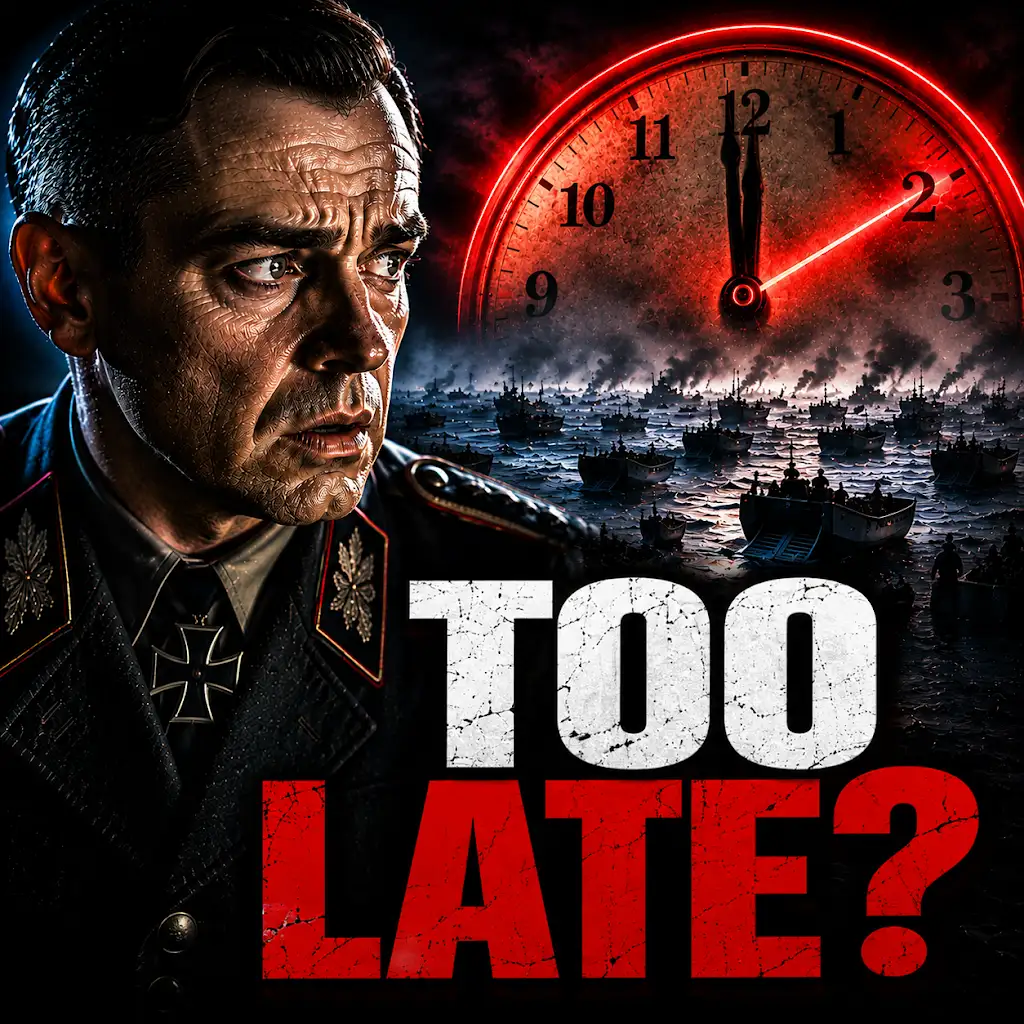
The German perspective on the Normandy Invasion, D-Day, presents a starkly different narrative from the Allied triumph. It is a story of formidable defenses, strategic miscalculations, and the devastating realization that the tide of war had irrevocably turned against them. While Allied forces stormed the beaches with the intention of liberation and victory, German soldiers, many of them battle-hardened but increasingly demoralized, found themselves defending a coastline they believed was impregnable, only to be overwhelmed by a meticulously planned and executed invasion. The months leading up to June 6, 1944, were a period of intense anticipation and desperate preparation for the German military command, a period characterized by a constant struggle to anticipate the enemy’s moves and shore up their defenses against an inevitable assault.
The concept of the Atlantic Wall, a vast network of coastal fortifications stretching from Denmark to the Spanish border, was a cornerstone of German defense strategy. Intended to deter and repel any Allied invasion of Western Europe, it represented a significant investment of resources and manpower. However, by the time of the Normandy landings, the Wall’s effectiveness was already being questioned, both by the Allies and by some within the German ranks.
Construction and Fortification
The construction of the Atlantic Wall was a monumental undertaking. From 1942 onwards, German engineers and forced laborers toiled relentlessly to erect concrete bunkers, anti-tank ditches, artillery emplacements, and minefields along the French coast. The scale of the effort was impressive, with thousands of structures built to withstand naval bombardment and direct assault. Coastal artillery batteries, some armed with formidable naval guns salvaged from warships, were strategically positioned to dominate the landing zones. Obstacles such as ‘Rommel’s Asparagus’ – tall metal stakes designed to impale landing craft – and extensive minefields were deployed to disrupt the amphibious assault. The ingenuity of German defensive engineering was evident in the design of these fortifications, many of which were designed to be highly resistant to conventional weaponry.
Strategic Purpose and Perceived Invincibility
The primary strategic purpose of the Atlantic Wall was to create a seemingly impenetrable barrier, deterring the Allies from launching an invasion and, if they did, to inflict such heavy casualties that they would be forced to withdraw. Propaganda played a significant role in fostering a sense of invincibility around the Wall. German soldiers stationed along the coast were often indoctrinated with the belief that the defenses were insurmountable and that any enemy attempt to breach them would result in catastrophic losses. This psychological aspect was intended to boost morale and instill fear in the enemy. However, this perception of invincibility also bred a degree of complacency and a failure to fully appreciate the evolving capabilities and determination of the Allied forces.
Gaps and Vulnerabilities
Despite its formidable appearance, the Atlantic Wall was not a monolithic, impenetrable defense. Significant gaps existed, particularly in areas where the terrain was less conducive to heavy fortification or where resources were stretched thin. The sheer length of the coastline meant that complete coverage was impossible. Furthermore, the Allies, through extensive intelligence gathering, aerial reconnaissance, and espionage, had a surprisingly accurate understanding of the Wall’s strengths and weaknesses. They identified key landing zones where the defenses, while present, were less densely packed or where natural features could be exploited. The German command was also divided on how best to utilize their reserves, with some advocating for a strong defensive posture along the coast and others preferring to hold mobile reserves further inland to counter-attack any breakthrough. This strategic indecision created vulnerabilities that the Allies were keen to exploit.
German Preparations and Expectations
In the lead-up to D-Day, German forces in France were engaged in a constant state of readiness, though often hampered by a lack of crucial resources and a fragmented command structure. Their preparations were a blend of determined defense and a growing, though often unspoken, anxiety about the impending invasion.
Deployment and Strength
By June 1944, German forces in France numbered over a million men. However, this vast number was deceptive. The forces were diverse, including seasoned Panzer divisions, static infantry divisions, and auxiliary units composed of older men or those with limited combat experience. Crucially, many of the most elite Panzer divisions, those capable of mounting a rapid and devastating counter-attack, were stationed further inland, far from the Normandy coast, or had been transferred to the Eastern Front. This dispersal of mobile reserves was a critical miscalculation. The troops stationed directly on the coast were often poorly equipped and trained for the kind of amphibious assault they were anticipating, with their primary role being to hold defensive positions.
Intelligence and Misinformation
German intelligence was, at best, a mixed bag. While they possessed a sophisticated spy network and conducted extensive aerial reconnaissance, their understanding of the precise timing and location of the D-Day landings was flawed. They were aware of the impending invasion, but the Allies employed a masterful deception campaign, codenamed “Operation Fortitude,” which successfully convinced the Germans that the main invasion would occur at the Pas-de-Calais, the narrowest point of the English Channel. This misinformation was crucial, drawing German reserves and attention away from Normandy. The Germans, therefore, were expecting the invasion elsewhere, and their defenses in Normandy, while present, were not configured for the full force of the Allied onslaught.
The Role of Field Marshal Erwin Rommel
Field Marshal Erwin Rommel, often referred to as the “Desert Fox,” was appointed to oversee the defenses of the Atlantic Wall in January 1944. He was a highly respected and aggressive commander, and his appointment signaled a renewed emphasis on coastal defenses. Rommel was a staunch advocate for a proactive defense, believing that the best way to defeat an invasion was to engage and destroy the enemy as they were still on the beaches. He initiated extensive improvements to the fortifications, ordering the deployment of more obstacles and the strengthening of bunkers. However, Rommel’s efforts were often hampered by bureaucratic hurdles, disagreements with other high-ranking officers, and a constant shortage of men and materiel. He famously expressed his frustration with the lack of decisive action from the high command and his concern that the defenses were still insufficient. His presence instilled a sense of urgency but also highlighted the systemic issues plaguing the German war effort.
D-Day: The Shock of Invasion
June 6, 1944, dawned with a brutal reality for the German defenders of Normandy. The meticulously planned Allied assault shattered the relative quiet of the coast, bringing with it a ferocity and scale that few had truly anticipated.
The Airborne Assault
The initial phase of the invasion was not on the beaches, but inland. Thousands of Allied paratroopers, dropped behind enemy lines, were tasked with securing key bridges, disrupting German communications, and sowing chaos. For the German garrisons stationed in the interior of Normandy, this airborne onslaught was a bewildering and terrifying introduction to the invasion. They faced an enemy that seemed to materialize from the night sky, disrupting their troop movements and creating widespread confusion. The effectiveness of these airborne operations in disrupting German reinforcements was a significant factor in the initial success of the invasion.
The Beach Landings: Omaha Beach as a Case Study
The landings on Omaha Beach became a byword for the brutal realities of the German defense. Allied forces faced heavily fortified positions manned by determined German soldiers, particularly the 352nd Infantry Division. The pre-invasion aerial bombardment, intended to neutralize these defenses, proved largely ineffective. As the landing craft approached the shore, they were met with a hail of machine-gun fire, artillery, and mortar shells. The beach was a deathtrap, with obstacles and minefields further hindering the Allied advance. The German defenders, fighting from well-prepared positions, inflicted horrific casualties. The fighting was desperate and chaotic, with many German units fighting with tenacity born of desperation and the understanding that they were fighting for their homeland. However, the sheer volume of Allied troops and the relentless pressure eventually began to wear down the German resistance.
The Coastal Defense Units
The German troops directly defending the beaches were a mix of experienced soldiers and those with less combat experience. They were often outnumbered and outgunned, fighting from static positions against an overwhelming amphibious assault. While some units fought with remarkable bravery and effectiveness, others were quickly overwhelmed or surrendered. The psychological impact of facing wave after wave of landing craft, coupled with the inability to receive timely reinforcements, took its toll. The German soldiers who survived these initial assaults often bore the psychological scars of witnessing such a catastrophic defeat.
The Immediate Aftermath and German Reaction
The initial hours and days following the D-Day landings were a period of intense chaos and difficult decision-making for the German command. The realization of the invasion’s success was slow to dawn in some quarters, while others understood the gravity of the situation immediately.
Initial Confusion and Underestimation
Despite the evidence, some German commanders initially struggled to grasp the full scope of the invasion. The persistent belief that the main effort would be at Pas-de-Calais, fueled by Allied deception, meant that reserves were slow to be committed to Normandy. There was also a tendency to underestimate the Allied fighting capabilities and the success they had achieved in securing beachheads. This underestimation led to a delayed and often uncoordinated response.
The Struggle for Reserves
The critical flaw in German strategy was the deployment of their best armored reserves far from the landing zones. Field Marshal Gerd von Rundstedt, commander of all German forces in the West, was hesitant to commit his Panzer divisions without definitive proof of the invasion’s main thrust. Field Marshal Rommel, recognizing the imminent danger, pressed for the immediate deployment of these reserves to push the Allies back into the sea. However, Hitler’s indecision and the complex chain of command meant that precious hours were lost. When the reserves were eventually released, the Allies had already consolidated their beachheads and begun their advance inland, making a decisive counter-attack far more difficult.
Hitler’s Response and Strategic Missteps
Adolf Hitler’s reaction to the invasion was characterized by a mixture of disbelief and a stubborn adherence to pre-conceived notions. He was often resistant to the advice of his generals, particularly when it contradicted his own strategic visions. The delayed authorization for the deployment of Panzer reserves was a direct consequence of Hitler’s indecision and his mistrust of his commanders. This hesitation proved to be a fatal blow to any chance of a successful German counter-offensive on D-Day. The subsequent decisions, such as launching ineffective counter-attacks with inadequately prepared units, further compounded the strategic errors.
The Long-Term Impact on the German War Effort
The Normandy Invasion marked a turning point in the Second World War, and its impact on the German war effort was profound and ultimately devastating. The loss of Western Europe would prove to be a fatal blow from which the Third Reich would never recover.
The Two-Front War Becomes a Reality
The Allied invasion of Normandy solidified the opening of a crucial second front against Germany in Western Europe. For years, German strategists had feared this scenario, having to fight a war on multiple fronts. The Eastern Front against the Soviet Union was already a brutal and attritional conflict. Now, with a powerful Allied force established in France, Germany was forced to divert even more resources and manpower to fight a war on two vastly different, yet equally critical, fronts. This stretched German military capabilities to their breaking point.
Loss of Territory and Resources
The successful Allied landings and subsequent breakout from Normandy led to the rapid liberation of France and Belgium. This meant the loss of vital industrial centers, agricultural resources, and strategic territories for Germany. The Allies could now operate with greater freedom and launch further offensives into German territory. The capture of key ports and airfields in France also allowed the Allies to build up their forces and launch bombing campaigns with greater impunity, further degrading Germany’s industrial capacity and civilian morale.
Psychological and Morale Blow
For the German military and civilian population, the Normandy Invasion was a significant psychological blow. The perceived invincibility of the Atlantic Wall had been shattered. The propaganda machines that had boasted of German strength and the inability of the Allies to invade were silenced, replaced by the grim reality of defeat. The constant fighting on multiple fronts, coupled with the increasing Allied air superiority and bombing campaigns, led to a widespread decline in morale. The hope for a swift victory or a negotiated peace began to fade, replaced by a growing sense of despair and the grim determination to survive the final stages of a lost war. The invasion of Normandy signaled the beginning of the end for Nazi Germany.