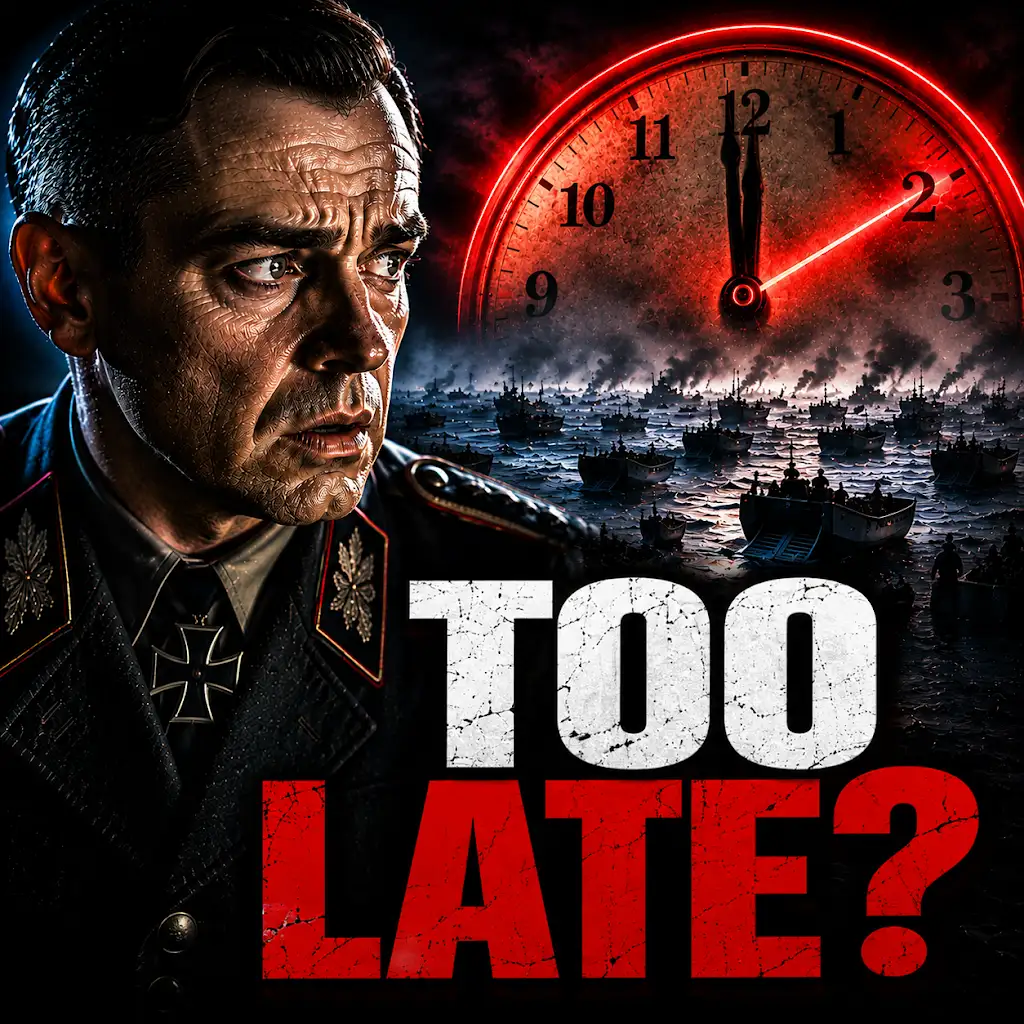
The dawn of June 6, 1944, marked a turning point in the Second World War. Codenamed Operation Overlord, the Allied invasion of Normandy was a monumental undertaking, and the German response, though ultimately insufficient to repel the landing, was a complex and multifaceted reaction shaped by years of war, strategic miscalculations, and intense pressure on multiple fronts. This article will delve into the German perspective, examining their initial awareness, their defensive preparations, the unfolding chaos of the invasion itself, and the subsequent attempts to contain and push back the Allied forces.
The German High Command was not entirely blindsided by the prospect of an Allied invasion. For months, intelligence reports had pointed towards an imminent large-scale amphibious assault in Western Europe. However, pinpointing the exact location and timing proved to be a persistent challenge for German intelligence agencies.
The Fog of War and Deception
The Allies, through meticulous planning and extensive deception operations, masterfully exploited the inherent uncertainties of wartime intelligence. Operation Fortitude, a sophisticated campaign of misinformation, successfully convinced the Germans that the primary invasion target was the Pas-de-Calais, the closest point of mainland Europe to Britain. This deception involved creating phantom armies, inflatable tanks, and fake radio traffic, all designed to draw German attention away from Normandy.
Allied Deception Tactics
- Operation Fortitude North: This element of the deception aimed to convince the Germans that a secondary invasion would occur in Norway. Dummy airfields, troop concentrations, and radio signals were deployed to support this narrative.
- Operation Fortitude South: The primary deception, this operation focused on creating the illusion of a massive Allied army, under the command of General George S. Patton, poised to invade the Pas-de-Calais. This involved the construction of fake landing craft, extensive propaganda, and even misleading aerial reconnaissance.
German Intelligence Failures and Misinterpretations
Despite the sophistication of Allied deception, there were also internal weaknesses within the German intelligence apparatus that contributed to their miscalculations. A lack of unified command and competing interests among different intelligence branches often led to conflicting reports and an inability to synthesize information effectively. Furthermore, the sheer scale of the Allied preparations made it difficult to distinguish genuine threats from diversionary tactics.
Key Intelligence Gaps
- Underestimation of Normandy’s Significance: While the Pas-de-Calais was heavily fortified, the Allies also recognized the strategic advantages of Normandy. German intelligence, however, remained fixated on the shorter crossing.
- Lack of Penetration into Allied Planning: Despite efforts, the Germans struggled to gain deep insight into the precise timing and scale of Allied operational planning.
Defensive Preparations: The Atlantic Wall
The bedrock of Germany’s western defense was the “Atlantic Wall,” a vast network of coastal fortifications stretching from Denmark to the Spanish border. While the concept was formidable, its implementation and readiness on D-Day were far from uniform.
Strengths of the Atlantic Wall
The Atlantic Wall incorporated a variety of defensive structures designed to repel an amphibious assault. These included:
- Concrete Bunkers and Gun Emplacements: Heavily armed and protected, these structures provided direct fire support against landing craft and troops on the beaches.
- Anti-Tank Ditches and Obstacles: Intended to slow down and channel advancing enemy armor, these physical barriers were scattered along the coast and inland.
- Minefields: Extensive minefields, both anti-personnel and anti-tank, were laid across beaches, dunes, and potential landing zones to inflict casualties and impede progress.
- Coastal Artillery: Long-range artillery pieces were positioned to bombard enemy naval forces and landing craft as they approached the shore.
Weaknesses and Gaps in the Wall
Despite the impressive scale of construction, the Atlantic Wall had significant deficiencies on June 6, 1944.
Incomplete Fortifications
- Varied Levels of Readiness: The Atlantic Wall was a work in progress. While some sectors, particularly around the Pas-de-Calais, were heavily fortified, other areas, including key landing zones in Normandy, were less developed and lacked the full complement of defenses.
- Insufficient Manpower: The German army was stretched thin across multiple fronts. The Atlantic Wall was undermanned, with many garrisons consisting of older soldiers, convalescents, or conscripts with limited training.
Strategic Misallocations of Resources
- The Pas-de-Calais Focus: The overwhelming concentration of resources and elite troops in the Pas-de-Calais, a direct consequence of Allied deception, left other sectors more vulnerable.
- Lack of Mobile Reserves: The German command structure was hesitant to commit their mobile armored reserves too early, fearing they would be drawn into a decisive battle prematurely and be destroyed. This left the defending infantry on the beaches without immediate, powerful reinforcements.
The Invasion Begins: Confusion and Initial Resistance
As the first Allied troops landed on the beaches of Normandy, the German defenders were thrown into a desperate struggle for survival and to report the unfolding events to their superiors. The initial hours were characterized by fierce fighting and a significant degree of confusion within the German ranks.
Dissemination of Information Under Fire
Communicating the gravity of the situation to the higher command was a monumental task.
Communication Challenges
- Disrupted Lines: Allied aerial bombardment and naval gunfire frequently severed telephone lines and radio communications, hindering the flow of crucial battlefield information.
- Decentralized Command: The German command structure, particularly at the lower levels, relied on local initiative. This meant that commanders on the ground had to make critical decisions with incomplete information while under direct attack.
Facing the Spearhead: Early Engagements
German units stationed along the coast, though often outnumbered and outgunned, mounted tenacious resistance.
Fierce Beach Defenses
- Machine Gun Fire and Artillery: Defensive positions, particularly those overlooking the beaches, unleashed devastating torrents of machine-gun fire and artillery on the Allied landing craft and assault waves.
- Obstacles and Traps: The pre-existing beach obstacles and minefields inflicted significant casualties and slowed the Allied advance, giving defenders precious time to inflict damage.
The Role of Isolated Units
- Isolated Pockets of Resistance: Many German units fought bravely in isolation, knowing that their reinforcements were either delayed or non-existent. Their determined defense, however, served to inflict heavy initial losses on the invading forces.
The German Response: From Defense to Counterattack
As the scale of the invasion became undeniable, the German command began to mobilize its forces, attempting to contain the beachhead and launch counterattacks. This phase was marked by strategic debates, the commitment of reserves, and a desperate race against time.
Mobilizing Reserves and Armored Divisions
The commitment of Germany’s elite Panzer divisions was a critical factor in the subsequent fighting. However, the speed and effectiveness of this mobilization were hampered by several issues.
The Debate Over Reserves
- Hitler’s Hesitation: Adolf Hitler, influenced by the deceptive intelligence regarding the Pas-de-Calais, was initially reluctant to commit his valuable armored reserves to Normandy. This delay proved to be a significant strategic blunder.
- Rommel’s Plea: Field Marshal Erwin Rommel, commander of Army Group B, recognized the immediate threat and repeatedly urged Hitler to release the Panzer divisions, arguing that the beachhead had to be destroyed on the first day.
Commitment of Panzer Divisions
- Tardy Deployment: When the reserves were finally committed, many Panzer divisions were based far inland, and their movement was slow due to Allied air superiority and damaged infrastructure.
- Fragmented Attacks: The commitment of these divisions was often piecemeal, with units being fed into the battle individually rather than in concentrated assaults, diminishing their overall impact.
The Struggle for Air Superiority
The lack of effective air support for German ground forces was a crippling disadvantage.
Luftwaffe’s Limited Impact
- Air Superiority of the Allies: The Allied air forces enjoyed overwhelming superiority over the invasion beaches and the immediate hinterland. This allowed them to provide close air support to ground troops and interdict German reinforcements.
- Weakened Luftwaffe: By 1944, the Luftwaffe had been significantly depleted by years of intense fighting on multiple fronts. Its ability to challenge Allied air dominance was severely limited.
Counterattack Attempts and Their Failure
Throughout the Normandy campaign, German forces launched numerous counterattacks aimed at pushing the Allies back into the sea. These efforts, while often characterized by bravery and ferocity, were ultimately unsuccessful.
Key Counterattack Operations
- The Battle for Caen: The fighting for Caen, a strategically important city, became a protracted and bloody struggle. German forces, particularly Panzer divisions, put up a strong defense and launched several counterattacks, but the city eventually fell to the Allies.
- The Mortain Counterattack: In August 1944, the Germans launched a desperate offensive, the Mortain Counterattack, aiming to split the Allied forces. While initially achieving some success, it was ultimately contained and resulted in heavy German losses.
The Aftermath and Long-Term Consequences
The failure of the German response to D-Day marked the beginning of the end for Nazi Germany in the West. The establishment of a strong Allied presence in Normandy irrevocably shifted the strategic balance of power.
The Erosion of German Defensive Capabilities
The losses sustained in Normandy significantly degraded Germany’s ability to wage offensive warfare and even mount effective defensive operations.
Loss of Elite Troops and Equipment
- Decimation of Panzer Divisions: The Normandy campaign saw the destruction or severe weakening of many of Germany’s best Panzer divisions, critical components of their offensive capability.
- Depletion of War Material: The constant fighting and the inability to replace losses led to a severe shortage of tanks, artillery, aircraft, and other essential war materiel.
The Opening of the Western Front
D-Day decisively opened the long-awaited Western Front, forcing Germany to fight a two-front war on a scale they had struggled to manage since the invasion of the Soviet Union.
Strategic Repercussions
- Pressure on the Eastern Front: The opening of the Western Front relieved some pressure on the Soviet Union, allowing them to intensify their offensives.
- The Race to Berlin: With the Allies firmly established in France, the stage was set for the eventual liberation of Western Europe and the final push towards Berlin.
The Psychological Impact
The failure to repel the D-Day invasion had a profound psychological impact on both the German leadership and the population.
Diminishing Hope for Victory
- Loss of Confidence: The success of Operation Overlord shattered any lingering illusions of a swift victory or a stalemate. It signaled to many that defeat was inevitable.
- Increased Resistance and Sabotage: As the war progressed and the prospect of defeat loomed, instances of internal dissent and sabotage within Germany increased.
In conclusion, the German response to D-Day was a complex tapestry woven from anticipation, deception, fierce but ultimately insufficient defense, and desperate counteroffensives. While individual acts of bravery and strategic blunders played their part, the overwhelming might of the Allied invasion, coupled with the cumulative strain of years of war on the German war machine, ultimately proved insurmountable. The failure to contain the Allied foothold in Normandy was a critical turning point, paving the way for the liberation of Europe and the eventual downfall of the Nazi regime.