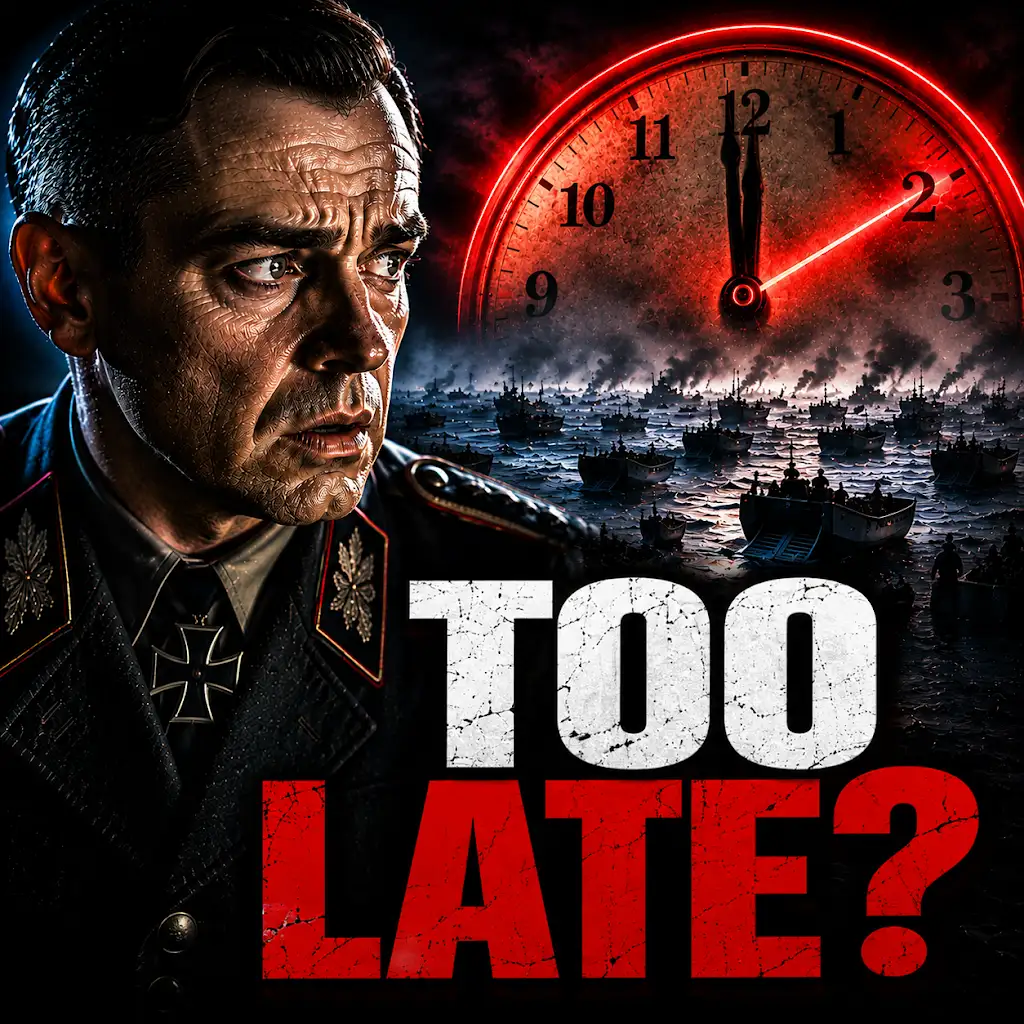
The relentless roar of Allied aircraft, a harbinger of the storm to come, had been a constant presence for weeks, a prelude that tested the nerves of every German soldier stationed along the Atlantic Wall. Yet, for the men of the German Reserve Command, their apprehension was laced with a unique uncertainty. They were the unseen guardians, the contingency plan, the force held back, their potential deployment a closely guarded secret. Their story on D-Day is not one of frontline clashes in the immediate sand and surf, but a tale of strategic anticipation, agonizing delays, and the grim reality of being a vital piece in a high-stakes chess game played out across the vast expanse of Normandy.
The German military doctrine, refined over years of conflict, placed a significant emphasis on strategic reserves. These formations were not intended for immediate engagement but were to be held back, ready to be committed to decisively counter Allied breakthroughs or to exploit emerging opportunities. On the eve of D-Day, the German Reserve Command constituted such a crucial element. It represented a significant portion of the Wehrmacht’s strength in the west, a formidable force designed to blunt the Allied invasion and, if possible, throw them back into the sea.
Strategic Role and Composition
The primary strategic role of the Reserve Command was to provide a mobile, powerful response to the D-Day landings. Unlike the static defenses of the Atlantic Wall, these units were trained and equipped for offensive action, particularly armored formations. Their presence was intended to create a psychological deterrent as well, a constant reminder to the Allies that a powerful counterattack was always a possibility.
The Reserve Command was not a monolithic entity. It comprised a diverse array of units, ranging from highly experienced Panzer divisions to motorized infantry, artillery units, and crucial support elements. These were the troops that had seen action on the Eastern Front, in North Africa, and elsewhere, possessing a hard-won combat effectiveness. Their equipment, while not always the latest models, included formidable tanks like the Panzer IV and the elusive Panther, as well as self-propelled guns and a significant number of anti-tank assets.
Geographic Distribution and Command Structure
The Reserve Command was strategically positioned to respond to potential landing zones across the vast coastline of Normandy and beyond. While some units were closer to the immediate invasion areas, others were held further inland, their rapid deployment dependent on the speed and accuracy of intelligence and logistical support. This distribution reflected the German leadership’s uncertainty regarding the precise Allied objectives.
The command structure of the Reserve Command was intricate, often falling under the umbrella of larger Army Groups. However, the operational control and deployment decisions were ultimately the prerogative of the highest echelons of the Oberkommando der Wehrmacht (OKW) and, to a degree, Adolf Hitler himself. This centralized decision-making would prove to be a significant impediment to swift and effective deployment on D-Day.
The Phantom Menace: Intelligence Failures and Allied Deception
One of the most significant factors shaping the role of the German Reserve Command on D-Day was the success of Allied deception operations. Operation Fortitude, a masterclass in strategic misdirection, had convinced the German high command that the primary Allied invasion would occur at the Pas-de-Calais, a much narrower point of the English Channel. This belief had a profound impact on the deployment of German reserves.
Operation Fortitude: The Art of Deception
Operation Fortitude was a multi-faceted campaign designed to convince the Germans that a massive invasion force, codenamed “Army Group”). Patton, was being assembled in Southeast England, poised to strike at the Pas-de-Calais. This involved elaborate deceptions, including the creation of phantom army encampments, dummy landing craft, and the systematic dissemination of false intelligence through various channels.
The impact of Fortitude cannot be overstated. It created a convincing illusion of a much larger and more immediate threat to the Pas-de-Calais than to Normandy. This directly influenced the disposition of German strategic reserves, including many units that would have otherwise been positioned closer to the actual landing zones.
Allied Air Superiority and its Impact
Beyond deception, the overwhelming Allied air superiority played a critical role in limiting the movement and effectiveness of German reserves. From dawn on D-Day, the skies over Normandy were a no-fly zone for the Luftwaffe. Allied fighter-bombers and reconnaissance aircraft relentlessly patrolled the skies, attacking any significant German troop or vehicle movement.
This air dominance had a crippling effect. It meant that German reserves, particularly armored units, could only move under the cover of darkness or in small, dispersed formations, making them vulnerable to devastating air attacks. The journey that should have taken hours could stretch into days of perilous, piecemeal movement, stripping them of their offensive punch by the time they reached the front.
The Waiting Game: Delays and Denied Deployment
On the morning of June 6th, 1944, as the first Allied gliders touched down behind enemy lines and the naval bombardment commenced, the German Reserve Command was in a state of heightened alert. However, their immediate deployment was not a foregone conclusion. A series of bureaucratic hurdles, intelligence confusion, and the agonizing indecision of the highest command would significantly delay their commitment.
The Initial Hours: Confusion and Disbelief
The initial reports reaching German headquarters were often contradictory and confused. The sheer scale and simultaneity of the landings across multiple beaches initially led some commanders to believe it was a diversionary attack, while the main effort was still to come at Pas-de-Calais. This confusion was exacerbated by the disruption of communication lines due to the airborne landings and the intense Allied air activity.
The German commander in Normandy, Field Marshal Erwin Rommel, had been granted limited authority to commit reserves in the event of an invasion. However, even he faced delays in obtaining formal approval for larger deployments, particularly of the vital Panzer divisions held further inland.
Hitler’s Personal Intervention: The Bottleneck
The ultimate decision-making authority for committing key Panzer reserves lay with Adolf Hitler himself. This centralization of power, a recurring theme in the latter stages of the war, proved to be a critical bottleneck on D-Day. Hitler was reportedly woken late and initially skeptical of the scale of the invasion. He was persuaded by some of his advisors that it was not the main assault and that reserves should be conserved for a later, more decisive engagement.
This personal intervention meant that precious hours were lost while Hitler considered the situation, received conflicting reports, and debated with his generals. The tanks that could have potentially pushed the Allies back into the sea on the first day were instead held in their staging areas, awaiting a decision that came too late.
The Slow Advance: The Reserve Command in Action
When the orders finally came, the German Reserve Command began its arduous journey towards the battlefront. The advance was a testament to the determination of the German soldier, but it was a fight against overwhelming odds, hampered by relentless Allied air power and the sheer distance the units had to cover.
Panzer Divisions on the Move: A Perilous Journey
The most potent elements of the Reserve Command were its Panzer divisions. Units like the 12th SS Panzer Division “Hitlerjugend” and the Panzer-Lehr Division, though initially positioned further inland, began their movement as soon as authorization was granted. Their journey was a desperate race against time, a testament to the skill of their commanders in minimizing casualties from air attack.
Convoy movements were conducted under strict radio silence, primarily at night, and in dispersed formations to avoid presenting large targets for Allied aircraft. Despite these precautions, the divisions suffered losses to fighter-bombers and reconnaissance planes. The advance was slow, often covering only a few miles per day, a stark contrast to the rapid offensives of earlier war years.
Initial Engagements: Containing the Beachheads
Upon reaching the vicinity of the Normandy front, elements of the Reserve Command were committed to stabilizing the situation and preventing the Allied beachheads from expanding. These were not the decisive counterattacks envisioned in earlier planning, but rather desperate attempts to contain the growing Allied presence.
The first significant engagements saw these reserve units clash with Allied troops who had already established a foothold. The terrain, characterized by hedgerows and bocage country, often favored the defenders and provided cover for the advancing Allied infantry. Despite their formidable armor, the German reserves found themselves fighting in congested environments, making them vulnerable to Allied anti-tank weapons and concentrated artillery fire.
The Long War: Impact on Subsequent Battles
The failure of the German Reserve Command to decisively impact D-Day had profound and lasting consequences for the entire Normandy campaign and, indeed, for the remainder of the war in Western Europe. The opportunity to potentially cripple the Allied invasion on its first day was lost, allowing the Allies to consolidate their positions and pour in reinforcements.
The Battle of Normandy: A War of Attrition
With the initial Allied landings secured and reinforced, the Battle of Normandy devolved into a brutal war of attrition. The German reserves, piecemeal committed and often outmaneuvered, found themselves engaged in a series of increasingly desperate defensive battles. Their original mission of a decisive counterattack was replaced by a struggle to prevent the Allies from breaking out of the Normandy bridgehead.
The constant pressure from Allied ground forces, coupled with the continued dominance of the air, gradually wore down the strength and effectiveness of the reserve formations. The loss of experienced personnel and vital equipment could not be easily replaced, further diminishing their offensive capabilities.
The Falaise Pocket: A Devastating Blow
The eventual Allied breakout from Normandy culminated in the encirclement and destruction of significant German forces in the Falaise Pocket. Elements of the Reserve Command, though weakened, were caught in this devastating trap. The pocket represented a catastrophic loss of manpower and materiel for the German army, effectively crippling their ability to mount any significant offensive operations in the west for the remainder of the war.
The story of the German Reserve Command on D-Day is a poignant reminder of the critical interplay between strategic planning, intelligence, deception, and the ultimate vagaries of command and control. They were the hidden strength, the potential game-changer, whose impact was blunted by a confluence of factors, ultimately contributing to the unfolding Allied victory on the beaches of Normandy and beyond. Theirs was a fate shaped not by their own shortcomings in combat, but by the strategic decisions made far from the battlefield, a stark illustration of the immense human cost of grand strategic blunders.