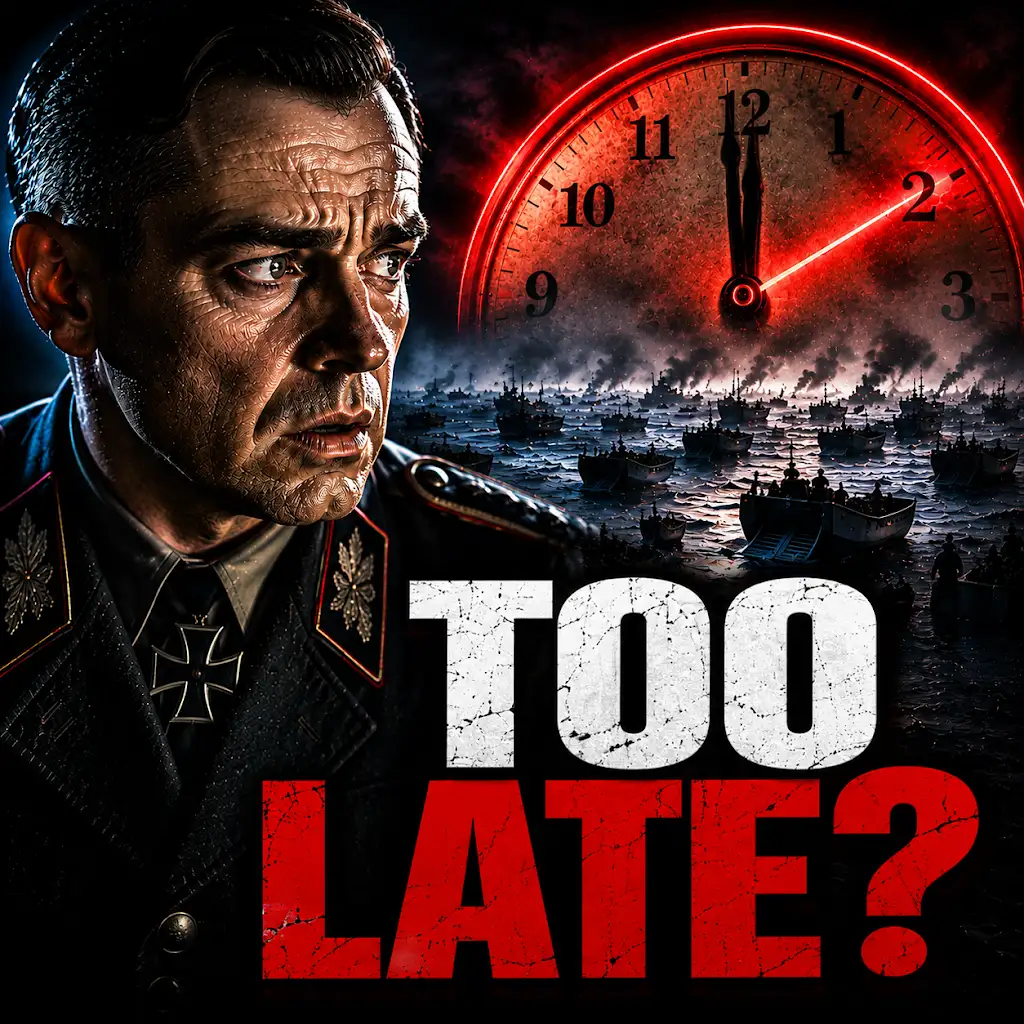
The dawn of June 6, 1944, was not merely the start of a momentous military operation; it was also the culmination of a series of critical miscalculations and strategic oversights by the German High Command that would ultimately contribute significantly to the Allied victory on D-Day. While the Atlantic Wall represented a formidable defensive line, its effectiveness was severely hampered by a combination of factors, from an underestimation of Allied resolve to a woeful lack of strategic flexibility.
One of the most fundamental German mistakes on D-Day was the persistent underestimation of the Allied forces’ resolve, capability, and technological prowess. This misjudgment permeated various levels of the German command structure, influencing decisions ranging from troop deployment to defensive preparations.
A War of Attrition Mentality
Throughout the war, the German military had often found success through swift, decisive campaigns, exploiting Blitzkrieg tactics. However, by 1944, facing the vast industrial might and manpower of the Allied powers, this approach was increasingly unsustainable. German strategists seemed to cling to a belief that they could continue to bleed the Allies dry in a protracted war of attrition, failing to grasp the sheer scale of resources the Western Allies could commit to a cross-channel invasion. They believed that the cost in casualties would eventually force the Allies to reconsider their invasion plans. This was a grave error in judgment, as the Allied leadership, particularly in Britain and the United States, was deeply committed to the defeat of Nazi Germany and saw the invasion as the only viable path to achieve that goal.
Misjudging the Scale of the Invasion
German intelligence, while not entirely blind, demonstrably failed to accurately predict the sheer scale and scope of the D-Day landings. They anticipated a significant invasion but were largely unable to ascertain the precise timing, location, or the sheer number of divisions that would be committed. This led to a diffusion of defensive forces along the entire Atlantic Wall, rather than concentrating them at the likely points of assault. The Germans correctly identified Normandy as a potential landing zone, but their assessments of the number of troops and the intensity of the air and naval bombardment were consistently underestimated. They believed that the air superiority of the Luftwaffe had been sufficiently degraded to prevent a large-scale amphibious assault, and that their coastal defenses, while strong, would be more than capable of repelling any attempted landings.
Overconfidence in the Atlantic Wall
While the Atlantic Wall was a testament to German engineering and a formidable defensive undertaking, there was a degree of overconfidence in its invincibility. The sheer length of the wall, stretching from Denmark to the Spanish border, meant that resources were stretched thin. Furthermore, critical sections were either incomplete or inadequately manned. The Germans believed that their concrete fortifications, minefields, and anti-tank obstacles would absorb the initial assault, giving them time to deploy their reserves. However, they underestimated the impact of Allied air and naval bombardment, which was designed to neutralize these defenses and sow chaos.
Strategic and Tactical Missteps
Beyond the overarching underestimation, specific strategic and tactical errors played a crucial role in undermining German defenses on D-Day. These ranged from the allocation of crucial armored reserves to the rigid command structure that hindered rapid responses.
The Misallocation of Panzer Divisions
Perhaps the most critical German error was the geographical misallocation of their most potent offensive weapon: the Panzer divisions. The majority of these highly mobile armored units were stationed far from the Normandy coast, particularly in areas like Pas-de-Calais and even further east in Germany. This was based on the assumption that the main Allied invasion would occur at the narrowest point of the English Channel, the Pas-de-Calais, where the defenses were heavily concentrated.
The Deception Operations’ Success
The Allies, through elaborate deception operations codenamed “Operation Bodyguard,” successfully convinced the Germans that the Pas-de-Calais was the primary target. This involved fake army groups, dummy landing craft, and misleading radio transmissions. While the deception was incredibly effective, the Germans’ rigid adherence to this perceived threat meant that their strategic reserves, the Panzer divisions, were too far away to intervene effectively in Normandy in the crucial initial hours and days of the invasion.
The Slow Deployment of Reserves
Even when the true nature of the landings became apparent, the movement of these Panzer divisions was hampered by several factors. Allied air superiority meant that daylight movement was extremely dangerous, forcing many tank columns to travel at night, significantly slowing their progress. Furthermore, the Allied bombing campaign had heavily targeted rail lines and bridges, further disrupting the movement of troops and equipment. The time it took for these vital reserves to reach the front lines allowed the Allies to establish a precarious but vital foothold.
The “No Retreat” Order
A significant factor that exacerbated German difficulties was the rigid command structure and the “no retreat” orders issued by Hitler. Unlike the more flexible approach often adopted by Allied commanders, Hitler frequently dictated battlefield tactics from afar, demanding that every inch of ground be held at all costs. This often led to units being encircled and destroyed, rather than being allowed to withdraw to more defensible positions.
The Infamous Omaha Beach Defense
This rigid doctrine was brutally evident on Omaha Beach, where German defenders, particularly those under the command of Lieutenant Colonel Eugen Rall, fought with fanatical tenacity, often to the last man. While this resulted in horrific casualties for the Allies, it also demonstrated the wasted potential of German manpower and resources that could have been preserved through tactical retreats and regrouping. The defenders on Omaha, though ultimately overwhelmed, inflicted immense damage due to their determination to hold their ground, a determination reinforced by Hitler’s orders.
The Hesitation to Commit Reserves
This “hold the line” mentality also extended to the deployment of reinforcements. Commanders were often hesitant to commit their limited reserves to counterattacks without explicit authorization from Hitler, which was often slow to arrive or refused altogether. This created critical windows of opportunity for the Allies, which they were able to exploit to expand their beachheads.
Communication and Coordination Failures
Effective communication and coordination are vital for any military operation, and their absence on the German side proved to be a critical vulnerability during D-Day. This included issues with command and control, intelligence dissemination, and the coordination between different branches of the Wehrmacht.
The Disjointed Command Structure
The German military command structure was notoriously complex and often rife with internal rivalries. This was particularly true during the latter stages of the war, with competing chains of command and overlapping responsibilities. On D-Day, this fragmentation hampered the ability to mount a cohesive and decisive response.
Rommel’s Absence and Influence
Field Marshal Erwin Rommel, who had been tasked with strengthening the Atlantic Wall’s defenses, was a proponent of a more aggressive and proactive defense. He believed in counterattacking the Allies as soon as they landed, before they could consolidate their positions. However, Rommel was away from the front on D-Day, attending a conference and visiting his family, a decision he later regretted. This absence meant that his vision for a dynamic defense was not fully implemented, and the more passive, static defense favored by some other commanders, aligned with Hitler’s preferences, prevailed.
Hitler’s Interference and Paranoia
Hitler’s constant interference in military matters, driven by paranoia and a lack of trust in his generals, further exacerbated the communication and coordination problems. His frequent micro-management and the elaborate authorization processes he demanded meant that decisions were often delayed, rendering them ineffective by the time they were enacted. This prevented commanders on the ground from reacting swiftly to the unfolding situation.
Intelligence Gaps and Misinterpretations
While German intelligence services were generally competent, they suffered from critical gaps and misinterpretations regarding the D-Day landings. As mentioned earlier, the success of Allied deception operations significantly skewed their understanding of Allied intentions.
The Underestimation of Air Power’s Role
Furthermore, the Germans consistently underestimated the impact of Allied air power. They believed that their anti-aircraft defenses, combined with the Luftwaffe’s remaining fighter strength, could adequately contest Allied air supremacy. However, the sheer scale of Allied air attacks on D-Day, which neutralized German airfields and communications, was far beyond what they had anticipated. The constant bombing and strafing severely disrupted German ground movements and morale.
The Lack of Real-time Information
On the ground, German units often lacked real-time information about the Allied landings. Communications equipment was vulnerable to jamming, and the decentralized nature of their defense meant that individual units were often left to fend for themselves for extended periods. This lack of situational awareness prevented them from effectively coordinating their responses and mounting organized counterattacks.
Deficiencies in Equipment and Manpower
By 1944, the relentless pressures of war had begun to take their toll on Germany’s war machine. Deficiencies in both equipment and manpower were becoming increasingly apparent and significantly impacted their ability to defend against the D-Day invasion.
The Degradation of the Luftwaffe
The once-dominant Luftwaffe had been severely depleted by years of intense aerial combat on multiple fronts. The Allied bombing campaign had systematically targeted German aircraft production and airfields. On D-Day, the Luftwaffe was a shadow of its former self.
Limited Air Support for Ground Troops
The Allied air forces achieved overwhelming air superiority, allowing them to conduct unhindered bombing raids and strafing runs against German positions. The Luftwaffe could offer little effective air support to their ground troops, leaving them exposed to the relentless Allied aerial onslaught. This lack of air cover was a devastating blow to German morale and defensive capabilities.
Inadequate Anti-Aircraft Defenses
While Germany had developed effective anti-aircraft guns, their numbers were insufficient to counter the sheer volume of Allied aircraft. Furthermore, the Allied bombing had degraded the infrastructure necessary to support these defenses, including fuel and ammunition.
Manpower Shortages and Inexperienced Troops
The war had consumed vast numbers of experienced German soldiers, leaving a significant deficit in seasoned troops by 1944. Many of the units defending the Atlantic Wall were either composed of older men, very young conscripts, or troops transferred from other fronts, many of whom lacked the training and combat experience of their predecessors.
The “Fortress Europe” Mindset
The “Fortress Europe” doctrine, which emphasized static defenses and holding ground at all costs, was partly a recognition of these manpower limitations. However, it also failed to account for the dynamic nature of modern warfare and the need for mobile reserves to counter threats. The static defenses, while formidable in theory, were vulnerable to concentrated assaults and sustained bombardment, especially when manned by less experienced troops.
The Impact on Morale
The constant pressure of Allied air and naval bombardments, coupled with the relentless ground assaults, took a heavy toll on the morale of these often-inexperienced German defenders. Witnessing their defenses being systematically dismantled and facing overwhelming odds, many units eventually broke or surrendered, contributing to the rapid Allied advance.
The Psychological Impact of Allied Superiority
Beyond the tangible military factors, the psychological impact of overwhelming Allied superiority played a significant role in the German experience of D-Day. This included a sense of inevitability and a dwindling belief in their ability to win.
The Overwhelming Technological Edge
The Allies showcased a breathtaking array of advanced technology on D-Day, from the massive naval armada to the sheer volume of aircraft and landing craft. This technological dominance was a stark contrast to the increasingly strained German war economy.
The Effectiveness of Allied Bombardment
The sustained and accurate bombing and shelling by Allied navies and air forces were a constant psychological battering ram. The Germans were subjected to relentless bombardment that eroded their defenses and their will to fight. They had no comparable offensive capability to inflict similar damage on the Allied invasion fleet or their staging areas.
The Scale of the Invasion Fleet
The sheer scale of the Allied invasion fleet, stretching across the horizon, was a sight that could induce despair. It represented an unstoppable force, a testament to the Allies’ industrial might and their unwavering commitment to the invasion. For many German defenders, it signaled the beginning of the end.
The Loss of Initiative
By D-Day, Germany had largely lost the strategic initiative on the Western Front. They were reacting to Allied moves rather than dictating the pace of the conflict. This sense of being on the defensive, of being constantly under pressure, contributed to a decline in morale and a questioning of their ability to achieve victory.
The Two-Front War Strain
The ongoing conflict on the Eastern Front, absorbing the vast majority of German resources and manpower, meant that the Western Front was always a secondary concern. The Germans were fighting a two-front war with dwindling resources, a strategic disadvantage that became increasingly apparent with each passing day. This meant that the troops in Normandy were often fighting with the knowledge that they were not receiving the full backing of the Reich.
The Propaganda Disconnect
While German propaganda continued to extol the virtues of their defenses and the determination of their soldiers, the reality on the ground often told a different story. The disconnect between official pronouncements and the grim realities of the battlefield further eroded confidence and contributed to a sense of futility for many soldiers.
In conclusion, while the German defenses on D-Day were designed to be formidable, a cascade of miscalculations, strategic blunders, and inherent weaknesses allowed the Allied invasion to succeed. The underestimation of Allied capabilities, the misallocation of crucial reserves, the rigid command structure, communication failures, and the growing deficiencies in equipment and manpower all conspired to create a perfect storm of vulnerability. These German mistakes, in conjunction with the meticulous planning and execution of the Allied forces, paved the way for the liberation of Europe and marked a decisive turning point in World War II.