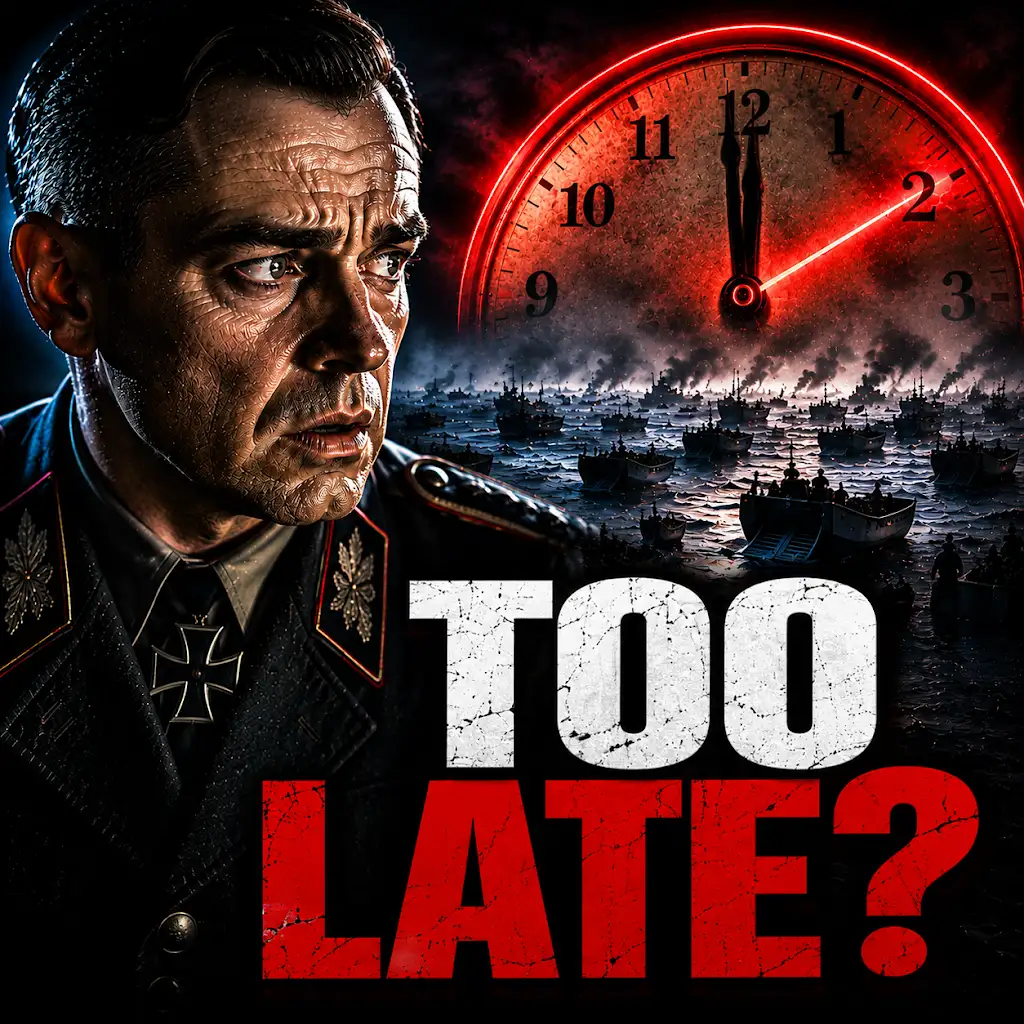
The meticulously planned invasion of Normandy on June 6, 1944, known as D-Day, was not only a monumental undertaking for the Allied forces but also a significant test of the German command structure. For years, Adolf Hitler and his High Command had anticipated an Allied invasion of Western Europe, and had poured immense resources into constructing the Atlantic Wall, a formidable defensive line designed to repel any such assault. However, the reality of D-Day would expose critical flaws and strategic miscalculations within the German military hierarchy, ultimately contributing to the success of the Allied landings and the beginning of the end for Nazi Germany.
The German command structure, though vast and ostensibly powerful, suffered from a fundamental strategic oversight: a pervasive underestimation of Allied capabilities and intentions. This was not a sudden lapse but a consistent theme throughout the war, rooted in Hitler’s own ideological biases and his often-unrealistic assessments of his own forces.
Hitler’s Obsession with the Pas-de-Calais
A significant aspect of the German strategic misjudgment lay in the unwavering focus on the Pas-de-Calais as the most likely Allied landing point. This belief was actively cultivated by Allied deception operations, most notably Operation Fortitude, which created the fictional First U.S. Army Group under General George S. Patton, positioned to threaten Calais. However, the underlying German assumption, that the shortest sea crossing and the proximity to vital ports like Antwerp would be the decisive factors for the Allies, proved to be a critical error.
The Impact of Operation Fortitude
Operation Fortitude was a masterclass in deception, employing dummy troops, inflatable tanks, fake radio traffic, and strategically leaked disinformation. This intricate web of lies convinced the German High Command, and importantly, Hitler himself, that the Pas-de-Calais was the primary objective. The sheer scale of the deception led to the concentration of significant German reserves and the most experienced panzer divisions in the Calais region, leaving other sectors, including Normandy, relatively weaker.
Rommel’s Foresight vs. The Führer’s Decree
Field Marshal Erwin Rommel, appointed Inspector of Coastal Defences and commander of Army Group B, recognized the strategic importance of Normandy and the need for a more robust defense there. He famously stated that to win the war, the Allies must be pushed back into the sea on the first day. Rommel understood that the open beaches of Normandy, while offering landing advantages, also presented opportunities for a rapid Allied breakout if they could establish a beachhead. He tirelessly worked to strengthen defenses, requisitioning additional troops and even personal funds to improve fortifications. However, his pleas for greater authority and the deployment of crucial panzer reserves closer to the coast were repeatedly hampered by the centralized decision-making of the Führer and the conflicting priorities of other branches of the German military.
The Underestimation of Allied Air Power
Another critical oversight was the underestimation of the impact of Allied air superiority. The German command structure had, to a degree, accepted the loss of air supremacy over Germany itself, but they failed to fully grasp its implications for a large-scale amphibious invasion. The Allied air forces, comprising the Royal Air Force (RAF) and the United States Army Air Forces (USAAF), had systematically degraded German air defenses, interdicted transportation networks, and conducted relentless bombing campaigns in the months leading up to D-Day.
The Allied Air Offensive’s Role
The sustained bombing campaign by the Allies had a profound impact on the German war effort. It disrupted supply lines, destroyed crucial infrastructure like bridges and rail yards, and significantly hampered the ability of German forces to move reserves quickly. On D-Day itself, the Allied air forces maintained complete dominance over the invasion beaches. They engaged and destroyed any German aircraft that dared to take to the skies and provided invaluable close air support to the attacking ground troops, suppressing German defenses and destroying artillery positions. The German command structure simply did not possess the means to counter this overwhelming air presence.
The Lack of Luftwaffe Coordination
The Luftwaffe, the German air force, was already depleted and fragmented by the ongoing war on the Eastern Front and the strategic bombing of Germany. Its command structure was also a source of weakness. Instead of a unified and coordinated effort to contest Allied air superiority over the invasion zone, the Luftwaffe was often deployed piecemeal, responding to perceived threats rather than executing a cohesive strategy. This lack of coordination meant that the Luftwaffe was unable to mount a significant challenge to the Allied air umbrella that protected the invasion forces.
The Disjointed Command Chain: A Hierarchy of Inefficiency
The German command structure for the defense of Western Europe, particularly concerning the Atlantic Wall, was characterized by a complex and often inefficient hierarchy. This created bottlenecks in decision-making, blurred lines of responsibility, and hampered the rapid and decisive actions necessary to repel an invasion of such magnitude.
The Supreme Command of the West (OKW) and its Ambiguities
The Oberkommando der Wehrmacht (OKW), or Supreme Command of the Armed Forces, was theoretically responsible for overall military strategy and operations. However, its authority was often superseded by Adolf Hitler’s direct intervention, leading to a constant tension between military pragmatism and the Führer’s ideological pronouncements.
Hitler’s Direct Intervention and Strategic Micromanagement
Hitler’s penchant for micromanagement was a significant detriment to the German war effort. He often overruled his generals, issuing direct orders that were sometimes strategically unsound. This was particularly evident in his refusal to commit panzer reserves to reinforce the Normandy front in the critical early hours of D-Day, despite pleas from his commanders on the ground. His distrust of his generals, coupled with his belief in his own infallible military genius, stifled initiative and led to costly delays.
Conflicting Jurisdictions and Rivalries
Within the OKW and between its various branches (Army, Navy, Air Force), there were often overlapping jurisdictions and inter-service rivalries. This meant that coordinating defensive efforts, especially across different military branches, could be a bureaucratic nightmare. The Army was responsible for ground defenses, the Navy for coastal patrols and submarines, and the Air Force for air defense. Each had its own priorities and resources, and achieving true synergy was a constant struggle, further exacerbated by Hitler’s often arbitrary assignments of authority.
Army Group B: The Frontline of a Fragmented Defense
Army Group B, under the command of Field Marshal Erwin Rommel, was directly responsible for defending the coast from the Dutch border to the Loire River, encompassing the Normandy sector. However, even within Army Group B, the command structure was stretched thin and faced significant challenges.
Rommel’s Command and the Role of Subordinate Commanders
Rommel, despite his considerable energy and drive, was operating with limited resources and under constant pressure from Hitler and the OKW. His subordinate commanders, such as Lieutenant General Dietrich von Choltitz (responsible for the Cherbourg area) and Major General Wilhelm Richter (responsible for the Omaha sector), were tasked with defending vast stretches of coastline with often inadequate forces. Their ability to react and counterattack was severely limited by the delays in receiving reinforcements and the lack of clear authorization to commit reserves without higher approval.
The Uncertainty of Divisional Deployment
A key weakness was the uncertain and often dispersed deployment of German divisions. While some units were stationed directly on the coast, many vital panzer divisions, the mobile striking force of the German army, were held further inland as reserves. This was partly due to Hitler’s fear of Allied airborne assaults and partly due to the expectation that the main invasion would be at Calais. This dispersed deployment meant that by the time these crucial reserve units could be mobilized and reach the front lines, the Allies had often already established a firm foothold.
The Fatal Flaw: Reserve Deployment and Decision-Making Lags
The most critical operational failure of the German command structure on D-Day was the indecisiveness and agonizing delays in committing strategic reserves. This hesitation, born from a combination of intelligence failures, Hitler’s personal intervention, and a flawed understanding of the invasion’s true scale, proved to be a devastating blow to German defensive capabilities.
The Panzer Divisions: A Double-Edged Sword
The formidable Panzer divisions, the backbone of the German offensive power, were ironically one of the greatest strategic liabilities on D-Day due to their misdeployment and delayed commitment.
The 12th SS Panzer Division and the Panzer-Lehr-Division
Two key panzer divisions, the 12th SS Panzer Division “Hitlerjugend” and the Panzer-Lehr-Division, were positioned too far inland to effectively respond to the initial landings in Normandy. Their deployment was further complicated by Allied interdiction of rail lines and roads, and by the need for Hitler’s direct authorization to release them from their operational control. The time it took for these units to mobilize, travel to the front, and engage the Allied forces allowed the beachheads to solidify and Allied reinforcements to pour ashore.
The Role of the Führer Directive
The requirement for Hitler’s personal approval before committing panzer divisions was a significant impediment. This “Führer Directive” meant that in the critical hours of the invasion, when rapid and decisive action was paramount, German commanders had to wait for authorizations that were often delayed or even denied by a distant and misinformed Führer. This bureaucratic inertia allowed the Allies to gain a crucial advantage.
The Intelligence Void: What Did They Really Know?
German intelligence on D-Day was a patchwork of accurate assessments, misleading disinformation, and outright wishful thinking. This intelligence void significantly impacted the command structure’s ability to make informed decisions.
Misinterpreting Allied Intentions
The pervasive belief that the Pas-de-Calais was the primary invasion target meant that even when intelligence suggested activity in Normandy, it was often dismissed or downplayed. Allied deception operations were highly effective in making German intelligence appear to confirm their preconceived notions.
Underestimating the Scale of the Invasion
The German command structure also failed to fully appreciate the sheer scale of the Allied operation. While they anticipated an invasion, the meticulously coordinated assault across five beach sectors, supported by massive naval and air power, exceeded their expectations. This underestimation led to a belief that local reserves might be sufficient to contain the initial landings, a belief that was swiftly and brutally disproven.
Communication Breakdown: The Fog of War Amplified
The effectiveness of any military command structure relies heavily on clear and timely communication. On D-Day, the German command structure suffered from significant communication breakdowns, further exacerbating the problems of delayed decision-making and misallocated resources.
The Disruption of Communication Networks
The Allied air campaign had systematically targeted German communication infrastructure in the months and weeks leading up to D-Day. Bridges, rail lines, and telephone exchanges were regularly bombed, making it difficult for German units to maintain contact with their higher headquarters.
Allied Air Interdiction and Sabotage
Beyond strategic bombing, Allied commando raids and sabotage operations also aimed to disrupt German communications. These efforts, though often small in scale, contributed to the overall fragmentation of the German network, isolating units and hindering the flow of vital information.
The Reliance on Radio Communications and its Vulnerabilities
When wired communications failed, German units often had to rely on radio. However, radio communications were vulnerable to Allied interception and jamming. The Allies possessed superior technology and expertise in radio intelligence, allowing them to intercept German transmissions and even broadcast false messages, further sowing confusion.
Interception and Decryption of German Signals
The Allies had a sophisticated system for intercepting and decrypting German radio traffic, known as “Ultra.” While not always fully utilized or understood at the tactical level, Ultra provided valuable insights into German troop movements and intentions. However, the sheer volume of information and the challenges in disseminating it effectively meant that not all intelligence derived from Ultra was acted upon in a timely manner.
The Aftermath: A Legacy of Missed Opportunities and Strategic Errors
The failure of the German command structure to effectively counter the D-Day landings was not a single event but a culmination of systemic flaws and strategic miscalculations that had been developing throughout the war. The events of June 6, 1944, exposed these weaknesses in the most brutal way possible.
The Long-Term Impact on the Western Front
The success of the D-Day landings and the establishment of the Allied beachhead in Normandy marked a turning point in the war in Western Europe. The German command structure’s inability to react effectively allowed the Allies to consolidate their position, bringing in vast amounts of men and material, and setting the stage for the eventual liberation of France.
The Inability to Push the Allies Back into the Sea
Rommel’s dire warning that the Allies must be pushed back into the sea on the first day went unheeded. The failure to commit reserves and the indecisiveness in the command structure allowed the Allied forces to establish and expand their beachheads, a critical strategic objective they achieved despite facing determined, though poorly coordinated, German resistance.
The Erosion of German Military Authority
The disastrous outcome of D-Day had a profound impact on the perceived competence and authority of the German military leadership. The constant interference from Hitler, the internal rivalries, and the clear evidence of strategic misjudgment led to a further erosion of confidence in the Wehrmacht’s ability to win the war.
The Blame Game and Internal Inquiries
In the aftermath of D-Day, there was a predictable cycle of blame within the German command structure. Generals pointed fingers at the OKW, the OKW at Hitler, and Hitler, in turn, often purged or demoted those he deemed responsible. While some internal inquiries were conducted, they were often hampered by the desire to protect the image of the Führer and the Nazi regime, rather than a genuine pursuit of accountability. The legacy of D-Day for the German command structure was one of missed opportunities, strategic blunders, and the beginning of the unraveling of their once formidable military machine.