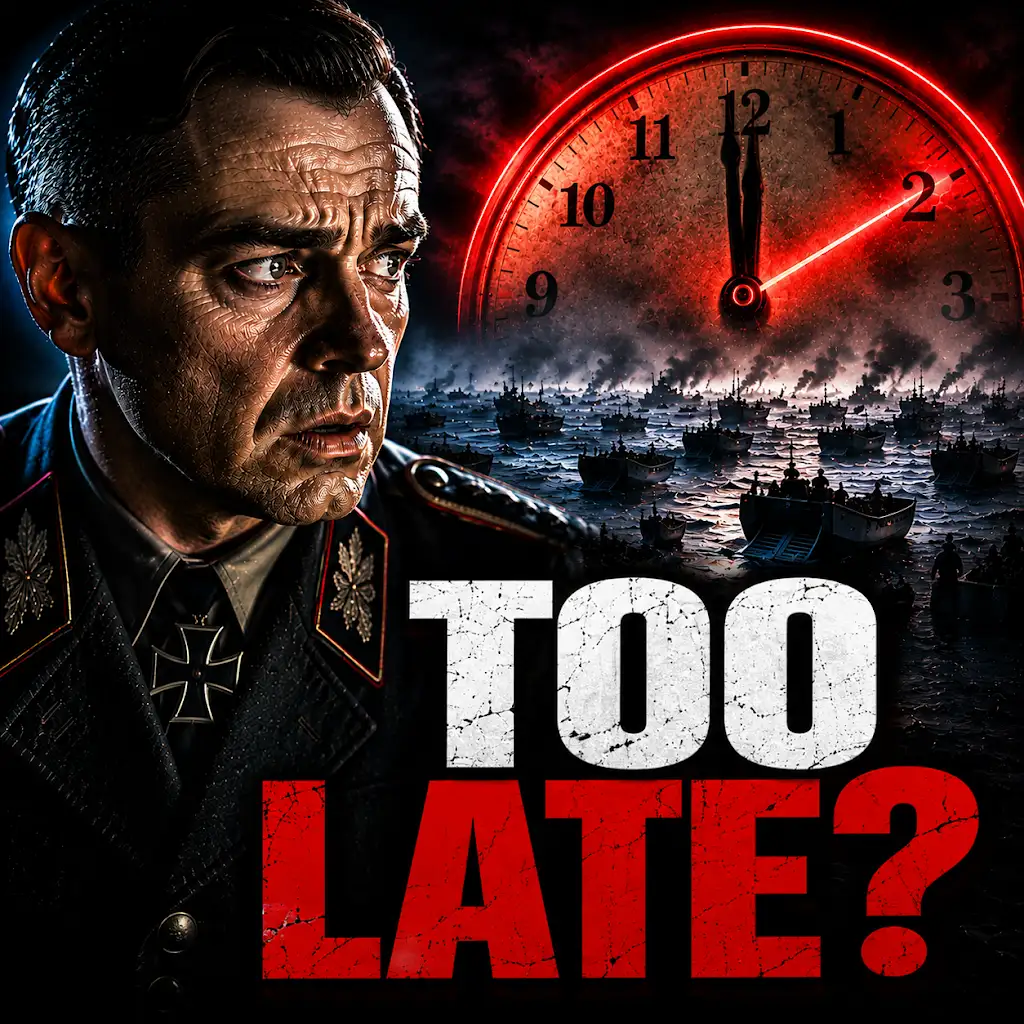
The beaches of Normandy, indelibly etched into the annals of history, bore witness to a monumental clash of wills. While the Allied landings on D-Day, June 6, 1944, are celebrated for their courage and strategic brilliance, the resounding victory for the Allies was also significantly amplified by a series of critical and ultimately catastrophic failures within the German command structure. From misjudged intelligence to indecisive leadership, the German response to the invasion was a cascade of errors that proved instrumental in sealing their fate on the Western Front.
The Illusion of Invincibility: German Intelligence Deficiencies
The German Wehrmacht, despite its formidable reputation, was plagued by a fundamental disconnect between its operational capabilities and its understanding of the enemy’s intentions. This disconnect manifested in a series of intelligence failures that left them woefully unprepared for the scale and nature of the Allied assault.
The Myth of the Pas-de-Calais
One of the most persistent and damaging intelligence fictions that held sway within the German high command was the unwavering conviction that the primary Allied landing site would be the Pas-de-Calais. This belief, fueled by a sophisticated Allied deception campaign, known as Operation Fortitude, played a pivotal role in misallocating crucial German resources.
Operation Fortitude’s Deception Masterclass
The Allied deception plan was a masterpiece of psychological warfare. By creating phantom armies, complete with inflated troop numbers and broadcast radio traffic, the Allies convinced the German command that vast invasion forces were massing opposite the narrowest point of the English Channel. This included the creation of the Fictitious First U.S. Army Group (FUSAG) under the command of the renowned General George S. Patton.
The ‘Ghost Armies’ and Their Impact
The existence of these “ghost armies,” complete with inflatable tanks, dummy aircraft, and meticulously crafted disinformation, effectively tied down significant German reserves and attention away from Normandy. German reconnaissance flights and intelligence reports, painstakingly filtered and often misinterpreted, reinforced this conviction, creating an echo chamber of self-deception.
Rommel’s Foresight vs. Hitler’s Obsession
Field Marshal Erwin Rommel, the celebrated “Desert Fox,” recognized the potential for an invasion in Normandy. His extensive reconnaissance and analysis led him to believe that the Cotentin Peninsula and its adjacent beaches were a viable, even probable, landing zone. However, his warnings and recommendations for a more dispersed and mobile defense were often overridden by Hitler’s unwavering focus on the Pas-de-Calais and his own rigid strategic doctrines.
Underestimating the Enemy: The Allies’ Resolve and Capabilities
Beyond the Pas-de-Calais fixation, the German command suffered from a pervasive underestimation of the Allies’ technological prowess, their logistical capabilities, and, perhaps most crucially, their sheer determination to succeed.
Naval and Air Superiority: A Blind Spot
The Germans, particularly their naval arm, had grown accustomed to a degree of battlefield dominance in previous campaigns. They failed to fully appreciate the overwhelming naval and air superiority the Allies possessed and were prepared to leverage. The ability of the Royal Air Force and the United States Army Air Forces to systematically degrade German defenses, interdict reinforcements, and provide close air support for the advancing Allied ground troops was a factor they had not adequately factored into their strategic calculations.
The Power of Combined Arms: A Concept Underappreciated
While the Wehrmacht was a master of combined arms in its earlier campaigns, its understanding of the evolving nature of Allied combined arms operations was lacking. The seamless integration of naval gunfire, aerial bombardment, and ground assaults by the Allies proved to be a devastatingly effective tactic that the German defenses, designed more for static warfare, struggled to counter.
The Flawed Defense: Fortifications and Firepower
The Atlantic Wall, the formidable network of fortifications stretching along the European coastline, was intended to be an insurmountable barrier. However, its effectiveness was significantly hampered by strategic planning flaws, inadequate deployment of key assets, and a lack of flexibility in its design.
The Atlantic Wall: A Not-So-Impregnable Bastion
While the Atlantic Wall represented a significant engineering feat, its overall impact on the D-Day landings was less than intended. Several factors contributed to its diminished effectiveness.
Uneven Distribution of Resources
The fortification efforts were not uniformly applied. Areas deemed less likely to be invaded, particularly those further from the Pas-de-Calais, received less attention and fewer heavy defenses. This meant that some stretches of the Normandy coast, while still dangerous, were significantly less formidable than others.
The Significance of the Normandy Sector’s Relative Weakness
The relative weakness of the defenses in key Normandy sectors allowed the Allies to establish beachheads with greater success than anticipated. While the fighting was still fierce, the lack of overwhelming firepower at certain landing sites significantly reduced the initial casualties and the difficulty of securing a foothold.
Insufficient Manpower and Equipment
Even in heavily fortified areas, the Atlantic Wall was often understaffed and inadequately equipped. Many experienced German soldiers had been redeployed to the Eastern Front, leaving a mix of veteran troops, less experienced units, and even foreign auxiliaries to man the defenses. Crucially, the lack of mobile reserves and adequate artillery in many sectors meant that once the initial landings were made, the German defenders lacked the firepower to effectively push the Allies back into the sea.
The Absence of Mobile Reserves
Perhaps one of the most critical defensive shortcomings was the lack of strategically placed, mobile reserves. The German command structure, particularly Hitler himself, was hesitant to commit their elite Panzer divisions to the front lines too early, fearing they would be drawn into a protracted battle of attrition or be caught in a pincer movement.
The Hesitation to Commit Panzer Divisions
The famed Panzer divisions, Germany’s armored fist, were dispersed and held back, awaiting Hitler’s direct authorization for their deployment. This indecisiveness meant that the Allied forces had precious hours to consolidate their gains and establish a firm toehold before any significant German counterattacks could be launched.
The Impact of Delayed Counterattacks
The delay in deploying these powerful armored formations allowed the Allies to bring in reinforcements, establish supply lines, and expand their beachhead. When the Panzer divisions were eventually released, they faced a more entrenched and reinforced enemy, diminishing their initial shock value and effectiveness.
The “No Retreat” Directive
Hitler’s infamous “no retreat” orders, while intended to instill unwavering resolve, often proved counterproductive. They prevented German commanders from executing tactical withdrawals to more defensible positions or from conserving their forces for more opportune counterattacks. This led to units being encircled and destroyed, draining valuable manpower and equipment.
Command and Control: A Fractured Hierarchy
The German command structure in Normandy was a labyrinth of overlapping authorities, conflicting orders, and a pervasive lack of clear, decisive leadership. This fractured hierarchy created confusion, delayed responses, and ultimately undermined the effectiveness of the German military.
The Duel of the Commanders: Rommel vs. von Rundstedt
The command structure in the West was characterized by a complex and often adversarial relationship between Field Marshal Erwin Rommel and Field Marshal Gerd von Rundstedt. This rivalry, coupled with their differing strategic philosophies, contributed to a disjointed and ineffective defensive strategy.
Rommel’s Frontline Presence vs. von Rundstedt’s Strategic Distance
Rommel, a highly respected and proactive commander, was deeply involved in the day-to-day defense of the Normandy coastline. He advocated for an aggressive, mobile defense, believing that the invaders had to be thrown back into the sea on the beaches themselves. Von Rundstedt, the overall commander of Army Group D, held a more strategic, long-term view, believing that the reserves should be held back to counter a major breakthrough.
The Lack of Unified Command
This divergence in their approaches, coupled with a lack of clear lines of authority, often resulted in conflicting orders and indecision at critical moments. Rommel’s attempts to maneuver troops were sometimes blocked by von Rundstedt, and vice versa, leading to paralysis rather than coordinated action.
The Role of Hitler and the OKW
Adolf Hitler, the Führer, wielded ultimate authority over the German military. His direct involvement in operational decisions, often from afar and without full situational awareness, frequently proved detrimental. The Oberkommando der Wehrmacht (OKW), the High Command of the Armed Forces, struggled to translate Hitler’s often unrealistic directives into effective battlefield plans.
Hitler’s Micromanagement and Detachment
Hitler’s tendency to micromanage, even at the tactical level, meant that operational decisions were often delayed or made without an accurate understanding of the fluid battlefield situation. His detachment from the front lines, combined with a reluctance to accept bad news, led to a distorted perception of reality.
The Impact of “Führer Directives”
Key “Führer directives,” dictating troop movements and defensive strategies, were often rigid and ill-suited to the dynamic nature of the invasion. This prevented German commanders on the ground from adapting to rapidly evolving circumstances and exploiting opportunities.
Communication Breakdowns and Bureaucracy
The German military, despite its reputation for efficiency, was also hampered by a cumbersome bureaucracy and frequent communication breakdowns. Orders could be lost, misinterpreted, or simply delayed in transit, further exacerbating the confusion on the battlefield.
The Impact of Radio Silence and Allied Air Dominance
Allied air superiority played a significant role in disrupting German communications. Allied aircraft routinely targeted communication lines, and the constant threat of aerial attack made it difficult for German units to maintain radio contact with their command centers.
The Isolation of German Units
This isolation meant that units on the front lines often fought without adequate intelligence or reinforcements, relying on their own initiative or the hope of distant assistance. The inability to coordinate effectively against a unified and well-communicated Allied force was a critical disadvantage.
The Operational Miscalculations: The First 24 Hours
The initial hours and days following the D-Day landings were crucial. The German response during this critical period was characterized by a series of operational miscalculations that allowed the Allies to solidify their positions and expand their bridgeheads.
The “Wait and See” Approach
Rather than a swift and decisive counterattack, the initial German response was often characterized by a cautious, “wait and see” approach. This hesitation stemmed from a combination of factors, including the intelligence failures mentioned earlier and a lack of clear authorization to engage.
The Underestimation of the Scale of the Invasion
The German command, still clinging to the belief that the primary invasion would occur elsewhere, initially underestimated the scale and determination of the Normandy landings. They viewed it as a diversionary tactic rather than the main assault.
The Psychological Impact of the Landing
The sheer audacity and success of the Allied landings, despite the formidable defenses, also had a psychological impact. Some German commanders may have been caught off guard by the ferocity and effectiveness of the assault, leading to a brief period of stunned inaction.
The Failure to React to Airborne Landings
The airborne landings by American and British paratroopers behind the enemy lines on the night of June 5-6 were a critical component of the D-Day plan. The German response to these isolated but strategically important landings was surprisingly weak and disorganized.
The Underestimation of Airborne Threat
The German military had some experience with airborne operations, but they did not fully anticipate the scale and effectiveness of the Allied airborne deployment. They failed to adequately prepare for the disruption these landings would cause to their rear areas.
The Inadequate Counter-Paratrooper Measures
In many sectors, the response to paratrooper landings was slow and uncoordinated. Local German garrisons were often overwhelmed by the scattered but determined airborne troops, who succeeded in their objectives of disrupting communications, seizing key bridges, and hindering German reinforcements.
The Delayed Release of Panzer Reserves
As previously noted, the hesitation to commit the Panzer divisions proved to be a fatal flaw. While they were eventually released, the delay allowed the Allies to gain a critical advantage.
The “Battle for the Beaches” Lost Before It Began
The absence of these crucial armored reserves meant that the battle for the beaches was largely lost before it could be fully engaged. The Allies were able to secure their initial beachheads and begin the process of reinforcement without facing the full fury of the German armored might.
The Strategic Consequences of Hesitation
The strategic consequences of this hesitation were profound. It allowed the Allies to break out of their initial beachhead and begin the long and arduous campaign into France, ultimately leading to the liberation of Paris and the eventual defeat of Nazi Germany.
The Long-Term Repercussions: The Road to Defeat
The cumulative effect of these German command failures in Normandy was not merely a tactical defeat but a strategic turning point that irrevocably set Nazi Germany on the path to total collapse.
The Loss of Initiative on the Western Front
The failure to effectively counter the D-Day landings meant that Germany lost the strategic initiative on the Western Front. From June 1944 onwards, the German military was largely on the defensive, reacting to Allied offensives rather than dictating the tempo of the war.
The Bleeding of Resources
The fierce fighting in Normandy and the subsequent Allied advance drained vital German resources, both in terms of manpower and materiel. The constant need to plug gaps and counter Allied thrusts left them unable to mount any significant offensive operations elsewhere.
The Eastern Front’s Growing Strain
The sustained pressure on the Western Front exacerbated the already critical situation on the Eastern Front, where the Soviet Union continued its relentless advance. The two-front war, once a strategic nightmare for Germany, became an unsustainable reality.
The Erosion of German Morale and Public Confidence
The news of the D-Day landings and the subsequent steady Allied advance had a devastating impact on German morale, both among the troops and the civilian population. The myth of German invincibility, carefully cultivated by Nazi propaganda, began to crumble.
The Disillusionment of the German Soldier
The initial shock of the invasion, followed by the desperate and often futile fighting to repel the Allied forces, led to widespread disillusionment among German soldiers. The realization that the war was likely lost, despite the pronouncements of their leaders, took its toll.
The Impact of Allied Propaganda
The Allies, cognizant of the psychological impact of their victory, effectively utilized propaganda to further erode German morale. News of defeats and the growing Allied strength was disseminated to the German populace, further fueling discontent and despair.
The Inevitable Allied Victory
Ultimately, the German command failures in Normandy played a direct and significant role in paving the way for the Allied victory in Europe. The inability to effectively repel the invasion on D-Day meant that the Allies gained a crucial foothold, from which they could launch their final offensive.
The Opening of the Second Front
The establishment of a strong Allied presence in France opened the long-awaited Second Front, forcing Germany to fight a decisive war on two fronts. This stretched their resources to the breaking point and ultimately proved insurmountable.
The Allied Advance and the Fall of the Reich
From Normandy, the Allied armies pushed relentlessly eastward, liberating France, Belgium, and the Netherlands, and eventually crossing into Germany itself. The failures of command in those critical hours on the beaches of Normandy had unleashed a force that would ultimately lead to the unconditional surrender of Nazi Germany in May 1945. The catastrophic cascade of German command failures in Normandy stands as a stark reminder of the critical role that effective leadership, accurate intelligence, and decisive action play in the crucible of war.