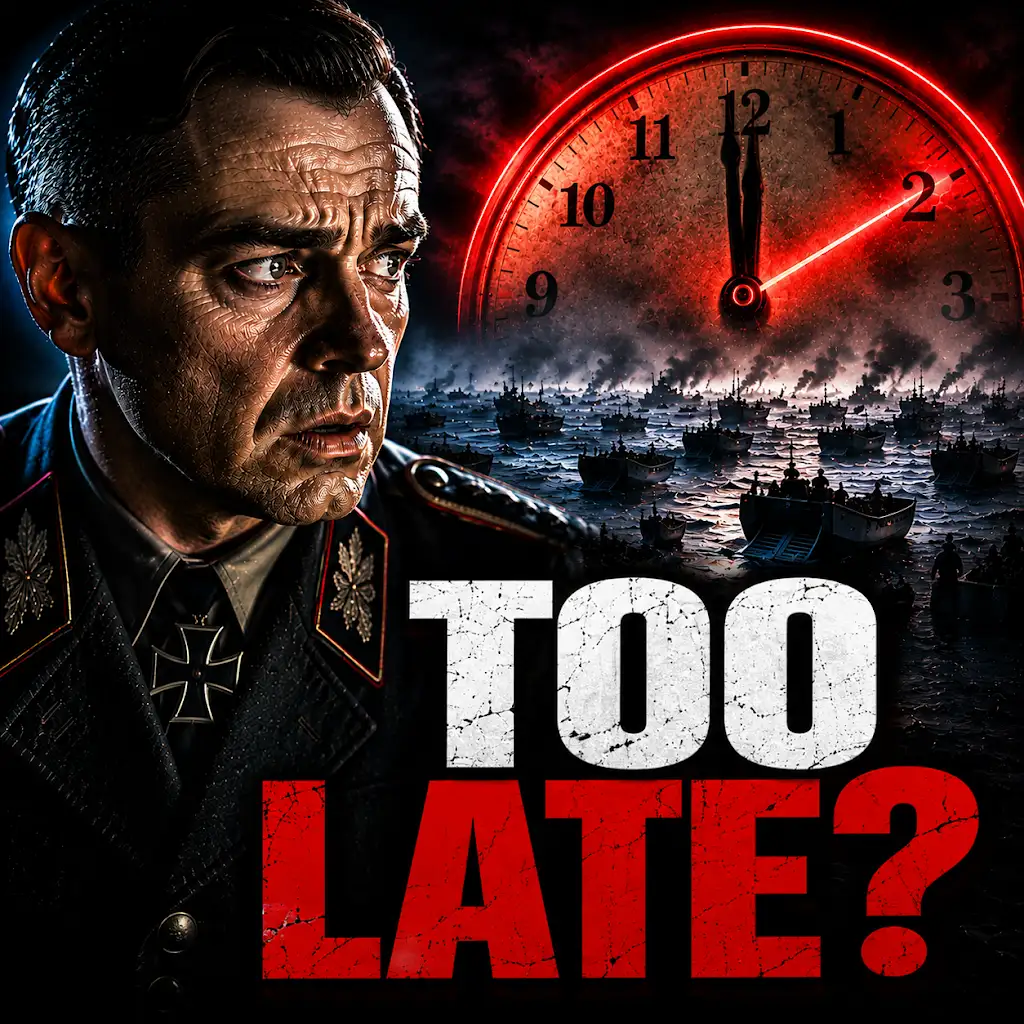
The intricate web of command that governed German forces in Normandy during World War II was a complex and, at times, deeply flawed system. From the highest echelons of the OKW (Oberkommando der Wehrmacht) down to the individual platoon leader, the chain of command dictated strategy, resource allocation, and ultimately, the fate of the soldiers on the ground. Understanding this hierarchy is crucial to comprehending the German military response to the Allied invasion and the reasons for their eventual defeat in the Normandy campaign.
At the apex of the German military structure sat the Oberkommando der Wehrmacht (OKW), the High Command of the Armed Forces. While the Führer, Adolf Hitler, held ultimate authority as the Supreme Commander-in-Chief, the OKW served as the primary staff body responsible for coordinating the operations of all branches of the Wehrmacht: the Army (Heer), the Navy (Kriegsmarine), and the Air Force (Luftwaffe).
Hitler’s Direct Involvement and Strategic Blunders
Hitler’s direct involvement in military decision-making was a defining characteristic of the OKW’s operation. While initially successful in his early campaigns, his increasing micromanagement and stubborn adherence to his own strategic visions, often detached from the realities on the ground, proved detrimental. In Normandy, this manifested in several critical instances.
The “Fortress Europe” Mentality and Static Defense
Hitler’s unwavering belief in the impregnability of “Festung Europa” (Fortress Europe) heavily influenced defensive strategy. He envisioned a static defense, where powerful coastal fortifications and a substantial reserve force would repel any invasion attempt. This rigid mindset, however, failed to account for the dynamic nature of modern warfare and the ingenuity of Allied amphibious operations.
Denying Rommel Flexibility
Field Marshal Erwin Rommel, appointed as the Inspector of the Westwall and later commander of Army Group B responsible for the Normandy defenses, was a proponent of a more aggressive, mobile defense. He understood the imperative of engaging the enemy as soon as they landed and preventing them from establishing a secure beachhead. However, Hitler consistently denied Rommel the authority and resources to implement his preferred strategy. The crucial decision of where to hold the panzer reserves, for instance, was a constant point of contention, with Hitler insisting on keeping them far from the coast, ostensibly to guard against potential feints.
The OKW as an Administrative and Operational Hub
Beyond Hitler’s direct command, the OKW functioned as a vast administrative and operational hub. It was responsible for:
Strategic Planning and Intelligence Gathering
The OKW, in conjunction with the OKH (Oberkommando des Heeres – High Command of the Army), was tasked with developing overarching strategic plans for the defense of Europe. This involved analyzing Allied intentions, assessing enemy strengths, and allocating resources accordingly. However, intelligence regarding the precise timing and location of the Normandy landings was often incomplete or misinterpreted, contributing to the initial German surprise.
Resource Allocation and Logistics
A significant function of the OKW was the allocation of scarce resources – troops, equipment, and supplies – to various theaters of war. In the lead-up to D-Day, the demands of the Eastern Front, along with other commitments, meant that Normandy often received a lower priority, a fact that would have profound consequences during the battle.
Inter-Service Cooperation (or Lack Thereof)
The OKW was theoretically responsible for fostering cooperation between the Army, Navy, and Air Force. In reality, inter-service rivalry and a lack of genuine integration often hampered coordinated efforts. This was particularly evident in the limited naval and air support available to ground troops in Normandy, who often found themselves facing overwhelming Allied air and sea power with little assistance.
The Army High Command (OKH) and Army Group B
Beneath the OKW, the Oberkommando des Heeres (OKH) was the supreme command for the German Army. Its purview extended to the organization, training, and operational direction of all Army formations. For the defense of Normandy, the primary Army command responsible was Army Group B.
The Structure of Army Group B
Army Group B, under the ultimate command of Field Marshal Gerd von Rundstedt, was responsible for the defense of the northwestern coastal areas of France, including Normandy. However, the actual day-to-day operational command on the ground in Normandy itself fell to Field Marshal Erwin Rommel, who commanded the LXXXIV Corps, directly responsible for the invasion beaches.
Field Marshal Gerd von Rundstedt: The Supreme Commander of the West
Gerd von Rundstedt, as the Commander-in-Chief West, held the highest Army command for the entire Western Front. His role was more strategic and supervisory, overseeing the deployment of Army Groups A and B. Rundstedt was a respected but aging general, often at odds with Hitler’s more impulsive decisions. He was aware of the precariousness of the situation but lacked the direct authority to fundamentally alter Hitler’s defensive doctrine.
Field Marshal Erwin Rommel: The Operational Commander of the Invasion Front
Erwin Rommel was a charismatic and highly respected tank commander, famed for his exploits in North Africa. His appointment to command Army Group B and oversee the Normandy defenses reflected a hope that his aggressive style could effectively counter the anticipated Allied invasion. Rommel was a staunch advocate for a mobile defense, believing that the invaders must be met and destroyed on the beaches.
Rommel’s Vision vs. Reality
Rommel’s primary objective was to prevent the Allies from establishing a foothold. He understood that once a beachhead was secured, the overwhelming Allied superiority in air power and naval gunfire would make it nearly impossible to dislodge them. He therefore advocated for the placement of significant armored reserves close to the coast, ready to launch immediate counterattacks. This vision, however, was repeatedly undermined by the decisions originating from Hitler and the OKW.
The “Desert Fox” in Normandy
Rommel’s personal involvement on the ground was extensive. He spent considerable time inspecting defenses, meeting with subordinate commanders, and attempting to instill a sense of urgency and preparedness. His presence provided a much-needed boost to morale, but his authority was ultimately constrained by the overarching strategic directives from higher command.
Subordinate Corps and Divisions
Under Army Group B and its operational arm led by Rommel, a hierarchy of corps and divisions were responsible for defending specific sectors of the Normandy coast.
LXXXIV Corps: The Direct Defenders of the Invasion Area
The LXXXIV Corps, under the command of Lieutenant General Erich Marcks, was directly responsible for the defense of the most vulnerable sector of the Normandy coast, encompassing the future landing zones. This corps comprised several divisions, each tasked with defending specific stretches of the coastline.
Divisions Under LXXXIV Corps
- 716th Infantry Division: Stationed in the eastern sector of the landing areas (Juno and Sword Beaches), this was a static division, lacking significant mobile assets and primarily composed of older soldiers and Osttruppen (Eastern Front soldiers).
- 352nd Infantry Division: Positioned further west (Omaha and part of Gold Beach), this division was better equipped and had some mobile reserves, but its deployment was also suboptimal, with a significant portion of its strength located inland.
- 711th Infantry Division: Occupied the extreme eastern end of the front, providing a less critical but still important defensive screen.
Other Corps and Their Responsibilities
Beyond LXXXIV Corps, other formations were positioned to reinforce the coastal defenses or act as mobile reserves. However, their deployment and readiness were often compromised by the broader strategic situation.
Panzer Divisions: The Strategic Reserve Dilemma
The most crucial element of the German defense was the presence of armored divisions, the Panzer divisions. These were intended to be the mobile striking force capable of launching decisive counterattacks against any Allied beachhead. However, the decision of where and when to commit these powerful formations was a constant source of friction.
- 12th SS Panzer Division “Hitlerjugend”: A young but highly motivated and well-equipped division, it was stationed further inland, initially as part of the overall reserve. Its commitment to the battle was delayed by several critical factors.
- 21st Panzer Division: Positioned closer to Caen, this division possessed some tanks and armored vehicles and would play a significant role in the early days of the battle.
- 1st SS Panzer Division “Leibstandarte SS Adolf Hitler” and 9th SS Panzer Division “Hohenstaufen”: These elite panzer divisions were initially held in reserve further afield, their deployment being subject to Hitler’s personal approval. The delay in their commitment proved to be a fatal flaw in the German response.
The Role of the Luftwaffe and Kriegsmarine
While the German Army bore the brunt of the fighting on the ground, the Luftwaffe and Kriegsmarine were also integral to the defensive effort, though their contributions were significantly hampered.
The Luftwaffe: Air Superiority and Limited Impact
The Luftwaffe, under Hermann Göring, was intended to provide air superiority and support for ground operations. However, by 1944, the Luftwaffe had been significantly weakened by years of attritional warfare, particularly on the Eastern Front, and by the relentless Allied bombing campaigns.
Depleted Resources and Strategic Commitments
The vast majority of the Luftwaffe’s combat strength was engaged on other fronts, primarily against the Soviet Union. Consequently, the air assets available to defend Normandy were severely limited.
The Tyranny of Allied Air Power
On D-Day and in the subsequent weeks, the Allies enjoyed almost total air supremacy over the battlefield. This meant that German ground forces were subjected to constant aerial bombardment and strafing, severely hindering their movement, resupply, and ability to launch counterattacks.
Limited Reconnaissance and Interdiction
The Luftwaffe’s ability to conduct effective reconnaissance of Allied movements was severely curtailed. This contributed to the element of surprise on D-Day. Furthermore, their attempts to interdict Allied supply lines and troop concentrations were met with fierce resistance and were largely unsuccessful.
The Kriegsmarine: Naval Weakness and Coastal Defense
The German Navy, the Kriegsmarine, was also severely outmatched by the Allied navies. It had been significantly depleted by the war and was largely focused on operations in the Baltic and the Atlantic U-boat war.
Limited Naval Assets in the Channel
The Kriegsmarine possessed very few modern warships capable of challenging the overwhelming Allied naval presence in the English Channel. The threat from Allied submarines also limited the operational freedom of any German naval units that were deployed.
Coastal Defenses and Minefields
The primary contribution of the Kriegsmarine to the defense of Normandy lay in its role in maintaining coastal defenses, including minefields and coastal artillery. However, these were insufficient to prevent the Allied landings.
Coastal Artillery and Obstacles
German coastal artillery batteries, while formidable in some locations, were often scattered and vulnerable to Allied naval bombardment. The extensive minefields laid along the coast and in the waters offshore provided some deterrent but were ultimately overcome by Allied sappers and naval clearance operations.
The Chain of Command in Action: D-Day and Beyond
The effectiveness of the German chain of command was severely tested on D-Day and in the ensuing weeks. The inherent weaknesses of the system, coupled with Allied deception and strategic brilliance, led to a faltering German response.
The Initial Confusion and Lack of Information
On the morning of June 6, 1944, a significant degree of confusion reigned within the German command structure. The imprecise intelligence regarding Allied intentions, coupled with the Allied deception operations (Operation Fortitude), meant that the exact location and scale of the invasion were not immediately clear.
Rommel’s Absence and Misinformation
Rommel himself was absent from the front on D-Day, having returned to Germany for a brief period. This absence, while coincidental, deprived the immediate defense of a crucial leader during the critical initial hours. Furthermore, misinformation about the location of the invasion, with some reports suggesting a landing in the Pas-de-Calais, led to delays in committing reserves.
The Role of Weather
The poor weather conditions over the English Channel on the night of June 5-6 played a double-edged role. It initially helped conceal the Allied invasion fleet but also contributed to the uncertainty within German intelligence, making it difficult to assess the situation.
The Delayed Commitment of Reserves
One of the most critical failures of the German command structure was the delay in committing its formidable panzer reserves to the battle. The requirement for Hitler’s personal authorization to move these units from their positions behind the coastal defenses proved to be a fatal bottleneck.
Hitler’s Hesitation and “Strategic Patience”
Hitler’s adherence to his defensive doctrine and his reluctance to release the panzer divisions meant that valuable hours were lost. While Rommel argued for immediate counterattacks, his pleas were often met with indecision or outright refusal. This “strategic patience” in the face of an immediate threat allowed the Allies to consolidate their bridgeheads.
The “Liberation” of Panzer Divisions
The eventual release of the 12th SS Panzer Division and the 1st SS Panzer Division was a protracted process, involving complex bureaucratic procedures and Hitler’s personal intervention. By the time these elite units were able to engage, the Allies had already established a significant foothold and benefited from overwhelming air and naval support.
Decentralized Command and Local Initiative
While the higher echelons of command struggled with decision-making and resource allocation, the effectiveness of the German defense on the ground often relied on the initiative of lower-ranking officers and NCOs.
Individual Heroism and Desperate Resistance
Many German units fought with considerable bravery and determination, conducting desperate delaying actions and counterattacks against overwhelming odds. These actions, often taken with limited communication and support from higher command, showcased the resilience of the German soldier.
The “Battle for Caen” as a Case Study
The protracted and brutal fighting around Caen exemplifies the complex interplay of command and the realities of the battlefield. While Rommel recognized the strategic importance of holding Caen, the German defensive efforts were characterized by fierce but often uncoordinated resistance, hampered by shortages of ammunition and the relentless pressure of Allied air and artillery power.
Consequences and Analysis: Lessons from the Normandy Chain of Command
The German chain of command in Normandy ultimately proved to be a significant factor in their defeat. The rigid adherence to flawed strategic doctrines, the micromanagement from the highest levels, and the delays in deploying critical reserves created vulnerabilities that the Allies expertly exploited.
The Flaws of Centralized Control
The Normandy campaign starkly highlighted the dangers of over-centralized control in military operations. Hitler’s personal involvement, while intended to ensure decisive leadership, often resulted in strategic blunders and a stifling of initiative at lower levels.
The “Führer Principle” and its Limitations
The “Führer Principle,” emphasizing absolute obedience to Hitler’s commands, while creating a disciplined fighting force, also discouraged independent thinking and adaptability. In a fast-moving and complex battle like Normandy, this rigid structure proved to be a severe handicap.
The Impact of Allied Deception and Intelligence
The success of Allied deception operations, particularly Operation Fortitude, played a crucial role in shaping the German defensive deployment. The belief that the main invasion would occur at the Pas-de-Calais led to the positioning of vital reserves far from the actual landing zones in Normandy.
The Role of ULTRA and Enigma
While German command struggled with its own intelligence failures, Allied intelligence, particularly the decryption of Enigma codes (ULTRA), provided invaluable insights into German dispositions and intentions. This allowed the Allies to plan their operations with a greater degree of certainty and to anticipate German responses.
The Legacy of Normandy
The German command structure in Normandy serves as a case study in the perils of inflexible leadership and the devastating consequences of strategic miscalculation. The campaign underscored the importance of adaptability, decentralized initiative, and effective inter-service cooperation – lessons that would continue to shape military thinking for decades to come. The valiant efforts of many German soldiers could not overcome the systemic weaknesses that ultimately contributed to their defeat on the beaches of Normandy.