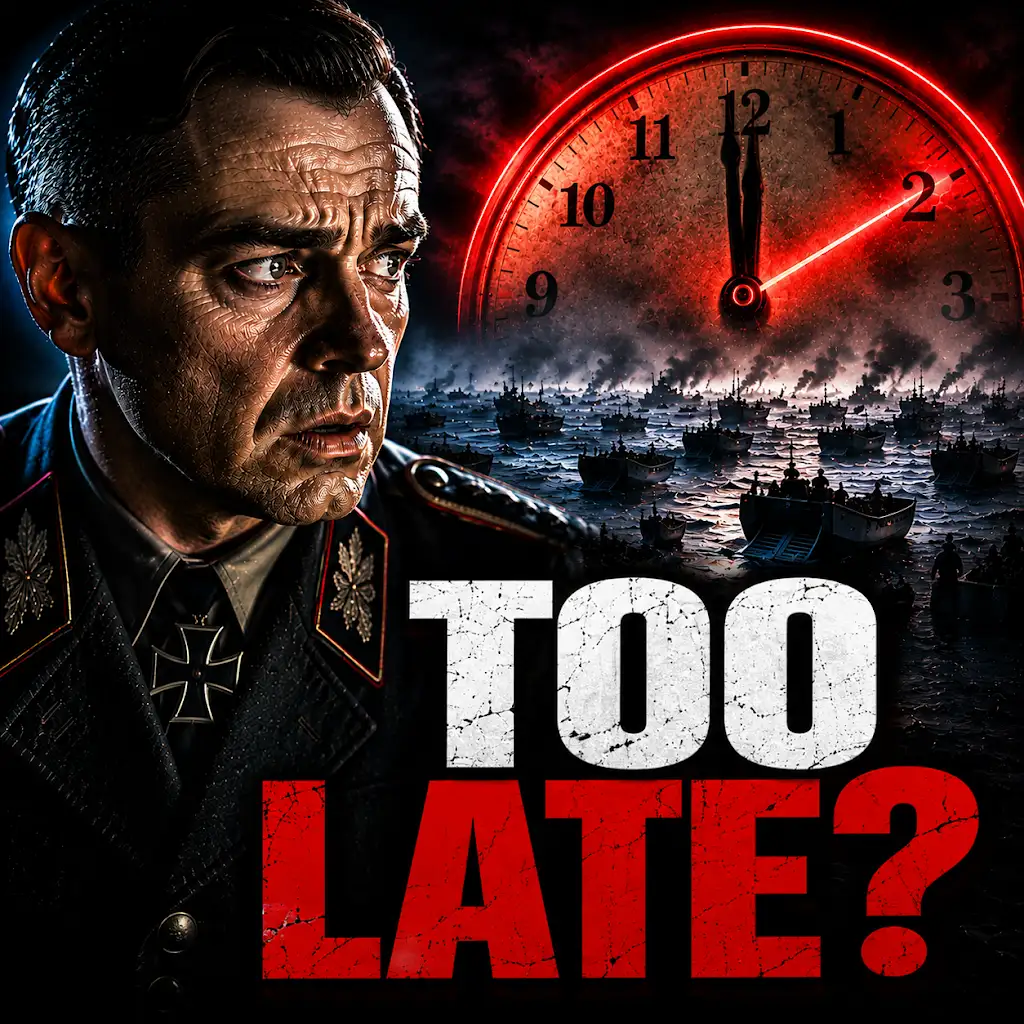
The summer of 1944 saw the Allied forces firmly entrenched on the continent of Europe, having successfully executed the D-Day landings and begun their arduous push inland. While the initial momentum of Operation Overlord was undeniable, the German military, despite its increasingly desperate situation, was far from defeated. In Normandy, specifically, a series of determined armored counterattacks would emerge, each designed to disrupt Allied progress, inflict maximum casualties, and perhaps, just perhaps, snatch victory from the jaws of defeat. These actions, though ultimately unsuccessful in their strategic aims, represent some of the most brutal and poignant armored engagements of the Normandy campaign, showcasing the resilience and tactical prowess of the German Wehrmacht even in its twilight.
The German High Command found itself in a precarious position following the D-Day landings. The strategic surprise of the invasion had been lost, and the Allies had established a formidable bridgehead. For German leadership, inaction was not an option. The forces in Normandy were cut off from easy reinforcement, and a sustained Allied advance threatened to sever their supply lines entirely. This necessitated a decisive response, a gamble to stem the tide and regain the initiative.
The Myth of the “Blitzkrieg” in Normandy
While the term “Blitzkrieg” is often associated with the early, sweeping victories of the German army, the Normandy campaign presented a different reality. The concentrated armored formations available for counterattack were a shadow of their former selves, depleted by years of attritional warfare on the Eastern Front and hampered by Allied air superiority. Yet, the underlying principles of combined arms warfare, heavily reliant on armored thrusts supported by infantry and artillery, remained central to German doctrine.
Disrupting Allied Operations
The primary objective of any German counterattack in Normandy was to disrupt the carefully orchestrated Allied advance. This involved targeting key areas of Allied buildup, severing communication lines, and forcing the Allies to commit their strategic reserves prematurely. The hope was to create chaos and exploit any momentary weakness in the Allied formation.
Inflicting Casualties and Destroying Enemy Armor
A secondary, but equally important, objective was to inflict heavy casualties on the invading forces. German armor, particularly the formidable Panther and Tiger tanks, was designed for shock and awe. Their powerful guns and thick armor could, under favorable conditions, inflict disproportionate losses on Allied armor, even if the Allies held numerical superiority. Destroying Allied tanks was not just about battlefield attrition; it was about breaking their offensive spirit and morale.
The Hope for a Strategic Reversal
Though perhaps bordering on fantasy by the summer of 1944, there was a lingering hope within some German circles that a series of successful counterattacks could potentially lead to a strategic reversal. By inflicting significant losses and demonstrating continued German resolve, they hoped to weaken Allied resolve, potentially leading to a negotiated peace or at least a stalemate that would allow for a more favorable regrouping of forces.
Early Thrusts and Tactical Clashes
The initial days and weeks following D-Day were characterized by a series of localized but fierce German responses. These were often hastily organized, reacting to immediate threats rather than executing grand strategic designs. However, they provided crucial lessons for both sides and hinted at the intense armored battles to come.
The Fight for Caen: A Grinding Stalemate
The battle for Caen, a strategically vital city, became emblematic of the attritional warfare that characterized the Normandy campaign. German armored units were deployed to defend the city and its approaches, engaging in bitter close-quarters combat with Allied forces, primarily British and Canadian.
The Role of Panzer Lehr Division
The Panzer Lehr Division, a highly experienced and well-equipped formation, played a significant role in the early defense of Caen. Its tanks, including Panthers and Panzer IVs, were deployed effectively, utilizing the bocage terrain to their advantage, creating deadly ambush sites. Despite their tactical successes in inflicting casualties, they were unable to halt the relentless Allied advance.
The Impact of Air Superiority
One of the most significant challenges faced by German armor in these early engagements was the overwhelming Allied air superiority. German tanks and transport columns were constantly harried and attacked from the air, significantly limiting their mobility and effectiveness. This made the concentrated deployment of armor for a counterattack an extremely risky endeavor.
The Fierce Defense of the Bocage Country
The hedgerow country of Normandy, with its dense vegetation and narrow lanes, proved to be a brutal environment for armored warfare. German panzer crews, masters of concealment and ambush, expertly used this terrain to their advantage. Allied armor, often struggling with visibility and maneuverability, frequently fell victim to well-sited German defenses.
Ambush Tactics and the “Schwerpunkt”
German commanders understood the importance of identifying and exploiting Allied weak points, the “Schwerpunkt.” They would concentrate their limited armored assets at these points, employing ambush tactics with their heavy tanks to inflict maximum damage before withdrawing. This defensive-offensive approach was a testament to their tactical adaptability.
The Challenges of Allied Breakthroughs
The Allies’ attempts to break through German lines were often met with determined resistance. Even when a breakthrough was achieved, German armored reserves, though often small, could be rapidly deployed to plug the gap, leading to sharp and often bloody engagements as Allied spearheads found themselves fighting isolated battles against determined counterattacks.
Operation Cobra and the Shift in Momentum
As the Allied campaign progressed, the sheer weight of numbers, combined with devastating aerial bombardment, began to wear down German defenses. Operation Cobra, the American offensive launched in late July, represented a pivotal moment, breaking through the German lines and creating a strategic crisis for the Wehrmacht.
The American Breakthrough at Saint-Lô
Operation Cobra was designed to shatter the German defenses in the western sector of the Allied bridgehead. After a massive aerial bombardment, American forces launched a ground assault that, despite initial setbacks and heavy fighting, ultimately achieved a significant breakthrough near Saint-Lô.
The Effectiveness of Allied Artillery and Air Power
The overwhelming application of Allied artillery and air power in the initial stages of Operation Cobra was instrumental in softening up German defenses. This bombardment, while devastating for German troops and equipment, also created a tactical vacuum that allowed American armor to exploit the gaps.
The American Armor Advance
Following the breakthrough, American armored divisions, including the highly mobile Sherman tanks, surged through the gap. Their objective was to bypass and envelop German strongpoints, preventing them from consolidating their defenses and launching effective counterattacks.
German Attempts to Contain the Breakout
The success of Operation Cobra presented a dire threat to the entire German position in Normandy. Large formations of German troops and armor were now in danger of being encircled. In response, German commanders scrambled to assemble whatever forces they could to contain the American advance and prevent a complete collapse.
The Deployment of Waffen-SS Panzer Divisions
Several crack Waffen-SS Panzer divisions, including the 12th SS Panzer Division “Hitlerjugend” and the 1st SS Panzer Division “Leibstandarte SS Adolf Hitler,” were rushed to the front to counter the American breakthrough. These units, despite heavy losses sustained earlier in the campaign, were still formidable fighting formations.
Desperate Defensive Stands
These SS divisions, often fighting in a more defensive posture to blunt the American advance, engaged in some of the most brutal armored clashes of the Normandy campaign. They fought tenaciously, inflicting significant casualties on the advancing Americans, but their efforts were ultimately insufficient to reverse the strategic situation.
Operation Lüttich: The Last Grand Offensive
In a desperate gamble to regain the initiative and potentially encircle Allied forces, the German High Command launched Operation Lüttich (Operation Liège) in early August. This was their last major armored offensive in Normandy, a final attempt to alter the course of the campaign.
The Objectives of Operation Lüttich
The plan for Operation Lüttich was ambitious. It aimed to punch through the relatively weaker American lines in the east of the Normandy salient, reach the coast, and cut off a significant portion of Allied forces, particularly American and British troops, from their beachhead.
The Concentration of Panzer Forces
German panzer divisions, including the 2nd SS Panzer Corps and elements of the 1st SS Panzer Corps, were concentrated for the offensive. Their aim was to exploit the terrain and surprise the Americans, using their heavy tanks to spearhead the assault.
The Importance of Terrain and Weather
The terrain in the east of the Normandy salient, while still featuring hedgerows, offered more open ground than the western sector, potentially favoring armored operations. However, the weather, notorious in Normandy, played a significant role, with Allied air power often being grounded, allowing German armor a brief window of opportunity.
The Initial German Successes and Subsequent Failure
Operation Lüttich began with a degree of success. German armor, under the cover of fog and artillery, achieved some initial breakthroughs, catching the American defenders by surprise. However, the operation quickly faltered.
The Role of Allied Intelligence and Reconnaissance
Allied intelligence had, to a degree, anticipated a German counteroffensive. While the exact timing and location might have been uncertain, the presence of significant German armored formations being moved towards the front was noted. This allowed Allied commanders to prepare defenses and reposition reserves.
The Fierce American Resistance
Despite being initially surprised, American forces mounted a determined defense. They utilized their anti-tank guns, artillery, and the increasing support of Allied air power, once the weather cleared, to halt the German advance. The terrain also proved to be a formidable obstacle, funneling German armor into kill zones.
The Devastating Impact of Allied Air Power
As the weather improved, Allied air power returned with a vengeance. German armored formations, concentrated for the offensive and now exposed, became prime targets for Allied fighter-bombers. The destruction inflicted on German tanks and vehicles was immense, effectively breaking the back of the offensive.
The Aftermath and Legacy
Operation Lüttich marked the definitive end of significant German armored counteroffensives in Normandy. While pockets of fierce resistance and localized counterattacks would continue, the strategic initiative had irrevocably passed to the Allies. The failure of these armored gambles had profound consequences for the German war effort.
The Encirclement of German Forces and the Falaise Pocket
The failure of Operation Lüttich, coupled with the continued Allied advance, led to the rapid tightening of the Allied noose around German forces in Normandy. The Falaise Pocket, a massive encirclement, trapped hundreds of thousands of German soldiers, including many of their remaining armored units.
The Brutal Fighting within the Pocket
The fighting within the Falaise Pocket was exceptionally brutal. German units, cut off and starving, fought with desperation to escape the encirclement. Allied forces, eager to annihilate the trapped enemy, relentlessly pounded the pocket from all sides. Many German tanks and their crews were lost in this catastrophic engagement.
The Sacrifice of German Armor in Delaying Actions
In a desperate attempt to allow their infantry and other units to escape the Falaise Pocket, remaining German armored units were often employed in suicidal delaying actions. These brave but ultimately futile stands saw their valuable tanks sacrificed to buy precious time for their comrades.
The End of German Armored Dominance in the West
The heavy losses sustained by German armor in Normandy, particularly during the counterattacks and the Falaise Pocket, effectively shattered their armored capabilities in the Western Front for the remainder of the war. While they would continue to produce and deploy tanks, they would never again possess the concentrated, offensive power that had characterized their earlier campaigns.
A Testament to German Resilience and Tactical Skill
Despite their ultimate defeat, the German armored counterattacks in Normandy stand as a testament to the resilience and tactical skill of the Wehrmacht, even in its declining years. Their ability to mount such determined offensives, utilize their weaponry effectively, and adapt to challenging battlefield conditions under overwhelming Allied superiority is a subject of continued study and remembrance. These battles, though ultimately unsuccessful in achieving their strategic objectives, were a crucial and often overlooked chapter in the story of the Second World War, highlighting the brutal and costly nature of armored warfare.