The global stage is set for a defining geopolitical struggle, a protracted rivalry between two titans: the United States and the People’s Republic of China. This competition, multifaceted and deeply ingrained, touches upon nearly every aspect of international relations, from economic dominance and technological innovation to ideological influence and military projection. It is not a sudden eruption but the culmination of decades of shifting power dynamics, differing political systems, and competing visions for the international order. This showdown, often characterized as a new Cold War, is reshaping alliances, triggering arms races, and demanding a recalibration of global strategy from nations worldwide.
The economic sphere serves as the primary arena for US-China competition, a contest for market share, technological leadership, and the very architecture of global trade. For decades, China has risen from a developing nation to an economic powerhouse, fueled by an export-driven model and massive investment. This growth has been perceived by the United States as both a legitimate economic achievement and a strategic challenge.
Trade Imbalances and Tariffs
The trade relationship between the two nations has long been a sore point. The United States has consistently run a significant trade deficit with China, importing far more goods than it exports. This imbalance has been attributed to various factors, including currency manipulation allegations, intellectual property theft, and state subsidies for Chinese industries. In response, the US has implemented a series of tariffs on Chinese goods, aiming to level the playing field and pressure China to change its trade practices. China, in turn, has retaliated with its own tariffs on American products, leading to a tit-for-tat escalation that has disrupted global supply chains and created economic uncertainty.
Intellectual Property and Technological Espionage
A critical flashpoint in the economic competition is the issue of intellectual property (IP) rights. The US has repeatedly accused China of systemic IP theft, both through cyber espionage and by forcing foreign companies to transfer technology as a condition of market access. This alleged appropriation of innovations hinders American competitiveness and undermines the incentives for research and development. The race for technological supremacy, particularly in areas like artificial intelligence, 5G telecommunications, and advanced semiconductors, is central to this IP battle. The US views Chinese technological advancements as not only an economic threat but also a potential national security risk, particularly if driven by state-sponsored entities with close ties to the military.
The Belt and Road Initiative (BRI) vs. US-led Alternatives
China’s ambitious Belt and Road Initiative (BRI) represents a massive, state-backed global infrastructure development strategy. Through a series of investments in ports, railways, roads, and energy projects across Asia, Africa, and Europe, China aims to enhance its economic connectivity and geopolitical influence. The BRI is seen by the US and its allies as a tool for expanding China’s economic reach, potentially creating debt traps for participating nations, and increasing China’s leverage over critical infrastructure. In response, the US and its allies have been promoting alternative development initiatives, though often with less scale and scope, aiming to offer a more transparent and sustainable model for global infrastructure investment.
In the context of the ongoing US-China geopolitical competition, a relevant article that delves into the complexities of this rivalry can be found at In the War Room. This piece explores the strategic maneuvers both nations are employing in various domains, including trade, technology, and military presence, highlighting the implications for global stability and international relations. The insights provided in the article offer a comprehensive understanding of how these two superpowers are shaping the future of geopolitics.
The Technological Arms Race: A Race for the Future
The competition extends beyond mere economic dominance into a fierce race for technological supremacy, a struggle that will determine future economic power, military capabilities, and societal evolution. The United States and China are locked in a battle for leadership in fields that will define the 21st century.
Dominance in Artificial Intelligence (AI)
Artificial intelligence is widely recognized as the next frontier of technological innovation, with the potential to revolutionize industries, transform warfare, and reshape societies. Both the US and China are investing heavily in AI research and development, seeking to gain a decisive advantage. China, with its vast data reserves and often less stringent privacy regulations, has made significant strides in areas like facial recognition and surveillance technology. The US, while also a leader in fundamental AI research, faces challenges in data availability and ethical considerations. The race for AI dominance has profound implications for economic competitiveness, national security, and the nature of governance.
The Struggle for 5G Supremacy
The rollout of 5th generation (5G) mobile network technology has become a critical battleground. 5G promises faster speeds, lower latency, and the ability to connect a vast array of devices, forming the backbone of future digital infrastructure. China’s Huawei has emerged as a global leader in 5G technology, posing a significant challenge to Western companies. The US has expressed grave concerns about the security implications of relying on Chinese 5G equipment, fearing it could be used for espionage or disruption. This has led to intense diplomatic pressure on allies to bar Huawei from their 5G networks, creating divisions within alliances and highlighting the interconnectedness of technology and national security.
The Semiconductor Chokepoint
The semiconductor industry, the bedrock of all modern technology, has become a crucial chokepoint in US-China competition. The United States has long been a leader in chip design, while Taiwan and South Korea dominate advanced chip manufacturing. China has made it a national priority to achieve semiconductor self-sufficiency, recognizing its strategic vulnerability. The US has responded by imposing export controls and restrictions on China’s access to advanced semiconductor technology and manufacturing equipment, aiming to slow China’s progress and maintain its own technological edge. This has sparked concerns about China’s ability to develop its own advanced chips and potentially retaliate with its own export restrictions.
The Ideological Divide: Democracy vs. Autocracy

Beyond economics and technology, the US-China competition is underpinned by a fundamental ideological divide. The United States champions liberal democracy, individual freedoms, and a rules-based international order, while China operates under an authoritarian, single-party system that prioritizes stability, economic development, and state control. This divergence in political philosophies colors their foreign policy approaches and fuels a battle for global influence.
Human Rights and Democratic Values
The United States consistently criticizes China’s human rights record, including its treatment of ethnic minorities in Xinjiang, the suppression of dissent in Hong Kong, and the broader lack of political freedoms. These criticisms are often framed as a defense of universal democratic values and human rights on the global stage. China, in turn, views these criticisms as interference in its internal affairs and a veiled attempt by the US to destabilize its government. The ideological struggle over human rights and democratic values is a constant source of friction and shapes international perceptions of both nations.
The Model of Governance: A Global Debate
Both nations present their respective models of governance as attractive alternatives for developing nations. China promotes its authoritarian developmental model as a path to rapid economic growth and stability, often contrasting it with the perceived inefficiencies and political polarization of Western democracies. The United States, conversely, advocates for democratic institutions and the rule of law as the ultimate guarantors of long-term prosperity and individual liberty. This competition for ideological allegiance plays out in international forums, development aid programs, and the narratives promoted by state-controlled media.
The Role of International Institutions
The US and China have differing views on the role and reform of international institutions. The United States has historically been a strong proponent of multilateralism and has played a leading role in shaping institutions like the United Nations and the World Trade Organization. China, while now a significant player in these institutions, has also sought to reshape them to better reflect its growing influence and interests. This can lead to friction over the norms, rules, and decision-making processes within these bodies, with China advocating for a more multipolar world order and the US seeking to preserve existing frameworks that often favor its interests.
The Military and Security Dimension: A Shifting Balance of Power
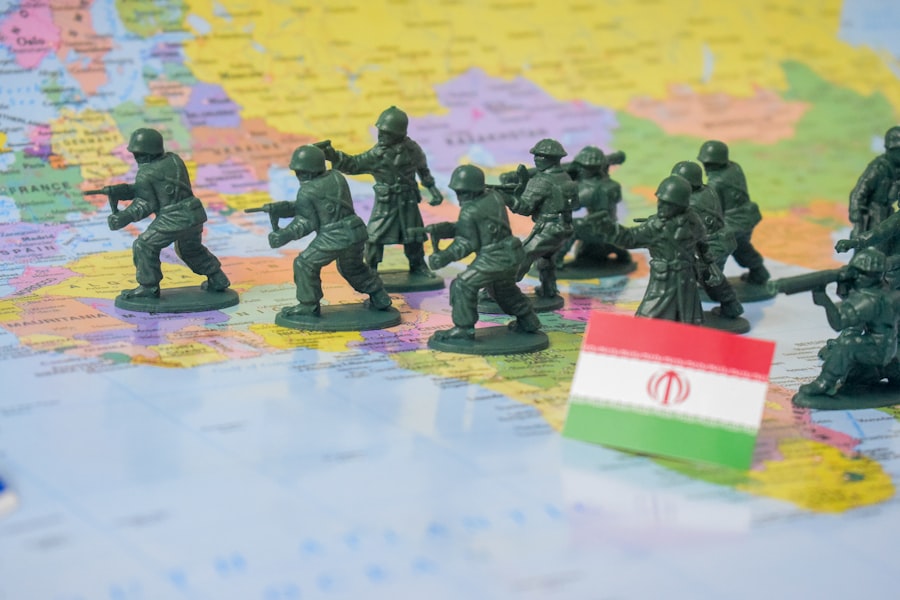
The military and security dimension of US-China competition is perhaps the most volatile and potentially dangerous aspect of their rivalry. As China’s military modernization accelerates, concerns about regional security and global power balance intensify.
The South China Sea: A Flashpoint of Tension
The South China Sea remains a major flashpoint. China claims vast swathes of this strategically vital waterway, building artificial islands and militarizing them, much to the consternation of neighboring countries and the United States. The US, asserting freedom of navigation, conducts regular naval patrols and supports regional allies who are challenging China’s claims. This recurring tension, marked by close encounters between naval and air forces, raises fears of accidental escalation and regional conflict.
Taiwan: The Ultimate Test
The political status of Taiwan is arguably the most sensitive and potentially explosive issue in US-China relations. China considers Taiwan a renegade province that must be reunified with the mainland, by force if necessary. The United States maintains a policy of strategic ambiguity but provides significant military assistance to Taiwan and insists that any resolution of the issue must be peaceful. The increasing military pressure from Beijing on Taipei, coupled with robust US support for Taiwan, creates a constant and high-stakes geopolitical dilemma.
The Space Race and Cyber Warfare
The competition has extended into new domains: space and cyberspace. Both nations are investing heavily in space capabilities, from satellites for communication and surveillance to anti-satellite weapons. The militarization of space carries significant risks and could lead to an arms race in orbit. Similarly, cyber warfare has become a new frontier, with both countries accused of conducting sophisticated cyberattacks against each other, targeting critical infrastructure, government networks, and private companies. The opaque nature of cyber warfare makes attribution difficult and escalates the potential for miscalculation and unintended consequences.
The ongoing geopolitical competition between the US and China has significant implications for global stability and economic dynamics. A recent article explores various aspects of this rivalry, shedding light on the strategic maneuvers both nations employ to assert their influence. For a deeper understanding of these complex interactions, you can read more in this insightful piece on the topic. If you’re interested in the nuances of this competition, check out the article here.
Navigating the Future: The Challenge of De-escalation and Coexistence
| Metrics | US | China |
|---|---|---|
| Military Spending | 732 billion | 261 billion |
| Number of Military Bases | 800 | 2 |
| Trade Volume | 560 billion | 660 billion |
| Number of Allies | 60 | 12 |
The US-China competition is not solely about conflict; it is also about managing a complex and potentially dangerous relationship. The challenge for both nations, and for the international community, is to find ways to de-escalate tensions, mitigate risks, and establish a framework for coexistence that avoids outright confrontation.
The Importance of Diplomacy and Communication
Despite the rivalries, robust diplomatic channels and open lines of communication are crucial. Misunderstandings or miscalculations in this high-stakes environment could have catastrophic consequences. Regular dialogues, even between adversaries, can help manage expectations, clarify intentions, and prevent crises from spiraling out of control. The challenge lies in finding common ground, even amidst deep disagreements.
The Search for Areas of Cooperation
While competition dominates the narrative, there are still areas where US-China cooperation remains in the global interest. Issues such as climate change, pandemic preparedness, and nuclear non-proliferation demand a collaborative approach. However, even the pursuit of cooperation is often overshadowed by the broader geopolitical rivalry, making progress difficult. Finding a balance between competition and cooperation is a monumental task.
The Global Impact and the Role of Third Parties
This geopolitical showdown has profound implications for the rest of the world. Nations are increasingly forced to choose sides or navigate a delicate balancing act between the two superpowers. The actions of the US and China shape global trade patterns, geopolitical alignments, and the very future of the international order. The international community has a vested interest in seeing this competition managed peacefully and responsibly, urging restraint and diplomacy from both sides to avoid a global descent into conflict. The future trajectory of this US-China competition will undoubtedly define the 21st century and shape the destiny of nations for generations to come.

China’s Invisible Chokehold on Modern Weapons
FAQs
What is the US-China geopolitical competition?
The US-China geopolitical competition refers to the ongoing rivalry and power struggle between the United States and China for influence and dominance in various regions around the world, as well as in international organizations and global economic systems.
What are the main areas of competition between the US and China?
The main areas of competition between the US and China include trade and economic dominance, technological innovation and development, military and security influence, diplomatic and political alliances, and ideological influence.
How does the US-China geopolitical competition impact global stability?
The US-China geopolitical competition has the potential to impact global stability by creating tensions and conflicts in various regions, disrupting international trade and economic systems, and influencing the behavior of other countries as they align themselves with either the US or China.
What are some recent developments in the US-China geopolitical competition?
Recent developments in the US-China geopolitical competition include trade disputes and tariffs, technological competition and restrictions, military posturing and territorial disputes in the South China Sea, and diplomatic efforts to gain influence in regions such as Africa and Latin America.
What are the potential implications of the US-China geopolitical competition for the future?
The potential implications of the US-China geopolitical competition for the future include shifts in global power dynamics, changes in international alliances and partnerships, advancements in technological innovation and development, and potential conflicts or confrontations in various regions around the world.