Underwater inspection is a crucial discipline for maintaining the integrity and safety of a vast array of submerged infrastructure and natural formations. From the colossal foundations of offshore energy platforms to the delicate ecosystems of coral reefs, understanding what lies beneath the surface is paramount. The challenges of performing these inspections are as profound as the depths themselves. Water acts as a formidable barrier, obscuring vision, distorting sound, and exerting immense pressure. These environmental factors necessitate the development and application of specialized methods, each with its own strengths and limitations.
The demand for effective underwater inspection has surged in recent decades, driven by the expansion of subsea industries such as oil and gas, renewable energy, and subsea telecommunications. Furthermore, increasing awareness of marine environmental protection and the need to monitor the health of aquatic ecosystems have added further impetus. Historically, divers formed the backbone of underwater inspection. However, the inherent risks associated with human involvement in deep or hazardous environments, coupled with increasing labor costs, have spurred continuous innovation. This evolution has seen a steady migration from purely human-centric approaches towards greater reliance on robotic and remote sensing technologies. The progression of these methods can be likened to humanity’s journey from exploring the unknown with only a flickering torch to employing sophisticated satellites capable of mapping the entire globe.
Historical Context: The Age of the Diver
For centuries, the primary method of examining anything submerged was by sending a human diver. Early divers relied on rudimentary equipment, primarily breath-hold diving or simple air hoses. Over time, advancements in diving technology, such as the aqualung and improved decompression techniques, allowed for extended submersion depths and durations.
Shallow Water Inspections: Scuba Diving
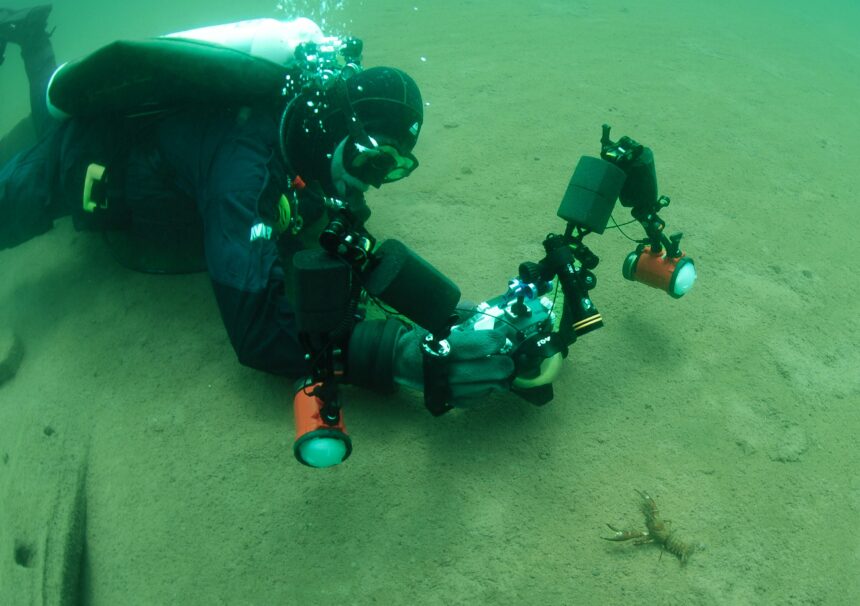
Scuba diving remains a prevalent method for inspections in relatively shallow waters, typically up to 50 meters (approximately 165 feet). It offers direct human observation and manipulation, allowing for detailed visual assessments and minor repairs.
Advantages of Scuba Diving
- Direct Observation: Divers can provide highly detailed visual feedback, identifying subtle cracks, corrosion, or biological growth that might be missed by automated systems.
- Dexterity and Problem-Solving: Trained divers can adapt to unforeseen circumstances, perform intricate tasks, and make on-the-spot judgments.
- Cost-Effectiveness for Shallow Depths: For simpler, shallow inspections, scuba diving can be more economical than deploying complex robotic systems.
Limitations of Scuba Diving
- Depth Limitations: The physiological limits of human divers, coupled with decompression sickness risks, restrict the operational depth.
- Safety Concerns: Diving is inherently risky, with potential hazards including equipment failure, entanglement, hypothermia, and marine life encounters.
- Time Constraints: The duration of dives is limited by air supply and decompression requirements.
- Subjectivity: Visual assessments made by divers can be subject to individual interpretation.
Deep Dive Operations: Surface-Supplied Diving and Saturation Diving
For deeper or longer-duration underwater tasks, surface-supplied diving, where air is pumped from the surface, and saturation diving, where divers live in pressurized habitats, are employed. These methods extend operational capabilities but come with significantly increased complexity and cost.
Underwater inspection methods are crucial for maintaining the integrity of underwater structures, and a related article that delves deeper into this topic can be found at this link. This article explores various techniques used in underwater inspections, including remotely operated vehicles (ROVs) and divers, highlighting their advantages and limitations. Understanding these methods is essential for industries such as oil and gas, marine construction, and environmental monitoring, where regular inspections are necessary to ensure safety and compliance.
The Rise of Remote and Robotic Inspection
The inherent risks and limitations of human divers have propelled the development of technologies that can perform inspections without direct human presence in the water. This has led to a significant shift towards Remotely Operated Vehicles (ROVs) and Autonomous Underwater Vehicles (AUVs).
Remotely Operated Vehicles (ROVs)
ROVs are tethered vehicles controlled by operators on the surface. The umbilical cable provides power and communication, allowing for real-time control and data transmission.
Applications of ROVs
ROVs are the workhorses of many subsea inspection tasks. They are employed in a wide range of industries:
- Offshore Oil and Gas: Inspecting pipelines, wellheads, platforms, and subsea structures for damage, corrosion, and leaks.
- Renewable Energy: Surveying offshore wind turbine foundations, subsea cables, and tidal energy devices.
- Subsea Infrastructure: Examining underwater bridges, dams, shipwrecks, and telecommunication cables.
- Scientific Research: Collecting data, deploying sensors, and observing marine life in challenging environments.
Key Components and Capabilities of ROVs
ROVs are equipped with a suite of sensors and tools to perform their tasks:
- High-Definition Cameras: Providing visual data for operators. Lighting systems are crucial for illuminating the often-dark underwater environment.
- Manipulator Arms: These robotic arms allow for physical interaction, such as collecting samples, opening valves, or retrieving objects.
- Sonar Systems: For navigating in low-visibility conditions and mapping the surrounding environment.
- Sensors: Including pressure, temperature, depth, salinity, and leak detection sensors.
- Data Logging and Transmission: Recording all sensor data and video feeds, often transmitted in real-time.
Advantages of ROVs
- Safety: Removes human divers from hazardous environments, significantly reducing risk.
- Endurance: Can operate for extended periods, limited only by power and the integrity of the umbilical.
- Depth Capability: Can operate at much greater depths than human divers.
- Payload Capacity: Can carry a variety of sensors and tools.
- Real-time Control and Observation: Operators can react to findings immediately and adjust inspection strategies.
Limitations of ROVs
- Tether Management: The umbilical can be a significant operational challenge, prone to entanglement and limiting maneuverability.
- Deployment and Recovery: Requires specialized vessels and equipment, which can be costly and time-consuming.
- Environmental Reliance: Performance can be affected by strong currents and poor visibility.
- Operator Dependency: Requires skilled operators for effective deployment and data interpretation.
Autonomous Underwater Vehicles (AUVs)
AUVs are untethered, pre-programmed vehicles that operate independently. They are designed to execute specific missions, such as detailed surveys or mapping, without constant human intervention.
Mission Types for AUVs
AUVs are primarily used for data acquisition and systematic surveys:
- Hydrographic Surveying: Mapping the seafloor topography with high accuracy.
- Pipeline and Cable Route Surveys: Identifying potential hazards and ensuring optimal placement.
- Environmental Monitoring: Collecting data on water quality, seabed composition, and marine habitats over large areas.
- Pre- and Post-Construction Surveys: Assessing the condition of an area before and after subsea construction activities.
Navigation and Data Collection in AUVs
AUVs utilize advanced navigation systems to chart their course:
- Inertial Navigation Systems (INS): Provide dead reckoning capabilities.
- Doppler Velocity Logs (DVLs): Measure speed over ground.
- Acoustic Positioning Systems: Such as LBL (Long Baseline) and USBL (Ultra-Short Baseline), for precise positioning relative to surface or seabed transponders.
- Sensors: Equipped with a range of sensors similar to ROVs, but often optimized for scientific data collection, including multibeam echosounders, side-scan sonar, sub-bottom profilers, and optical sensors.
Advantages of AUVs
- Autonomy: Can operate independently, reducing the need for constant surface support and freeing up personnel.
- Efficiency: Capable of covering large areas systematically and efficiently.
- Depth Capability: Can operate at significant depths, often exceeding ROV capabilities.
- Reduced Risk: No tether to get entangled, making them suitable for complex terrain.
- Cost-Effectiveness for Large Surveys: Can be more economical for extensive data acquisition over time.
Limitations of AUVs
- Limited Interaction: Generally lack manipulators for physical tasks, focusing on data collection.
- Pre-programmed Missions: Less adaptable to unforeseen circumstances compared to ROVs. Mission failure can mean loss of the vehicle.
- Emergence from the Water: Recovery and data download require the AUV to surface, which can be challenging in rough seas.
- Positioning Accuracy: Achieving pinpoint accuracy can still require external referencing systems.
Advanced Sensing Technologies for Underwater Inspection
Beyond visual and sonar methods, a variety of specialized sensing technologies are employed to gain comprehensive insights into submerged structures and environments. These technologies act as the eyes and ears of underwater inspection, detecting what the naked eye cannot.
Acoustic Imaging and Sonar Systems
Sonar, an acronym for Sound Navigation and Ranging, is indispensable for underwater imaging, especially in conditions of poor visibility.
Types of Sonar Systems
- Side-Scan Sonar (SSS): Creates detailed, high-resolution images of the seabed and objects on it by emitting sound pulses to the side. It is excellent for detecting anomalies, debris, and the general texture of the seabed. Think of it as painting a picture of the seafloor by bouncing sound waves off it.
- Multibeam Echosounders (MBES): Emit a fan of acoustic beams to map the seabed topography in great detail, producing bathymetric charts and 3D models. This is crucial for understanding the shape and depth of the underwater terrain.
- Sub-Bottom Profilers (SBP): Use lower-frequency sound waves to penetrate the seabed sediments and reveal subsurface geological layers. This is vital for understanding seabed stability and identifying buried structures.
- Synthetic Aperture Sonar (SAS): An advanced form of sonar that uses motion compensation and signal processing to create extremely high-resolution images, often comparable to optical imagery.
Applications of Acoustic Imaging
- Seabed Mapping and Characterization: Understanding sediment types, identifying geological features, and assessing seabed stability.
- Object Detection and Identification: Locating submerged structures, pipelines, cables, shipwrecks, and unexploded ordnance (UXO).
- Pipeline and Cable Route Surveys: Ensuring safe and efficient placement of subsea infrastructure.
- Habitat Mapping: Identifying and characterizing marine habitats for environmental surveys.
Non-Destructive Testing (NDT) Methods
NDT techniques allow for the assessment of material integrity and structural defects without causing damage to the inspected item.
Ultrasonics
Ultrasonic testing uses high-frequency sound waves transmitted into the material. The reflections of these waves from internal flaws or the back wall of the material are analyzed to detect defects.
- Pulse-Echo Techniques: A single transducer sends out a pulse and receives the echo from the material.
- Through-Transmission Techniques: Two transducers are used, one transmitting and one receiving, to detect flaws that would attenuate the signal.
Applications of Ultrasonics
- Thickness Measurement: Verifying the remaining thickness of metal structures, crucial for corrosion assessment.
- Flaw Detection: Identifying cracks, voids, and inclusions within materials.
- Weld Inspection: Assessing the integrity of welded joints.
Eddy Current Testing (ECT)
ECT uses electromagnetic induction to detect surface and near-surface flaws in conductive materials. An alternating electrical current is passed through a coil, creating a magnetic field. When this field interacts with a conductive material, eddy currents are induced. Defects alter the flow of these eddy currents, which can be detected by the coil.
Applications of Eddy Current Testing
- Surface Crack Detection: Highly sensitive to small surface cracks.
- Coating Thickness Measurement: For non-conductive coatings on conductive substrates.
- Material Sorting and Identification: Differentiating between different metal alloys.
Radiography
Radiography uses penetrating radiation, such as X-rays or gamma rays, to create an image of the internal structure of an object. Defects appear as variations in the density of the image.
Applications of Radiography
- Weld Inspection: A common method for assessing the quality of welds.
- Detecting Internal Voids and Inclusions: Identifying flaws within castings and forgings.
Magnetic Particle Testing (MPT)
MPT is used to detect surface and near-surface discontinuities in ferromagnetic materials. The material is magnetized, and then fine magnetic particles are applied. These particles are attracted to and accumulate at areas of magnetic discontinuity, revealing the flaw.
Applications of Magnetic Particle Testing
- Surface Crack Detection: Effective for detecting surface-breaking cracks.
- Inspection of Ferromagnetic Components: Widely used for steel structures.
Visual Inspection Technologies
While advancements have been made, high-quality visual inspection remains a cornerstone of underwater assessment.
High-Definition and 3D Cameras
Modern underwater cameras offer exceptional clarity and detail, allowing for precise visual identification of issues. 3D cameras can provide a sense of depth, aiding in the assessment of structural deformations.
Lighting Systems
Effective lighting is paramount in the often-dark underwater environment. Powerful LED lights can illuminate large areas, while adjustable lighting allows for optimal viewing angles and highlighting subtle surface irregularities.
Imaging Software and Analysis
Sophisticated software can be used to enhance images, stitch together multiple video frames for larger overviews (mosaicing), and perform quantitative analysis of detected features, such as measuring crack lengths or quantifying corrosion.
Emerging Technologies and Future Trends
The field of underwater inspection is dynamic, with continuous research and development pushing the boundaries of what is possible. The drive for greater efficiency, safety, and data quality fuels innovation.
AI and Machine Learning in Analysis
Artificial intelligence (AI) and machine learning (ML) are increasingly being integrated into underwater inspection systems. These technologies can automate the analysis of vast amounts of data, from sonar imagery to video feeds, identifying anomalies and potential issues far more rapidly and consistently than human analysis alone.
Automated Anomaly Detection
AI algorithms can be trained to recognize patterns indicative of corrosion, cracks, or seabed disturbances, flagging them for human review. This acts as a powerful sieve, sifting through the mountains of data to highlight the needles of concern.
Predictive Maintenance
By analyzing historical inspection data and identifying trends, AI can help predict when maintenance might be required, shifting from reactive repairs to proactive maintenance strategies.
Swarm Robotics and Distributed Sensing
The concept of swarm robotics, where multiple smaller robots coordinate their actions, is emerging. Instead of a single large, expensive robot, a swarm of smaller, more agile units could cover larger areas or perform complex tasks collaboratively. Distributed sensing, where multiple sensors are deployed over an area and their data is aggregated, offers a more comprehensive understanding of the inspected environment.
Advanced Materials and Sensor Integration
The development of novel materials for underwater vehicles and sensors, coupled with improved sensor fusion techniques, promises enhanced performance. This includes more robust and efficient propulsion systems, as well as sensors capable of detecting a wider range of parameters with greater accuracy.
Underwater inspection methods have become increasingly vital in various industries, ensuring the safety and integrity of submerged structures. For those interested in exploring this topic further, a related article can be found at In the War Room, which discusses innovative technologies and techniques used in underwater inspections. These advancements not only enhance the efficiency of inspections but also contribute to better decision-making processes in marine environments.
Conclusion: A Continual Quest for Clarity
The exploration of underwater inspection methods is not a static field but a dynamic and evolving discipline. As human activity beneath the waves expands and our understanding of marine ecosystems deepens, the need for sophisticated and reliable inspection tools will only grow. From the intrepid human diver in the early days to the sophisticated autonomous vehicles of today, the objective remains the same: to see, understand, and safeguard the hidden world beneath the surface. The drive towards greater autonomy, enhanced sensory capabilities, and intelligent data analysis promises a future where underwater inspection is more efficient, safer, and more insightful than ever before, ensuring the integrity of our vital subsea infrastructure and the health of our planet’s oceans.
FAQs
What are common methods used for underwater inspection?
Common underwater inspection methods include visual inspections by divers, remotely operated vehicles (ROVs), sonar scanning, ultrasonic testing, and magnetic particle inspection. These techniques help assess the condition of underwater structures such as pipelines, ship hulls, and offshore platforms.
How do remotely operated vehicles (ROVs) assist in underwater inspections?
ROVs are unmanned, remotely controlled submersibles equipped with cameras and sensors. They can access deep or hazardous underwater environments, capturing high-resolution images and data to identify structural damage, corrosion, or marine growth without the need for human divers.
What role does sonar technology play in underwater inspections?
Sonar technology uses sound waves to create images or maps of underwater objects and terrain. It is particularly useful for detecting structural anomalies, measuring thickness, and locating submerged objects or debris, even in low-visibility conditions.
Why is ultrasonic testing important in underwater inspections?
Ultrasonic testing involves sending high-frequency sound waves into materials to detect internal flaws or measure thickness. It is crucial for assessing the integrity of underwater metal structures, identifying corrosion, cracks, or weld defects that are not visible externally.
What safety considerations are involved in underwater inspection methods?
Safety considerations include ensuring diver safety through proper training and equipment, minimizing exposure to hazardous environments, using ROVs to reduce human risk, and following environmental regulations to protect marine life during inspection activities.