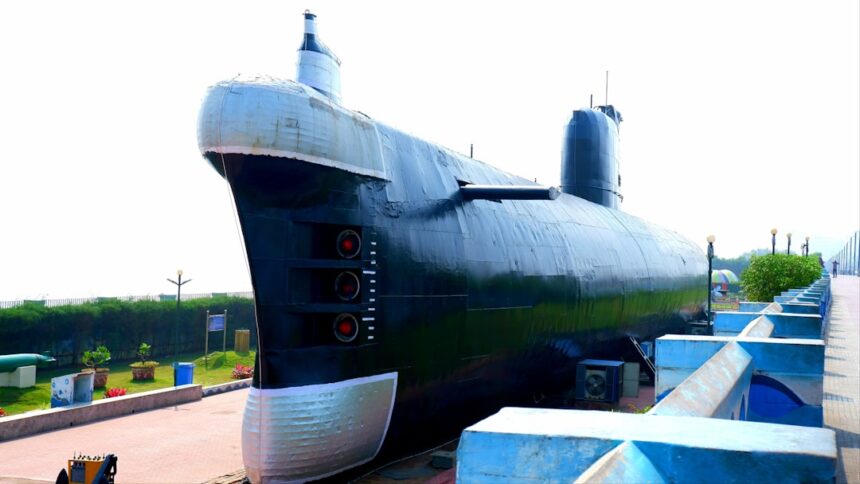
The U.S.S. Halibut (SSN-587), a unique vessel in the annals of naval history, represents a significant departure from conventional submarine design and operational doctrine. Conceived during the Cold War, a period characterized by intense geopolitical rivalry and technological innovation, the Halibut was initially commissioned as a guided missile submarine. However, its true legacy lies in its subsequent transformation into a specialized “special project” submarine, a covert operative designed for clandestine intelligence gathering. This article will delve into the Halibut’s construction, operational evolution, and the profound impact it had on U.S. intelligence capabilities during a tumultuous era.
The Halibut’s origins are firmly rooted in the strategic imperatives of the late 1950s. The perceived “missile gap” and the burgeoning capabilities of the Soviet Navy prompted the United States to accelerate its own naval development programs.
Initial Design and Construction
The Halibut was laid down on January 7, 1957, at Mare Island Naval Shipyard in Vallejo, California. Its design, while incorporating elements of contemporary submarine technology, also featured several innovations. It was the first nuclear-powered submarine designed from the keel up to carry cruise missiles, specifically the Regulus I and later the Regulus II. This initial role dictated much of its outward appearance and internal layout.
- Hull Configuration: The Halibut possessed a distinctive sail structure, larger than that of attack submarines of the era, to accommodate its missile launchers. Its overall length was 350 feet (106.7 meters), with a beam of 29 feet (8.8 meters), and a displacement of 5,066 long tons (5,147 metric tons) submerged.
- Propulsion System: Power was provided by a single S5W pressurized water reactor, a common propulsion plant for U.S. nuclear submarines of the era, enabling it to achieve submerged speeds in excess of 20 knots. This nuclear heart gave the Halibut virtually unlimited endurance, a crucial advantage for sustained missile patrol missions.
- Armament: Initially, its primary armament consisted of five Regulus missile tubes, three forward and two aft, along with six 21-inch (533 mm) torpedo tubes for self-defense. The Regulus missiles were surface-launched, meaning the submarine had to surface to deploy its main offensive weapons, a vulnerability that would soon be superseded by submerged-launch ballistic missile technology.
The Missile Submarine Era
From its commissioning on January 4, 1960, to late 1964, the Halibut operated as a guided-missile submarine, conducting deterrent patrols in the Pacific Ocean. Its missions involved cruising in designated areas, ready to launch its Regulus missiles if ordered. This period, while operationally significant, proved to be a transitional phase. The advent of Polaris ballistic missile submarines, capable of launching their missiles from deep beneath the waves, quickly rendered the surface-launched Regulus system obsolete. The Halibut, in its original configuration, was a technological bridge, soon to be crossed.
The USS Halibut, a unique special project submarine, played a crucial role during the Cold War, particularly in intelligence gathering and surveillance missions. For a deeper understanding of its significance and operations, you can read a related article that delves into the history and impact of this remarkable vessel. To explore more about the USS Halibut and its contributions, visit this article.
The Transformation into a Special Project Platform
The diminishing efficacy of the Regulus missile system, coupled with an escalating demand for specialized intelligence gathering, catalyzed the Halibut’s profound transformation. It was a strategic pivot, driven by the evolving nature of Cold War espionage.
Design Modifications and Equipment Integration
In 1965, the Halibut entered drydock at Pearl Harbor for extensive modifications that would irrevocably alter its purpose. This overhaul was not a mere refit; it was a radical re-engineering project aimed at converting the vessel into a cutting-edge platform for clandestine operations. The modifications were so extensive that they effectively created a new class of submarine.
- A “Super Secret” Compartment: The most significant structural modification was the removal of the forward Regulus missile bay and its replacement with a large, sealed “super-secret” compartment. This compartment was designed to house a variety of specialized equipment, including advanced sonar systems, remotely operated vehicles (ROVs), and intricate data collection apparatus. It was essentially a blank slate, capable of being reconfigured for specific missions.
- The “Fish” and Other Submersibles: The Halibut was equipped to deploy and recover various specialized submersibles, often referred to as “fish.” These ROVs were custom-designed for tasks such as cable tapping, wreckage recovery, and underwater surveillance. The ability to launch and retrieve these vehicles covertly from a submerged platform was a technological marvel of its time.
- Advanced Sonar and Navigation Systems: To support its new role, the Halibut received an array of advanced sonar systems, specifically optimized for detecting and tracking underwater objects and signals. Its navigation systems were also upgraded to ensure pinpoint accuracy, vital for precise positioning during sensitive operations.
- Maneuvering and Station Keeping: The submarine underwent modifications to improve its low-speed maneuvering capabilities and its ability to maintain precise station-keeping for extended periods, often in challenging underwater environments. This was crucial for operations requiring the submarine to hover silently near targets.
The “Special Projects” Designation
Following its refit, the Halibut was officially re-designated as a “Special Projects Submarine.” This seemingly innocuous title was a euphemism, a veil drawn over its true operational mandate. No longer a missile boat, it became a silent hunter, an underwater chameleon designed to gather intelligence where no other platform could. The transformation of the Halibut was a testament to the ingenuity of naval engineers and the strategic foresight of intelligence agencies. It represented a novel application of submarine technology, pushing the boundaries of what was previously considered possible.
The Art of Underwater Espionage: The Halibut’s Operational Saga
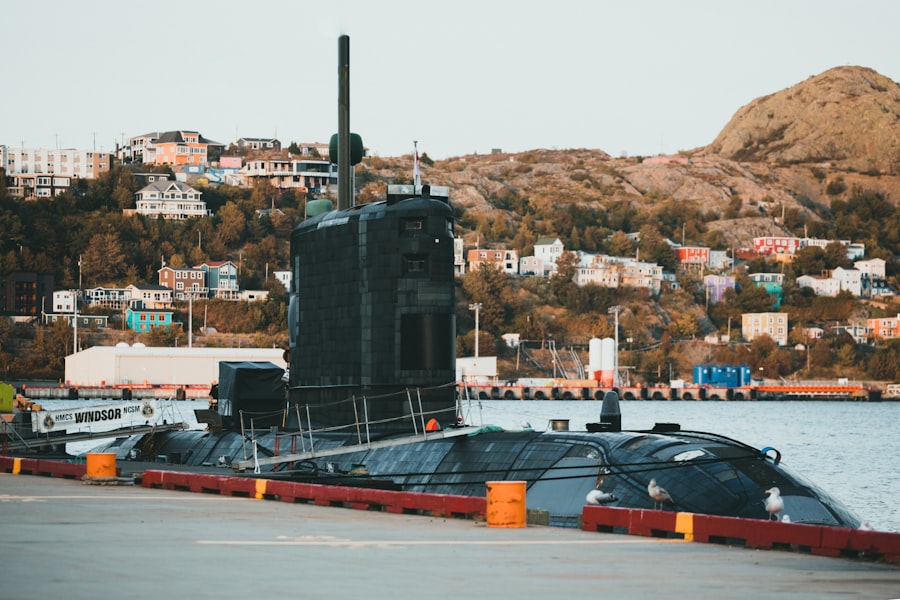
The operational life of the Halibut as a special projects submarine was shrouded in secrecy, its exploits unfolding in the silent depths of the ocean. Its missions were of critical national importance, often targeting sensitive Soviet installations and communication infrastructure.
Project Ivy Bells
One of the Halibut’s most celebrated, albeit largely unacknowledged, achievements was its pivotal role in Project Ivy Bells. This audacious operation, initiated in the early 1970s, involved locating and tapping into Soviet underwater communication cables in the Sea of Okhotsk, a body of water heavily patrolled by the Soviet Navy.
- The Target: The chosen target was a fiber-optic communication cable connecting Soviet naval base at Petropavlovsk-Kamchatsky to the Soviet Pacific Fleet headquarters in Vladivostok. Tapping this cable promised a direct line into Soviet military communications.
- The Methodology: The Halibut, utilizing its specialized equipment and advanced maneuvering capabilities, located the cable. Subsequently, a custom-built tapping device, essentially a sophisticated listening post, was deployed and attached to the cable. This device was designed to record all communications passing through the cable, storing the data for later retrieval.
- Data Retrieval: Periodically, the Halibut or another specially modified submarine would return to the site to retrieve the recorded data and replace the tapping device with a fresh one. This arduous process required immense precision, stealth, and operational discipline. The intelligence gleaned from Project Ivy Bells was invaluable, providing unparalleled insights into Soviet naval capabilities, strategies, and intentions. It was a digital lifeline into the heart of the adversary’s communications.
The Soviet Response to the Loss of K-129
The Halibut also played a role in the aftermath of the sinking of the Soviet submarine K-129 in March 1968. The K-129, a Golf II-class ballistic missile submarine, sank northwest of Hawaii under mysterious circumstances. The United States, aware of the potential intelligence windfall, embarked on a highly secretive operation to locate and potentially salvage parts of the wreckage.
- Initial Search: The Halibut, with its advanced sonar and deep-diving capabilities, was instrumental in the initial search efforts. Its mission was to meticulously survey the vast ocean floor to locate the sunken Soviet submarine. The ocean floor, however, is a vast and unforgiving landscape, a natural graveyard where secrets often remain buried.
- Location and Subsequent Operations: While the credit for the initial location of the K-129’s wreckage is often attributed to the U.S.S. Swordfish (SSN-579), the Halibut undertook subsequent detailed photographic and sonar reconnaissance of the site. This reconnaissance was crucial for the planning of Project Azorian, the CIA’s audacious attempt to salvage the K-129’s wreckage using the specialized recovery vessel Glomar Explorer. The Halibut’s role was that of a silent surveyor, mapping the underwater terrain and the remnants of a fallen titan.
The Technology of Secrecy: Halibut’s Unique Capabilities
The Halibut’s effectiveness as a special projects submarine was heavily reliant on its specialized technological suite. These capabilities put it at the forefront of underwater intelligence gathering for nearly two decades.
Advanced Sonar Systems
Unlike attack submarines, whose sonar systems are primarily designed for detecting and tracking other vessels, the Halibut’s sonar was optimized for different tasks.
- Side-Scan Sonar: It was equipped with sophisticated side-scan sonar arrays capable of generating highly detailed images of the seafloor. This was essential for locating cables, wreckage, and other objects of interest buried in the sediment. Imagine using an underwater radar to “see” the contours and objects of the ocean floor with unprecedented clarity.
- Bottom-Profiling Sonar: Bottom-profiling sonar, another key component, allowed the Halibut to map the bathymetry (depth and contours) of the ocean floor, creating three-dimensional profiles that were crucial for precise navigation and targeting.
- Passive Acoustic Arrays: In addition to active sonar, the Halibut carried extensive passive acoustic arrays to detect subtle sounds, such as those emitted by underwater cables or distant vessels, without betraying its own presence. These arrays served as its ears in the silent world, listening for the faint whispers of adversary activity.
Remotely Operated Vehicles (ROVs)
The ability to deploy and recover ROVs was a cornerstone of the Halibut’s operational success. These unmanned submersibles were the “hands and eyes” of the submarine in environments too dangerous or inaccessible for human divers.
- “Bridget” and “Cashmere”: Several specialized ROVs known by their project names, such as “Bridget” and “Cashmere,” were developed specifically for Halibut missions. These ROVs were equipped with high-resolution cameras, manipulators, and sensors to perform tasks such as cable tapping, sample collection, and detailed reconnaissance.
- Deployment and Recovery System: The Halibut featured a unique internal hangar and a complex system for deploying and recovering these ROVs while submerged. This intricate ballet of machinery and precision hydrodynamics allowed the submarine to launch and retrieve its robotic assistants covertly, often in deep water and under challenging conditions. The hangar, a cavernous space within the submarine, was the womb from which these mechanical servants emerged.
Diver Lockout Chamber
For operations requiring human intervention, the Halibut was equipped with a diver lockout chamber. This specialized compartment allowed divers to exit and re-enter the submerged submarine, performing tasks that required manual dexterity or direct observation. This capability made the Halibut even more versatile, bridging the gap between automated and human-centric operations.
The USS Halibut, a unique special project submarine, played a significant role during the Cold War, particularly in intelligence gathering and reconnaissance missions. For those interested in exploring more about the fascinating history of submarines and their impact on naval warfare, you can read a related article that delves deeper into this subject. The insights provided in this piece highlight the strategic importance of submarines like the Halibut in shaping military tactics. To learn more, visit this article for an in-depth analysis.
The End of an Era and Enduring Legacy
| Metric | Details |
|---|---|
| Name | USS Halibut (SSGN-587) |
| Type | Special Project Submarine / Guided Missile Submarine |
| Builder | Electric Boat Division, General Dynamics |
| Laid Down | June 1, 1957 |
| Launched | May 2, 1959 |
| Commissioned | December 10, 1960 |
| Length | 252 feet (77 meters) |
| Beam | 27 feet (8.2 meters) |
| Displacement | 3,180 tons (surfaced), 3,640 tons (submerged) |
| Propulsion | 1 S5W nuclear reactor, 1 shaft |
| Speed | 20+ knots (surfaced), 25+ knots (submerged) |
| Armament | Regulus I and II cruise missiles, torpedoes |
| Special Missions | Underwater reconnaissance, intelligence gathering, special operations support |
| Decommissioned | 1986 |
The Halibut’s remarkable career spanned nearly two decades, during which it played an instrumental, albeit secret, role in the Cold War. However, even the most capable technologies eventually yield to the inexorable march of progress.
Decommissioning and Successor Vessels
By the late 1980s, the Halibut, despite its storied history, was showing its age. Its specialized equipment was becoming obsolete, and newer, more advanced platforms were being developed to carry on its mission. It was decommissioned on June 30, 1989, and subsequently entered the Ship-Submarine Recycling Program at Puget Sound Naval Shipyard, where its components were safely dismantled and recycled.
- Successor Submarines: The legacy of the Halibut continued through dedicated special operations submarines, such as the U.S.S. Parche (SSN-683) and later the modified Seawolf-class submarines. These vessels incorporated lessons learned from the Halibut and leveraged advancements in stealth technology, automation, and sensor capabilities. The mantle of clandestine underwater intelligence gathering was passed on, but the Halibut had forged the path.
The Unveiling of Secrets
For many years, the Halibut’s special missions remained classified, its true role known only to a select few. However, with the passage of time and the declassification of certain historical documents, glimpses of its extraordinary exploits have emerged. The story of Project Ivy Bells, in particular, has become a prominent example of daring Cold War espionage. The Halibut’s story serves as a stark reminder that some of the most impactful victories in international relations are won not with brute force, but with profound stealth and technological ingenuity, beneath the silent waves.
The U.S.S. Halibut (SSN-587) stands as a monument to naval innovation and clandestine operations. From its initial role as a missile submarine to its transformation into a dedicated special projects platform, it continuously adapted to the evolving demands of the Cold War. Its missions, largely hidden from public view, provided invaluable intelligence that significantly influenced geopolitical dynamics. The Halibut was more than just a submarine; it was a silent sentinel, a master of deception, and a critical instrument in the shadowy struggle for global dominance. Its legacy continues to echo in the design and doctrine of modern special operations submarines, a testament to its enduring impact on naval history and intelligence gathering.
WARNING: The $35,000 Betrayal That Blinded America
FAQs
What was the USS Halibut special project submarine?
The USS Halibut (SSGN-587) was a unique nuclear-powered submarine of the United States Navy, specially modified for covert intelligence-gathering missions during the Cold War. It was equipped with advanced surveillance technology and was used for special operations rather than traditional attack submarine roles.
When was the USS Halibut commissioned and decommissioned?
The USS Halibut was commissioned in 1960 and served until it was decommissioned in 1976. During its service, it played a critical role in underwater reconnaissance and intelligence missions.
What made the USS Halibut different from other submarines of its time?
Unlike typical attack submarines, the USS Halibut was designed with specialized equipment for tapping undersea communication cables and conducting covert surveillance. It featured a large hangar bay for deploying submersibles and other special project tools, making it a pioneering vessel in underwater espionage.
What were some notable missions of the USS Halibut?
One of the most famous missions of the USS Halibut was Operation Ivy Bells, where it tapped Soviet underwater communication cables in the Sea of Okhotsk. This mission provided valuable intelligence during the Cold War and demonstrated the submarine’s unique capabilities.
What happened to the USS Halibut after it was decommissioned?
After decommissioning in 1976, the USS Halibut was eventually scrapped. However, its legacy lives on as a significant example of Cold War naval innovation and covert operations, influencing the design and use of future special project submarines.