The silent depths of the ocean hold secrets that often remain hidden from the world, veiled by the crushing pressure and the vast expanse of water. Among these secrets are the tales of incredible feats of engineering and daring human endeavor, stories that sometimes echo through the annals of history with a particular, almost mythical, resonance. One such story is that of the Soviet Union’s Project 705 Lira, and its most famous, or perhaps infamous, vessel – the K-162, nicknamed “Golden Fish.” This submarine was not just another addition to the Soviet Navy; it was a radical departure, a technological marvel born of a desperate desire for naval supremacy, and a testament to the ingenuity, and sometimes the recklessness, of the Soviet design bureaus.
The Genesis of a Revolutionary Design
The K-162 was a product of the Cold War, a period of intense technological competition between the Soviet Union and the United States. The Soviet Union, facing a perceived numerical disadvantage in naval power, sought to develop submarines that could outmaneuver and outgun their Western counterparts. This led to the conception of Project 705 Lira, a design that prioritized speed and stealth above all else, even at the cost of crew comfort and operational simplicity.
The Strategic Imperative
During the latter half of the 20th century, the strategic importance of submarines grew exponentially. They served as a crucial component of nuclear deterrence, capable of launching devastating retaliatory strikes from hidden positions beneath the waves. The Soviet Union recognized this, and the development of advanced submarine technology became a top priority. The traditional submarine design, while effective, was inherently limited in speed and maneuverability. Project 705 was envisioned as a complete reimagining, a submarine that could exploit the oceans’ vastness with unprecedented agility.
The Vision of the “Golden Fish”
The “Golden Fish” was more than just a nickname; it encapsulated the extraordinary aspirations for this unique vessel. Its titanium hull, a material rarely used for submarine construction at the time, promised exceptional strength and resistance to corrosion, enabling deeper dives and greater durability. The innovative propulsion system, utilizing liquid metal cooling and a titanium rotor, was designed to achieve speeds that were simply unheard of for submarines of that era. The goal was to create a submarine that could outrun any threat, penetrate enemy defenses with unparalleled speed, and escape detection with remarkable ease. It was a dream of an uncatchable, untouchable predator of the deep.
The Soviet Golden Fish submarine K-162, known for its remarkable speed and advanced technology during the Cold War, has been the subject of various analyses and discussions. For those interested in exploring more about the strategic implications and historical context of this submarine, a related article can be found at In the War Room, which delves into the broader narrative of submarine warfare and the innovations that defined naval power during that era.
Engineering the Unconventional
The K-162 pushed the boundaries of material science and engineering. Its titanium construction and unique propulsion system were revolutionary, but they also presented significant challenges. The design was a stark departure from conventional submarine architecture, prioritizing performance over habitability and ease of maintenance.
The Titanium Hull: Strength and Sacrifice
The decision to construct the K-162’s hull from titanium was a bold one. Titanium alloys offer superior strength-to-weight ratios compared to steel, allowing for a lighter yet stronger hull. This translates directly into increased diving depth and improved maneuverability. However, working with titanium presented considerable engineering hurdles. Welding and machining titanium require specialized techniques and equipment, making construction more complex and expensive. Furthermore, the Soviet Union’s access to and expertise in large-scale titanium fabrication were still developing, adding another layer of difficulty. Despite these challenges, the engineers pressed on, driven by the belief that the advantages of titanium were essential for achieving the project’s ambitious goals. The K-162’s hull was designed to withstand immense pressure, allowing it to operate at depths that would crush conventional steel submarines. This capability was intended to provide a significant tactical advantage, making it incredibly difficult for enemy sonar to detect and track.
The Liquid Metal Reactor and Titanium Rotor: A Symphony of Speed
The heart of the K-162’s revolutionary design lay in its propulsion system. Unlike conventional submarines that rely on steam turbines or electric motors, the “Golden Fish” was equipped with a unique liquid metal-cooled fast reactor. This reactor, using a sodium-potassium alloy as a coolant, could operate at much higher temperatures than water-cooled reactors, leading to greater thermal efficiency and thus, more power. This immense power was then harnessed by a titanium rotor, directly connected to the propeller shaft. This direct-drive system eliminated the need for a complex gearbox, reducing weight and mechanical losses, and contributing to the submarine’s incredible acceleration and speed. The titanium rotor itself was a marvel of engineering, designed to withstand the immense centrifugal forces generated at high rotational speeds. The entire system was designed for maximum speed and minimal acoustic signature, making the K-162 a phantom in the water. The engineers aimed for a system that could rapidly accelerate to astonishing speeds, a capability that earned it its legendary reputation.
Operational Realities and the Human Element
While the K-162 was a triumph of engineering, its unconventional design presented significant challenges for the crew. The focus on speed and stealth came at the expense of crew comfort and operational simplicity, leading to a demanding and often hazardous environment.
A Cramped and Austere Environment
The pursuit of speed and agility meant that space within the K-162 was at a premium. The reactor core was compact, but the machinery required to manage the liquid metal coolant and the high-powered propulsion system occupied a significant portion of the hull. This left little room for crew amenities, resulting in cramped living quarters, limited personal space, and a generally austere environment. The need for specialized equipment and the constant vigilance required to operate such a complex system placed a significant strain on the sailors. The constant hum of machinery, the confined spaces, and the potential dangers associated with the liquid metal coolant created a high-stress operational environment. Crew rotation was carefully managed, and the sailors assigned to the K-162 were among the most skilled and resilient in the Soviet Navy.
The “Golden Fish” at Sea: Speed and its Consequences
The K-162 lived up to its “Golden Fish” moniker when it came to speed. During trials, it achieved astonishing speeds, reportedly exceeding 40 knots, and some claims even suggest speeds closer to 50 knots. This was significantly faster than any contemporary submarine and presented a formidable tactical advantage. However, operating at such high speeds was not without its risks. The stresses on the hull and machinery were immense. The liquid metal coolant posed a constant danger; any leak could have catastrophic consequences, leading to fires or the release of radioactive material. The unique propulsion system also required highly specialized maintenance and a crew with exceptional technical expertise. The submarine was a complex, high-strung machine that demanded constant attention and a deep understanding of its intricate systems. Despite these challenges, the K-162 proved its capabilities, demonstrating the Soviet Union’s ability to develop cutting-edge naval technology.
The Legacy of the “Golden Fish”
The K-162 was a groundbreaking submarine, but its radical design also contributed to its relatively short operational lifespan. Its complexity, cost, and the inherent risks associated with its advanced systems eventually led to its withdrawal from active service.
A Technological Dead End?
The K-162 represented a significant investment of resources and technological expertise. While it demonstrated the potential of advanced materials and propulsion systems, its operational realities proved challenging. The high cost of construction and maintenance, coupled with the demanding operational environment, made it difficult to justify building a large fleet of such submarines. The Soviet Union, while capable of building one “Golden Fish,” struggled to replicate its success on a broader scale. The operational complexities and the inherent dangers also raised questions about its long-term viability and the safety of its crew. Ultimately, Project 705, while a marvel of engineering, proved to be more of a technological experiment than a practical solution for widespread naval deployment.
A Symbol of Soviet Ambition and Innovation
Despite its limitations, the K-162 remains a potent symbol of Soviet ambition and innovation during the Cold War. It showcased the nation’s ability to push the boundaries of scientific and engineering knowledge, even if it meant venturing into uncharted and sometimes perilous territory. The “Golden Fish” was a testament to the Soviet drive for technological superiority, a bold statement of intent on the global stage. Its story continues to fascinate, a reminder of a time when the race for technological supremacy led to the creation of some of the most extraordinary machines ever built, machines that ventured into the deepest, darkest parts of the ocean, carrying with them the weight of national ambition and the ingenuity of human endeavor. The legacy of the K-162 is not just in its speed or its titanium hull, but in the story of a nation daring to dream big and build even bigger, a story etched in the silent, unforgiving depths of the sea.
The Soviet Golden Fish submarine K-162, known for its remarkable speed and advanced technology, has been the subject of various analyses and discussions in military history. For those interested in exploring more about the capabilities and historical significance of this submarine, a related article can be found at this link, which delves into the innovations of Soviet naval engineering during the Cold War era.
The Silent Service and the “Golden Fish”
| Metric | Details |
|---|---|
| Name | K-162 (NATO reporting name: Papa-class) |
| Type | Attack submarine (SSN) |
| Country | Soviet Union |
| Displacement | Approximately 5,000 tons surfaced, 6,000 tons submerged |
| Length | 107 meters (351 feet) |
| Beam | 11.7 meters (38 feet) |
| Propulsion | One nuclear reactor, one shaft, pump-jet propulsor |
| Maximum Speed | 44.7 knots (82.8 km/h; 51.4 mph) submerged (record speed) |
| Test Depth | Approximately 400 meters (1,312 feet) |
| Armament | 6 × 533 mm torpedo tubes |
| Commissioned | 1969 |
| Decommissioned | 1988 |
| Notable Achievement | Fastest submarine ever recorded |
The K-162 was a part of the Soviet Union’s formidable “Silent Service,” a clandestine branch of the navy tasked with undersea operations. Its unique capabilities made it a valuable, albeit highly specialized, asset within this complex organization. The very existence of such a vessel, and the technological leaps it represented, underscored the strategic importance the Soviet Union placed on its submarine forces.
The Shadow of the Cold War
The development and deployment of the K-162 cannot be understood outside the context of the Cold War. The constant arms race between the United States and the Soviet Union fueled a relentless pursuit of military technological superiority. Submarines, with their ability to project power and pose an existential threat, were at the forefront of this competition. The “Golden Fish,” with its unprecedented speed and potential for deep-sea operations, was a direct response to perceived threats and a desire to maintain a strategic advantage. Its capabilities were designed to counter emerging Western technologies and to ensure the Soviet Union’s ability to conduct effective undersea warfare, whether for offensive or defensive purposes. The submarine was a silent warrior in a global struggle, a testament to the strategic anxieties and the immense resources poured into the naval arms race.
Echoes in Modern Submarine Design
While the K-162 itself was a unique and ultimately limited program, the technological innovations it embodied have had a lasting impact on submarine design. The exploration of advanced materials like titanium, the development of more efficient and powerful propulsion systems, and the relentless pursuit of stealth and speed continue to be central themes in modern submarine engineering. The lessons learned from the K-162’s triumphs and challenges have undoubtedly informed subsequent designs, contributing to the evolution of underwater warfare technology. The “Golden Fish” may have been a singular entity, a bold experiment, but its legacy can be seen in the ongoing quest to build submarines that are faster, stealthier, and more capable than ever before. Its story serves as a reminder that even the most unconventional designs can push the boundaries of what is possible, leaving an indelible mark on the future of technology.
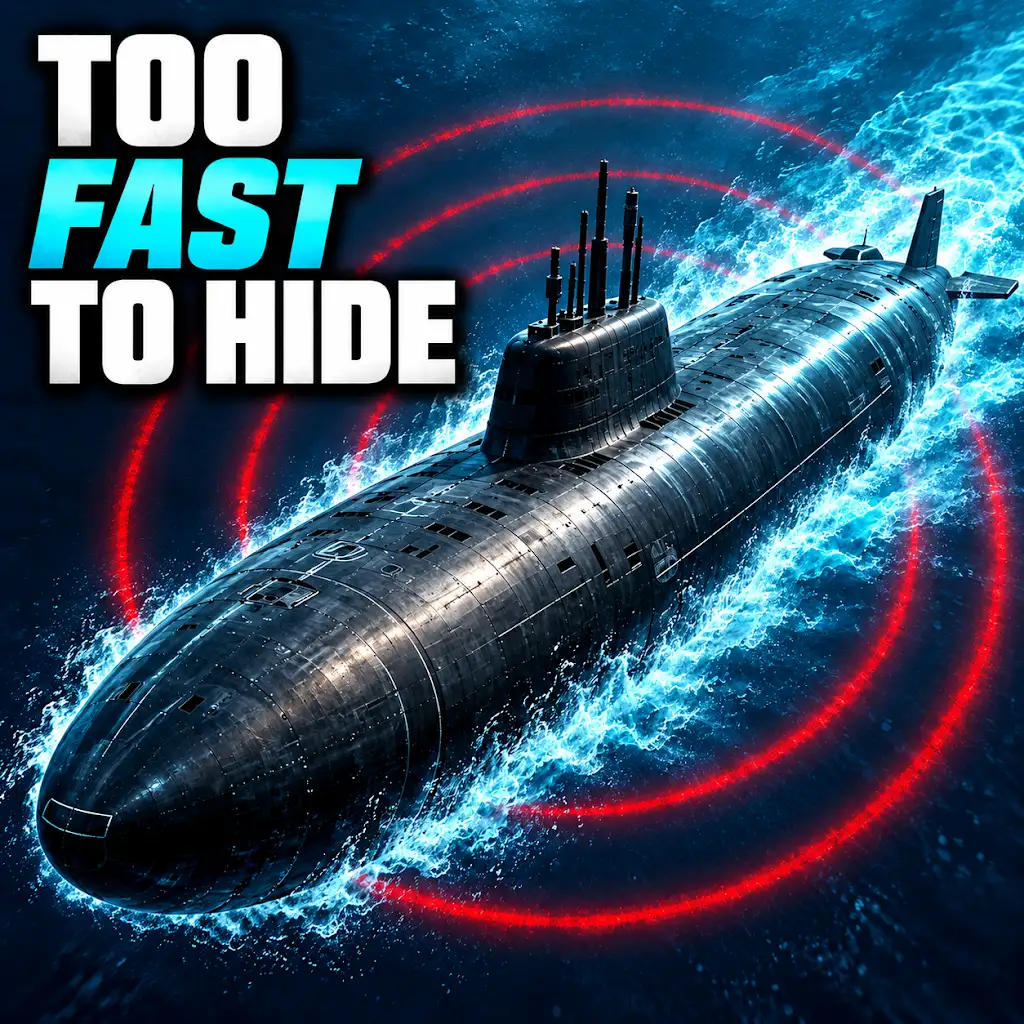
The Soviet Submarine That Broke a Speed Record—and Its Own Stealth
FAQs
What is the Soviet Golden Fish submarine K-162?
The Soviet Golden Fish submarine K-162, also known as the Papa-class submarine, was a nuclear-powered submarine built by the Soviet Union in the 1960s.
What was the purpose of the Soviet Golden Fish submarine K-162?
The K-162 submarine was designed to be a fast attack submarine capable of high speeds and deep diving capabilities, intended to counter the United States Navy’s fast attack submarines.
How fast could the Soviet Golden Fish submarine K-162 travel?
The K-162 submarine was capable of reaching speeds of up to 44.7 knots (82.8 km/h or 51.4 mph), making it one of the fastest submarines ever built.
What was unique about the design of the Soviet Golden Fish submarine K-162?
The K-162 submarine featured a revolutionary titanium hull, which made it lighter and stronger than traditional steel-hulled submarines, allowing for greater speed and diving depths.
What happened to the Soviet Golden Fish submarine K-162?
The K-162 submarine was decommissioned in the 1980s and eventually scrapped in the early 1990s, marking the end of its service in the Soviet Navy.