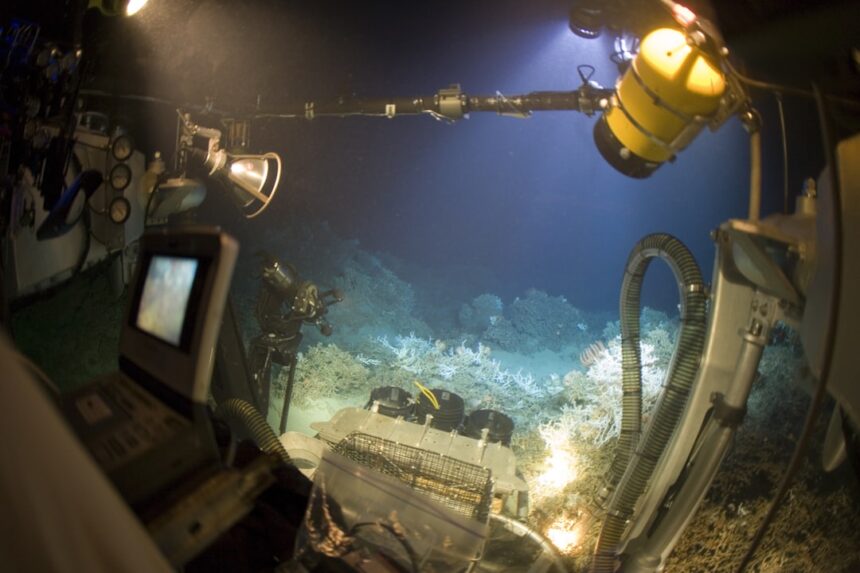
The ocean’s abyss, a realm of crushing pressure, perpetual darkness, and alien life, has long held a mystique that ignites the human spirit of exploration. Few documentaries manage to capture the raw intensity and scientific wonder of this extreme environment, but the recently released “Deep Sea Recovery” not only achieves this feat but transcends it, offering a compelling and often breathtaking journey into the often-overlooked world of deep-sea salvage operations and the extraordinary organisms that inhabit these forgotten domains. This film is not merely a chronicle of sunken vessels and lost treasures; it is a testament to human ingenuity, resilience, and the profound connection we have with the planet’s most enigmatic frontier.
The Allure of the Abyss: A Realm of Mystery and Danger
The deep sea, a vast expanse that constitutes over 90% of the Earth’s living space, remains largely unexplored. Its inky blackness, where sunlight dares not penetrate, has fostered environments unlike any other on the surface. The sheer pressure, capable of crushing conventional submersibles, and the frigid temperatures create a brutal yet uniquely adapted ecosystem. “Deep Sea Recovery” masterfully juxtaposes the stark realities of this hostile environment with the unwavering determination of the men and women who venture into it. The documentary begins by setting a somber and awe-inspiring tone, emphasizing the sheer scale of the ocean floor and the multitude of secrets it holds.
Whispers from the Deep: The Historical Significance of Lost Vessels
The narrative often returns to the historical context of the wrecks being explored. These sunken ships are not just metal hulks; they are time capsules, silent witnesses to past tragedies, acts of heroism, and the ebb and flow of human history. The documentary highlights the emotional weight carried by these relics, reminding viewers that each recovery effort is not just a technical challenge but also an archaeological undertaking with profound human implications. The ghosts of storms, battles, and forgotten voyages seem to emanate from the rusted metal and scattered artifacts, making the recovery process a poignant act of remembrance.
The Titanic’s Shadow: Echoes of a Legendary Disaster
While “Deep Sea Recovery” explores numerous wrecks, the spectral presence of the Titanic often looms large in the collective imagination, and the documentary acknowledges this. Although not the primary focus, the film includes segments that reflect on the pioneering efforts to reach and document the Titanic’s resting place, underscoring the evolution of deep-sea technology and the boundless human desire to understand such iconic tragedies. The sheer scale of the Titanic’s story serves as a powerful backdrop for the inherent risks and rewards associated with deep-sea exploration.
Untold Stories of Maritime History: Beyond the Famous Names
Beyond the widely recognizable names, “Deep Sea Recovery” shines a spotlight on less celebrated but equally significant shipwrecks. These might include merchant vessels carrying invaluable cargo, naval ships lost in historical conflicts, or even smaller craft that met their demise far from shore. The documentary emphasizes that each wreck has its own unique narrative, a tapestry of human endeavor, trade, and sometimes, devastating loss. The meticulous work of identifying, locating, and assessing these sites is presented as a crucial aspect of preserving maritime heritage.
The Guardians of the Deep: The Unsung Heroes of Recovery
The heart of “Deep Sea Recovery” lies in its portrayal of the individuals who undertake these perilous missions. These are not simply divers; they are engineers, geologists, archaeologists, historians, and highly skilled technicians, all bound by a shared passion for the unknown and a remarkable level of courage. The documentary offers an intimate look into their lives, showcasing the extensive training, rigorous preparation, and the psychological fortitude required to operate in environments that would daunt most people.
Masters of the Machine: The Expertise Behind Remote Operated Vehicles (ROVs)
A significant portion of the film is dedicated to the sophisticated technology that makes deep-sea recovery possible. The star of this technological marvel is often the Remotely Operated Vehicle (ROV). Viewers are granted unprecedented access to the control rooms where these unmanned robotic submersibles are piloted. The precision required to maneuver these complex machines through the dark, turbulent waters, equipped with cameras, lights, and manipulator arms, is nothing short of astonishing. The documentary illustrates how ROVs have revolutionized our ability to explore and interact with the abyss, minimizing human risk while maximizing data acquisition.
A Symphony of Controls: Piloting the Unseen
The skill of the ROV pilots is a recurring theme. The film captures the intense focus and years of practice that go into mastering the controls of these sophisticated robots. Viewers witness the delicate dance of the ROV’s arms, collecting samples, stabilizing objects, and navigating treacherous terrain, all guided by the pilots’ expert hands and keen eyes as they interpret the live video feeds. The communication between the pilot and the support crew on the surface adds another layer of complexity and tension.
The Eyes of the Abyss: Advanced Imaging and Sonar Technologies
Beyond the ROVs, the documentary highlights the cutting-edge imaging and sonar technologies employed. Multi-beam sonar systems paint detailed topographical maps of the seafloor, revealing the contours and anomalies that might indicate a wreck. Advanced cameras, capable of capturing high-definition footage in near-total darkness, bring the underwater world into sharp relief. The film explains in accessible terms how these technologies work, demonstrating their critical role in the initial discovery and subsequent detailed exploration of wreck sites.
Human Divers: The Brave Few Who Descend
While ROVs are indispensable, “Deep Sea Recovery” also acknowledges the vital role of human divers in certain specialized operations. The documentary delves into the extreme risks associated with saturation diving and the specialized equipment and protocols that are in place to protect these brave individuals. Witnessing divers emerge from their pressurized habitats, preparing for descents that could last for days, is a powerful testament to their extraordinary commitment.
The Breath of the Deep: Saturation Diving and its Challenges
The film explains the concept of saturation diving, where divers live in pressurized environments for extended periods, allowing their bodies to adapt to deep-sea pressures. This process is crucial for enabling longer working times on the seabed. However, the inherent dangers, including decompression sickness and the psychological toll of extended confinement, are unflinchingly portrayed, emphasizing the immense courage and discipline required.
Navigating Obstacles: The Physical and Mental Resilience of Divers
The documentary showcases the sheer physical and mental fortitude of human divers as they navigate the complex debris fields of shipwrecks. The risk of entanglement, the unpredictable currents, and the limited visibility all contribute to the extreme nature of their work. Viewers gain an appreciation for the meticulous planning, constant communication, and unwavering trust between divers and their surface support crews.
The deep sea recovery documentary highlights the incredible advancements in underwater exploration and the challenges faced in retrieving valuable resources from the ocean floor. For a deeper understanding of the geopolitical implications and technological innovations surrounding underwater recovery missions, you can explore a related article on this topic at In The War Room. This article delves into the strategic importance of deep-sea resources and the international competition that drives these underwater endeavors.
Unveiling the Ocean’s Biodiversity: Life in the Deep
“Deep Sea Recovery” is not solely focused on inanimate objects; it offers a profound and often surprising glimpse into the vibrant and unique ecosystems that thrive in the deep sea. The documentary artfully interweaves the recovery efforts with observations of the extraordinary creatures that have made these submerged environments their home. These are organisms that have evolved to survive under immense pressure and in perpetual darkness, displaying adaptations that defy imagination.
Alien Landscapes: The Unconventional Habitats of the Abyss
The shipwrecks themselves, once symbols of human endeavor, have become artificial reefs, providing shelter and substrate for a rich tapestry of marine life. The documentary highlights how these metallic structures foster the growth of corals, sponges, and anemones, creating miniature oases in the otherwise barren seabed. The contrast between the rusted, decaying metal and the vibrant, pulsating life that flourishes upon it is a recurring visual motif.
Cities of Coral: Shipwrecks as Artificial Reefs
The film showcases how wrecks become bustling metropolises for marine organisms. Schools of fish dart through corroded hulls, octopuses make their lairs in dark crevices, and sessile invertebrates attach themselves to every available surface. The documentary emphasizes the ecological importance of these shipwrecks, contributing to the biodiversity of the deep ocean.
Sculptures of the Sea: The Growth of Sessile Organisms
Viewers are introduced to the fascinating world of sessile organisms – those that attach themselves to a fixed substrate. The documentary’s visual coverage captures the intricate beauty of deep-sea corals, ancient sponges, and diaphanous tunicates, all slowly filtering nutrients from the surrounding water and transforming the man-made wreckage into living sculptures.
Creatures of the Dark: Adaptations to Extreme Conditions
The inhabitants of the deep sea are a testament to the power of evolution. “Deep Sea Recovery” introduces viewers to some of the most remarkable species, showcasing their unique adaptations to life in the abyss. These adaptations are not just for survival; they are often stunningly beautiful and incredibly specialized.
Bioluminescence: The Light in the Darkness
Perhaps the most captivating adaptation is bioluminescence, the ability of organisms to produce their own light. The documentary features breathtaking footage of bioluminescent creatures, from the ethereal glow of jellyfish to the flashing signals of deep-sea fish. The film explores the various functions of bioluminescence, including communication, courtship, and defense.
The Language of Light: Signals in the Perpetual Night
The film delves into the intricate ways in which deep-sea creatures use bioluminescence. It explains how different species have developed unique light patterns to attract mates, warn off predators, or lure prey. The visual display of these bioluminescent organisms is one of the most visually arresting aspects of the documentary.
Mimicry and Deception: The Art of Survival
The documentary also highlights the incredible strategies of mimicry and deception employed by deep-sea organisms. Some creatures evolve to resemble inedible objects, while others use lures or camouflage to ambush unsuspecting prey. These fascinating survival tactics are brought to life through stunning macro photography and expert narration.
Sensory Marvels: Senses Beyond Sight
In an environment devoid of sunlight, other senses become paramount. The documentary explores the heightened olfactory senses, the electroreception, and the pressure-sensitive organs that allow deep-sea creatures to navigate, hunt, and communicate. The intricate mechanisms behind these alien sensory experiences are explained in a clear and engaging manner.
Navigating the Unseen: Specialized Sensory Organs
The film introduces viewers to the specialized sensory organs that have evolved in deep-sea inhabitants. This includes the large eyes of some species, adapted to capture even the faintest traces of light, and the lateral lines of fish, which can detect subtle vibrations in the water. The documentary emphasizes how these adaptations allow life to flourish in seemingly impossible conditions.
The Science of Salvage: Techniques and Innovations
“Deep Sea Recovery” is not just a visual spectacle; it is also a deep dive into the scientific methodologies and technological innovations that underpin modern deep-sea salvage operations. The documentary provides an accessible yet comprehensive overview of the complex processes involved, from initial site surveys to the delicate retrieval of artifacts.
The deep sea recovery documentary sheds light on the fascinating yet challenging efforts to reclaim lost treasures from the ocean floor. For those interested in exploring this topic further, a related article discusses the technological advancements that have made these underwater missions possible. You can read more about it in this insightful piece here, which delves into the innovations that are transforming our understanding of underwater exploration.
Locating the Lost: The Art of Subsea Geolocation
The initial stage of any recovery operation is the daunting task of locating the wreck. The film details the sophisticated techniques used to pinpoint these underwater targets. This often involves extensive sonar mapping and the use of autonomous underwater vehicles (AUVs) to conduct wide-area surveys.
Sonar Sweeps: Mapping the Seafloor
The documentary showcases how advanced sonar systems create detailed acoustic maps of the ocean floor. These high-resolution images allow researchers to identify anomalies, such as the distinct shapes of shipwrecks, that might be missed by less sophisticated technologies. The interpretation of these sonar data sets is a critical first step.
Beyond the Horizon: The Reach of AUVs
The film highlights the increasing reliance on Autonomous Underwater Vehicles (AUVs) for deep-sea exploration. These pre-programmed robotic vehicles can cover vast distances and collect data independently, significantly expanding the scope of initial surveys and reducing the time and cost associated with locating wreck sites.
Precision Engineering: Tools and Techniques for Recovery
Once a wreck is located, the real challenge begins: retrieving artifacts and, in some cases, entire sections of vessels. “Deep Sea Recovery” offers an in-depth look at the specialized tools and techniques employed in this delicate and often dangerous phase.
The Dexterity of Manipulator Arms: Collecting Delicate Objects
The film provides a close-up view of the highly articulated manipulator arms on ROVs, demonstrating their incredible precision. These robotic hands, guided by skilled operators, can delicately grasp fragile artifacts, collect samples of sediment, or even perform intricate repairs on equipment. The level of control and finesse exhibited is extraordinary.
From Grabbers to Grasping: The Evolution of Manipulator Technology
The documentary traces the evolution of manipulator technology, from basic grabber claws to multi-fingered hands capable of intricate manipulation. The emphasis is on how this technology has advanced to allow for the recovery of increasingly delicate and historically significant items with minimal risk of damage.
Lifting the Giants: The Power of Heavy-Lift Equipment
For larger artifacts or even entire sections of a wreck, specialized heavy-lift equipment is employed. The film illustrates the use of powerful winches, underwater cranes, and advanced buoyancy systems to safely bring massive objects from the crushing depths to the surface. The engineering feats involved are truly remarkable.
Buoyancy and Balance: The Physics of Raising the Dead
The documentary explains the principles of buoyancy and how specialized lifting devices are used to overcome the immense weight of submerged debris. The careful calculation and deployment of these systems are crucial for a successful and safe recovery operation, preventing further damage to the artifact and minimizing risk to the recovery vessel.
Preserving the Past, Informing the Future: The Legacy of Recovery
The ultimate goal of deep-sea recovery, as portrayed in the documentary, extends far beyond the recovery of material objects. It is about preserving priceless historical information, advancing scientific understanding, and inspiring future generations of explorers and scientists. “Deep Sea Recovery” leaves the viewer with a profound sense of the importance of these endeavors.
The Unwritten Chapters: Historical and Archaeological Significance
Each recovered artifact, from a personal letter to a piece of naval ordnance, contributes to our understanding of human history. The documentary emphasizes the meticulous cataloging, conservation, and archival processes that follow a successful recovery. These objects, once lost to the depths, are now re-entering the realm of human knowledge, offering new perspectives on past events.
From Rust to Revelation: The Conservation of Artifacts
The film shows the painstaking process of conserving artifacts recovered from the deep sea. Many materials, especially metal and organic matter, undergo significant degradation underwater. Expert conservators employ specialized techniques to stabilize these items, preventing further decay and preserving them for future study and exhibition. The transformation from corroded relics to recognizable historical objects is awe-inspiring.
Telling Tales: The Stories Embedded in Objects
The documentary highlights how even seemingly mundane objects can tell compelling stories. A soldier’s boot, a child’s doll, a navigator’s sextant – these items provide intimate glimpses into the lives of those who were on board, connecting us to the human element of these historical events. The film skillfully guides the audience to appreciate these nuances.
Scientific Frontiers: Unlocking the Secrets of the Deep
Beyond historical context, the deep-sea recovery operations presented in the film also contribute significantly to scientific knowledge. The study of the geological formations, the unique biological specimens, and the environmental conditions of the deep ocean expand our understanding of Earth’s complex systems.
Geologic Insights: Uncovering Earth’s History
The documentary touches upon how some wrecks lie in areas of significant geological interest, such as hydrothermal vents or ancient underwater landslide zones. The recovery efforts in these regions can provide valuable data about geological processes, plate tectonics, and the Earth’s dynamic history.
The Deep Biosphere: Understanding Life’s Extremes
The encounter with the unique and resilient life forms of the abyss offers invaluable insights into the limits of life itself. Studying these organisms can have implications for astrobiology, the search for extraterrestrial life, and our understanding of how life might exist in other extreme environments both on Earth and beyond.
Inspiring the Next Generation: A Call to Exploration
Ultimately, “Deep Sea Recovery” serves as a powerful call to action and inspiration. By showcasing the dedication, ingenuity, and courage of those who explore the abyss, the documentary aims to ignite a passion for science, exploration, and conservation in viewers of all ages. The film leaves a lasting impression of the immense, unexplored wonders that still await us in the hidden depths of our planet. It is a reminder that the greatest discoveries often lie just beyond the edges of our current understanding, waiting to be found in the silent, mysterious realm of the deep sea.

How the CIA Tried to Steal a Soviet Nuclear Submarine
FAQs

What is deep sea recovery?
Deep sea recovery refers to the process of retrieving valuable resources or artifacts from the ocean floor, often at great depths. This can include recovering sunken ships, recovering valuable minerals, or exploring and documenting deep sea ecosystems.
What are some common methods used in deep sea recovery?
Common methods used in deep sea recovery include remotely operated vehicles (ROVs), manned submersibles, and specialized equipment such as dredging and suction systems. These tools allow researchers and recovery teams to explore and retrieve items from the ocean floor.
What are some of the challenges of deep sea recovery?
Challenges of deep sea recovery include extreme water pressure, darkness, and the harsh conditions of the deep ocean. Additionally, navigating and operating equipment at such depths can be technically challenging and require specialized training and expertise.
What are some examples of deep sea recovery projects?
Examples of deep sea recovery projects include the recovery of sunken ships such as the Titanic, the exploration and retrieval of valuable minerals from the ocean floor, and the documentation and study of deep sea ecosystems and marine life.
What are the potential benefits of deep sea recovery?
The potential benefits of deep sea recovery include the discovery and preservation of historical artifacts, the extraction of valuable resources such as rare earth minerals, and the advancement of scientific knowledge about the deep sea and its ecosystems.