The Soviet Union, a nation forged in revolution and shaped by ideological conflict, dedicated immense resources and intellectual prowess to the development of its military might. This endeavor was not a static pursuit but a dynamic evolution, spanning from the brutal crucible of World War II to the sophisticated technological landscape of the modern era. The trajectory of Soviet weapons development is a testament to its strategic imperatives, its unique scientific and industrial base, and its enduring rivalry with the West.
The Crucible of War: Soviet Arms in World War II
World War II represented an existential struggle for the Soviet Union, demanding a rapid and effective mobilization of its industrial and military capabilities. The initial years of the conflict exposed severe deficiencies in Soviet weaponry and doctrine, compelling a brutal but ultimately successful period of innovation and adaptation. The emphasis during this period was on mass production, robust simplicity, and battlefield effectiveness over technological refinement.
Early War Struggles and the Red Army’s Reawakening
The initial German invasion in 1941 caught the Red Army by surprise, highlighting a critical gap in technology and leadership. Soviet tanks, such as the T-26 and BT series, were outmatched by German panzers in terms of armor, firepower, and optics. The air force, reliant on outdated biplanes and early monoplanes, suffered heavy losses. However, the sheer scale of Soviet industry, albeit severely disrupted by the German advance, allowed for a remarkable resurgence. The relocation of key factories east of the Ural Mountains was a monumental undertaking that enabled continued production of vital armaments. This period was characterized by a desperate scramble to learn from battlefield experience and to produce weapons that could stem the Nazi tide.
Iconic Designs Forged in Conflict
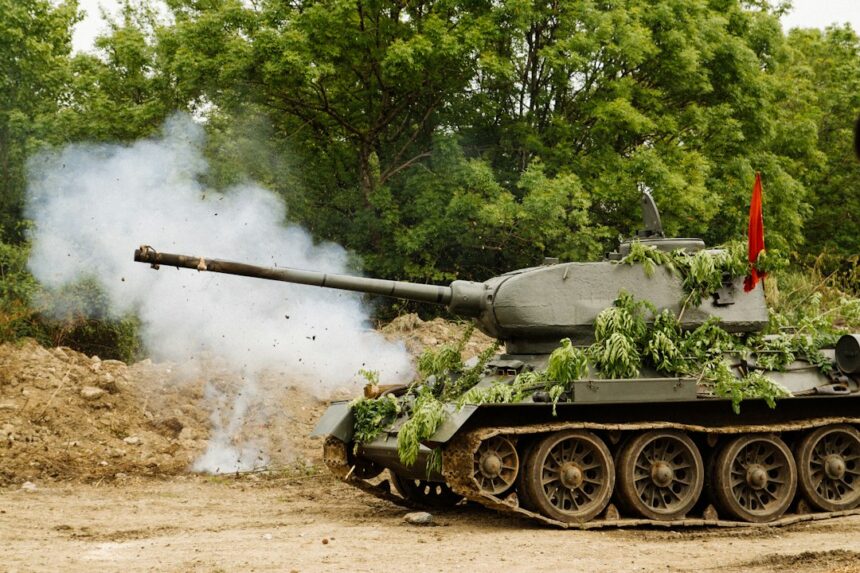
Despite the initial setbacks, World War II also witnessed the birth of some of the Soviet Union’s most iconic and influential weapons. The T-34 medium tank, with its sloped armor, powerful F-34 gun, and excellent mobility, became a legendary symbol of Soviet resilience and tank warfare. Its production numbers were staggering, and its impact on the Eastern Front was profound, often outclassing its German counterparts in sheer numbers and battlefield performance. Similarly, the KV-1 heavy tank, though less numerous, provided a formidable platform for confronting German heavy armor. In the realm of small arms, the PPSh-41 submachine gun, with its high rate of fire and reliability, armed Soviet infantry and partisan fighters effectively. The Mosin-Nagant rifle, a venerable design, remained the workhorse of the infantry, proving to be rugged and dependable. Artillery also played a crucial role, with the Katyusha rocket launcher becoming a terrifying and psychologically impactful weapon system, capable of unleashing a devastating barrage on enemy positions. The Soviet approach emphasized standardization and ease of maintenance, ensuring that these weapons could be produced in vast quantities and operated by a largely conscripted army.
The Doctrine of Deep Battle and Mechanized Warfare
The experiences of World War II also profoundly shaped Soviet military doctrine. The concept of “Deep Battle,” which emphasized coordinated operations involving large armored formations, airborne assaults, and integrated artillery support, gained prominence. This doctrine envisioned breaking through enemy lines with overwhelming force, penetrating deep into their rear areas to disrupt command and control, and encircling enemy units. The development of specialized combat engineering vehicles and bridging equipment was crucial for supporting these large-scale mechanized operations. The emphasis on combined arms warfare, where infantry, armor, artillery, and air power worked in concert, became a hallmark of Soviet military thinking and continued to influence its development well into the Cold War.
The development of Soviet weapons during the Cold War was a pivotal aspect of military strategy and technological advancement. For a deeper understanding of this topic, you can explore the article titled “The Evolution of Soviet Military Technology” which provides insights into the various innovations and challenges faced by Soviet engineers and scientists. To read more, visit this article.
The Cold War Arms Race: Ideology and Innovation
The post-war era ushered in an unprecedented period of technological competition between the Soviet Union and the United States, driven by ideological animosity and the ever-present threat of nuclear annihilation. This Cold War arms race saw both superpowers pour vast resources into developing increasingly sophisticated and devastating weaponry, with the Soviet Union often seeking to match or counter Western technological advancements through its own unique approaches.
Nuclear Ambitions and Intercontinental Reach
The Soviet Union’s entry into the nuclear age, marked by its first atomic test in 1949, fundamentally altered the strategic landscape. The development of its own nuclear arsenal was a top priority, driven by a desire to achieve strategic parity with the United States. This led to a rapid expansion of its nuclear weapons program, encompassing not only the development of atomic and hydrogen bombs but also the means to deliver them. The creation of the R-7 Semyorka, the world’s first intercontinental ballistic missile (ICBM), was a monumental achievement that demonstrated Soviet prowess in rocketry and space exploration. This development directly challenged the perceived invulnerability of the United States and initiated the concept of mutually assured destruction (MAD) as a cornerstone of nuclear deterrence. Subsequent generations of ICBMs, such as the SS-18 Satan, became increasingly powerful and sophisticated, capable of carrying multiple independently targetable re-entry vehicles (MIRVs) to overwhelm enemy missile defenses.
The Evolution of Soviet Armor and Air Power
While the nuclear threat loomed large, the development of conventional military hardware continued unabated. Soviet tank design evolved significantly from the T-34. The T-54/55 series became the most produced tank in history, a testament to its robust design and relatively low cost. Later iterations like the T-62, T-64, T-72, T-80, and the formidable T-90 showcased advancements in armor technology, armament, and fire control systems. The Soviets often prioritized simplicity and ease of production over the intricate complexity found in some Western designs, aiming for reliability and operational readiness in large numbers. In the air, the Soviet fighter jet programs produced iconic aircraft like the MiG-15 and MiG-21, which proved to be formidable adversaries during the Korean and Vietnam Wars, respectively. The development of supersonic bombers like the Tu-160 Blackjack, a strategic nuclear bomber, represented the pinnacle of Soviet aviation engineering, designed for long-range penetration of enemy airspace. Emphasis was placed on high speed, high altitude performance, and advanced missile armament, reflecting a doctrine that valued offensive capabilities.
Naval Power Projection and Submarine Dominance
The Soviet Navy, initially a secondary concern, grew into a formidable global force during the Cold War. The development of aircraft carriers, albeit with a different operational doctrine than their American counterparts, signaled a desire for power projection capabilities. However, it was in submarine technology that the Soviet Union truly excelled. The development of nuclear-powered ballistic missile submarines (SSBNs) like the Delta and Typhoon classes provided a secure and survivable nuclear deterrent. Soviet diesel-electric submarines also represented a significant threat to NATO shipping lanes, with their advanced sonar and torpedo capabilities. The focus on silent running and aggressive patrol tactics made Soviet submarines a persistent concern for Western navies throughout the Cold War. The development of advanced anti-ship missiles, such as the P-70 Ametist and P-15 Termit, further enhanced the offensive capabilities of Soviet naval assets.
Technological Leapfrogging and Asymmetrical Advantages
Facing a technologically superior adversary for much of the Cold War, the Soviet Union often employed strategies of technological leapfrogging and exploiting asymmetrical advantages to achieve its military objectives. This involved focusing resources on specific areas where a breakthrough could yield significant strategic benefits, often bypassing incremental development in favor of disruptive innovations.
The Space Race as a Military Arena
The Space Race, while presented as a scientific endeavor, was inextricably linked to military objectives. The development of rocketry for space exploration directly translated into advancements in ICBM technology. Soviet achievements like the launch of Sputnik, the first artificial satellite, and Yuri Gagarin’s historic flight into space, were not only propaganda victories but also demonstrated a sophisticated understanding of rocket propulsion and guidance systems. The development of reconnaissance satellites provided crucial intelligence on Western military activities, while anti-satellite (ASAT) weapon programs were pursued, highlighting the militarization of space. The development of technologies like the Buran space shuttle, though ultimately unsuccessful in its operational goals, showcased the Soviet Union’s ambition and engineering capabilities in complex aerospace projects, mirroring and competing with the American space program.
Electronic Warfare and Countermeasures
In the realm of electronic warfare (EW), the Soviet Union made significant strides, often developing sophisticated jamming and counter-surveillance technologies. Recognizing the importance of disrupting enemy communications and radar systems, Soviet EW capabilities became a crucial component of their military doctrine. This included the development of dedicated EW aircraft, ground-based jamming stations, and sophisticated electronic countermeasures integrated into their weapons systems. The ability to blind enemy radar, disrupt command and control networks, and protect their own forces from electronic detection provided a vital asymmetrical advantage, particularly against more technologically advanced Western platforms. This area of development was a continuous cat-and-mouse game, with both sides constantly innovating to gain the upper hand.
Guided Munitions and Precision Strikes
While the Soviet Union was known for its mass production of rugged and reliable weaponry, it also invested heavily in the development of guided munitions and precision-strike capabilities. This included a wide array of anti-tank guided missiles (ATGMs) like the Sagger and Spandrel, which could be operated by infantry and were highly effective against Western armor. The development of air-launched and ground-launched cruise missiles, such as the Kh-55, provided stand-off strike capabilities, allowing platforms to engage targets from a safe distance. These advancements demonstrated a growing sophistication in Soviet targeting systems and guidance technologies, enabling them to project power with increasing accuracy and effectiveness, moving beyond the purely brute-force approaches of earlier eras.
Post-Soviet Transition and Modern Innovations
The dissolution of the Soviet Union in 1991 presented a period of significant upheaval and restructuring for its defense industry. However, the legacy of Soviet weapons development, combined with new economic realities and evolving geopolitical challenges, has led to a distinct trajectory of innovation in the modern era. Russia, as the successor state, inherited much of the Soviet Union’s military-industrial complex, but has had to adapt and modernize to survive and compete.
Modernization and Export Markets
In the post-Soviet era, Russia has focused on modernizing its existing inventory of Soviet-era equipment while also developing new platforms. This has involved upgrading tanks with improved fire control systems and composite armor, enhancing fighter jets with new avionics and weapons, and revamping its submarine fleet. The need for foreign currency has also driven a strong focus on the export market. Russian arms sales have been a significant source of revenue, leading to the widespread adoption of Russian weaponry by many nations around the world. This has influenced the design and development of new systems, with considerations for affordability, ease of maintenance, and battlefield proven reliability becoming paramount. The emphasis has been on delivering proven technologies that offer a good balance of performance and cost.
The Rise of Advanced Air Defense and Electronic Warfare
Modern Russian air defense systems, such as the S-300 and S-400 series, have gained international acclaim for their advanced capabilities. These systems are designed to counter a wide range of aerial threats, including aircraft, cruise missiles, and ballistic missiles, demonstrating a continued Soviet and now Russian emphasis on robust air defense. Furthermore, Russia has remained at the forefront of electronic warfare innovation. Its EW capabilities are widely considered to be among the most advanced in the world, with a focus on developing systems that can disrupt and degrade enemy communications, radar, and navigation systems. This has been particularly evident in recent conflicts, where Russian EW systems have played a significant role in shaping the battlefield.
The Re-emergence of Great Power Competition and New Frontiers
The resurgence of great power competition has spurred further investment in advanced military technologies. Russia is actively pursuing the development of hypersonic weapons, which represent a significant leap forward in missile technology. These weapons, capable of traveling at speeds exceeding Mach 5, are extremely difficult to intercept and possess devastating kinetic energy. Examples include the Avangard hypersonic glide vehicle and the Zircon anti-ship hypersonic missile. Furthermore, Russia is exploring new frontiers in unmanned aerial vehicles (UAVs), aiming to develop sophisticated drone swarms and autonomous systems. Investment in cyber warfare capabilities and space-based assets also reflects a strategic understanding of the evolving nature of modern conflict, pushing the boundaries of traditional weapons development into the digital and extraterrestrial domains. The integration of artificial intelligence and advanced robotics into military platforms is also a growing area of focus, promising to further transform the nature of warfare.
The evolution of Soviet weapons development during the Cold War was marked by significant advancements in technology and strategy, shaping the military landscape of the era. For those interested in a deeper exploration of this topic, a related article provides insights into the various phases of Soviet military innovation and its impact on global security dynamics. You can read more about it in this informative piece on Soviet weapons development. This exploration reveals how these advancements not only influenced Soviet tactics but also prompted reactions from other world powers.
Enduring Legacies and Future Projections
| Weapon System | Development Period | Type | Key Features | Impact/Significance |
|---|---|---|---|---|
| AK-47 | 1945-1947 | Assault Rifle | Durable, reliable, easy to manufacture | Standardized Soviet infantry weapon, widely exported |
| T-34 Tank | 1937-1940 | Medium Tank | Sloped armor, powerful 76.2mm gun, good mobility | Revolutionized tank design, key in WWII Eastern Front |
| MiG-15 | 1947-1949 | Jet Fighter | First successful swept-wing jet fighter | Dominated Korean War air combat |
| R-7 Semyorka | 1953-1957 | Intercontinental Ballistic Missile (ICBM) | First ICBM, also used to launch Sputnik | Marked Soviet entry into strategic missile age and space race |
| SS-18 Satan | 1970s | ICBM | Multiple independently targetable reentry vehicles (MIRVs), heavy payload | Key component of Soviet nuclear deterrent during Cold War |
| AK-74 | 1970s-1974 | Assault Rifle | 5.45×39mm cartridge, improved accuracy and reduced recoil | Modernized Soviet infantry weapon replacing AK-47 |
The evolution of Soviet weapons development is a complex narrative of necessity, ingenuity, and relentless competition. From the pragmatic, mass-produced designs of World War II to the sophisticated, technologically advanced systems of the modern era, the Soviet and now Russian approach to military hardware has consistently aimed for effectiveness, reliability, and strategic impact.
The Influence of Soviet Design Philosophy
The enduring legacy of Soviet design philosophy can still be seen in modern Russian military hardware. The emphasis on ruggedness, simplicity of operation, and ease of maintenance, born out of the logistical challenges of its vast territory and conscript army, continues to inform design choices. While Western militaries often prioritize cutting-edge technology and individual platform sophistication, the Soviet approach consistently favored fielding large numbers of capable, well-supported systems. This philosophy has proven resilient and adaptable, allowing Russia to maintain a significant military presence on the global stage despite economic constraints. The focus on interoperability and standardization, while not always perfect, has also been a key aspect of Soviet and Russian military planning, ensuring that different branches and units can operate effectively together.
The Role of Research and Development
Despite the challenges of economic transition, Russia continues to invest in research and development for its defense sector. The country maintains a network of research institutes and design bureaus that are responsible for developing the next generation of weaponry. This commitment to innovation, coupled with the practical lessons learned from decades of military engagement, ensures that Russia remains a formidable player

The Soviet Warship That Learned to Fly
FAQs
What were some key Soviet weapons developed during the Cold War?
Some key Soviet weapons developed during the Cold War include the AK-47 assault rifle, the MiG fighter jets, the T-34 tank, and the R-7 Semyorka intercontinental ballistic missile.
How did Soviet weapons development compare to that of the United States?
Soviet weapons development was often focused on quantity over quality, leading to the production of large numbers of relatively simple and rugged weapons. In contrast, the United States tended to focus on more technologically advanced and expensive weapons systems.
What role did Soviet weapons play in shaping global geopolitics during the Cold War?
Soviet weapons played a significant role in shaping global geopolitics during the Cold War by providing the Soviet Union with military capabilities that allowed it to project power and influence around the world, leading to a balance of power with the United States.
How did Soviet weapons development impact military strategy and tactics?
Soviet weapons development impacted military strategy and tactics by influencing the way wars were fought, with a focus on mass mobilization, combined arms tactics, and the development of specialized units like Spetsnaz and the Soviet Airborne Troops.
What legacy did Soviet weapons development leave behind in the modern world?
The legacy of Soviet weapons development in the modern world includes the continued use of Soviet-designed weapons and equipment by various countries, as well as the influence of Soviet military thinking on modern military strategy and tactics.