The Soviet Union, a geopolitical behemoth for much of the 20th century, was locked in a perpetual ideological and military struggle with the West, primarily the United States. This Cold War rivalry, characterized by proxy conflicts and a relentless arms race, served as a powerful catalyst for the evolution of Soviet military technology. From the ashes of World War II, the Soviet Union embarked on an ambitious program to not only rebuild its war-torn infrastructure but also to forge a military capable of challenging American global dominance. This endeavor was driven by a complex interplay of factors, including strategic necessity, scientific ambition, and the unique organizational and ideological structures of the Soviet state. The development of Soviet military technology was not a linear progression but rather a dynamic process of adaptation, innovation, and, at times, fervent replication, all aimed at achieving parity or superiority in key strategic areas.
The Early Years: Post-War Reconstruction and Nuclear Aspirations
The immediate aftermath of World War II found the Soviet Union with a formidable, albeit battle-hardened, conventional military, but significantly behind the United States in nuclear technology. The devastating power of the atomic bombs dropped on Hiroshima and Nagasaki served as a stark reminder of this technological gap and spurred an urgent drive to acquire nuclear weapons. This period was marked by a pragmatic approach to technological development, often relying on intelligence gathering and the adaptation of existing designs.
The Race for the Bomb
The Soviet atomic bomb project, codenamed “First Lightning,” was a monumental undertaking. Leveraging the expertise of Soviet scientists and, crucially, information acquired through espionage from Allied nuclear programs, the USSR detonated its first atomic bomb, RDS-1, in August 1949. This event was a watershed moment, fundamentally altering the global balance of power and initiating the nuclear arms race in earnest. The rapid pace of this development underscored the Soviet Union’s capacity for focused, resource-intensive technological projects when deemed a national priority. Following the success of RDS-1, work on more advanced thermonuclear weapons began, culminating in the detonation of the Soviet Union’s first hydrogen bomb in August 1953.
Rebuilding Conventional Forces and Early Jet Age Developments
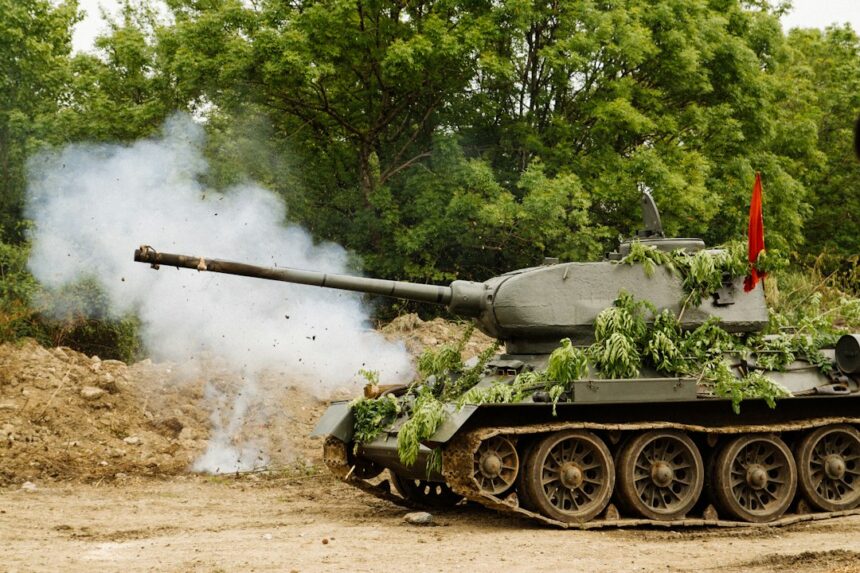
While the nuclear program occupied a central position, the Soviet Union also dedicated significant resources to modernizing its conventional military. The lessons learned from World War II, particularly the effectiveness of Soviet tank designs like the T-34, informed the development of new armored vehicles. Concurrently, the dawning of the jet age presented a new frontier. Soviet aircraft designers, including Andrei Tupolev and Mikoyan-Gurevich, worked to catch up with Western advancements in jet fighter and bomber technology. The MiG-15, a potent fighter that saw considerable action during the Korean War, demonstrated the Soviet Union’s burgeoning capabilities in this new domain, even if it was partly inspired by captured German and British designs. This era was characterized by a drive for indigenous production and a willingness to adapt and improve upon existing technological concepts, laying the groundwork for future advancements.
For those interested in the evolution of Soviet military technology, a fascinating article can be found at this link. It delves into the advancements made during the Cold War era, highlighting key innovations and their impact on global military strategies. The article provides a comprehensive overview of how Soviet engineering and design philosophies shaped their military capabilities, offering insights into the technological race that defined a significant part of the 20th century.
The Khrushchev Era: Strategic Parity and the Space Race
Nikita Khrushchev’s leadership ushered in an era of greater emphasis on intercontinental ballistic missiles (ICBMs) and the burgeoning space race, viewing these as key arenas for demonstrating Soviet technological prowess and achieving strategic parity with the United States. This period saw a shift in focus towards long-range strike capabilities and the symbolic competition for cosmic supremacy.
The ICBM Revolution
The development of ICBMs was central to Khrushchev’s strategy of challenging American nuclear superiority. The R-7 Semyorka, the world’s first ICBM, became the launch vehicle for Sputnik and Yuri Gagarin, the first human in space. Beyond its space-faring credentials, the R-7 represented a significant leap in Soviet rocketry, capable of delivering a nuclear warhead across intercontinental distances. This success was followed by the development of more sophisticated and reliable ICBMs, such as the SS-7 Saddler and the SS-8 Sasin, which formed the backbone of the Soviet Union’s strategic nuclear deterrent. The pursuit of ICBM technology was driven by the desire to neutralize the perceived advantage of American forward-deployed nuclear forces and to project Soviet power globally.
The Dawn of the Space Age and its Military Implications
The Soviet Union’s triumphs in the early years of the Space Race – Sputnik in 1957 and Gagarin’s flight in 1961 – were not merely scientific achievements; they had profound military implications. The same rocket technology that propelled satellites and cosmonauts into orbit could also deliver nuclear warheads. The development of reconnaissance satellites, early warning systems, and the potential for space-based weapons were all within the purview of this burgeoning field. The “missile gap” rhetoric, fueled by Soviet successes, forced the United States to accelerate its own missile programs. The space race became a proxy battlefield for technological and ideological competition, showcasing the USSR’s scientific and engineering capabilities on a global stage.
The Brezhnev Era: Military Buildup and Technological Maturation
Under Leonid Brezhnev, the Soviet Union entered a period of sustained military buildup, driven by a doctrine of achieving “strategic parity” with the United States and projecting Soviet influence globally. This era witnessed the maturation of Soviet military technology across all branches, with a focus on qualitative improvements and the development of increasingly sophisticated weapon systems.
Naval Power Projection
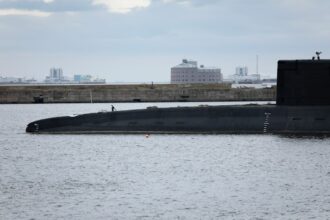
A significant shift during the Brezhnev years was the dramatic expansion of the Soviet Navy. From a coastal defense force, it transformed into a blue-water navy capable of global power projection. This involved the construction of a new generation of aircraft carriers, nuclear-powered submarines (including ballistic missile submarines and attack submarines), and surface combatants. The development of anti-ship missiles, such as the SS-N-2 Styx and the later SS-N-12 Sandbox, became a key element of Soviet naval doctrine, designed to counter the superior firepower of the US carrier battle groups. The aim was to deny the US Navy freedom of movement and to project Soviet influence into distant oceans.
Advancements in Armored Warfare and Air Power
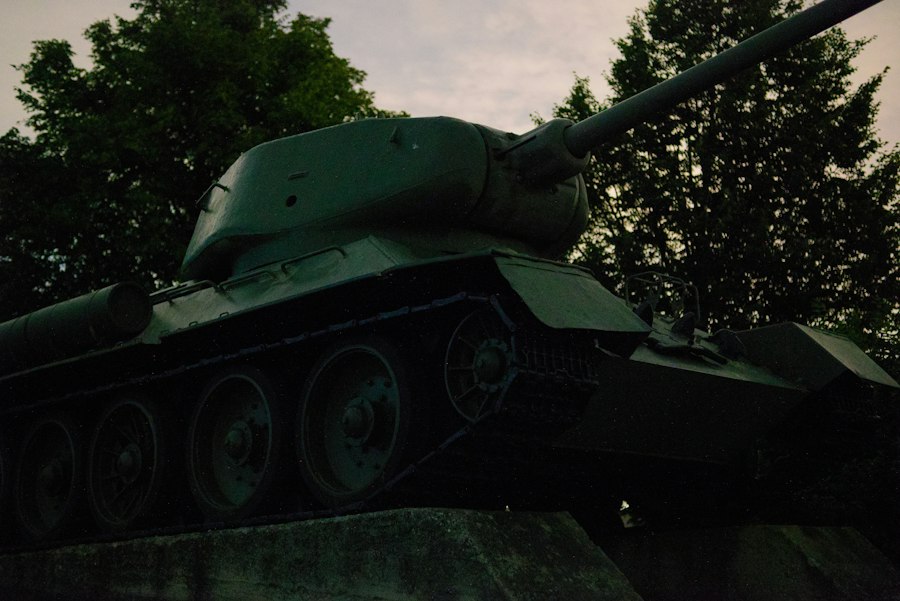
The Soviet Union continued to refine its mastery of armored warfare. The T-64 and T-72 main battle tanks, introduced during this period, incorporated advanced features such as composite armor, autoloader systems, and sophisticated fire control systems, making them formidable opponents on the battlefield. The development of specialized combat vehicles, like the BMP infantry fighting vehicle, also enhanced the survivability and combat effectiveness of Soviet ground forces. In the air, the Soviet Union continued to develop advanced fighter aircraft, such as the MiG-23 and MiG-29, and strategic bombers like the Tu-95 “Bear” and the supersonic Tu-160 “Blackjack.” Emphasis was placed on maneuverability, speed, and advanced missile systems.
The Military-Industrial Complex and Intelligence Gathering
The Brezhnev era solidified the power and influence of the Soviet military-industrial complex. Massive resources were channeled into research, development, and production, creating a vast network of design bureaus, factories, and research institutes. This complex, while highly effective in delivering military hardware, also represented a significant drain on the Soviet economy. Furthermore, intelligence gathering, both human and technical, played a crucial role in Soviet military technological development. Monitoring Western advancements and, where possible, acquiring blueprints and prototypes, allowed the Soviets to keep pace and, in some instances, to leapfrog Western developments.
The Late Soviet Period: Innovation, Stagnation, and the Arms Race’s Toll
The final decades of the Soviet Union’s existence were characterized by a continued, albeit increasingly strained, pursuit of technological superiority. While significant innovations occurred, the economic limitations and systemic inefficiencies of the Soviet system began to take their toll, leading to a widening technological gap in certain areas.
Stealth Technology and Precision Munitions
Despite its economic woes, the Soviet Union did make strides in areas like stealth technology, albeit with different approaches than the West. The development of the Su-27 “Flanker” and its subsequent variants demonstrated an increasing focus on aerodynamic design and radar cross-section reduction. Furthermore, the Soviet Union invested heavily in precision-guided munitions, including laser-guided bombs and anti-tank guided missiles, recognizing the importance of accuracy in modern warfare. These efforts, though sometimes lagging behind their Western counterparts, represented a conscious attempt to adapt to evolving battlefield realities.
The Impact of Economic Constraints and Systemic Inefficiencies
The immense cost of maintaining a technologically advanced military, coupled with a centrally planned economy that often struggled with innovation and efficiency, began to severely strain the Soviet system. The constant pressure to match or exceed American military spending diverted resources from other vital sectors of the economy, contributing to widespread shortages and declining living standards. The rigidities of the Soviet bureaucratic and scientific system also hampered rapid adaptation and the widespread adoption of new technologies, leading to instances where cutting-edge designs remained prototypes or were produced in limited numbers.
The Shadow of SDI and a New Era of Arms Control
The Strategic Defense Initiative (SDI), proposed by the United States in the 1980s, presented a significant challenge to Soviet military planners. While its feasibility was debated, the potential threat of a space-based missile defense system forced the Soviets to consider costly countermeasures. This period also saw a renewed focus on arms control, as the economic and human cost of the arms race became increasingly unsustainable for both superpowers. The eventual dissolution of the Soviet Union in 1991 brought an end to this intense period of military technological competition.
The evolution of Soviet military technology is a fascinating subject that reveals much about the strategic priorities of the USSR during the Cold War. For those interested in a deeper exploration of this topic, a related article can be found at In the War Room, which delves into the innovations and challenges faced by Soviet engineers and military planners. Understanding these developments not only sheds light on historical events but also provides context for contemporary military strategies.
Legacy and Lasting Impact
| Year | Technology/Equipment | Description | Significance |
|---|---|---|---|
| 1945 | T-34 Tank | Medium tank with sloped armor and powerful gun, widely used in WWII. | Revolutionized tank design and contributed to Soviet victory in WWII. |
| 1957 | R-7 Semyorka ICBM | First intercontinental ballistic missile developed by the USSR. | Enabled nuclear deterrence and launched Sputnik, the first artificial satellite. |
| 1960 | MiG-21 Fighter Jet | Supersonic jet fighter with delta wings, widely exported and used. | One of the most produced supersonic jets in history, key in Cold War air combat. |
| 1977 | T-72 Tank | Main battle tank with composite armor and advanced fire control systems. | Standard Soviet tank during late Cold War, exported globally. |
| 1980 | AK-74 Assault Rifle | Modernized version of AK-47 with smaller caliber 5.45×39mm rounds. | Improved accuracy and reduced recoil, standard infantry weapon. |
| 1983 | Su-27 Fighter Jet | Advanced air superiority fighter with high maneuverability and range. | Countered US F-15, enhanced Soviet air defense capabilities. |
The evolution of Soviet military technology left an indelible mark on the global geopolitical landscape and continues to influence modern defense capabilities. The advancements made during the Cold War, particularly in areas like rocketry, nuclear weapons, and armored vehicles, laid the foundation for the military power of successor states, most notably Russia.
Enduring Technological Contributions
Soviet military technological achievements, such as the development of ICBMs, advanced fighter jet designs, and robust tank platforms, have had a lasting impact. Many of these designs, or their descendants, remain in service today, adapted and modernized. The Soviet emphasis on simplicity, ruggedness, and mass production, while sometimes at the expense of sophistication, ensured the reliability and widespread deployment of their equipment. The legacy of Soviet rocketry is particularly evident in the global space launch industry.
The Geopolitical Implications of the Arms Race
The relentless pursuit of technological superiority during the Cold War had profound geopolitical consequences. The arms race fueled global tensions, shaped alliances, and dictated the strategic calculus of nations for decades. The proliferation of Soviet-designed weaponry around the world also contributed to regional conflicts and continues to influence the security dynamics of many nations. The experience of the Soviet Union serves as a case study in the complex relationship between ideology, economic capacity, and military technological development.
Lessons for the Future
The history of Soviet military technological evolution offers valuable lessons for contemporary defense strategy. It highlights the importance of sustained investment in research and development, the challenges of economic sustainability in an arms race, and the critical role of adaptability in the face of evolving threats. The Soviet experience underscores that technological superiority alone is not a guarantee of security, and that the societal and economic costs of such a pursuit must be carefully considered. The enduring legacy of Soviet military innovation continues to be studied and analyzed by defense strategists worldwide.

The Soviet Warship That Learned to Fly
FAQs
What were some key advancements in Soviet military technology during the Cold War?
During the Cold War, the Soviet Union made significant advancements in military technology, including the development of intercontinental ballistic missiles (ICBMs), strategic bombers like the Tu-95 Bear, and main battle tanks such as the T-72 and T-80.
How did Soviet military technology compare to that of Western countries during the Cold War?
Soviet military technology was often on par with or even surpassed that of Western countries during the Cold War. The Soviet Union excelled in areas such as missile technology, armored vehicles, and aircraft design, leading to a formidable military force.
What role did Soviet military technology play in the space race?
Soviet military technology played a crucial role in the space race, with the Soviet Union launching the first artificial satellite, Sputnik, and sending the first human, Yuri Gagarin, into space. Military rocket technology was adapted for space exploration, showcasing the Soviet Union’s technological prowess.
How did Soviet military technology evolve after the Cold War ended?
After the Cold War ended, Soviet military technology faced challenges due to economic difficulties in Russia. However, some technologies were modernized and adapted for new threats, such as the development of advanced missile defense systems and upgrades to existing aircraft and tanks.
What is the legacy of Soviet military technology in modern Russia?
The legacy of Soviet military technology in modern Russia is evident in the country’s continued focus on defense research and development. Russian military technology continues to be a significant player in the global arms market, with advancements in areas such as missile defense, electronic warfare, and unmanned aerial vehicles.