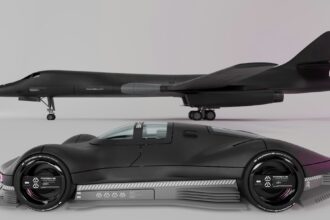
The Silent Slicers of the Surface: Ekranoplan and Hovercraft Pitted Against Each Other
The realm of surface transportation often conjures images of wheels on roads or hulls cutting through water. Yet, a fascinating niche exists where vehicles defy conventional interaction with their environment, skimming inches or feet above the surface. Two prominent contenders in this domain are the ekranoplan and the hovercraft, each offering distinct approaches to achieving near-frictionless travel. While both operate on principles of aerodynamic or hydrodynamic lift, their design philosophies, performance characteristics, and operational envelopes lead to vastly different capabilities and applications. This article delves into a comprehensive comparison of ekranoplans and hovercraft, examining their speed, efficiency, and diverse uses to illuminate their individual strengths and limitations.
In exploring the fascinating world of unique transportation vehicles, an insightful article on the differences between ekranoplans and hovercraft can be found on the website In The War Room. This piece delves into the design, functionality, and historical significance of both vehicles, highlighting their respective advantages and limitations in various environments. For a deeper understanding of these innovative crafts, you can read the article here: Ekranoplan vs Hovercraft.
Principles of Flight and Surface Interaction
The Ekranoplan’s Ground Effect Marvel
The ekranoplan, often referred to as a “wing-in-ground-effect vehicle” (WIG), operates on a principle fundamentally different from conventional aircraft. Its design leverages the “ground effect,” a phenomenon where a wing flying very close to a surface experiences a significant reduction in induced drag. This occurs because the proximity of the ground restricts the downward flow of air from the wing’s trailing edge, forcing it to spread sideways. This confinement effectively increases the wing’s aspect ratio and lift coefficient, allowing it to generate substantial lift with less effort.
An ekranoplan typically features a large wing surface, often with specialized chines or spray suppression devices along its hull. Propulsion is usually provided by engines mounted on pylons or integrated into the wing structure, directing thrust forward. The craft rises off the surface on a cushion of air generated by its forward motion and wing design, remaining at a relatively constant low altitude, typically a few meters. This low altitude is crucial; flying too high negates the ground effect, while flying too low risks collision with surface features. The ekranoplan effectively “rides” this cushion of air, allowing for remarkably efficient high-speed travel over water, ice, or flat land.
Aerodynamic Lift and Induced Drag Reduction
At the core of the ekranoplan’s capability lies its mastery of aerodynamics. As the ekranoplan gains speed, air is forced underneath its wings. The proximity to the surface, however, alters the airflow pattern. Instead of escaping freely downwards, the air is compressed between the wing and the surface, creating a high-pressure zone. This pressure differential generates lift, but more importantly, it significantly reduces the wingtip vortices that are the primary source of induced drag in conventional aircraft. Induced drag is the drag created as a consequence of lift generation. By minimizing these vortices, the ekranoplan can achieve significantly higher lift-to-drag ratios, translating directly into superior fuel efficiency at cruising speeds. The closer the ekranoplan flies to the surface, the more pronounced this ground effect becomes, and the more efficient its flight. This is why ekranoplans are inherently surface-bound vehicles, unable to achieve the higher altitudes of conventional aircraft.
Hull Design and Stability
The hull of an ekranoplan is not merely a passenger or cargo compartment; it plays a vital role in its aerodynamic stability and operation. Many ekranoplans feature a V-shaped or catamaran-like hull, which helps to manage water spray and provides a stable platform. The chines, the sharp edges running along the underside of the hull, are instrumental in deflecting water upwards and outwards, preventing it from inundating the wings and disrupting the airflow. The shape and size of the wings are meticulously designed to optimize lift generation within the ground effect. The overall design is a delicate balance between aerodynamic efficiency and the ability to handle the dynamic environment of the surface, whether it be calm water or choppy seas.
The Hovercraft’s Air Cushion Supremacy
In contrast to the ekranoplan’s aerodynamic reliance on proximity, the hovercraft, also known as an air-cushion vehicle (ACV), utilizes a more active form of lift generation. A hovercraft employs powerful fans to create a high-pressure air cushion beneath its hull. This cushion of air is contained by a flexible skirt, a skirt that trails around the perimeter of the vehicle. This skirt traps the air, allowing the hovercraft to “float” a short distance above the surface, independent of its forward speed.
Propulsion for a hovercraft is typically achieved through separate fans or propellers that provide thrust in any desired direction. This independent control of lift and thrust gives hovercraft exceptional maneuverability. They can move forward, backward, sideways, and even rotate on the spot. The height at which a hovercraft operates is determined by the volume and pressure of the air being pumped into its cushion, and it is generally not dependent on forward speed, unlike the ekranoplan.
Active Lift Generation and Skirt Technology
The defining feature of the hovercraft is its skirt system. This flexible, often segmented, curtain of material is crucial for containing the air cushion. The skirt acts as a flexible seal, adapting to the contours of the surface beneath the hovercraft. This adaptability allows hovercraft to traverse a wide variety of terrains, including water, mud, sand, ice, snow, and even relatively uneven ground. The skirt’s design is a sophisticated engineering challenge, balancing the need for a good seal with durability and minimal drag. Modern skirt designs incorporate features to minimize air loss and improve performance in challenging conditions. The continuous pumping of air by lift fans maintains the pressure within the skirt, keeping the hovercraft suspended above the surface.
Independent Propulsion and Maneuverability
Unlike the ekranoplan, whose forward motion is intrinsically linked to its lift generation through ground effect, hovercraft achieve lift independently of their propulsion system. This separation is the key to their remarkable agility. Separate fans or propellers provide thrust, allowing for precise directional control. This means a hovercraft can change direction almost instantaneously, move sideways, or hold its position against strong currents or winds. This maneuverability makes them ideal for roles requiring precise positioning, such as rescue operations, patrol duties, or navigating confined waterways. The ability to reverse thrust also provides effective braking, a feature not as readily available or as effective on ekranoplans.
The debate between ekranoplans and hovercraft has garnered significant interest in recent years, particularly as advancements in technology continue to shape their capabilities. For those looking to explore this topic further, an insightful article can be found at this link, which delves into the unique advantages and limitations of each vehicle type. Understanding these differences is crucial for anyone interested in modern transportation solutions and their potential applications in various industries.
Speed: A Tale of Two Surfaces
| Feature | Ekranoplan | Hovercraft |
|---|---|---|
| Principle of Operation | Ground effect wing-in-ground (WIG) effect for lift | Cushion of air created by fans under a flexible skirt |
| Typical Speed | 250-400 km/h (155-250 mph) | 80-100 km/h (50-62 mph) |
| Payload Capacity | Up to 100+ tons (varies by model) | Up to 50 tons (varies by model) |
| Range | Up to 1,000 km (620 miles) | Typically 200-400 km (125-250 miles) |
| Surface Types | Water and flat surfaces (limited rough terrain) | Water, ice, mud, and some rough terrain |
| Operational Environment | Primarily over water, requires calm conditions | Versatile; can operate over water, land, ice, and marsh |
| Fuel Efficiency | Moderate; benefits from aerodynamic lift | Lower; continuous fan operation consumes more fuel |
| Noise Level | High due to jet or prop engines | High due to lift fans and engines |
| Typical Use Cases | Military transport, fast cargo, passenger transport over water | Rescue operations, passenger transport, military, amphibious cargo |
| Development Origin | Primarily Soviet Union/Russia | Developed in UK, widely used worldwide |
The speed capabilities of ekranoplans and hovercraft are significantly influenced by their underlying operating principles and the surfaces they traverse. While both offer a departure from the friction-limited speeds of conventional watercraft, their peak performance and optimal operating regimes differ.
Ekranoplan’s High-Speed Domain
Ekranoplans are designed for speed. By exploiting the ground effect, they experience drastically reduced drag compared to displacement or planing hulls. This allows them to achieve speeds that are comparable to or even exceed those of many aircraft, while consuming considerably less fuel. Early Soviet-designed ekranoplans, like the “Caspian Sea Monster” (MD-160), were capable of speeds exceeding 500 kilometers per hour (approximately 310 mph). This remarkable speed is achievable because the ground effect essentially creates a “virtual wing” with significantly less drag. However, this speed is contingent upon maintaining the optimal low altitude. Descending too low will cause the craft to bog down or crash, while ascending too high will cause the ground effect to diminish, increasing drag and reducing speed and efficiency dramatically. Their operational speed is thus constrained to a narrow altitude band.
Hovercraft’s Versatile Velocity
Hovercraft, while capable of respectable speeds, generally do not reach the same extreme velocities as high-performance ekranoplans. Typical cruising speeds for hovercraft range from 50 to 100 kilometers per hour (approximately 30 to 60 mph), though some specialized military designs can achieve higher speeds. The speed of a hovercraft is limited by several factors, including the power of its propulsion system, the efficiency of its skirt in containing the air cushion, and the drag generated by the skirt itself and the air escaping from it. While their speed is lower than that of an ekranoplan, it is far more versatile. A hovercraft can maintain its speed over a much wider range of surfaces and conditions, and its ability to maneuver at speed makes it highly effective in tactical situations. Furthermore, the risk of damage at higher speeds due to surface anomalies is a greater concern for hovercraft than for ekranoplans operating in their ideal environment.
Efficiency: Fuel Consumption and Operational Costs
The efficiency of any vehicle is a critical factor in its practicality and economic viability. For both ekranoplans and hovercraft, efficiency is measured in terms of fuel consumption, maintenance, and the ability to carry a useful payload over a given distance.
Ekranoplan: The Fuel-Miser of the Surface
When operating within its optimal ground effect envelope, the ekranoplan is exceptionally fuel-efficient. The dramatic reduction in induced drag means that less engine power is required to maintain high speeds. This makes them potentially very attractive for long-distance cargo or passenger transport over large bodies of water. The fuel consumption per ton-mile can be significantly lower than that of conventional ships or even some aircraft. However, the caveat is that this efficiency is highly dependent on the flight profile. In conditions that force the ekranoplan to fly higher or deviate from its optimal altitude, its fuel efficiency will plummet. The maintenance of large ekranoplans can also be complex, involving the upkeep of large engines and specialized wing structures.
Hovercraft: A Trade-off for Versatility
Hovercraft, while offering unparalleled versatility, are generally less fuel-efficient than ekranoplans operating in their ideal conditions, and often less efficient than conventional vessels in their specific domains. The constant need to power lift fans to maintain the air cushion consumes a significant amount of energy, even when the craft is stationary or moving slowly. This “parasitic drag” from the air cushion and the escaping air contributes to higher fuel consumption. Furthermore, the wear and tear on the flexible skirts can be considerable, especially when operating over abrasive surfaces like sand or ice, leading to higher maintenance costs and more frequent replacement of skirt components. Despite these inefficiencies, the ability of hovercraft to operate across multiple terrains often outweighs the fuel cost for specific applications where conventional vehicles cannot perform.
Diverse Applications: Where They Shine
The distinct characteristics of ekranoplans and hovercraft dictate their suitability for various roles and environments. Their contrasting strengths allow them to excel in specialized niches.
Ekranoplan’s Niche: High-Speed Interdiction and Transport
Historically, ekranoplans were primarily developed by the Soviet Union for military applications. Their high speed and ability to traverse water surfaces made them ideal for rapid troop deployment, anti-ship warfare, and intelligence gathering. The sheer speed allowed them to close distances quickly and engage targets before they could react. More recently, there have been renewed interests in civilian applications, particularly for high-speed ferry services over large distances, cargo transport in remote coastal areas, and potential uses in search and rescue operations where speed is paramount. The vastness of bodies like the Caspian Sea and the Baltic Sea made them ideal testing grounds and operational areas for these unique craft. Their ability to operate at speeds approaching those of aircraft without the need for extensive airport infrastructure makes them a compelling proposition for specific logistical challenges.
Hovercraft’s Domain: Amphibious Assault, Rescue, and Patrol
The hovercraft’s amphibious nature and exceptional maneuverability make it invaluable in a wide array of military and civilian roles. In the military, they are used for amphibious assaults, allowing troops and equipment to land directly on beaches, bypassing heavily defended ports. Their ability to traverse varied terrain makes them ideal for patrolling coastlines, rivers, and estuaries. For civilian purposes, hovercraft are crucial for search and rescue operations in areas inaccessible to conventional boats, such as shallow waters, ice floes, or flooded regions. They are also used for passenger transport across lakes and rivers, environmental monitoring, and even for navigating challenging ice conditions in polar regions. Their ability to land and take off from virtually any flat surface makes them incredibly versatile for emergency response and utility tasks.
Conclusion: Complementary, Not Competing
In conclusion, while both ekranoplans and hovercraft represent ingenious solutions to overcoming surface friction, they are not direct competitors. The ekranoplan, a marvel of aerodynamic efficiency, excels in high-speed, long-distance travel over relatively smooth surfaces, making it ideal for specific transport and interdiction roles. Its efficiency is paramount when operating within its carefully defined ground effect envelope. Conversely, the hovercraft, with its active lift system and flexible skirt, prioritizes versatility and maneuverability above all else. It is the king of amphibious operations, capable of traversing a vast array of challenging terrains where the ekranoplan would be rendered useless or even endangered.
The choice between an ekranoplan and a hovercraft, therefore, is dictated by the specific mission requirements. For rapid, efficient transit across open water, the ekranoplan holds an undeniable advantage in speed and fuel economy. For operations requiring access to diverse and often unpredictable environments, where precision maneuvering and the ability to overcome obstacles are key, the hovercraft emerges as the superior choice. They are not vying for the same market but rather carving out their own unique and valuable niches in the spectrum of surface transportation, each offering a remarkable testament to human innovation in conquering the interface between air and ground. Their continued development and potential future integration into diverse logistical and operational frameworks underscore their enduring relevance.

The Soviet Warship That Learned to Fly
FAQs
What is an ekranoplan?
An ekranoplan is a type of ground effect vehicle that is designed to fly just above the surface of the water, using the ground effect to reduce drag and increase efficiency.
What is a hovercraft?
A hovercraft is a type of vehicle that is supported by a cushion of air, allowing it to travel over a variety of surfaces including water, land, mud, ice, and snow.
How do ekranoplans and hovercrafts differ in terms of operation?
Ekranoplans rely on the ground effect to generate lift and are most efficient when flying close to the surface of the water, while hovercrafts use a cushion of air to hover above the surface and can travel over a wider range of terrains.
Which type of vehicle is faster, an ekranoplan or a hovercraft?
Ekranoplans are generally faster than hovercrafts due to their ability to take advantage of the ground effect, which allows them to achieve higher speeds with less power.
What are some common applications of ekranoplans and hovercrafts?
Ekranoplans are often used for military purposes, such as surveillance and transport, while hovercrafts are commonly used for search and rescue operations, passenger transport, and amphibious military missions.