The Battle of the Bulge, a name etched into the annals of military history, represents a pivotal moment in World War II. For the Allied forces, it was a brutal and unexpected challenge that tested their resolve, leadership, and strategic acumen to their very limits. At the heart of the Allied response, making critical decisions under immense pressure, stood General Dwight D. Eisenhower, the Supreme Allied Commander. His leadership during those harrowing weeks in the Ardennes forest proved instrumental in weathering the German offensive and ultimately securing victory.
The winter of 1944-1945 was a period of relative calm along the Western Front. After the D-Day landings and the subsequent liberation of France, Allied forces had pushed deep into Germany. It was against this backdrop of anticipated victory that the German offensive, codenamed Wacht am Rhein (Watch on the Rhine) and later known as the Battle of the Bulge, struck with ferocious intensity on December 16, 1944.
Underestimation of German Capabilities
One of the most significant challenges Eisenhower faced in the initial stages of the battle was the widespread underestimation of the German army’s capacity for a major offensive. Following significant losses on both the Eastern and Western Fronts, many Allied commanders believed the Wehrmacht was on the verge of collapse. Intelligence reports, while noting increased German activity in certain sectors, largely failed to anticipate the scale and ambition of Hitler’s final desperate gamble.
The Illusion of a Quiet Sector
The Ardennes sector, characterized by dense forests and challenging terrain, had been considered a relatively quiet front. Allied troops stationed there were often less experienced or recovering from previous campaigns. This perception of a low-threat area contributed to a complacency that would prove costly. Eisenhower, while ultimately responsible, was reliant on the intelligence flowing to him, and the failure to accurately assess German intentions in this sector was a collective intelligence lapse.
The Shock of the Breakthrough
The German attack, launched across a 75-mile front, shattered the Allied lines with astonishing speed. The armored spearheads, supported by significant artillery fire, exploited weaknesses in Allied defenses and created a deep “bulge” in the Allied front line. This surprise assault caught Eisenhower and his staff entirely off guard.
Initial Disbelief and Confusion
Reports of a massive German breakthrough initially met with disbelief and confusion at Supreme Headquarters. The sheer audacity of the offensive, coupled with the speed of the German advance, challenged preconceived notions of the war’s trajectory. Establishing clear lines of communication and verifying the extent of the German penetration became an immediate and urgent priority.
Eisenhower’s Immediate Response: A Leader Tested
Despite the shock, Eisenhower’s leadership was quickly put to the test. His initial decisions, made in the face of incomplete and often contradictory information, set the tone for the Allied response. The immediate focus was on containing the German advance and preventing a complete collapse of the front.
The Crucial Decision to Reinforce
Eisenhower’s most immediate and crucial decision was to commit Allied reserves to stem the German tide. This was a difficult choice, as these reserves were crucial for ongoing offensives elsewhere. However, the gravity of the situation demanded their redeployment. He understood that failing to contain the bulge would have catastrophic consequences for the entire Allied war effort.
The decisions made by President Dwight D. Eisenhower during the Battle of the Bulge were pivotal in shaping the outcome of World War II. For a deeper understanding of the strategic considerations and challenges faced by Eisenhower and his command during this critical period, you can read a related article that explores these themes in detail. Check it out here: Eisenhower’s Strategic Decisions in the Battle of the Bulge.
Mobilizing the Allied Machine: Strategic Redeployments and Command Decisions
With the initial shockwave of the German offensive subsiding, Eisenhower’s focus shifted to orchestrating a comprehensive Allied response. This involved a series of complex strategic redeployments and decisive command decisions that would ultimately shape the course of the battle.
The Vital Role of Airborne Divisions
The defense of key communication and supply hubs, particularly the vital road junction of Bastogne, became paramount. Eisenhower understood the strategic importance of these locations and the need to secure them against the rapidly advancing German forces.
Paratroopers to Bastogne: A Defining Moment
One of Eisenhower’s most significant decisions was to rush airborne divisions to reinforce besieged garrisons, most notably Bastogne. The 101st Airborne Division, famously surrounded and outnumbered, received orders to hold the town at all costs. This airborne reinforcement, despite facing overwhelming odds, became a symbol of Allied resilience and a crucial choke point for the German advance. Eisenhower’s faith in the fighting spirit of these troops, even in dire circumstances, was a testament to his understanding of morale as a weapon.
Shifting the Center of Gravity: Realigning Forces
The German offensive had created a significant disruption to the Allied front. Eisenhower had to make tough choices about which sectors to defend and which to cede temporarily to consolidate his forces. This involved a delicate balancing act, ensuring that efforts to contain the bulge did not cripple operations on other fronts.
The 1st and 9th Armies to the North
Eisenhower made the difficult decision to detach significant portions of the U.S. First and Ninth Armies from their positions under British command and place them under the direct control of Field Marshal Montgomery. While controversial among some American commanders, this move aimed to create a more unified and effective command structure in the northern sector of the Ardennes salient. The objective was to build a strong defensive line and launch a counterattack from the north.
The 3rd Army’s Pivotal Role
Concurrently, General George S. Patton’s U.S. Third Army was tasked with a daring maneuver: to pivot 90 degrees and advance north to relieve the besieged forces at Bastogne. This audacious plan, requiring rapid movement and intense logistical support, became a critical element of Eisenhower’s strategy. The swiftness of Patton’s advance, accomplished in the face of harsh winter conditions and persistent German attacks, was a remarkable feat of military engineering and leadership.
The Importance of Unified Command
The Battle of the Bulge highlighted the complexities of multi-national and multi-army command. Eisenhower, as Supreme Allied Commander, had to navigate differing command structures and personalities to achieve a cohesive fighting force.
Navigating the Montgomery-Bradley Dynamic
The decision to place American forces under British command in the northern sector, while tactically sound in Eisenhower’s view, created friction with some American commanders, particularly General Omar Bradley. Eisenhower had to deftly manage these relationships, ensuring that operational effectiveness took precedence over inter-service rivalries. His ability to mediate and enforce his decisions, even when they were unpopular, underscored his leadership.
Eisenhower’s Direct Involvement
Throughout the battle, Eisenhower remained actively involved, making regular visits to the front lines and meeting with his commanders. This personal engagement provided him with firsthand knowledge of the evolving situation and allowed him to make informed decisions. His presence also served to boost the morale of the troops, demonstrating his commitment to their cause.
The Grit and Resilience of the Allied Soldier: Eisenhower’s Reliance on His Troops

While strategic decisions and command maneuvers are critical, the ultimate success of any military operation hinges on the courage and determination of the soldiers on the ground. Eisenhower understood this implicitly, and his decisions were consistently underpinned by a profound respect for the fighting capabilities of the Allied troops.
The Unwavering Spirit of the Infantry
The infantry soldiers, often the first to bear the brunt of the German onslaught, displayed extraordinary bravery and resilience. Facing overwhelming odds, freezing temperatures, and constant enemy pressure, they held their ground, inflicting heavy casualties on the advancing Germans.
Holding the Line Against All Odds
From the desperate defense of small villages to the gruelling combat in snow-covered forests, Allied infantrymen demonstrated an unyielding spirit. Eisenhower’s faith in their ability to endure and fight was a crucial element in his strategic calculations. He knew that even the most brilliant plans would falter without the grit of the common soldier.
The Indispensable Role of Logistics
The success of any offensive or defensive operation, especially in challenging terrain and weather conditions, is heavily reliant on a robust logistical network. Eisenhower recognized that the ability to supply troops with ammunition, food, fuel, and medical aid was as vital as battlefield tactics.
Overcoming the Logistical Nightmare
The Battle of the Bulge presented a severe logistical challenge. The rapid German advance threatened supply lines, and the harsh winter conditions hampered transportation. Eisenhower’s administration worked tirelessly to overcome these obstacles, rerouting supplies and prioritizing critical assets to the front lines. The ability to keep the troops supplied directly influenced their ability to fight and endure.
The Steadfastness of the Air Corps
While the ground war raged, the Allied air forces played a crucial role in disrupting German supply lines, providing close air support to ground troops, and eventually regaining air superiority over the battlefield.
Air Power as a Decisive Factor
The Allied air forces, once the weather cleared sufficiently, delivered devastating blows to German armor and transport. This air superiority not only inflicted direct damage but also severely hampered the German ability to reinforce and resupply their forces. Eisenhower had consistently advocated for the build-up of air power, and its effectiveness during the Bulge was a vindication of that strategy.
The Counteroffensive and the Road to Victory: Eisenhower’s Strategic Vision

Once the initial German thrust was blunted, Eisenhower’s strategic vision shifted towards a decisive counteroffensive. This phase of the battle required careful planning, precise execution, and the coordination of multiple Allied armies to push the Germans back and restore the Allied front line.
The pincers Movement: A Classic Maneuver
Eisenhower’s strategy for the counteroffensive involved a classic pincer movement. Allied forces, advancing from the north and south, aimed to trap and destroy the German forces within the Ardennes salient.
Montgomery’s Northern Push
Field Marshal Montgomery’s forces in the north, after consolidating their lines, launched a methodical advance, pushing south. This phase of the operation was characterized by attritional warfare, as Allied troops sought to systematically reduce German resistance.
Patton’s Southern Drive and the Relief of Bastogne
General Patton’s Third Army, having successfully relieved Bastogne, continued its relentless drive north. This southward thrust from the north and the northward thrust from the south converged, squeezing the German salient and forcing a German withdrawal.
The Importance of Timing and Coordination
The success of the pincer movement hinged on precise timing and seamless coordination between the various Allied armies. Eisenhower meticulously oversaw the synchronization of these offensives, ensuring that each army advanced at the right pace and in the right direction.
Eisenhower’s Constant Oversight
Eisenhower’s headquarters worked around the clock to monitor the progress of the counteroffensive. He received continuous updates from his commanders and made adjustments to the plan as needed. His ability to maintain a clear strategic overview while managing the complexities of multiple army group operations was a testament to his leadership.
The Strategic Significance of the German Retreat
The German retreat from the Ardennes was not simply a tactical withdrawal; it represented the final, catastrophic failure of Hitler’s last major offensive on the Western Front. The massive losses in men and materiel severely weakened the Wehrmacht, paving the way for the final Allied advance into Germany.
Hitler’s Gamble Fails
The Battle of the Bulge was a high-stakes gamble by Hitler, designed to split the Allied forces and force a negotiated peace. Eisenhower’s decisions, from the initial containment to the coordinated counteroffensive, effectively thwarted this ambition. The German army bled out in the Ardennes, a devastating blow from which it would never recover.
The decisions made by President Dwight D. Eisenhower during the Battle of the Bulge were pivotal in shaping the course of World War II. His strategic choices not only influenced the immediate outcome of the battle but also had lasting effects on the Allied forces’ approach to warfare. For a deeper understanding of these critical decisions and their implications, you can explore a related article that provides further insights into Eisenhower’s leadership during this challenging time. Check it out here.
Legacy and Lessons Learned: Eisenhower’s Enduring Impact
| Decision Aspect | Description | Impact | Date |
|---|---|---|---|
| Reallocation of Reserves | Shifted reserves to reinforce the Ardennes sector after the German offensive began. | Helped stabilize the front and prevent a complete breakthrough. | December 16, 1944 |
| Priority on Air Support | Ordered maximum use of air power once weather cleared to disrupt German supply lines. | Significantly reduced German mobility and resupply efforts. | December 23, 1944 |
| Relief of Bastogne | Directed General Patton’s Third Army to relieve the encircled 101st Airborne in Bastogne. | Boosted Allied morale and secured a critical road junction. | December 26, 1944 |
| Maintaining Offensive Momentum | Decided to continue offensive operations in other sectors despite the Bulge crisis. | Prevented Germans from exploiting weaknesses elsewhere. | December 1944 – January 1945 |
| Coordination with British Command | Enhanced coordination with British forces to ensure unified response. | Improved overall Allied strategic effectiveness. | December 1944 |
The Battle of the Bulge stands as a defining moment in Dwight D. Eisenhower’s military career and in the broader narrative of World War II. His leadership during this crisis demonstrated not only his strategic brilliance but also his profound understanding of the human element of warfare.
A Masterclass in Crisis Management
Eisenhower’s handling of the Battle of the Bulge is widely regarded as a masterclass in crisis management. He faced an unprecedented challenge with intelligence failures, initial disbelief, and overwhelming enemy force. Yet, he maintained his composure, made difficult and often unpopular decisions, and ultimately rallied the Allied forces to victory.
The Power of Delegation and Trust
While Eisenhower made the ultimate decisions, he also demonstrated a remarkable ability to delegate authority and trust his subordinate commanders. He selected capable leaders, provided them with clear objectives, and allowed them the latitude to execute their missions. This fostered initiative and adaptability within the Allied command structure.
The Human Cost of War and Eisenhower’s Empathy
Eisenhower was acutely aware of the immense human cost of the battle. He visited wounded soldiers, consoled grieving families, and never lost sight of the sacrifices made by the men under his command. This empathy, coupled with his unwavering resolve, endeared him to his troops and solidified his reputation as a compassionate and effective leader.
Eisenhower’s Post-War Reflections
In his post-war memoirs, Eisenhower reflected on the Battle of the Bulge with humility and a deep sense of responsibility. He acknowledged the intelligence failures but also highlighted the extraordinary courage and determination of the Allied soldiers. His reflections continue to offer valuable insights into the nature of leadership in wartime.
The Battle’s Impact on Allied Strategy
The Battle of the Bulge had a profound impact on Allied strategy. It underscored the need for constant vigilance, even when victory seemed within reach. It also reinforced the importance of flexible command structures and the ability to adapt to rapidly changing battlefield conditions.
The Path to German Surrender
By repelling the German offensive and inflicting devastating losses, Eisenhower’s decisions directly contributed to the eventual Allied victory and the unconditional surrender of Germany in May 1945. The Battle of the Bulge, a moment of profound peril, ultimately became a testament to the strength and resilience of the Allied cause, guided by the decisive leadership of Dwight D. Eisenhower.
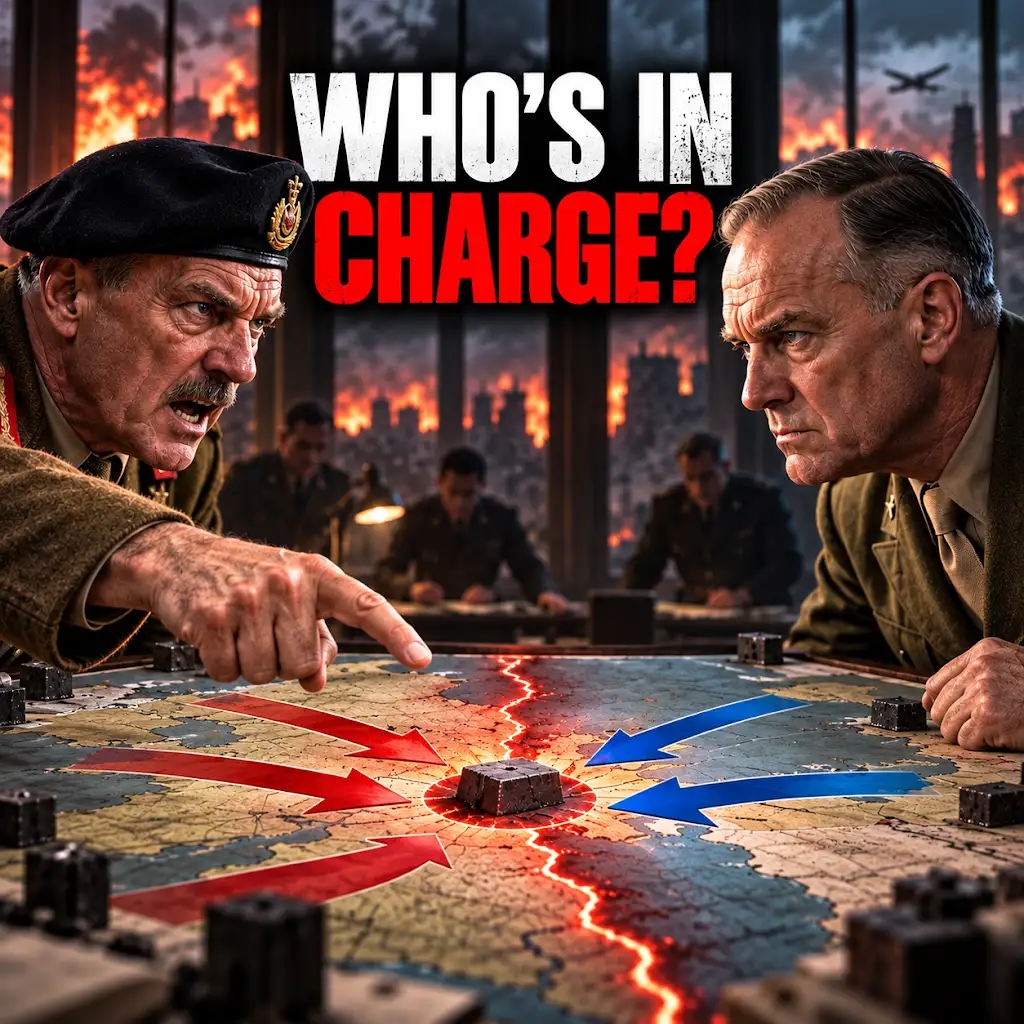
Eisenhower Gave Montgomery 2 U.S. Armies—Then He Wanted More
FAQs
What was the Battle of the Bulge?
The Battle of the Bulge was a major German offensive campaign launched through the Ardennes region in Belgium during World War II.
What decisions did Eisenhower make during the Battle of the Bulge?
Eisenhower made the crucial decision to prioritize the defense of Bastogne, a key town in the Ardennes, and to commit reserves to counter the German offensive.
How did Eisenhower’s decisions impact the outcome of the Battle of the Bulge?
Eisenhower’s decisions to reinforce Bastogne and commit reserves helped to stabilize the Allied front line and ultimately repel the German offensive, leading to a significant strategic victory for the Allies.
What challenges did Eisenhower face during the Battle of the Bulge?
Eisenhower faced challenges such as rapidly shifting German tactics, harsh winter weather conditions, and logistical difficulties in coordinating Allied forces during the Battle of the Bulge.
What was the significance of Eisenhower’s leadership during the Battle of the Bulge?
Eisenhower’s leadership during the Battle of the Bulge demonstrated his ability to make critical decisions under pressure, adapt to changing circumstances, and effectively command Allied forces to achieve victory.