The summer of 1944 was a period of immense pressure and profound strategic decisions. Following the D-Day landings and the subsequent push into Normandy, the Allied forces, particularly the British and American armies, found themselves at a critical juncture. It was during this volatile period that a significant leadership struggle, often referred to as the “Eisenhower-Montgomery Command Crisis,” erupted, threatening to derail Allied progress and expose deep-seated tensions between two of the era’s most prominent military figures: General Dwight D. Eisenhower, the Supreme Allied Commander, and Field Marshal Bernard Montgomery, the commander of the 21st Army Group. This crisis was not merely a clash of personalities, but a complex interplay of differing strategic visions, operational priorities, and the inherent difficulties of coordinating vast, multinational armies.
The roots of the Eisenhower-Montgomery command crisis lay in the fundamental differences in their strategic outlooks and operational philosophies, exacerbated by the realities of the Normandy campaign.
The Broad Front vs. The Narrow Thrust
Following the successful establishment of the beachhead, the Allied strategy, largely dictated by Eisenhower, was to advance on a broad front across France. This approach aimed to engage and overwhelm German forces by applying pressure from multiple directions, thereby preventing them from concentrating their defenses. Eisenhower envisioned a continuous push towards the German homeland, exploiting the initial momentum gained on D-Day and pushing through the enemy’s weakened defenses. His rationale was to prevent the Germans from establishing a cohesive defensive line and to maintain the initiative throughout the advance.
Montgomery, on the other hand, advocated for a more concentrated, “narrow front” strategy. He believed that a powerful, decisive thrust by a single, well-equipped army group would break through German lines, allowing for a deep penetration into enemy territory. This thrust, he argued, would disorganize the German command and control, leading to a rapid collapse of their defenses. Montgomery’s emphasis was on achieving a decisive breakthrough, a concept deeply ingrained in his military thinking from his experiences in North Africa and Italy. He felt that the broad front strategy, while potentially covering more ground, risked diluting Allied strength and allowing the Germans to recover and redengthen their positions.
The Operational Challenges of Normandy
The terrain of Normandy itself played a significant role in amplifying these strategic differences. The hedgerow country, characterized by dense vegetation and narrow lanes, proved to be a formidable obstacle for large armored formations. This terrain inherently favored defensive tactics and made rapid advances extremely difficult. Montgomery, commanding the British and Canadian forces at the spearhead of the advance, found himself bogged down in this attritional fighting, which validated his belief that a more focused approach was needed. He felt his forces were bearing the brunt of the German resistance, while other Allied formations were not contributing as effectively.
Eisenhower, from his vantage point as Supreme Commander, had to consider the overall operational picture, including the American advance in the south. He was acutely aware of the political and logistical implications of a strategy that might be perceived as favoring one nationality over another. The need to maintain troop morale, secure adequate supply lines for multiple advancing armies, and achieve overarching political objectives weighed heavily on his decision-making. The broad front strategy, while potentially less decisive in the short term, offered a more balanced approach to these complexities.
The Eisenhower Montgomery command crisis during World War II highlighted the complexities of Allied leadership and the challenges of coordinating military efforts among different nations. For a deeper understanding of this pivotal moment in history, you can read a related article that explores the dynamics of command and the impact of personal relationships on military strategy. To learn more, visit this article.
The Market Garden Gamble and Escalating Tensions
Operation Market Garden, launched in September 1944, became a pivotal moment in the unfolding crisis, serving to exacerbate the existing tensions between Eisenhower and Montgomery.
Montgomery’s Bold Proposal
Following the liberation of Paris and Brussels, Montgomery presented Eisenhower with a daring plan to bypass the heavily fortified Siegfried Line and seize key bridges over a series of rivers and canals in the Netherlands, culminating in a drive towards the Ruhr industrial heartland. Market Garden was a bold airborne and ground operation designed to create a corridor into Germany and outflank the main German defenses. Montgomery saw this as the decisive blow that would end the war by Christmas.
Eisenhower’s Reluctance and Compromise
Eisenhower, though recognizing the potential strategic rewards of Market Garden, harbored reservations. His concerns centered on the ambitious nature of the operation, the reliance on airborne troops, and the logistical challenges of sustaining such a deep penetration. He also felt that the American forces needed to consolidate their gains and prepare for their own offensive operations. However, under considerable pressure from Montgomery and the perceived urgency of ending the war, Eisenhower ultimately authorized the operation. While he agreed to the plan, his approval was not enthusiastic, and his reservations would later fuel further friction.
The Operation’s Outcome and its Fallout
Market Garden, despite initial successes, ultimately fell short of its ambitious objectives. The capture of the bridge at Arnhem proved to be an insurmountable task, and the operation incurred significant Allied casualties. While the operation achieved some strategic gains, it did not deliver the decisive knockout blow Montgomery had envisioned. The failure of Market Garden led to a significant increase in Montgomery’s frustration and his conviction that his strategic vision had been undermined. He blamed the operation’s shortcomings on a lack of resources, insufficient support from other Allied formations, and what he perceived as Eisenhower’s inadequate leadership and his failure to fully commit to the narrow thrust strategy.
The “All Road Lead to Rome” Repercussion: Montgomery’s Direct Challenge

The aftermath of Market Garden saw Montgomery escalate his criticisms, leading to direct challenges to Eisenhower’s authority and strategic direction.
The Infamous Meeting at Nijmegen
One of the most significant confrontations occurred during a meeting in Nijmegen in late September 1944. Montgomery, deeply aggrieved by the perceived failure of Market Garden and the subsequent lack of progress, openly questioned Eisenhower’s leadership and the overall Allied strategy. He directly asserted that Eisenhower was not a wartime commander capable of directing operations of this magnitude and that he (Montgomery) should be given more authority.
Montgomery’s Memorandum: A Direct Accusation
Following this meeting, Montgomery penned a memorandum that was highly critical of Eisenhower’s command and strategic decisions. In this document, he outlined his grievances, highlighting his belief that the broad front strategy was inefficient and costly, and that his own proposals for a concentrated effort had been ignored. The memorandum was not just a critique of strategy; it was a personal indictment of Eisenhower’s leadership capabilities. It implied that Eisenhower was too political, too hesitant, and too indecisive to effectively prosecute the war.
Eisenhower’s Reaction: Restraint and Authority
Eisenhower, while undoubtedly angered by Montgomery’s insubordination and the implicit challenge to his authority, displayed remarkable restraint. He recognized the immense political ramifications of such a public rift within the Allied command. However, he also understood the necessity of maintaining his position as Supreme Commander. Instead of engaging in a public debate or issuing a harsh reprimand, Eisenhower chose to address the issue privately and firmly. He reminded Montgomery of his ultimate authority and reiterated his commitment to the agreed-upon strategy, while also acknowledging some of Montgomery’s points in a diplomatic manner.
The Battle of the Bulge: A Test of Command and Control

The Ardennes Offensive, or the Battle of the Bulge, in December 1944, proved to be the ultimate crucible for Allied leadership and a stark test of Eisenhower’s command and control capabilities.
The German Surprise and Initial Setbacks
The German surprise attack through the Ardennes caught the Allied forces completely off guard. The swift German advance created a massive bulge in the Allied lines, threatening to split Allied forces and recapture vital supply ports. Initial reports of the breakthrough were dire, and there was a palpable sense of crisis within Allied headquarters.
Eisenhower’s Decisive Leadership
In the face of this emergency, Eisenhower demonstrated decisive leadership. He did not succumb to panic or indecision. He immediately authorized the redeployment of Allied forces, including American units from other sectors and elements of Montgomery’s 21st Army Group from the north, to counter the German offensive. He delegated authority to his subordinate commanders but maintained a clear overview of the unfolding situation.
Montgomery’s Role and the Resurgence of Tension
During the Battle of the Bulge, Montgomery was placed in command of all Allied forces north of the German salient, including American units. This controversial decision, while strategically sound in concentrating forces against the German advance, reignited some of the underlying tensions. Montgomery’s subsequent actions, particularly his perceived autocratic handling of the American troops under his command and his somewhat self-congratulatory pronouncements after the battle, further strained relations with some American commanders and with Eisenhower. He was credited with stabilizing the northern front, but his style and public statements were not always well-received by his American counterparts.
The Eisenhower Montgomery command crisis during World War II highlighted the complexities of military leadership and collaboration among Allied forces. This pivotal moment is further explored in a related article that delves into the dynamics of command and the challenges faced by leaders in high-stakes situations. For a deeper understanding of these historical events, you can read more about it in this insightful piece on military strategy and leadership at In The War Room.
The Lingering Impact and Legacy of the Crisis
| Metric | Details |
|---|---|
| Event | Eisenhower-Montgomery Command Crisis |
| Time Period | 1950s |
| Key Figures | General Dwight D. Eisenhower, Field Marshal Bernard Montgomery |
| Nature of Crisis | Command disagreement and rivalry during NATO military planning |
| Location | Europe (NATO Headquarters) |
| Impact on NATO | Delayed unified command decisions and affected military cohesion |
| Resolution | Reorganization of command structure and Eisenhower appointed Supreme Allied Commander Europe (SACEUR) |
| Significance | Set precedent for NATO command hierarchy and cooperation |
The Eisenhower-Montgomery Command Crisis, while eventually resolved, left a lasting imprint on the Allied war effort and continues to be studied for its insights into leadership and command.
Preserving Allied Unity
Despite the profound disagreements and personal friction, both Eisenhower and Montgomery understood the paramount importance of maintaining Allied unity. Eisenhower’s measured approach, coupled with his unwavering assertion of command authority, prevented the crisis from fracturing the Allied coalition. Montgomery, despite his strong convictions, ultimately respected Eisenhower’s position and continued to serve under his command. Their ability to set aside personal differences for the greater objective of defeating Nazi Germany was crucial.
The Evolution of Command Structures
The crisis highlighted the inherent challenges of commanding a multinational army with diverse command cultures and strategic philosophies. It underscored the need for clear lines of authority, effective communication, and a shared understanding of strategic objectives. The lessons learned from this period likely informed the development of future multinational command structures and strategies.
A Case Study in Leadership Under Pressure
The Eisenhower-Montgomery Command Crisis remains a compelling case study in leadership under extreme pressure. It demonstrates how differing strategic visions, personality clashes, and thefog of war can create significant challenges within a military command. Eisenhower’s ability to navigate these complexities, maintain his authority, and ultimately guide the Allied forces to victory, is a testament to his strategic acumen and his diplomatic skill. Montgomery’s relentless pursuit of his strategic vision, while at times divisive, also reflected a deep commitment to achieving decisive victory. The crisis serves as a reminder that even in the face of immense challenges and personal animosities, the ultimate success of any military campaign hinges on the ability of its leaders to effectively collaborate and achieve common goals. The enduring legacy of this command struggle is a testament to the complex and often fraught nature of wartime leadership.
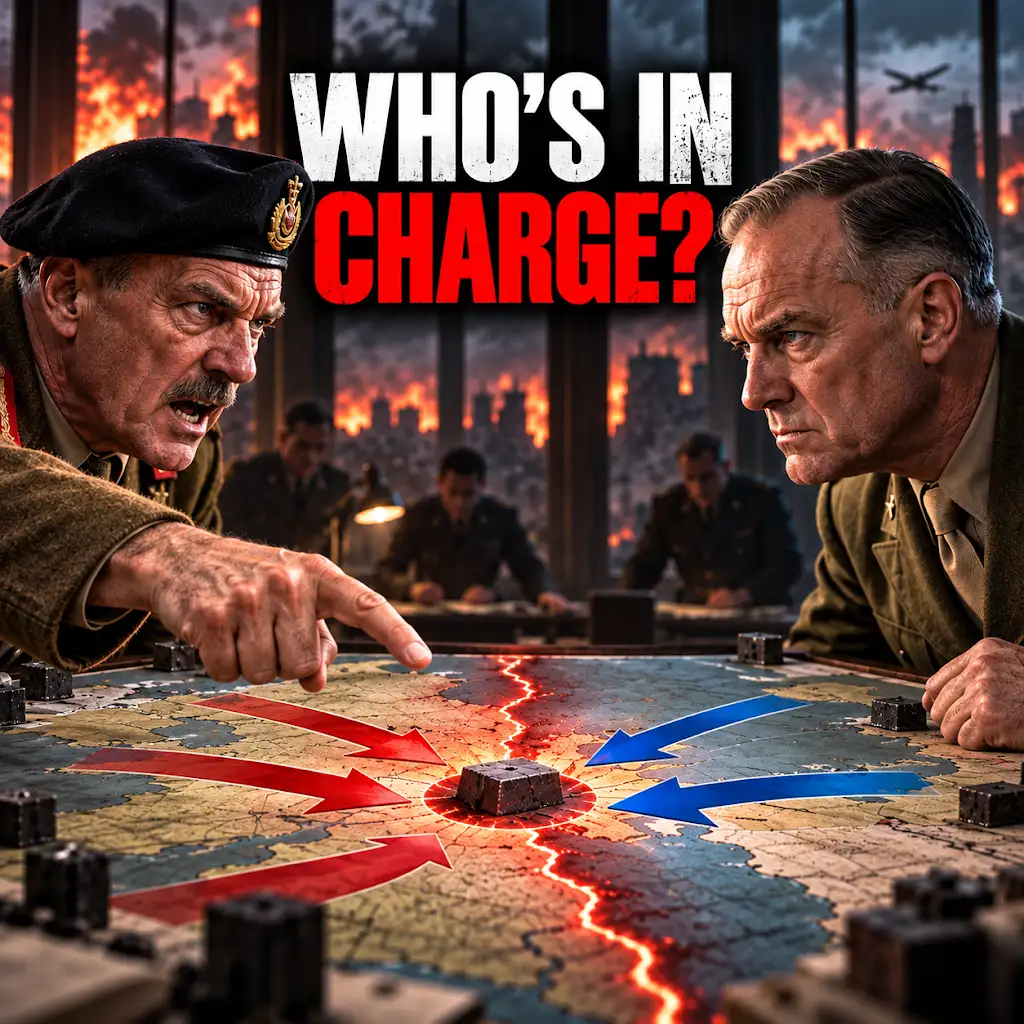
Eisenhower Gave Montgomery 2 U.S. Armies—Then He Wanted More
FAQs
What was the Eisenhower Montgomery command crisis?
The Eisenhower Montgomery command crisis refers to a disagreement between General Dwight D. Eisenhower and General Bernard Montgomery during World War II over the strategy and command structure for the Allied forces in Europe.
When did the Eisenhower Montgomery command crisis occur?
The Eisenhower Montgomery command crisis occurred in 1944, leading up to and during the Battle of Normandy (D-Day) in June of that year.
What were the main points of contention between Eisenhower and Montgomery?
The main points of contention between Eisenhower and Montgomery included disagreements over the overall strategy for the invasion of Normandy, the allocation of resources and troops, and the command structure of the Allied forces.
How was the Eisenhower Montgomery command crisis resolved?
The crisis was ultimately resolved through the intervention of British Prime Minister Winston Churchill, who helped mediate the dispute between Eisenhower and Montgomery and reaffirmed Eisenhower’s overall command of the Allied forces in Europe.
What were the consequences of the Eisenhower Montgomery command crisis?
While the crisis did cause some tension and delays in the Allied planning for the invasion of Normandy, ultimately the two generals were able to work together and the successful D-Day landings marked a turning point in World War II.