
The annals of World War II are replete with tales of strategic brilliance and the iron will of generals who shaped the course of history. Yet, beneath the veneer of unified Allied purpose, lay a simmering undercurrent of tension and disagreement, particularly between two towering figures: Dwight D. Eisenhower, the Supreme Allied Commander, and Bernard Montgomery, the tenacious British Field Marshal. Their relationship, a delicate dance of mutual respect and profound strategic divergence, often threatened to derail critical operations and underscored the inherent challenges of commanding a multinational force. The story of Eisenhower and Montgomery is not just a historical footnote; it is a compelling case study in leadership, ego, and the relentless pursuit of victory, even when the path forward was fraught with disagreement.
The conflict between Dwight Eisenhower and Bernard Montgomery during World War II is a fascinating study of leadership and military strategy. Their differing approaches to command and operations often led to tension, particularly during the planning of the D-Day invasion. For a deeper understanding of this complex relationship and the implications it had on the Allied forces, you can read a related article that explores their dynamics in detail at this link.
The Genesis of a Complex Relationship
The foundations of Eisenhower and Montgomery’s relationship were laid in the crucible of war, forged through shared objectives but defined by starkly different approaches. Eisenhower, the American diplomat-turned-general, favored a broad, coordinated strategy involving multiple thrusts and the empowerment of his subordinate commanders. Montgomery, a seasoned British officer with an unshakeable belief in his own tactical acumen, gravitated towards a more singular, decisive offensive, often advocating for a concentrated blow at a key point. This fundamental difference in strategic philosophy would become the bedrock of their recurring conflicts.
Eisenhower: The Diplomat-General
Eisenhower’s appointment as Supreme Allied Commander in Europe in late 1943 was a testament to his unique skill set. He was not the most brilliant tactician on paper, nor the most decorated soldier in terms of battlefield experience. Instead, he possessed an unparalleled ability to manage egos, bridge national divides, and maintain the cohesion of a diverse coalition. His strength lay in his understanding of personalities, his patience, and his unwavering commitment to the overarching Allied goal. He was a master of the political battlefield, understanding that military success hinged as much on maintaining unity among allies as it did on defeating the enemy. His approach was characterized by a desire for consensus and a reluctance to alienate key personalities, even when their strategies were questionable. This diplomatic approach, while essential for maintaining the alliance, sometimes put him at odds with commanders who preferred a more direct, confrontational style of leadership.
Montgomery: The Master Tactician and His Convictions
Montgomery, on the other hand, was a man of immense self-belief. He had a reputation for meticulous planning, an almost obsessive attention to detail, and an unwavering conviction in his own judgment. Having enjoyed significant successes in North Africa and Sicily, he arrived in Europe with a reputation for being the man who could deliver victory. His preferred method of warfare was a carefully orchestrated, overwhelming offensive, designed to crush the enemy through superior firepower and methodical advance. He was not afraid to demand resources, time, or concessions if he believed it was necessary for success. This single-mindedness, while effective in certain situations, often clashed with Eisenhower’s broader, more integrated strategic vision. Montgomery’s belief that he was the Allied force’s most capable offensive commander sometimes led him to view Eisenhower’s more distributed approach as hesitant or indecisive.
Early Encounters and Divergent Philosophies
Even in the early stages of their collaboration, the differences were palpable. During the North African campaign, while both were instrumental in Allied victories, their working relationship was marked by moments of friction. Eisenhower, as the overall theater commander, aimed for a coordinated approach, while Montgomery, commanding the British Eighth Army, often pursued his own objectives with a distinct emphasis on thoroughness and minimizing casualties, sometimes to the perceived detriment of speed. This laid the groundwork for the more significant clashes that were to come. Eisenhower’s inherent trust in the capabilities of his various national commanders, coupled with his desire to maintain morale across the entire Allied force, meant he was often reluctant to commit all resources to a single, highly risky thrust, a preference that often frustrated Montgomery.
The Italian Campaign: A Prelude to Disagreement

The Italian campaign, a strategic choice born of a desire to pressure Germany on a southern flank and occupy Italian forces, quickly became a proving ground for the strains in Eisenhower and Montgomery’s command. The theater was characterized by difficult terrain and a determined German defense, demanding a nuanced approach that often exposed the divergent strategic thinking of the Allied commanders.
Operation Avalanche and the Salerno Landings
The landings at Salerno in September 1943, a crucial part of the Allied invasion of Italy, exemplified the operational challenges and the emerging friction. While the initial landings were successful, the subsequent fighting was brutal, with Allied forces facing fierce German counterattacks. Montgomery, whose forces were involved in the broader campaign, often expressed his frustration with the pace of operations and what he perceived as a lack of decisive action from the overall command. Eisenhower, from his distant headquarters, had to balance the immediate needs of the troops on the ground with the larger strategic imperatives and the political realities of maintaining the alliance.
Montgomery’s Criticisms and Eisenhower’s Restraint
Montgomery was quick to voice his criticisms, often directly to Eisenhower or through his staff, arguing for a more concentrated effort and a clearer strategic direction. He felt that the Italian campaign was becoming a quagmire, draining resources and manpower without delivering a decisive blow. Eisenhower, while acknowledging Montgomery’s concerns and respecting his experience, found himself constantly mediating between different Allied interests and strategic priorities. He understood the importance of the Italian front but was also acutely aware of the looming D-Day invasion of Normandy, which demanded the lion’s share of Allied resources. This balancing act required a level of diplomatic finesse that Montgomery, with his more direct approach, often found lacking in his superior.
The Burden of a Multinational Command
The Italian campaign highlighted the inherent difficulties of commanding a multinational army. Different national objectives, varying levels of equipment and training, and distinct cultural approaches to warfare all contributed to operational complexities. Eisenhower’s primary role was to ensure these diverse elements worked in concert, a task that often involved smoothing over ruffled feathers and ensuring that national pride did not supersede the collective mission. Montgomery’s focus, by contrast, was on achieving tactical victory with the forces under his direct command, and he was often impatient with what he saw as the bureaucratic and political entanglements that Eisenhower had to navigate.
D-Day and the Shadow of Operation Overlord

The planning and execution of the Normandy landings, Operation Overlord, represented the apex of Allied military endeavor in Europe. It was also the stage on which the tensions between Eisenhower and Montgomery would reach their most critical point, as the fate of the Western Front hung in the balance.
The Airborne Assault and Montgomery’s Vision
Montgomery, as the ground force commander for the initial D-Day assault, had a very specific vision for the operation. He advocated for a more aggressive and concentrated airborne drop, aiming to secure key bridges and road networks deep behind enemy lines. This vision clashed with Eisenhower’s desire for a broader, more dispersed airborne operation to disrupt enemy movements across a wider front and to provide greater flexibility for the ground forces. Eisenhower’s concerns included the risks of concentrating too many paratroopers in a single area, making them vulnerable to concentrated enemy fire, and the potential for confusion and disorganization if the drops were too deep and spread out.
Disagreements Over Objectives and Tactics
The disagreements were not merely about the number of paratroopers or their drop zones; they extended to the broader objectives of the initial landings. Montgomery favored a rapid and direct thrust towards Caen, a strategically important city, believing it would be the key to breaking out of the Normandy beachhead. Eisenhower, while recognizing the importance of Caen, was more inclined towards a broader offensive, aiming to outflank German defenses and exploit weaknesses across a wider front. This difference in approach stemmed from their differing views on how to engage the formidable German defenses. Montgomery sought to overwhelm a specific point, while Eisenhower sought to create multiple dilemmas for the enemy.
Eisenhower’s Decision and Montgomery’s Compliance
Ultimately, Eisenhower, as the Supreme Commander, had the final say. He approved a plan that incorporated elements of both their visions, but with a distinct emphasis on a more balanced approach, reflecting his broader strategic considerations. While Montgomery complied with the approved plan, his discontent was evident, and it would continue to color his interactions with Eisenhower throughout the campaign. This episode underscores Eisenhower’s difficult task of managing powerful personalities and conflicting strategic visions within his command structure, a task that required him to be both a commander and a mediator.
The conflict between Dwight Eisenhower and Bernard Montgomery during World War II is a fascinating topic that highlights the complexities of military leadership and strategy. Their differing approaches to command and operational planning often led to tensions, particularly during the planning of the D-Day invasion. For a deeper insight into this historical rivalry, you can read more in the article available at In The War Room, which explores the dynamics of their relationship and its impact on the Allied forces.
The Race to Berlin: Divergent Strategies for the Final Push
| Aspect | Dwight Eisenhower | Bernard Montgomery | Conflict Details |
|---|---|---|---|
| Role | Supreme Allied Commander, European Theater | Commander, British 21st Army Group | Both were senior Allied commanders during WWII with overlapping responsibilities |
| Leadership Style | Consensus-builder, diplomatic | Assertive, direct, sometimes confrontational | Differences in leadership style led to friction in planning and execution |
| Strategic Approach | Broad, multi-national coordination | Focused on British forces and direct offensive operations | Disagreements on timing and scale of operations, e.g., Normandy invasion |
| Key Disputes | Preferred broad front strategy | Favored narrow front, concentrated attacks | Conflict over operational strategy in Northwest Europe 1944 |
| Impact on Campaigns | Maintained overall Allied unity and coordination | Occasionally challenged Eisenhower’s decisions | Despite conflicts, cooperation led to successful liberation of Western Europe |
| Post-War Relations | Respected Montgomery but maintained authority | Resented some of Eisenhower’s decisions | Professional respect but personal tensions remained |
The period following the D-Day landings saw the Allied armies pushing inland, and with them, the enduring strategic disagreements between Eisenhower and Montgomery. The question of how best to deliver the final blow to Nazi Germany became a focal point of their conflicting views.
Montgomery’s “All-Out” Push vs. Eisenhower’s Broad Front
As the Allies liberated France and advanced towards the German border, Montgomery continued to advocate for a concentrated, “all-out” offensive in a specific sector, often championed by his own forces. He believed this would be the quickest and most decisive way to end the war. This was in stark contrast to Eisenhower’s preference for a broad-front advance, aimed at stretching German defenses thin and exploiting weaknesses wherever they appeared. Eisenhower believed that a concentrated thrust, while potentially yielding rapid gains in one area, risked overextension and vulnerability to enemy counteroffensives, especially given the depleted state of Allied resources and the ongoing need to secure multiple fronts.
Operation Market Garden: A Case Study in Disagreement
Operation Market Garden, a daring airborne and ground assault aimed at securing a series of bridges in the Netherlands, is perhaps the most famous example of this strategic divergence. Montgomery championed the operation, seeing it as a potential shortcut to Berlin. Eisenhower, while supportive of the concept, harbored reservations about the ambitious scope and the reliance on airborne troops to achieve such a far-reaching objective. The operation ultimately fell short of its most ambitious goals, and while Montgomery’s initial plans were adjusted, the outcome fueled further debate about the wisdom of such concentrated, high-risk offensives. Some historians argue that Eisenhower’s initial caution, while understandable given the risks, may have also been influenced by a desire to avoid singling out Montgomery for what could have been a catastrophic failure, thereby preserving the overall Allied coalition.
The Command Structure and Eisenhower’s Ultimate Authority
Despite their disagreements, Eisenhower consistently maintained his authority as Supreme Commander. He was responsible for the overall strategic direction of the Allied forces, and while he valued Montgomery’s tactical expertise and sought his counsel, he was not beholden to his subordinate’s preferences. This sometimes led to Montgomery feeling sidelined or that his strategic insights were not fully appreciated. However, Eisenhower’s firm grip on the reins of command ensured that the Allied war effort remained unified, even when individual commanders harbored different ideas about the best path to victory. His ability to absorb criticism and make decisions that served the broader Allied interest, even when they were unpopular with some of his most prominent generals, was a hallmark of his leadership.
Legacy and Conclusion: A Complex Partnership
The relationship between Dwight D. Eisenhower and Bernard Montgomery was far from harmonious, but it was undeniably effective. Their conflicts, while sometimes acrimonious, were often born from genuine disagreements about the best way to achieve victory, not from personal animosity alone. Both men were driven by an intense desire to defeat Nazism, and their clashing styles, in a strange way, may have contributed to the overall success of the Allied war effort.
The Necessity of Compromise and Cooperation
The enduring lesson from Eisenhower and Montgomery’s command relationship is the inherent complexity of leading a coalition. It requires not only strategic vision and tactical acumen but also the ability to compromise, to mediate, and to foster cooperation among individuals with differing perspectives and ambitions. Eisenhower’s genius lay in his ability to harness these disparate elements and forge them into a cohesive fighting force. Montgomery’s tenacity and his unwavering focus on achievable objectives, while sometimes a source of friction, also contributed significantly to Allied successes.
A Different Outcome with Different Leaders?
One can only speculate on how the war might have unfolded if the command structure had been different. Would a different Supreme Commander have been more amenable to Montgomery’s concentrated offensives? Or would a different British commander have been more willing to cede to Eisenhower’s broader strategic vision? The reality is that Eisenhower and Montgomery, with all their flaws and disagreements, were the leaders who guided the Allied forces to victory in Europe. Their story is a testament to the fact that even in the face of intense conflict and disagreement, a shared objective can forge unlikely partnerships and ultimately lead to triumph. Their complex partnership, marked by both friction and a grudging respect, stands as a significant chapter in the grand narrative of World War II.
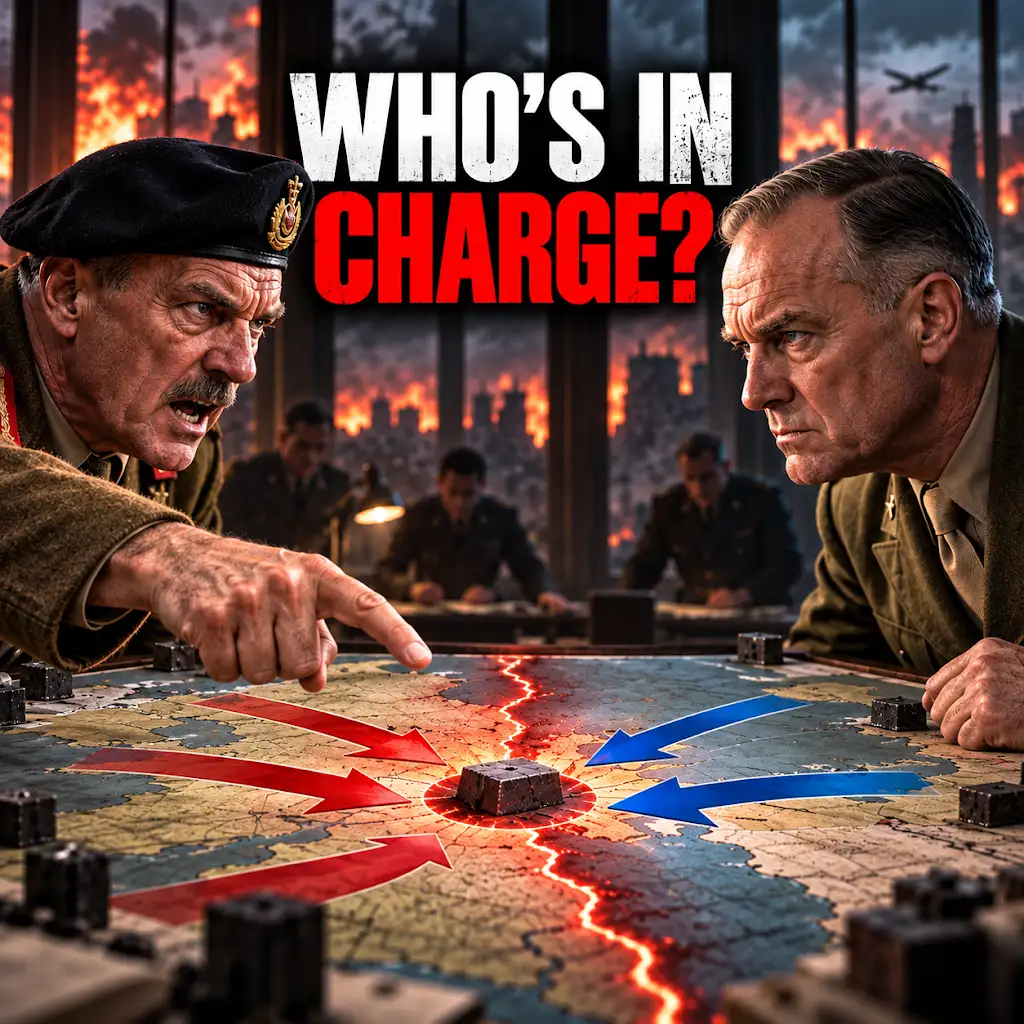
Eisenhower Gave Montgomery 2 U.S. Armies—Then He Wanted More
FAQs
What was the conflict between Dwight Eisenhower and Bernard Montgomery?
The conflict between Dwight Eisenhower and Bernard Montgomery was primarily a result of differing military strategies and personalities during World War II.
What were the main points of contention between Eisenhower and Montgomery?
Eisenhower and Montgomery disagreed on various strategic decisions, including the timing and location of key offensives, allocation of resources, and overall approach to the war in Europe.
How did the conflict between Eisenhower and Montgomery impact the Allied war effort?
The conflict between Eisenhower and Montgomery led to delays, inefficiencies, and strained relationships within the Allied command structure, which could have potentially hindered the overall success of the war effort.
Did Eisenhower and Montgomery ever reconcile their differences?
Despite their disagreements, Eisenhower and Montgomery were able to work together to achieve the common goal of defeating Nazi Germany. They eventually put aside their personal differences for the greater good of the Allied forces.
What was the ultimate outcome of the conflict between Eisenhower and Montgomery?
The conflict between Eisenhower and Montgomery did not have a lasting impact on their respective legacies, as both men are still remembered as key figures in the Allied victory in World War II.