The chill in the air of rural France in the autumn of 1944 was a constant companion, a stark contrast to the warmth that bloomed in the heart of a young woman named Genevieve Dubois. Her life, like so many others, had been irrevocably altered by the war. But amidst the ruins and the uncertainty, a flicker of hope, a profound personal connection, had emerged. It was a connection forged in the fleeting days of liberation, a time when the Allied forces poured into her village, bringing with them not just freedom, but also camaraderie and, for some, unexpected love. Genevieve, barely out of her teens, found herself drawn to a tall, kind-eyed American soldier named Sergeant Thomas Miller. Their courtship was swift, clandestine, and passionate, a stolen interlude in a world at war. He spoke of home, of dreams of a future beyond the battlefield, and she, in turn, shared her quiet world of village life, of dreams of peace and a family. Their time together was tragically brief, a handful of stolen moments before the relentless march of war pulled him away, leaving Genevieve with a secret that would shape her life and the lives of generations to come.
The Unforeseen Consequence of War
The passage of time, while healing many wounds, also brought its own unique set of challenges. Genevieve found herself carrying a precious secret, a burgeoning life within her that was a tangible reminder of her time with Sergeant Miller. The societal norms of the mid-20th century, particularly in a small French village, were rigid. A child born out of wedlock carried a significant stigma, a burden Genevieve was determined to shield her child from. She poured all her love and devotion into raising her daughter, Isabelle, as a single mother, a difficult but ultimately rewarding path. Isabelle grew up knowing of her father only through whispered stories, a romanticized figure from a distant time and place. Genevieve never received word from Sergeant Miller, and as the years turned into decades, the hope of his return, or even of him knowing of his child, began to fade. Isabelle, however, inherited her mother’s resilience and her father’s wanderlust, a curious spirit that often led her to ponder the identity of the man who had played such a pivotal role in her existence.
A Daughter’s Quest for Identity
As Isabelle reached adulthood, the questions about her father became more pressing. She yearned to understand the circumstances of her birth, to connect with a part of her heritage that had remained elusive. Genevieve, though loving, was often reticent to dwell on the painful memories of the war and the separation. Yet, the silent longing in her daughter’s eyes eventually prompted her to share more intimate details, fragments of letters that had been carefully preserved, photographs, and the lingering scent of a soldier’s uniform that had been tucked away. Isabelle’s quest was not one of blame or accusation, but of a deep-seated need for wholeness, a desire to fill the void of a father’s presence. She began to meticulously collect every scrap of information, every faded inscription, every anecdotal detail that could shed light on Sergeant Thomas Miller. The task, however, was monumental, like searching for a single grain of sand on a vast beach.
The Long Road to Discovery
Isabelle’s journey involved years of dedicated research, poring over archives, delving into historical records, and connecting with genealogists. The digital age offered new tools, but the lack of concrete information about Sergeant Miller made the process arduous. She learned of the general movements of American troops in the region during that period, piecing together potential timelines and locations. She contacted historical societies, veteran organizations, and even embarked on trips to the United States, following faint trails of names and addresses that were often outdated or led to dead ends. The emotional toll was significant, marked by moments of profound hope followed by crushing disappointment. Yet, Isabelle’s unwavering determination, fueled by her mother’s enduring love and her own innate curiosity, propelled her forward. She understood that this was not just about finding a name; it was about understanding her lineage, her identity, and the story of a love that had transcended the brutality of war.
In a fascinating exploration of familial connections and the power of modern science, an article titled “DNA Identifies American GI Father” delves into the story of how genetic testing has transformed the lives of individuals seeking to uncover their heritage. This piece highlights the emotional journey of a child discovering their father’s identity through DNA analysis, showcasing the profound impact of such technology on personal histories. For more details, you can read the full article here: DNA Identifies American GI Father.
The Breakthrough: A DNA Connection

The modern marvel of DNA technology, once a concept confined to science fiction, became Isabelle’s ultimate hope. She submitted her DNA to a reputable ancestry testing service, a gamble that held the potential for either profound discovery or continued silence. The waiting period was fraught with a familiar blend of anticipation and apprehension. Then, the email arrived. A potential match. A distant relative of Sergeant Thomas Miller had also submitted their DNA, and the algorithms had identified a statistically significant connection. This was not a direct hit, but a familial link, a thread that, with careful unraveling, could lead to the truth. Isabelle felt a surge of adrenaline, a feeling of being closer than ever before. The genetic data, a string of base pairs and nucleotides, held the key to unlocking a decades-old mystery.
Tracing the Genetic Footprint
The initial match was a cousin, several times removed, of Sergeant Thomas Miller. This individual, living in a different part of the United States, was initially as surprised as Isabelle was delighted. However, with a shared desire to understand the connection, they began to communicate. Isabelle shared her mother’s story, the approximate timeframe, and the details she had about Sergeant Miller. The cousin, in turn, provided family trees, names, and photographs that began to paint a clearer picture of Sergeant Miller’s life. It was through this collaborative effort, combining Isabelle’s historical research with the cousin’s genealogical knowledge, that a more solid biographical profile of Sergeant Thomas Miller began to emerge. They learned of his hometown, his family members, and the military unit he served with. The puzzle pieces, once scattered and disparate, were slowly but surely fitting together, guided by the invisible blueprint of their shared DNA.
Confirmation and Closure
The crucial step was to confirm the paternal link. The cousin, having identified several living relatives of Sergeant Miller, including a nephew who was still alive, suggested a direct DNA comparison. Isabelle, with her mother’s blessing, embarked on the final leg of her journey. The nephew, an elderly gentleman, was deeply moved by Isabelle’s story and readily agreed to provide a DNA sample. The results were definitive. The DNA analysis confirmed, with an overwhelming degree of certainty, that Sergeant Thomas Miller was indeed Isabelle’s father. The confirmation brought a wave of emotions – relief, joy, a profound sense of peace, and a deep sadness for the years lost, for the father she never knew. For Genevieve, witnessing this moment was the culmination of a lifetime of quiet strength and enduring love. The DNA had not only revealed a father but had also brought a sense of closure to a chapter of her life marked by both hardship and unwavering hope.
A Legacy Reclaimed

The revelation that Sergeant Thomas Miller was Isabelle’s father was more than just a personal discovery; it was the reclaiming of a lost legacy. Isabelle, through this genetic connection, now understood the full scope of her heritage. She learned that Sergeant Miller, a man of integrity and promise, had returned home after the war and lived a full life, though he never married. He had a successful career and was remembered fondly by his family as a good man. The fact that he had never known of Isabelle’s existence was a poignant reminder of the brutal realities of war, the missed connections, and the lives forever altered. However, the discovery also brought a sense of pride. Isabelle now understood that she was the living embodiment of a love story that had dared to bloom in the most unlikely of circumstances, a testament to the enduring power of human connection.
In a fascinating exploration of familial connections, a recent article discusses how DNA testing has played a crucial role in identifying the American GI father of a child born during wartime. This story highlights the emotional journeys of families separated by conflict and the power of modern science in bridging those gaps. For more insights on this topic, you can read the full article here.
Bridging Generations
The discovery also opened a new avenue for connecting with Sergeant Miller’s family. Isabelle’s newfound relatives embraced her with open arms, eager to learn about her and her mother. They shared stories of Sergeant Miller, filling in the gaps of her understanding and providing a more complete picture of the man she now knew was her father. This intergenerational connection, forged through the scientific precision of DNA and the shared human experience of family, was a powerful force. Isabelle found herself not only understanding her paternal lineage but also becoming a part of a larger family narrative. She learned about her father’s passions, his values, and the kind of man he was. This was not about replacing the mother who had raised her with unwavering love, but about enriching her identity with a deeper understanding of her origins.
Honoring a Father’s Memory
Isabelle’s journey, initiated by a desire for self-discovery, had evolved into a mission of honoring her father’s memory. She and her mother, Genevieve, began to create a more tangible legacy for Sergeant Miller. They documented his story, shared their findings with his extended family, and found ways to commemorate his life. For Genevieve, seeing her daughter connect with her paternal heritage brought a profound sense of satisfaction. The secret she had carried for so long had become a beacon of truth, a story of love and resilience that deserved to be told. The DNA had not only answered a question but had also provided a path for healing, for reconciliation, and for the creation of a shared narrative that transcended the boundaries of time and loss. The story of Isabelle and Sergeant Thomas Miller, once a whisper in the winds of war, was now a clear and resonant testament to the enduring power of human connection, revealed through the meticulous science of genetics.
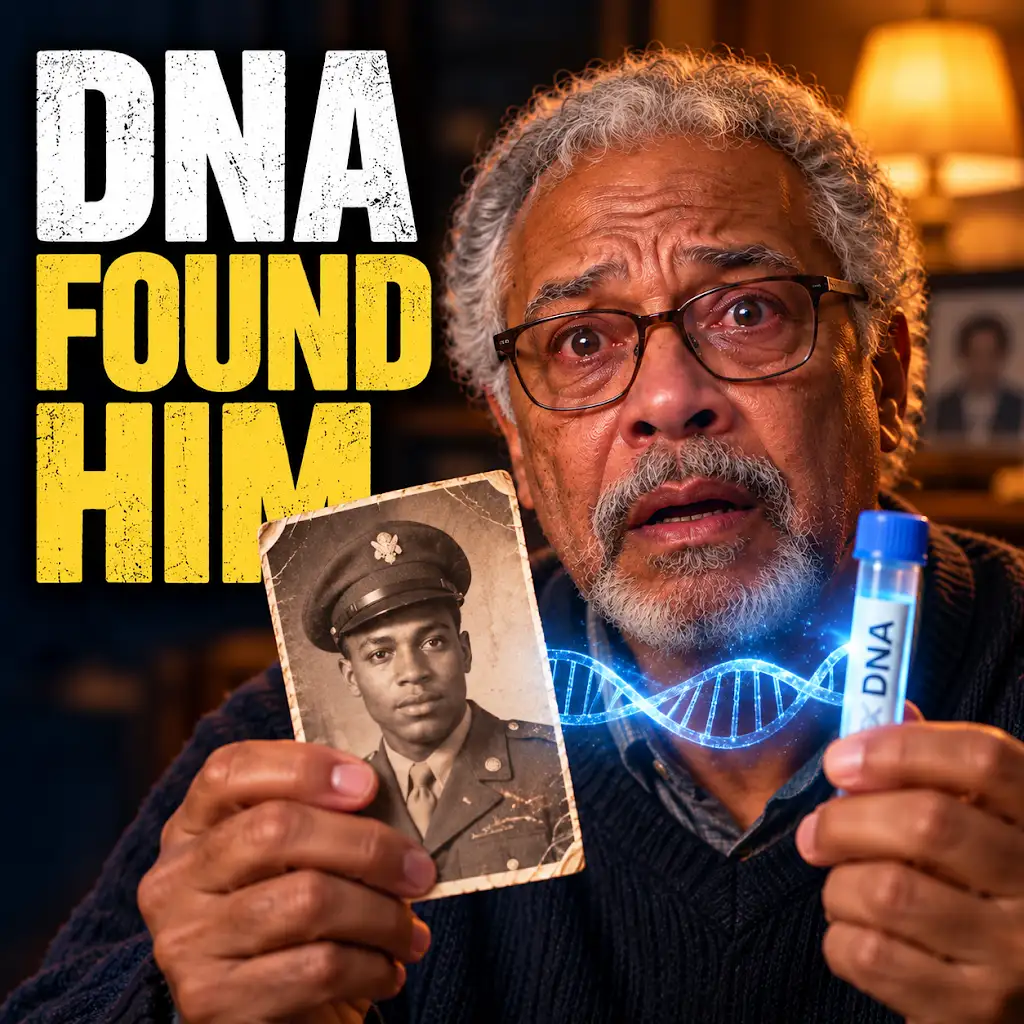
His WWII GI Father Was a Mystery for Nearly 80 Years
FAQs
What is the article about?
The article is about how DNA testing helped identify the father of an American GI.
How was the father identified?
The father was identified through DNA testing, which matched the DNA of the American GI’s child.
Why was DNA testing used in this case?
DNA testing was used to confirm the biological relationship between the American GI and the child, as traditional methods were not available or inconclusive.
What impact did the DNA identification have on the family?
The DNA identification provided closure and answers to the family, confirming the identity of the American GI father.
Is DNA testing commonly used for identifying family relationships?
Yes, DNA testing is a common and reliable method used to determine biological relationships, such as paternity or ancestry.