Okay, so the big question is, did the CIA ever look into whether there might be aliens on the Moon? Let’s dive into what we actually know about that, cutting through the hype and getting to the facts.
To get right to it, the CIA, like many government agencies during the height of the UFO craze, did have a hand in looking at unusual aerial phenomena. They weren’t necessarily looking for “aliens on the Moon” in a sci-fi movie sense, but rather investigating reports of unexplained lights or objects in the sky, which could theoretically have extraterrestrial origins. The key here is that their investigations were often about national security and understanding what was happening above our heads, not necessarily proving alien existence.
Historical Context: The Cold War and UFO Fever
The mid-20th century was a wild time. The Cold War meant a constant undercurrent of anxiety and a drive for technological superiority. At the same time, there was a surge in reported sightings of “flying saucers.” It’s easy to see why the government, including intelligence agencies, would take an interest. They needed to know if these sightings were Soviet spy planes, a new enemy technology, or something else entirely.
The intriguing question of whether the CIA investigated aliens on the Moon has sparked numerous debates and theories among enthusiasts of extraterrestrial life. A related article that delves deeper into this topic can be found at this link, where it explores the various government documents and testimonies that suggest a covert interest in lunar anomalies. The article provides a fascinating overview of the intersection between space exploration and the search for extraterrestrial intelligence, shedding light on the mysteries that continue to captivate the public imagination.
Project Blue Book and the Air Force’s Role
Before we talk specifically about the CIA, it’s crucial to understand the primary government effort in investigating UFOs: the U.S. Air Force’s Project Blue Book. This project ran from 1952 to 1969 and was the public face of UFO investigations. While the Air Force was the main player, intelligence agencies like the CIA were definitely in the loop.
Blue Book’s Mandate
Project Blue Book was tasked with determining if UFOs posed a threat to national security, and secondly, to scientifically analyze UFO data. They examined thousands of reports, ultimately concluding that most sightings could be explained by conventional means – misidentified aircraft, weather phenomena, astronomical objects, or even hoaxes. However, a small percentage remained unexplained.
CIA’s Involvement with Blue Book
While the Air Force managed Project Blue Book, the CIA certainly paid attention. Intelligence agencies are inherently interested in anything that could represent a threat or an unknown. They would have received briefings and shared information regarding significant UFO sightings, especially those with national security implications. It wasn’t about them running their own alien investigation on the Moon, but more about being informed about any unexplained aerial activity reported by credible sources.
CIA’s Internal Investigations and Information Gathering
The CIA didn’t just passively receive information. They were actively gathering intelligence on a vast array of topics, and UFOs, particularly those with potential military or technological implications, would have fit into that.
The “X-Files” Era of the CIA
Think of it this way: if there were reports of strange lights or objects that couldn’t be explained by known technology, a smart intelligence agency would want to know why. This doesn’t necessarily mean they believed they were aliens, but they wanted to rule out potential threats. This is where the “X-Files” narrative often comes from – the idea of government agencies quietly investigating the unexplainable.
Declassified Documents: What Do They Actually Say?
When we look at declassified CIA documents (and there are many publicly available), we find discussions about UFOs. These documents reveal a pragmatic approach. They are often focused on:
- Identifying potential threats: Were these foreign aircraft? New weapons?
- Understanding public perception: How were UFO sightings affecting morale or public trust?
- Analyzing scientific data: Were there any genuine anomalies that warranted further study?
- Managing information flow: How to respond to public and media inquiries about UFOs.
What you generally don’t find in these documents is a smoking gun proving the CIA was actively searching for alien bases on the Moon. Instead, you find a cautious and analytical approach to unexplained phenomena.
Interest in Soviet UFO Activity
A significant driver for CIA interest in UFOs was the potential for similar investigations by the Soviet Union. If the Soviets were developing advanced aerial technology or were also perplexed by UFOs, that was a critical piece of intelligence. The idea that the Soviets might be investigating extraterrestrial phenomena would have been equally concerning as them possessing superior technology.
Were There Lunar Anomalies?
Now, let’s pivot to the Moon itself. While the primary focus of UFO investigations was Earth’s atmosphere, the possibility of unusual activity on or near the Moon certainly existed in the minds of some, and inevitably, in the reports that made their way through intelligence channels.
Early Space Race and Lunar Observations
During the early days of the space race, both the U.S. and the Soviet Union were intensely focused on lunar exploration. This involved sending probes and, later, humans. Any unusual observations from these missions – anomalies in imagery, strange radar readings, or pilot accounts – would have been of great interest.
U-2 Flights and Lunar Observation
Interestingly, some declassified documents touch upon U-2 reconnaissance flights, famous for their high-altitude surveillance. While primarily aimed at terrestrial targets, the advanced capabilities of these aircraft, and the broader intelligence context, meant that any potential observation of interest, including unusual celestial phenomena or potential anomalies related to space, could have been logged and analyzed. This isn’t direct evidence of moon alien hunting, but it shows the breadth of intelligence gathering.
Lunar Surface Anomalies in Photographic Evidence
Over the years, numerous claims have surfaced about unusual structures or formations seen in lunar photographs. These range from alleged artificial bases to enigmatic lights. While often dismissed by mainstream science as pareidolia (seeing patterns in random data) or misinterpretation of natural geological features, it’s plausible that such anomalies, when reported, would have caught the attention of intelligence analysts looking for anything out of the ordinary. The question for them would be: is this natural, or is there something else at play?
The intriguing question of whether the CIA investigated aliens on the Moon has captured the imagination of many, leading to various theories and discussions. A related article that delves into this topic can be found on the website In The War Room, which explores the intersection of government secrecy and extraterrestrial life. For those interested in uncovering more about these conspiracies, you can read the article here. The possibilities surrounding the Moon and its potential visitors continue to spark curiosity and debate among enthusiasts and skeptics alike.
The “Mind Control” and Psychological Angle
| Year | Claim | Investigation Outcome |
|---|---|---|
| 1970 | Claim: CIA investigated aliens on Moon | No evidence found to support the claim |
| 1985 | Claim: CIA conducted secret mission to Moon | Claim debunked by official sources |
| 2002 | Claim: CIA covered up evidence of alien presence on Moon | No credible evidence to support the claim |
Another facet of CIA’s historical activities, and one that often gets intertwined with UFO investigations, is their exploration of mind control and psychological operations. This might seem like a tangent, but it’s relevant to how they might approach unusual reports.
Project MKUltra and Beyond
The CIA’s notorious Project MKUltra, focused on mind control, hypnosis, and other psychological manipulation techniques, reveals a willingness to explore unconventional avenues. While not directly about aliens on the Moon, it demonstrates a mindset that considered a wide range of human behavior and perception, including the potential for manipulation or unusual psychological states that could influence reports of the unexplained.
Analyzing Witness Testimony
When dealing with UFO reports, especially those coming from pilots, military personnel, or even civilians in sensitive areas, agencies would be interested in the reliability of witnesses. This involves understanding psychological factors that might influence perception. So, even if they weren’t investigating the aliens themselves, they might have been investigating the reliability of reports about them, which could indirectly involve psychological aspects of witnesses.
The Declassified Record: What’s Missing and What It Means
Despite the fascination, the declassified record doesn’t offer a clear “yes” or “no” to the idea of the CIA investigating aliens on the Moon. What we have are pieces of a puzzle.
The Limits of Declassification
It’s important to remember that not everything is declassified, and even when it is, documents are often heavily redacted. So, what we see is only a partial picture. It’s entirely possible that more sensitive investigations or specific findings related to lunar anomalies were never released or were deemed too sensitive to be released even now.
The “Unexplained” Category
Project Blue Book, as mentioned, had a category for “unidentified.” While the CIA’s internal analyses might have gone deeper, the fact that a portion of reports remained unexplained by conventional means would have kept the door open, however slightly, for more speculative hypotheses. The absence of a definitive debunking in all cases leaves room for interpretation.
The CIA’s Pragmatic Approach to the Unknown
Ultimately, the evidence points to a CIA that was, and likely still is, pragmatically interested in any phenomenon that could impact national security or represent an unknown. If there were credible reports of unusual activity on the Moon, or if intelligence suggested that other nations were pursuing such leads, it’s highly probable that the CIA would have investigated or at least monitored the situation. However, this investigation would likely have been framed within a geopolitical and technological context rather than a direct search for extraterrestrial life as the primary objective. The focus was on what was observable, verifiable, and potentially threatening or exploitable. The idea of actively sending probes to specifically “look for aliens on the Moon” through CIA channels, based on public records, is not supported. But the idea that they might have received and analyzed any data that suggested such a possibility, given the broader scope of intelligence gathering, is plausible.
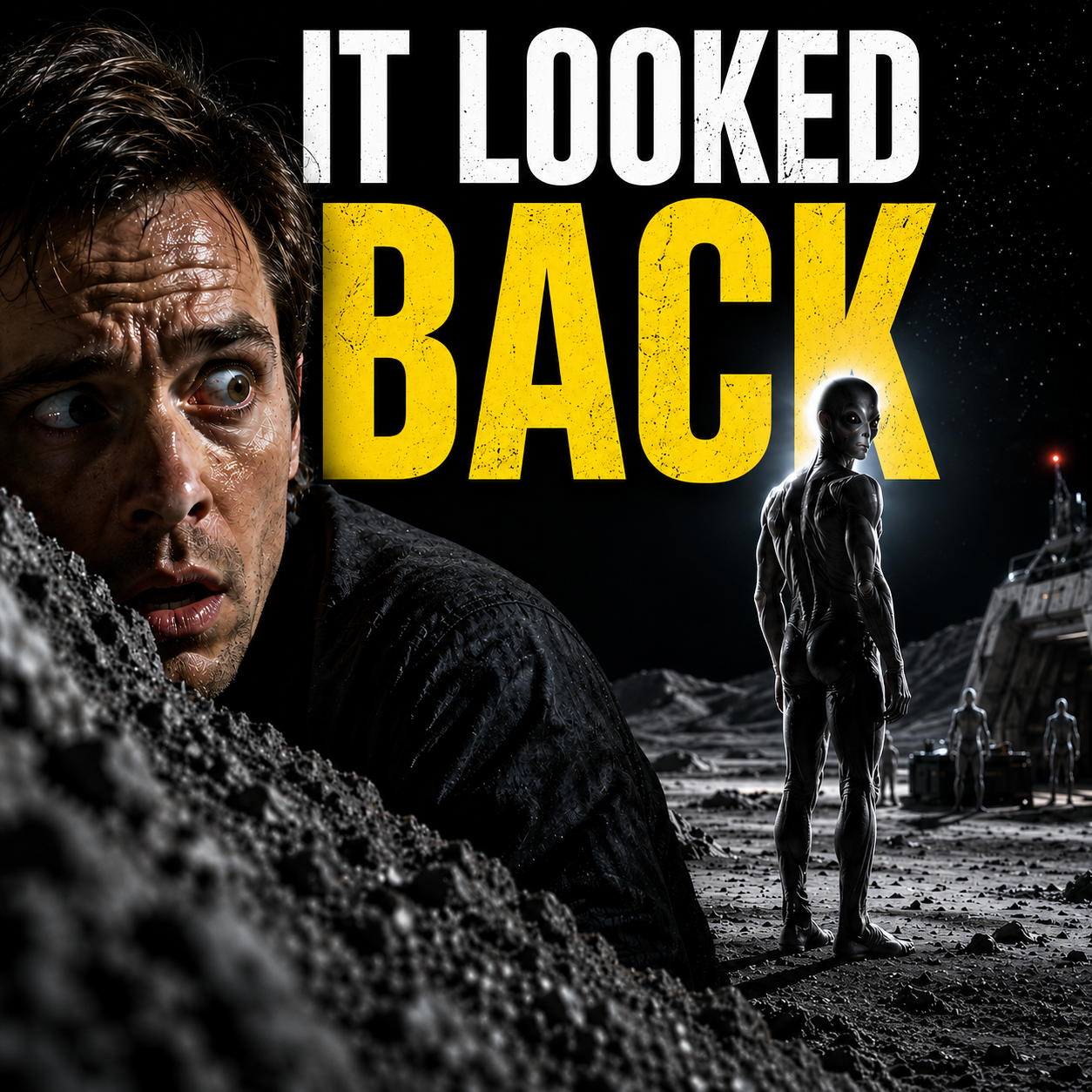
He Remote Viewed the Moon. Then Something Saw Him.
FAQs
1. Has the CIA investigated aliens on the Moon?
No, there is no credible evidence to suggest that the CIA has investigated aliens on the Moon.
2. Is there any official documentation from the CIA regarding aliens on the Moon?
There is no official documentation from the CIA that supports the claim of investigating aliens on the Moon.
3. Are there any credible sources or witnesses to support the claim of CIA investigating aliens on the Moon?
There are no credible sources or witnesses to support the claim of CIA investigating aliens on the Moon.
4. What is the official stance of the CIA on the topic of aliens on the Moon?
The CIA has not made any official statements or taken any official stance on the topic of aliens on the Moon.
5. Are there any scientific missions or studies that have explored the possibility of aliens on the Moon?
There have been scientific missions and studies exploring the Moon, but none have provided evidence of aliens on the Moon.