The morning of December 7, 1941, dawned deceptively peaceful over the Hawaiian Islands. A Sunday, it promised a rare respite for the men stationed at Pearl Harbor, the United States’ vital Pacific naval base. Yet, beneath the tranquil surface of the Pacific and the quiet hum of military life, a storm was brewing, one that would forever etch this date into the annals of history with fire, smoke, and profound loss. The meticulously planned and devastating surprise attack by the Imperial Japanese Navy on Pearl Harbor would shatter the illusions of peace, plunge America into World War II, and leave a scarred testament to the brutal realities of modern warfare, particularly through the catastrophic destruction of its most powerful war machines: the battleships.
The relationship between the United States and Japan had been steadily deteriorating for years leading up to 1941. Underlying tensions stemmed from a complex interplay of imperial ambitions, resource competition, and ideological differences. Japan, a burgeoning industrial and military power, had embarked on a path of expansionism in Asia, seeking to establish its dominance through the Greater East Asia Co-Prosperity Sphere. This ambition inevitably brought it into conflict with American interests, which included maintaining an open-door policy in China and protecting its own territories in the Pacific.
The Shadow of Expansionism
Japan’s invasion of Manchuria in 1931 and its subsequent full-scale war with China starting in 1937 were viewed with increasing alarm by the United States. These actions demonstrated Japan’s disregard for international norms and its aggressive pursuit of territorial gains. The U.S. responded with a series of diplomatic and economic measures, aiming to curb Japan’s aggression without resorting to direct military confrontation.
Economic Sanctions and Rising Tensions
As Japan’s conflict in China deepened, the United States, along with other Western powers, began to impose increasingly stringent economic sanctions. The most significant of these was the oil embargo in July 1941, which severely impacted Japan’s war machine, heavily reliant on imported oil. This move was a calculated gamble, intended to force Japan to reconsider its aggressive policies. However, instead of capitulating, the sanctions were perceived by many in Japan as an existential threat, pushing them towards a decisive, offensive response to secure the resources they needed.
The Illusion of Peace
Despite the escalating tensions, the prevailing sentiment in the United States was one of a desire to avoid war. Many believed that a direct confrontation with Japan could be averted through diplomatic channels, and the notion of a surprise attack on American soil was largely considered improbable. Military planners, while aware of the potential for conflict, did not anticipate an attack of such magnitude or on such a distant base as Pearl Harbor. This underestimation of Japan’s capabilities and its willingness to take extreme measures would prove to be a critical flaw in American defense strategy.
The attack on Pearl Harbor on December 7, 1941, resulted in the destruction of several battleships, which significantly impacted the United States Navy’s capabilities in the Pacific Theater. For a deeper understanding of the events surrounding this pivotal moment in history, you can read the related article that explores the aftermath and the strategic implications of the battleships lost during the attack. For more details, visit this article.
The Dawn of Destruction: The Attack Begins
On the morning of Sunday, December 7, 1941, a Japanese naval task force, operating under the code name “Operation Z,” launched a surprise aerial assault on Pearl Harbor. The attack was divided into two waves, with the primary objective of neutralizing the U.S. Pacific Fleet, particularly its battleships, which were considered the backbone of naval power. The element of surprise was absolute, catching the American forces entirely off guard.
First Wave: The Initial Onslaught
The first wave of Japanese aircraft, consisting of bombers, torpedo planes, and fighter escorts, began their assault at approximately 7:55 AM Hawaiian time. The attack was swift and brutal. Torpedo planes, flying low over the water, unleashed their deadly payloads at the anchored battleships, while bombers targeted critical infrastructure and other naval vessels. The air was filled with the roar of engines, the whistle of falling bombs, and the deafening explosions of ordnance.
The Barrage on Battleship Row
Battleship Row, the mooring area for the U.S. Pacific Fleet’s battleships, became the primary target. The immense vessels, silhouetted against the morning sky, offered a seemingly easy target. The Japanese pilots, highly trained and motivated, executed their attacks with precision and ferocity. Torpedoes struck the hulls of ships like the USS Arizona, USS Oklahoma, and USS West Virginia, tearing through their steel plating and igniting their fuel tanks.
The Fate of the Arizona: A Fiery Inferno
The USS Arizona suffered a catastrophic fate. A bomb penetrated its forward magazine, triggering a massive explosion that ripped the battleship apart. The ensuing inferno consumed the ship, killing over 1,100 of its crew. The Arizona became an enduring symbol of the devastation, its burning hulk a somber reminder of the morning’s carnage. The Oklahoma, capsized by torpedo hits, trapped hundreds of sailors inside its submerged hull.
Battleships: The Fallen Giants
The heart of the U.S. Pacific Fleet was its powerful battleship force. These majestic vessels, symbols of American naval might, were the primary targets and suffered the most significant losses. The effectiveness of the Japanese aerial assault lay in its ability to cripple these capital ships, effectively removing them from the naval equation in the Pacific for a considerable period.
The Oklahoma: A Tragic Capsize
The USS Oklahoma, a pre-World War I battleship, was struck by multiple torpedoes, causing it to list rapidly and then capsize. The swiftness of its demise trapped many sailors within its hull, and heroic rescue attempts were made to free those still alive. Despite these efforts, hundreds of men were lost with the ship, a grim testament to the overwhelming power of the attack. The Oklahoma would remain on its side in the harbor for years, a haunting monument to the losses suffered.
The West Virginia: A Mighty Vessel Brought Low
The USS West Virginia, one of the Navy’s most modern battleships at the time, took multiple torpedo hits and bomb damage. Despite suffering severe damage and sinking to the harbor bottom, the ship’s crew fought valiantly to save it, ultimately preventing it from sinking completely. Its hull, however, was extensively damaged, and it would require extensive repairs before it could return to service.
The California: A Slow Sinking
The USS California was also hit by torpedoes and bombs. It was unable to get underway immediately, and its crew worked diligently to fight the fires and control the flooding. Despite their efforts, the ship eventually settled to the bottom of the harbor, though its crew managed to save it from a complete loss.
The Nevada: The Lone Survivor’s Dash
The USS Nevada was the only battleship that managed to get underway during the initial assault. Realizing the dire situation, its captain ordered the ship to attempt to escape the harbor. Under heavy fire from Japanese aircraft, the Nevada navigated through the chaos, determined to reach open sea. However, realizing its chances of survival were slim and wishing to avoid becoming a target in the narrow channel, its captain made the difficult decision to deliberately run the ship aground near Hospital Point, preventing it from falling into enemy hands and blocking the harbor entrance.
The Pennsylvania and Other Damage
While the Arizona and Oklahoma were total losses, and the West Virginia, California, and Nevada were severely damaged, other battleships also sustained hits. The USS Pennsylvania, which was in drydock for repairs at the time, was hit by a bomb, and the USS Utah, a target ship, was also torpedoed and capsized. The concentration of damage on the battleships was a clear indication of Japan’s strategic aim to neutralize America’s most potent naval assets.
The Second Wave: Continued Devastation
Following a brief lull, the second wave of Japanese aircraft arrived to continue the assault. This wave focused on inflicting further damage on the already crippled fleet and on the shore installations, including oil storage tanks and airfields. The American response, though disorganized, began to take shape as surviving aircraft scrambled to engage the attackers and anti-aircraft gunners opened fire.
Targeting Oil Tanks and Infrastructure
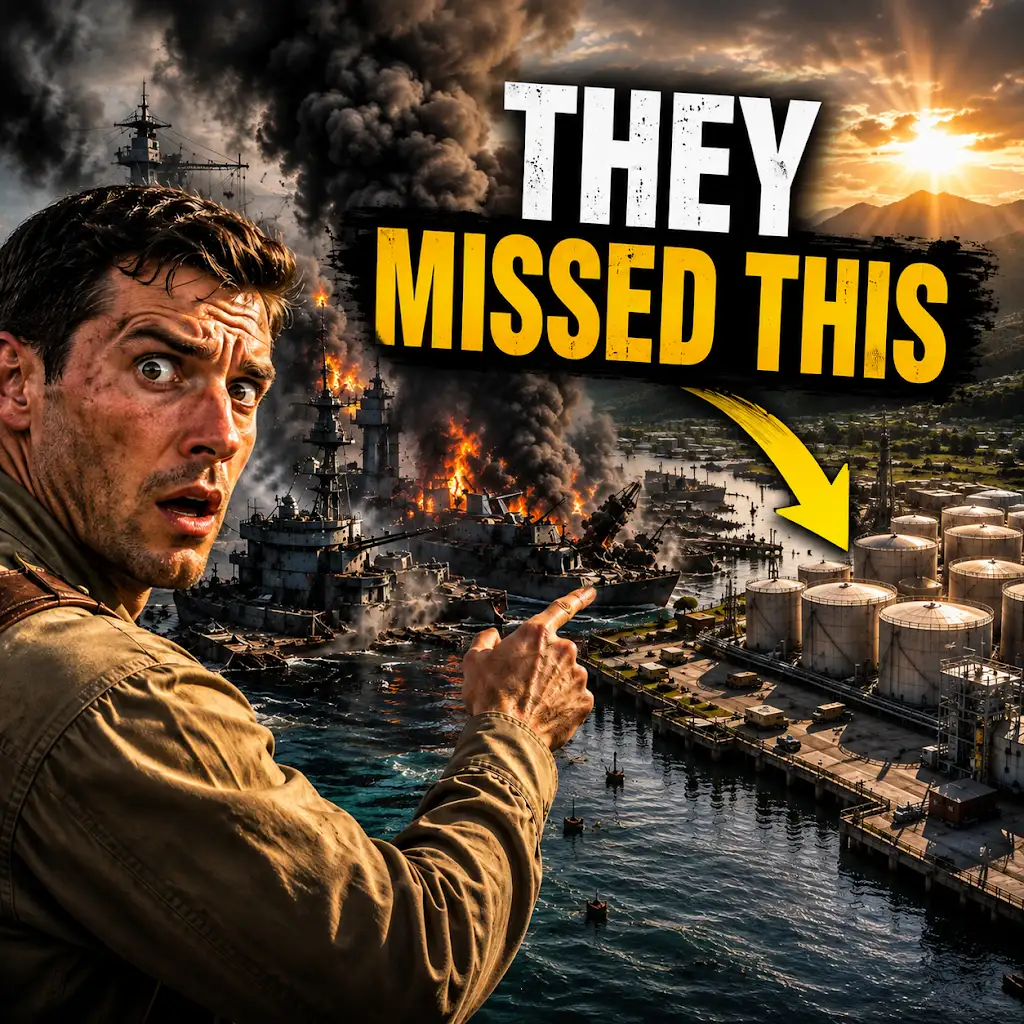
The Japanese pilots aimed to cripple the base’s ability to sustain its operations by targeting fuel storage facilities. While they managed to ignite some tanks, the primary fuel reserves, which were located further inland and protected by concrete bunkers, largely survived the attack, a crucial factor in the eventual rebuilding and continuation of the Pacific War. However, the damage to other infrastructure, including hangars and airfields, significantly hampered the American air defense.
The Unanswered Question: Why Not Carriers?
A significant aspect of the attack that has been debated by historians is why the Japanese did not target the U.S. aircraft carriers. At the time of the attack, the carriers USS Enterprise, USS Lexington, and USS Saratoga were all at sea, conducting operations or en route to Pearl Harbor. While the surprise attack on the battleships was undeniably devastating, a successful strike against the carriers, the future of naval warfare, could have had an even more profound impact on the Pacific theater. Some theories suggest that the Japanese commanders prioritized the destruction of the battleships, believing them to be the primary threat, while others propose that they were unaware of the carriers’ exact whereabouts or decided to avoid the risk of confronting them.
The attack on Pearl Harbor on December 7, 1941, resulted in the destruction of several battleships that were pivotal to the U.S. Navy’s fleet. This devastating event not only marked a turning point in World War II but also led to significant changes in naval warfare. For a deeper understanding of the battleships affected during this surprise attack, you can read more about it in this insightful article on the topic. The article provides a detailed account of the ships lost and their historical significance, which can be found here.
The Aftermath: A Nation Reeling
| Battleship | Date of Destruction | Cause of Destruction |
|---|---|---|
| USS Arizona | December 7, 1941 | Hit by a bomb, exploded and sank |
| USS Oklahoma | December 7, 1941 | Hit by multiple torpedoes, capsized and sank |
| USS Utah | December 7, 1941 | Hit by torpedoes, capsized and sank |
The attack on Pearl Harbor was a devastating blow to the United States. The loss of life was immense, and the destruction of so many battleships represented a significant setback for the U.S. Pacific Fleet. The element of surprise and the scale of the destruction sent shockwaves across the nation, galvanizing public opinion and irrevocably drawing America into World War II.
The Human Cost: Lives Lost and Heroes Made
The immediate aftermath of the attack was marked by heroism and tragedy. Sailors and airmen, thrown into chaos, fought bravely against overwhelming odds. Medical personnel worked tirelessly to tend to the wounded, and recovery efforts began almost immediately. The loss of over 2,400 American lives, including many civilians, cast a pall over the nation and ignited a fierce desire for retribution.
The Strategic Impact: A Shift in Naval Power
The destruction of the battleships at Pearl Harbor fundamentally altered the balance of naval power in the Pacific. For a time, the U.S. Pacific Fleet was significantly weakened, and its ability to project power was severely diminished. However, the attack also spurred a rapid acceleration in aircraft carrier development and deployment, a shift that would define naval warfare in the coming years. The battleships, once the undisputed kings of the sea, would find their dominance challenged and eventually superseded by the speed and flexibility of the carrier.
The Psychological Impact: “A Date Which Will Live in Infamy”
President Franklin D. Roosevelt famously described December 7, 1941, as “a date which will live in infamy.” The attack was a profound shock to the American psyche, shattering the nation’s sense of security and its belief in its own invincibility. It served as a harsh awakening to the brutal realities of global conflict and the existential threat posed by the Axis powers. The attack unified the nation in a way that few events could, forging a collective resolve to fight and win the war.
Legacy of the Day: Resilience and Resolve
The devastation at Pearl Harbor, while a dark chapter in American history, also became a catalyst for incredible resilience and unwavering resolve. The sacrifices made that day fueled a national determination to rebuild, to learn from the mistakes, and to ultimately emerge victorious from the global conflagration. The sunken battleships, though lost, became powerful symbols of the cost of freedom and the unwavering spirit of those who defended it.
The Rebuilding Effort: A Testament to Ingenuity
The American response to the damage was swift and determined. Engineers and sailors worked tirelessly to salvage sunken vessels, repair damaged ships, and rebuild damaged infrastructure. The ingenuity and dedication displayed in these efforts were remarkable, allowing many of the damaged battleships to return to service, albeit with modifications. The USS West Virginia, for instance, was rebuilt with a significantly improved anti-aircraft armament, reflecting the lessons learned from the attack.
The Rise of the Aircraft Carrier
The attack on Pearl Harbor unequivocally demonstrated the vulnerability of battleships to air power and accelerated the U.S. Navy’s commitment to the aircraft carrier as the primary capital ship. While battleships had been the symbol of naval power for decades, the war in the Pacific would prove to be dominated by carrier-based aviation. The loss of the battleships, in a tragic twist of fate, cleared the way for the ascendant power of the aircraft carrier.
A Constant Reminder: The USS Arizona Memorial
Today, the USS Arizona Memorial stands as a poignant reminder of the events of December 7, 1941. Built over the sunken remains of the battleship, it serves as a sacred ground for remembrance and reflection. Visitors from around the world come to pay their respects to the fallen heroes, to witness the enduring legacy of sacrifice, and to understand the profound impact of that fateful day. The oil that still leaks from the Arizona’s hull is often referred to as “black tears,” a somber and continuous testament to the enduring grief and the profound loss experienced at Pearl Harbor. The devastation at Pearl Harbor, particularly the destruction of its battleships, was a stark and brutal lesson, one that forever changed the course of history and the nature of naval warfare.
Japan Won Pearl Harbor—So Why Did It Lose the War?
FAQs
What happened to the battleships at Pearl Harbor?
On December 7, 1941, during the surprise attack on Pearl Harbor by the Japanese, several battleships were severely damaged or destroyed. The USS Arizona, USS Oklahoma, USS West Virginia, USS California, and USS Utah were among the battleships that suffered significant damage.
How were the battleships destroyed?
The battleships at Pearl Harbor were primarily destroyed by Japanese aerial torpedoes and bombs. The attack resulted in catastrophic damage to the ships, with some sinking and others left severely crippled.
What was the impact of the destruction of the battleships at Pearl Harbor?
The destruction of the battleships at Pearl Harbor was a major blow to the United States Navy and a significant factor in the country’s entry into World War II. The attack led to the deaths of over 2,400 Americans and the destruction of numerous ships and aircraft.
Were any of the battleships salvaged or repaired?
Following the attack on Pearl Harbor, efforts were made to salvage and repair the damaged battleships. Some, like the USS West Virginia and USS California, were successfully raised and restored to service, while others, like the USS Arizona, remained at the bottom of the harbor as a memorial.
What is the significance of the Pearl Harbor battleships in history?
The destruction of the battleships at Pearl Harbor marked a pivotal moment in American history, leading to the country’s full involvement in World War II. The attack on Pearl Harbor and the subsequent loss of the battleships served as a rallying cry for the nation and ultimately shaped the course of the war.