Delta Force and DEVGRU stand as titans in the realm of special operations, each boasting a formidable reputation forged through decades of elite service. While both units are tasked with the most demanding and clandestine missions, a closer examination reveals distinct differences in their origins, training, operational focus, and organizational structures. Understanding these nuances is crucial to appreciating the unique capabilities and strategic roles these Tier 1 operators play in safeguarding national security. This article delves into a comprehensive comparison of Delta Force and DEVGRU, exploring their genesis, the rigorous paths to qualification, the types of missions they undertake, and the philosophical underpinnings that guide their actions.
The establishment of both Delta Force and DEVGRU was a direct response to critical failures in intelligence and counter-terrorism operations. Their creation was not a gradual evolution but a decisive pivot towards developing highly specialized units capable of handling threats that conventional military forces were ill-equipped to address.
Delta Force: The Birth of Counter-Terrorism Expertise
Delta Force, officially known as the 1st Special Forces Operational Detachment-Delta (1st SFOD-D), emerged from the ashes of a disastrous hostage rescue attempt. The 1980 Operation Eagle Claw, aimed at freeing American hostages from Iran, exposed significant deficiencies in the U.S. military’s ability to conduct complex hostage rescue and counter-terrorism operations. The mission was plagued by equipment failures, logistical nightmares, and a lack of coordinated command and control, ultimately leading to its cancellation and the tragic loss of lives.
In the aftermath of Eagle Claw, Colonel Charles Beckwith, a highly decorated Special Forces veteran, spearheaded the concept for a new unit that would be specifically trained and equipped for such high-stakes missions. His vision was to create an elite force capable of precise, surgical strikes against terrorist targets, employing innovative tactics and a level of professionalism previously unseen. The unit was formally established in 1977, though its true operational capacity and public recognition came later. Delta Force was designed to be a highly selective unit, drawing its operators from existing Special Forces and Ranger battalions, individuals who demonstrated exceptional skill, discipline, and mental fortitude. The emphasis was on creating a small, agile force that could operate with unparalleled stealth and precision, often in denied or hostile environments. The early years were dedicated to developing doctrine, refining selection processes, and conducting extensive training that pushed the boundaries of human endurance and operational capability.
DEVGRU: The Naval Component of Special Warfare
DEVGRU, formerly known as the SEAL Team Six, is the United States Navy’s premier counter-terrorism and special operations unit. Its origins are also rooted in the need for a specialized response to evolving threats, particularly those involving maritime terrorism and hostage situations. The unit was established in 1980 in direct response to the same failed Operation Eagle Claw that spurred the creation of Delta Force.
Rear Admiral William McRaven, a renowned SEAL commander, played a pivotal role in shaping DEVGRU’s development. He envisioned a unit composed of the Navy’s most capable SEALs, trained to conduct a wide spectrum of special operations, with a particular emphasis on counter-terrorism, direct action, and special reconnaissance in maritime environments. DEVGRU was designed to be an extension of the broader SEAL community, yet distinct in its mission parameters and operational tempo. The selection process was equally rigorous, targeting experienced SEALs who had already proven themselves in combat and demonstrated the highest levels of physical and mental resilience. The initial focus was on developing specialized skills for maritime interdiction, hostage rescue from vessels, and asymmetric warfare scenarios. Like Delta Force, DEVGRU underwent a period of intense training and doctrinal development to ensure its operators were prepared for the most challenging and unconventional missions.
For those interested in a deeper understanding of the elite special operations forces, a related article that provides further insights is available at this link: Delta Force vs DEVGRU Explained. This article delves into the unique missions, training, and operational capabilities of both Delta Force and DEVGRU, highlighting the distinctions and similarities between these two formidable units.
The Crucible of Selection and Training
The path to becoming an operator in either Delta Force or DEVGRU is a gauntlet designed to identify and cultivate individuals with extraordinary capabilities. The selection processes are notoriously arduous, weeding out all but the most resilient and proficient candidates. Training for both units is continuous, evolving to meet new threats and technological advancements.
Delta Force: The Esoteric Assessment and Unrelenting Preparation
Delta Force’s selection process is shrouded in secrecy, but it is widely understood to be one of the most demanding in the military. Candidates, primarily drawn from experienced U.S. Army Special Forces (Green Berets) and the 75th Ranger Regiment, undergo an extensive assessment that evaluates not only their physical prowess but also their psychological resilience, problem-solving abilities, and teamwork.
The Assessment and Selection (AS) Course
The AS course is the initial gateway. It is a physically and mentally grueling period designed to break down candidates and identify those who can withstand extreme pressure. This phase often involves long-distance rucks, demanding land navigation exercises, and complex problem-solving scenarios under conditions of sleep deprivation and fatigue. The instructors meticulously observe candidates, looking for leadership potential, initiative, the ability to remain calm under duress, and a willingness to support fellow candidates, even when exhausted. This initial phase is designed to filter out those who cannot meet the baseline requirements of mental toughness and physical endurance.
Operator Training Course (OTC)
Upon successful completion of the AS course, candidates enter the Operator Training Course (OTC). This is where the highly specialized skills required for Delta Force operations are honed. The OTC is significantly longer and more intensive, focusing on advanced techniques in:
- Small Unit Tactics: This includes intricate planning and execution of direct action missions, such as raids, ambushes, and assaults on fortified positions. Emphasis is placed on precision, speed, and overwhelming force when necessary.
- Close Quarters Battle (CQB): Mastery of CQB is paramount for hostage rescue and urban combat scenarios. Operators are trained in clearing rooms, engaging multiple threats in confined spaces, and utilizing various entry techniques.
- Marksmanship and Weapons Handling: This encompasses proficiency with a wide array of firearms, from handguns to heavy machine guns, as well as specialized weapons systems. Accuracy and speed are critical.
- Intelligence Gathering and Reconnaissance: Operators are trained in advanced surveillance techniques, HUMINT (Human Intelligence), and SIGINT (Signals Intelligence) collection to support mission planning and execution.
- Demolitions and Explosives: A thorough understanding of explosives is essential for breaching obstacles, disabling enemy equipment, and creating diversions.
- Unconventional Warfare: This includes skills in operating behind enemy lines, developing local support, and conducting operations in environments where traditional military support is unavailable.
- Medical Skills: Advanced trauma care and battlefield medicine are critical, as operators often work in austere environments with limited access to medical facilities.
The OTC is not a static curriculum; it is constantly updated to reflect the evolving nature of threats and the latest technological advancements in special operations. This continuous training ensures that Delta Force operators remain at the forefront of counter-terrorism capabilities.
DEVGRU: The SEAL Ethos and Maritime Specialization
DEVGRU’s selection and training process is deeply intertwined with the established ethos of the U.S. Navy SEALs, emphasizing a strong sense of self-reliance, adaptability, and unparalleled proficiency in maritime operations.
SEAL Qualification Training (SQT) and Beyond
While DEVGRU operators are already experienced SEALs, they still undergo a rigorous internal selection process and further specialized training. This process begins with a candidate’s performance within their SEAL Team, where their aptitude for high-risk missions is assessed. Those who demonstrate the requisite skills, discipline, and mental fortitude are then recommended for DEVGRU assessment.
The training at DEVGRU builds upon the foundational skills of a SEAL, with a particular focus on:
- Maritime Interdiction Operations: This is a cornerstone of DEVGRU’s capabilities. Operators are trained to board vessels of all sizes, in any sea state, and conduct swift and decisive operations to neutralize threats, rescue hostages, or seize high-value targets. This includes advanced techniques in small boat operations, helicopter-borne insertions onto ships, and underwater approaches.
- Counter-Terrorism in Maritime Environments: This encompasses a broad range of scenarios, from rescuing hostages on oil rigs to disrupting terrorist activities on cargo ships and passenger vessels.
- Advanced Diving and Underwater Operations: DEVGRU operators are masters of SCUBA and rebreather systems, allowing for covert insertions and extractions via the water, as well as underwater demolition and reconnaissance.
- Close-Quarters Battle (CQB) in Maritime Settings: This involves adapting CQB techniques to the unique challenges of fighting within the confines of ships, submarines, and other maritime structures.
- Aviation Operations (HELO-borne): Expertise in helicopter-borne insertions and extractions, including fast-roping and direct helicopter assaults, is crucial for rapid deployment and response.
- Specialized Intelligence and Reconnaissance: DEVGRU excels in gathering intelligence in the maritime domain, utilizing advanced surveillance technologies and clandestine methods.
- Weapons Proficiency: Similar to Delta Force, DEVGRU operators are highly proficient with a wide array of firearms and specialized weapons, with a particular emphasis on those suitable for maritime environments.
The training at DEVGRU is characterized by its realism and intensity. Operators are constantly pushed to their limits, simulating real-world scenarios with a high degree of fidelity. The emphasis is on creating a cohesive and highly professional unit capable of executing missions with unparalleled precision and effectiveness, especially in the complex and often unforgiving maritime environment.
Operational Focus and Mission Profiles
While both Delta Force and DEVGRU are tasked with the most sensitive and dangerous missions, their primary operational focuses exhibit subtle yet significant distinctions, shaped by their respective service branches and historical mandates.
Delta Force: The Land-Centric Spearhead of Counter-Terrorism
Delta Force’s operational mandate is primarily focused on land-based counter-terrorism operations. This encompasses a wide spectrum of direct action missions designed to neutralize threats and rescue individuals in hostile territories.
Direct Action and Hostage Rescue
The hallmark of Delta Force missions is their emphasis on direct action. This involves the swift and decisive application of force to achieve specific objectives, such as:
- Hostage Rescue: This remains a core competency. Delta Force is tasked with rescuing hostages from terrorist organizations, criminal elements, or rogue states. These operations are characterized by meticulous planning, precise execution, and a high degree of risk. Examples include the rescue of former German Chancellor Helmut Kohl’s daughter and the liberation of kidnapped American aid workers.
- Counter-Terrorism Raids: Delta Force conducts raids against terrorist training camps, leadership elements, and high-value targets. These operations are often deep within enemy territory and require extreme stealth and tactical acumen.
- Assassination/Capture of High-Value Targets (HVTs): While not openly discussed, Delta Force is believed to be capable of conducting operations to capture or eliminate individuals deemed an existential threat to national security.
- Sabotage and Denied Area Operations: Delta Force can operate in politically sensitive or highly contested areas where conventional forces cannot be deployed, undertaking missions to disrupt enemy capabilities or gather critical intelligence.
- Support to Conventional Forces: In certain situations, Delta Force may provide specialized support to larger military operations, offering unique tactical capabilities that conventional units lack.
Delta Force’s strength lies in its ability to insert discreetly into hostile environments, conduct surgical strikes with minimal collateral damage, and exfiltrate without leaving a trace. Their training emphasizes adaptability and the ability to operate in a wide range of land-based terrains and urban environments.
DEVGRU: The Maritime Vanguard of Special Operations
DEVGRU’s unique strengths are most evident in its maritime and coastal operations, leveraging its specialized training and equipment to tackle threats emanating from or occurring in the sea.
Maritime Counter-Terrorism and Special Operations
DEVGRU’s mission set is intrinsically linked to the vastness of the world’s oceans and coastlines, making them the go-to unit for a range of specialized operations:
- Maritime Counter-Terrorism: This is their bread and butter. DEVGRU is responsible for interdicting terrorist activities at sea, including the disruption of drug and weapons smuggling, preventing maritime attacks, and responding to piracy incidents that pose a threat to national interests.
- Hostage Rescue from Vessels: A critical capability is the ability to board and clear vessels of all types, from small fishing boats to large cargo ships, to rescue hostages held by pirates or terrorists.
- Coastal Infiltration and Exfiltration: DEVGRU excels at covertly infiltrating and exfiltrating personnel and equipment into coastal regions or from maritime platforms. This often involves advanced diving techniques and specialized watercraft.
- Special Reconnaissance in Coastal and Littoral Zones: Conducting reconnaissance missions in coastal areas, estuaries, and riverine environments to gather intelligence on enemy positions, capabilities, and intentions.
- Underwater Operations: DEVGRU operators are highly skilled in underwater demolition, mine countermeasures, and intelligence gathering in submerged environments.
- Support to Naval Operations: DEVGRU provides specialized support to U.S. Navy and allied naval forces, conducting missions that require a level of stealth, precision, and specialized skill beyond the capabilities of standard naval units.
- Direct Action in Littoral and Maritime Environments: Conducting raids on offshore installations, coastal bases, and enemy vessels to neutralize threats or capture high-value targets.
DEVGRU’s operational success hinges on its seamless integration with naval assets, its mastery of maritime navigation and insertion techniques, and its ability to operate effectively in the challenging conditions of the open sea and coastal environments.
Organizational Structure and Command Relationships
The organizational structures of Delta Force and DEVGRU reflect their parent service branches and are designed to maintain operational autonomy while integrating into broader military command structures when necessary.
Delta Force: Army Special Operations Command and Decentralized Operations
Delta Force operates under the umbrella of the U.S. Army Special Operations Command (USASOC), but it maintains a significant degree of operational independence. This structure allows for agility and rapid deployment without being encumbered by the larger bureaucratic processes of conventional Army units.
A Command Within a Command
- USASOC Oversight: While Delta Force is part of USASOC, its direct operational command and control typically reside within a specialized command element that reports up the chain. This allows for a level of isolation that protects its secrecy and operational tempo.
- Company-Sized Sub-Units: Delta Force is generally understood to be organized into multiple companies or squadrons, each with a specific specialization. These sub-units are highly modular and can be deployed independently or combined for larger operations.
- Emphasis on Autonomy: The organizational structure promotes a high degree of autonomy at the team level, empowering operators to make critical decisions in the field based on their extensive training and intelligence.
- Integration with Intelligence Agencies: Delta Force works very closely with various U.S. intelligence agencies, including the CIA, to plan and execute missions that often have intelligence-gathering components.
The decentralized nature of Delta Force’s command allows for rapid decision-making and a high degree of flexibility, crucial for the fast-paced and unpredictable nature of counter-terrorism operations.
DEVGRU: Naval Special Warfare Command and Integrated Execution
DEVGRU falls under the purview of the Naval Special Warfare Command (NSWC), but like Delta Force, it operates with a considerable degree of independence. Its integration with the Navy’s broader fleet structure is a key aspect of its operational capabilities.
The Naval Special Warfare Framework
- NSWC Command: DEVGRU is part of the Naval Special Warfare Command, which oversees all SEAL teams and special warfare units. However, DEVGRU’s specific operational planning and execution are managed through its own dedicated command element.
- Squadron Structure: DEVGRU is typically organized into squadrons (often referred to as “Gold,” “Blue,” “Red,” and “Black” squadrons, though these designations can change and may not be entirely accurate publicly), each with a specific mission focus or geographical area of responsibility.
- Maritime Integration: A critical aspect of DEVGRU’s organization is its seamless integration with naval assets. This includes close coordination with aircraft carriers, destroyers, submarines, and special operations craft for insertion, extraction, and logistical support.
- Close Ties to SEAL Teams: While distinct, DEVGRU maintains close ties with the broader SEAL community, drawing experienced operators and collaborating on training exercises and intelligence sharing.
DEVGRU’s organizational structure emphasizes its ability to leverage the Navy’s extensive resources and maritime expertise, enabling it to project power globally from the sea.
For those interested in the intricacies of elite military units, a fascinating article that delves deeper into the capabilities and missions of Delta Force and DEVGRU can be found at In The War Room. This resource provides a comprehensive overview of their training, operational history, and the unique roles each unit plays in modern warfare, offering readers a clearer understanding of how these forces operate in high-stakes environments.
The Philosophical Underpinnings and Evolving Roles
| Aspect | Delta Force (1st SFOD-D) | DEVGRU (SEAL Team Six) |
|---|---|---|
| Branch | U.S. Army | U.S. Navy |
| Primary Mission | Counter-terrorism, hostage rescue, direct action, reconnaissance | Counter-terrorism, hostage rescue, direct action, reconnaissance |
| Selection Process | Highly secretive, candidates usually from Army Special Forces or Rangers | Highly selective, candidates from Navy SEALs |
| Unit Size | Estimated 1,000 operators | Estimated 300-400 operators |
| Known For | Counter-terrorism operations, high-profile hostage rescues, classified missions | High-profile counter-terrorism missions, including Osama bin Laden raid |
| Training Focus | Close quarters combat, marksmanship, explosives, intelligence gathering | Maritime operations, close quarters combat, marksmanship, intelligence gathering |
| Operational Environment | Land-based, global deployment | Maritime and land-based, global deployment |
| Command Structure | Under U.S. Army Special Operations Command (USASOC) | Under Naval Special Warfare Command (NSWC) |
| Notable Operations | Operation Eagle Claw, Operation Gothic Serpent | Operation Neptune Spear, Maersk Alabama rescue |
Beyond their operational capabilities, Delta Force and DEVGRU are shaped by distinct philosophical underpinnings that influence their approach to missions and their evolving roles in national security.
Delta Force: Precision, Surprise, and Deniability
Delta Force’s operational philosophy is deeply rooted in the principles of precision, surprise, and, where necessary, deniability. The goal is to achieve objectives with minimal fuss and maximum effectiveness.
The Unseen Hand
- Surgical Precision: The emphasis is on surgical strikes, hitting targets with overwhelming force at the opportune moment, minimizing collateral damage and civilian casualties.
- Stealth and Surprise: Operations are designed to be conducted with the utmost stealth and surprise, catching adversaries off guard and preventing them from mounting an effective defense.
- Information Dominance: A significant part of their strategy involves thorough intelligence gathering and analysis, ensuring they have a complete understanding of the operational environment and enemy capabilities before any action is taken.
- Psychological Impact: The very existence and rumored capabilities of Delta Force serve as a psychological deterrent to terrorist organizations and rogue states. The fear of an unseen, highly capable force striking at any moment can be a powerful tool.
- Deniability (When Necessary): In certain highly sensitive operations, the ability to operate with a degree of deniability can be crucial for diplomatic or strategic reasons. This is achieved through meticulous planning and operational security.
Delta Force’s philosophy is about being the unseen hand that corrects grave threats, operating with a level of skill and discretion that leaves little room for error or attribution.
DEVGRU: Maritime Dominance and Global Reach
DEVGRU’s philosophy is built around achieving maritime dominance and projecting power globally through its specialized capabilities. They are the tip of the spear for naval special operations.
The Unrelenting Tide
- Maritime Control: Their core philosophy revolves around securing and controlling maritime environments, ensuring the free flow of commerce and preventing hostile actors from exploiting the sea.
- Adaptability and Versatility: DEVGRU embodies the SEAL ethos of adaptability, able to transition seamlessly between various maritime environments, from the open ocean to riverine operations and coastal assaults.
- Leveraging Naval Power: Their approach is to effectively integrate with and leverage the immense power and reach of the U.S. Navy, acting as its highly specialized offensive arm.
- Proactive Threat Neutralization: DEVGRU is not just reactive; they are tasked with proactively identifying and neutralizing threats in the maritime domain before they can manifest into larger crises.
- Global Presence: Their operations underscore the importance of maintaining a constant global presence to deter adversaries and respond to emerging threats wherever they may arise at sea.
DEVGRU’s philosophy is about being the relentless tide that washes over threats, ensuring the security of maritime interests and projecting American power with unparalleled maritime expertise.
Conclusion: Two Pillars of Special Operations
Delta Force and DEVGRU, though operating under different service branches and with distinct areas of emphasis, represent the absolute apex of special operations capabilities within the United States military. Both units are forged through extreme selection processes and continuous, cutting-edge training, preparing them for missions that would overwhelm any conventional force.
Delta Force, with its land-centric focus, excels in direct action, hostage rescue, and counter-terrorism operations that demand precision, surprise, and often, a degree of strategic deniability. They are the architects of surgical strikes against land-based threats.
DEVGRU, on the other hand, is the unparalleled maritime special operations force. Their expertise in counter-terrorism at sea, maritime interdiction, and coastal operations makes them indispensable for safeguarding global maritime interests and projecting power from the water. They are the unyielding wave that confronts threats on the world’s oceans.
While the public often equates special operations with a monolithic entity, the existence of these two distinct yet equally formidable units highlights the nuanced and highly specialized nature of modern warfare. Their operational success, while often clandestine, is a testament to the dedication, skill, and unwavering commitment of the operators who comprise these elite organizations, ensuring the security of the nation in its most challenging moments. They are the quiet professionals, the unseen guardians, and the ultimate instruments of national resolve.
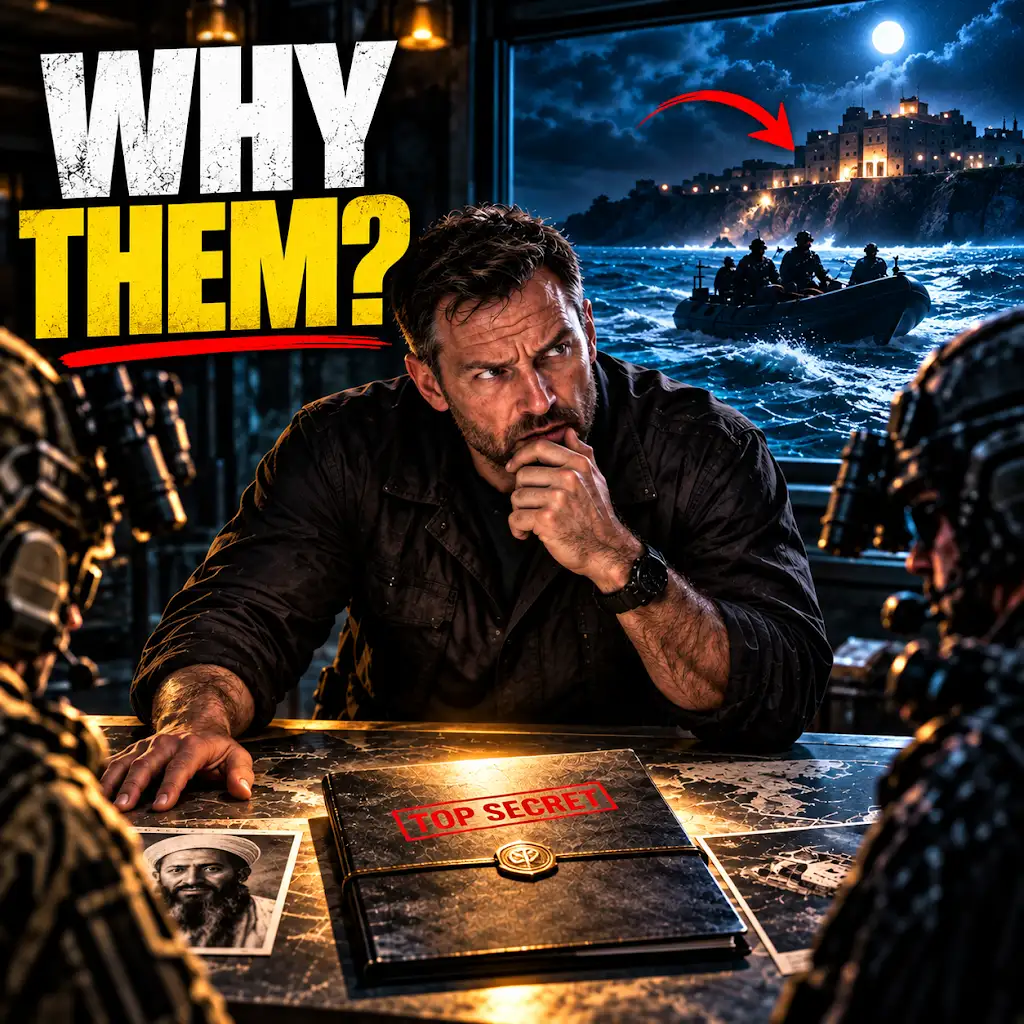
Why SEAL Team Six Got the Bin Laden Raid — Not Delta Force
FAQs
What is Delta Force?
Delta Force, officially known as 1st Special Forces Operational Detachment-Delta (1st SFOD-D), is a special operations force of the United States Army. It is primarily focused on counterterrorism and other high-risk missions.
What is DEVGRU?
DEVGRU, officially known as the United States Naval Special Warfare Development Group, is a special operations force of the United States Navy. It is commonly referred to as SEAL Team Six and is known for its counterterrorism and hostage rescue missions.
How do Delta Force and DEVGRU differ?
Delta Force and DEVGRU are both elite special operations forces, but they fall under different branches of the U.S. military – Delta Force is part of the Army, while DEVGRU is part of the Navy. They also have different areas of expertise and operational focuses.
What are some similarities between Delta Force and DEVGRU?
Both Delta Force and DEVGRU are highly trained and elite special operations forces that conduct missions requiring a high level of skill, precision, and secrecy. They both work closely with other U.S. special operations forces and international partners.
Which unit is considered more secretive – Delta Force or DEVGRU?
Both Delta Force and DEVGRU are known for their secretive nature and classified operations. However, Delta Force is often considered more secretive due to the fact that it is part of the Army’s Special Operations Command, which operates under a higher level of secrecy compared to the Navy’s Special Warfare Command.