Decoding Iran’s Military Strategy: Darkening Tactics Explained
Iran’s military strategy has long been characterized by a complex and often opaque approach, designed to offset conventional military disadvantages and project influence across a volatile region. This strategy, often referred to as “asymmetric warfare” or “resistance economy,” is not monolithic but rather a mosaic of interwoven doctrines and operational methodologies. Understanding these tactics requires dissecting the underlying strategic objectives, the historical context that shaped them, and the continuous adaptation to evolving geopolitical realities. The overarching goal appears to be the preservation of the Islamic Republic’s sovereignty, the expulsion of perceived foreign adversaries, and the support of allied groups, all while minimizing direct confrontation with superior conventional forces.
Iran’s military doctrine is deeply rooted in a desire for self-preservation and the assertion of regional power. Decades of international pressure, including sanctions and military threats, have fostered a strategic culture that prioritizes deterrence, resilience, and the cultivation of unconventional capabilities.
Ideological Underpinnings of Military Doctrine
The Islamic Revolution of 1979 injected a potent ideological dimension into Iran’s national security calculus. The concept of “exporting the revolution” and supporting oppressed Muslim communities globally has translated into a foreign policy that often underpins its military engagements.
The Doctrine of Velayat-e Faqih and its Impact on Defense
The principle of Velayat-e Faqih, or Guardianship of the Jurist, grants the Supreme Leader ultimate authority in all state affairs, including national defense. This centralized control ensures that military strategy aligns with the ideological vision of the leadership, often emphasizing resistance against perceived infidels and imperialist powers.
Global Islamic Resistance and Support Networks
Iran actively promotes and supports what it frames as a global Islamic resistance movement. This is manifested through the establishment and nurturing of proxy groups and allied militias across the Middle East and beyond, creating a network of influence that extends its reach and complicates its adversaries’ security.
The Imperative of Deterrence
Given its conventional military limitations compared to regional powers and global superpowers, Iran places a significant premium on deterrence. This is achieved through a combination of conventional and unconventional means, aiming to inflict unacceptable costs on any potential aggressor.
Development of Ballistic Missile Capabilities
Iran has invested heavily in its ballistic missile program, viewing it as a crucial component of its deterrent posture. These missiles, with varying ranges and payloads, offer the capability to strike targets deep within enemy territory, making any direct military action against Iran a risky proposition.
The Role of Missiles in Conventional Deterrence
While often discussed in the context of nuclear ambitions, Iran’s ballistic missiles serve a primary purpose in conventional deterrence. Their existence signals a retaliatory capacity that could inflict significant damage, thereby raising the threshold for any preemptive strike.
Technological Advancements and Future Projections
The continuous development of its missile technology, including improvements in accuracy, payload capacity, and countermeasures, suggests a long-term commitment to this deterrent strategy. Iran actively seeks to enhance its missile forces to maintain a qualitative and quantitative edge against potential threats.
The Nuclear Ambiguity and its Diplomatic Leverage
While Iran denies pursuing nuclear weapons, its enrichment program and advancements in nuclear technology create a degree of ambiguity that serves as a strategic asset. This ambiguity allows Iran to exert diplomatic leverage and potentially deter existential threats.
International Perceptions and Negotiating Positions
The international community’s perception of Iran’s nuclear program plays a significant role in shaping diplomatic negotiations. Iran’s incremental advancements can be used to extract concessions or resist unfavorable international agreements.
The Impact of JCPOA on Nuclear Advancements
The Joint Comprehensive Plan of Action (JCPOA) aimed to limit Iran’s nuclear program. However, subsequent actions by Iran, including advanced uranium enrichment, demonstrate its continued pursuit of nuclear knowledge, albeit within the framework of post-JCPOA complexities.
In exploring the complexities of Iran’s military strategy, it is essential to consider the insights provided in the article titled “Understanding Iran’s Military Tactics and Regional Influence.” This piece delves into the nuances of Iran’s approach to warfare, including its asymmetric tactics and the role of proxy forces in the region. For a comprehensive analysis, you can read the article here: Understanding Iran’s Military Tactics and Regional Influence.
The Art of Asymmetric Warfare: Projecting Power Beyond Conventional Limits
Iran’s military strategy is most visibly recognized through its adeptness at asymmetric warfare, a domain where it can effectively counter the technological superiority of its adversaries. This involves leveraging a combination of unconventional forces, irregular tactics, and the exploitation of local grievances.
The Revolutionary Guard Corps (IRGC) and its Special Forces
The Islamic Revolutionary Guard Corps (IRGC) is the primary architect and executor of Iran’s asymmetric strategy. It operates a parallel military structure alongside the regular army, with a distinct focus on ideological loyalty, irregular warfare, and regional influence operations.
Quds Force: The Vanguard of Foreign Operations
The Quds Force, a special unit within the IRGC, is central to Iran’s projection of power abroad. Its mandate includes supporting allied movements, conducting covert operations, and training and equipping proxy forces in numerous countries.
Training and Equipping of Proxy Militias
The Quds Force invests heavily in training and equipping militias and allied groups in countries such as Lebanon (Hezbollah), Syria, Iraq, and Yemen. This ensures a degree of operational synergy and allows Iran to achieve its objectives without direct involvement.
Intelligence Gathering and Special Operations
Beyond supporting proxies, the Quds Force engages in intelligence gathering and specialized operations aimed at disrupting adversary plans and furthering Iranian strategic interests in contested territories.
Basij: The Mobilization of Popular Support
The Basij Resistance Force, a paramilitary organization, plays a significant role in domestic security and also serves as a recruitment and training ground for forces involved in regional operations. Its vast network allows for rapid mobilization and the infusion of manpower into various theaters.
Domestic Security and Internal Dissent Management
The Basij is instrumental in maintaining domestic security, suppressing internal dissent, and enforcing ideological conformity. Its presence reinforces the state’s control over its population.
Supporting IRGC Foot Soldiers in Foreign Campaigns
The Basij not only contributes to domestic stability but also provides a pool of motivated personnel who can be deployed to support IRGC operations in foreign conflicts, often with a strong ideological commitment.
The Use of Proxies and Non-State Actors
Iran’s reliance on a network of proxy groups is a cornerstone of its asymmetric strategy. These actors allow Iran to exert influence, project power, and engage in conflict without direct attribution or the significant human and material costs of conventional warfare.
Hezbollah: The Quintessential Iranian Proxy
Hezbollah, the Lebanese Shia political party and militant group, is arguably Iran’s most successful and influential proxy. It possesses a sophisticated military wing that has engaged in direct conflict with Israel and plays a crucial role in regional power dynamics.
Military Capabilities and Operational Reach
Hezbollah’s military capabilities, including its extensive rocket arsenal and combat experience, far surpass those of many conventional state armies. Its operational reach extends beyond Lebanon, influencing events in Syria and Iraq.
Political and Social Influence in Lebanon
Beyond its military prowess, Hezbollah wields significant political and social influence within Lebanon, acting as a powerful political bloc and a significant provider of social services, further solidifying its popular base.
Houthi Movement: A Strategic Foothold in Yemen
The Houthi movement in Yemen represents another critical element of Iran’s regional strategy. While Iran denies direct control, its support for the Houthis has given it a strategic foothold on the Arabian Peninsula, posing a significant challenge to Saudi Arabia.
Disrupting Regional Maritime Security
The Houthis, with Iranian support, have demonstrated the capacity to disrupt regional maritime security, particularly in the Red Sea, impacting global shipping lanes and creating significant economic repercussions.
A Lever in Regional Power Struggles
The Houthi conflict provides Iran with a powerful lever in its broader geopolitical rivalry with Saudi Arabia and its allies, allowing it to engage in a protracted conflict that absorbs regional adversaries’ resources.
In exploring the complexities of Iran’s military strategy, it is essential to consider various perspectives and analyses that shed light on the country’s evolving tactics. A related article that delves deeper into these themes can be found at In the War Room, where experts discuss the implications of Iran’s recent maneuvers and their potential impact on regional stability. Understanding these dynamics is crucial for comprehending the broader geopolitical landscape in the Middle East.
Irregular Warfare and Deniable Operations
Iran’s strategy heavily relies on irregular warfare tactics that are difficult to attribute directly to the state, allowing for plausible deniability and minimizing the risk of direct retaliation.
The Concept of “Shadow Wars”
Iran engages in what can be termed “shadow wars,” employing covert means to achieve strategic objectives. This includes cyber warfare, disinformation campaigns, and the use of non-state actors to exert pressure and undermine adversaries.
Cyber Warfare and Information Operations
Iran has significantly developed its cyber warfare capabilities, employing them for espionage, disruption, and propaganda. Information operations aim to shape narratives, sow discord, and undermine the legitimacy of its opponents.
Sabotage and Destabilization Campaigns
Indirect actions such as sabotage of infrastructure, assassinations of perceived enemies, and support for destabilizing movements are integral to Iran’s approach to achieving its foreign policy goals.
Exploitation of Local Grievances and Political Instability
Iran masterfully exploits existing local grievances and political instability in target countries. By supporting dissident groups and exacerbating internal divisions, it can weaken adversary states and expand its own influence without direct military intervention.
Fueling Ethnic and Sectarian Tensions
Iran may indirectly fuel ethnic and sectarian tensions within other nations to create opportunities for its allies and to undermine stable governments that are opposed to its interests.
Supporting Insurgent and Rebel Groups
The provision of training, funding, and weaponry to insurgent and rebel groups allows Iran to exert influence and achieve its objectives in areas where direct intervention would be politically untenable or militarily unfeasible.
The Defense Innovation Ecosystem: Adapting to Evolving Threats
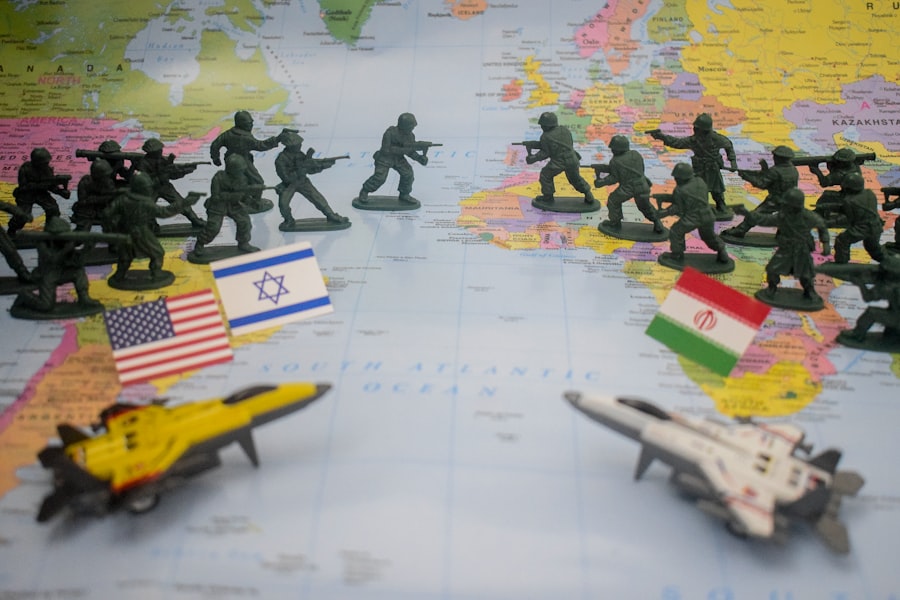
Iran’s military strategy is not static; it is a dynamic and evolving system that continuously adapts to new threats and technological advancements. This adaptability is crucial for maintaining its strategic relevance and projecting power in an increasingly complex global landscape.
Emphasis on Indigenous Defense Industries
A significant component of Iran’s strategy is the development of robust indigenous defense industries. Years of international sanctions have forced Iran to become self-reliant in many aspects of its military production, fostering innovation and reducing dependency on foreign suppliers.
Research and Development in Key Military Sectors
Iran invests heavily in research and development across various military sectors, including its missile program, drone technology, and cyber capabilities. This focus on R&D ensures a continuous pipeline of new and improved weaponry and operational approaches.
Drone Technology: A Force Multiplier
Iran has emerged as a significant player in drone technology, developing and deploying a range of unmanned aerial vehicles (UAVs) for reconnaissance, surveillance, and attack missions. These drones have proven effective in various regional conflicts.
Offensive Drone Capabilities and Swarming Tactics
Iranian drones are increasingly equipped with offensive capabilities, capable of delivering payloads and engaging targets. The development of swarming tactics, where multiple drones are deployed simultaneously, presents a significant challenge to air defenses.
Reconnaissance and Intelligence Gathering Applications
Beyond offensive uses, drones provide Iran with crucial intelligence gathering and reconnaissance capabilities, enhancing its situational awareness in contested operational environments.
Naval Modernization and Asymmetric Naval Warfare
While not a traditional naval power, Iran has focused on modernizing its naval forces with an emphasis on asymmetric warfare tactics. This includes the proliferation of small, fast attack craft and anti-ship missiles.
Coastal Defense and Sea Denial Strategies
Iran’s naval strategy prioritizes coastal defense and “sea denial,” aiming to prevent enemy naval forces from operating freely in its territorial waters and the Persian Gulf. Advanced missile systems and mine-laying capabilities contribute to this strategy.
The Role of Submarines and Special Naval Units
Smaller submarine forces and specialized naval units are also employed to conduct asymmetric operations, including mine-laying and covert insertions, further complicating the operational environment for potential adversaries.
Adapting to Advanced Air and Missile Defense Systems
As adversaries deploy increasingly sophisticated air and missile defense systems, Iran continuously seeks to adapt its offensive capabilities to overcome these countermeasures.
Countermeasures Against Radar and Detection Systems
Iran’s missile development program often incorporates features designed to evade current radar and detection systems. This includes efforts to reduce radar cross-section and employ advanced guidance systems.
Stealth Technology and Electronic Warfare
While not at the forefront of global stealth technology, Iran is understood to be researching and integrating elements of stealth design into its platforms, alongside sophisticated electronic warfare capabilities to jam and deceive enemy radar.
Decoy Technologies and Deception Tactics
The use of decoys and deception tactics is a critical aspect of Iran’s strategy to overwhelm adversary air defense networks, making it harder to discriminate between real and decoys.
Command, Control, and Communications (C3) Vulnerabilities
While focused on offensive capabilities, Iran also analyzes and exploits potential vulnerabilities in the command, control, and communications (C3) systems of its adversaries.
Cyber Operations Targeting C3 Networks
Iran’s cyber warfare capabilities are increasingly employed to target the C3 networks of its adversaries, aiming to disrupt their operational cohesion and decision-making processes.
Psychological Operations and Information Warfare
Information warfare and psychological operations are used to sow confusion and doubt within enemy command structures, weakening their resolve and operational effectiveness.
The Geostrategic Calculus: Iran’s Regional Ambitions and Global Impact
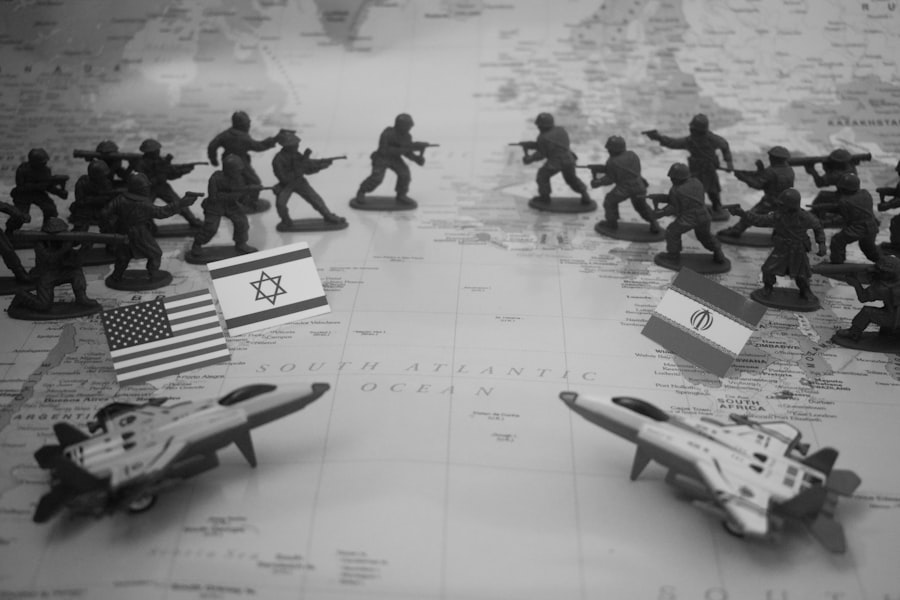
Iran’s military strategy is inextricably linked to its broader geostrategic ambitions in the Middle East and its evolving role on the global stage. The country seeks to reshape regional power dynamics and challenge the existing international order.
The Arc of Influence: From the Levant to the Indian Ocean
Iran has systematically cultivated an “arc of influence” extending from the Levant through Iraq, Syria, and into Yemen, reaching towards the Indian Ocean. This network of allies and proxies provides strategic depth and projects Iranian power across a vast geographical expanse.
Proximity to Israel and the “Axis of Resistance”
A central tenet of Iran’s regional strategy is its animosity towards Israel and its promotion of an “axis of resistance” comprising Hezbollah, Hamas, and other anti-Israel militant groups. This unified front aims to undermine Israel’s security and challenge its regional hegemony.
Hezbollah’s Role as a Deterrent Against Israel
Hezbollah serves as a critical deterrence mechanism against potential Israeli aggression towards Iran. Its substantial rocket arsenal and combat readiness are designed to inflict significant damage on Israel in the event of a conflict.
Supporting Palestinian Militant Groups
Iran’s support for various Palestinian militant groups, including Hamas and Islamic Jihad, is a key element of its strategy to maintain pressure on Israel and to demonstrate solidarity with the Palestinian cause.
Influence in Iraq and Syria: Post-Conflict Dynamics
Following the defeat of ISIS, Iran has sought to consolidate its influence in Iraq and Syria. Its military and paramilitary forces have played a significant role in combating ISIS, and it continues to exert political and security influence in these war-torn nations.
Securing Shia Majorities and Political Dominance
In both Iraq and Syria, Iran’s strategic objective includes ensuring the political dominance of Shia factions and securing its broader regional interests through allied governments.
Counterbalancing Western and Regional Adversaries
By maintaining a strong presence and influence in Iraq and Syria, Iran can effectively counter the influence of Western powers and regional rivals like Saudi Arabia and Turkey.
The Maritime Dimension: Controlling the Strait of Hormuz
Control or the ability to disrupt traffic through the Strait of Hormuz, a critically important global oil chokepoint, is a significant strategic objective for Iran. It uses its naval capabilities and missile forces to project this capability.
Sea Denial Strategies and Asymmetric Naval Power
Iran’s naval strategy in the Persian Gulf focuses on “sea denial,” employing a multitude of small, fast attack craft, mines, and anti-ship missiles to make it extremely difficult for larger naval forces to operate freely in the waterway.
The Threat of Mine Warfare in the Strait
The potential use of mines by Iran or its proxies in the Strait of Hormuz represents a significant threat to maritime commerce and could trigger a rapid escalation of conflict.
Sophistication of Iranian Mine-Laying Capabilities
Intelligence suggests that Iran possesses sophisticated mine-laying capabilities, including the use of submarines and specialized vessels, to deploy mines effectively in strategic areas.
The Economic and Political Ramifications of Mine Warfare
The disruption of shipping through mine warfare would have severe economic consequences for global energy markets and would likely provoke a strong international response.
The Impact of Sanctions on Naval Modernization
International sanctions have constrained Iran’s ability to acquire advanced naval hardware, forcing it to rely on indigenous production and asymmetric tactics to compensate for technological disadvantages.
Indigenous Production of Fast Attack Craft and Missiles
Despite sanctions, Iran has continued to produce its own fleet of fast attack craft and anti-ship missiles, enhancing its asymmetrical naval warfare capabilities.
The Role of Foreign Technology Acquisition
While facing restrictions, Iran has historically sought to acquire relevant naval technologies from various sources, subtly circumventing sanctions to bolster its capabilities.
Global Outreach and Challenges to International Norms
Iran’s military strategy extends beyond its immediate neighborhood, with manifestations of its influence and actions posing challenges to international norms and security architectures.
The Global Reach of its Support Networks
The support networks Iran has established extend to various regions, impacting stability and security far beyond its immediate geographical vicinity. This global outreach complicates international efforts to contain regional conflicts.
Activities in Latin America and Africa
Iran has been observed to cultivate relationships and engage in activities in Latin America and Africa, raising concerns about its growing global footprint and the potential for increased regional instability.
Building Diplomatic and Economic Ties
Iran actively seeks to build diplomatic and economic ties in these regions, which can serve as a platform for its broader strategic objectives.
Allegations of Supporting Dissident Groups
There have been various allegations of Iranian support for dissident groups and proxy movements in these farther-flung regions, though definitive proof is often elusive.
The Response of International Coalitions and Diplomacy
The international community, through coalitions and diplomatic efforts, seeks to counter Iran’s destabilizing activities and to promote regional stability. This involves a complex interplay of sanctions, diplomatic pressure, and security cooperation.
The Limitations of Sanctions and Military Posturing
While sanctions and military posturing can constrain Iran’s actions, they have not fundamentally altered its strategic calculus. Iran has demonstrated a capacity to adapt and persevere under significant external pressure.
The Persistence of Iran’s Asymmetric Strategy
Despite international efforts, Iran’s asymmetric strategy and its reliance on proxy forces remain resilient, posing an ongoing challenge to global security.
The Importance of Diplomatic Engagement and De-escalation
Ultimately, a sustained focus on diplomatic engagement and de-escalation remains crucial for managing tensions and preventing conflicts from escalating, while acknowledging the deeply ingrained nature of Iran’s current military strategy.
FAQs
What is the Darken Iran military strategy?
The Darken Iran military strategy is a concept developed by the United States to counter Iran’s influence in the Middle East. It involves a combination of economic sanctions, diplomatic pressure, and military deterrence to limit Iran’s ability to expand its influence in the region.
How does the Darken Iran strategy affect Iran’s military capabilities?
The Darken Iran strategy aims to limit Iran’s military capabilities by imposing economic sanctions that restrict its ability to acquire advanced weapons and technology. It also includes efforts to deter Iran from engaging in aggressive military actions through the presence of U.S. military forces in the region.
What are the key components of the Darken Iran military strategy?
The key components of the Darken Iran military strategy include economic sanctions, diplomatic isolation, military deterrence, and support for regional allies to counter Iran’s influence. These components are aimed at weakening Iran’s ability to project power in the Middle East.
How has Iran responded to the Darken Iran strategy?
Iran has responded to the Darken Iran strategy by increasing its military cooperation with other countries, such as Russia and China, to counter the impact of economic sanctions. It has also sought to expand its influence in the region through support for proxy groups and militias.
What are the potential implications of the Darken Iran military strategy?
The Darken Iran military strategy has the potential to escalate tensions in the Middle East and increase the risk of military conflict. It also has the potential to further strain relations between the United States and Iran, as well as impact the security and stability of the region.