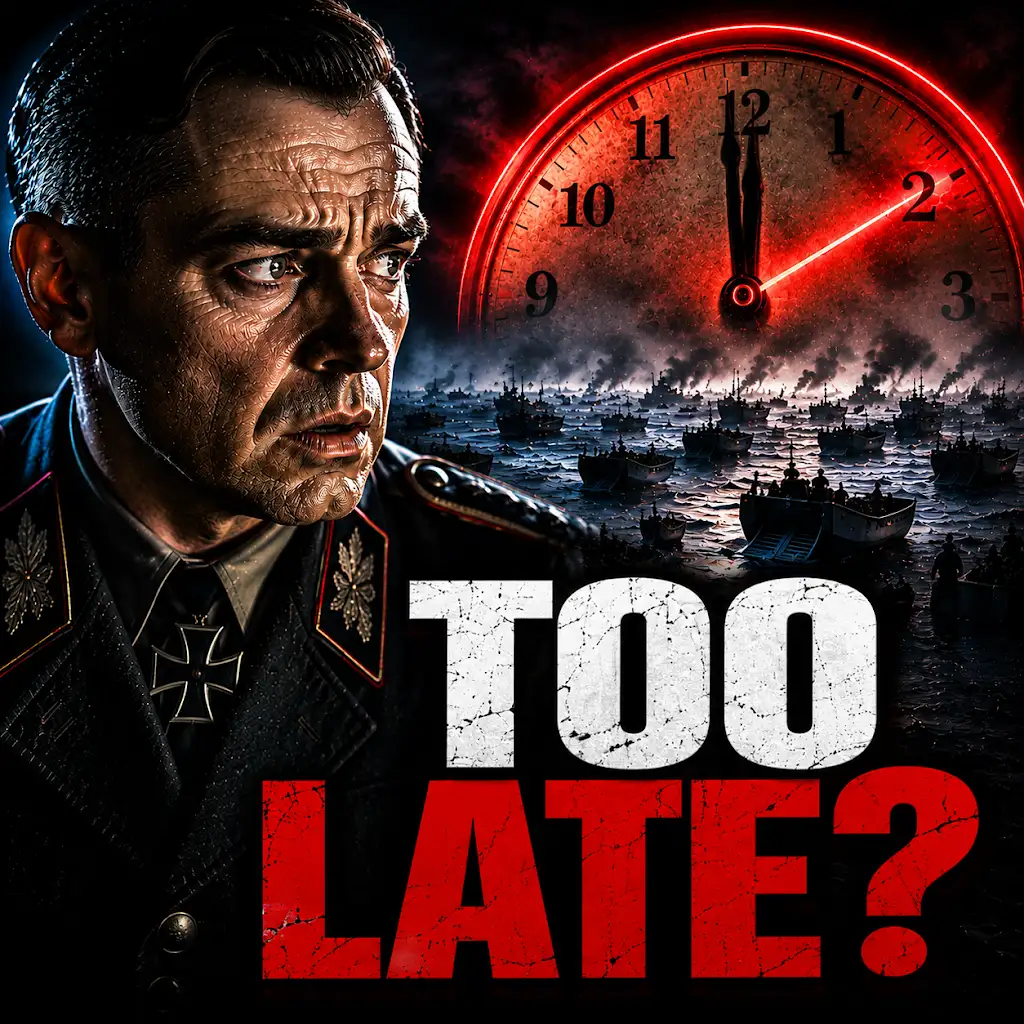
The early hours of June 6, 1944, were a period of unsettling calm for many German defenders along the Atlantic Wall. The moon had set, and the predawn sky offered little illumination, yet an undercurrent of anxiety was palpable. For months, intelligence reports had hinted at an impending Allied invasion, but the exact timing and location remained elusive. This uncertainty, coupled with the vastness of the coastline, created a pervasive sense of anticipation, a feeling that the long-awaited storm was finally upon them.
The Atlantic Wall, a vast network of fortifications stretching from Norway to the Spanish border, was Germany’s intended bulwark against an Allied landing. However, by the summer of 1944, its effectiveness was debatable. The immense length of the coastline meant that resources were thinly spread, and the quality of defenses varied significantly. While some sectors boasted formidable concrete bunkers, extensive minefields, and sophisticated artillery emplacements, others were comparatively weak, relying more on natural defenses and thinly manned trenches. The German High Command, preoccupied with the Eastern Front and other strategic concerns, had never fully committed the resources necessary to make the Wall truly impregnable.
Uneven Distribution of Forces
The deployment of German troops along the Atlantic Wall was a testament to the strategic dilemmas faced by the Wehrmacht. While the coastal artillery units were generally well-equipped and stationed in strategically important locations, the bulk of the infantry divisions tasked with defending the beaches were either depleted, undertrained, or lacked essential equipment. Many of these units were designated as static defense formations, designed to hold their ground rather than engage in mobile warfare. The presence of Osttruppen – soldiers recruited from Soviet territories occupied by Germany – in some sectors further highlighted the strain on German manpower. These troops, often lacking full commitment and subjected to varying levels of reliability, represented a vulnerability that the Allies would later exploit.
The Role of Rommel and the Ardennes Illusion
Field Marshal Erwin Rommel, appointed commander of Army Group B in November 1943, had been tasked with strengthening the Atlantic Wall. He recognized the inherent weakness of the static defenses and advocated for a more mobile defense strategy, believing that the Allies would land in force and that the initial hours were critical. Rommel pushed for the placement of more obstacles on the beaches, a more robust system of coastal artillery, and the deployment of armored reserves closer to the anticipated landing zones. However, his efforts were met with resistance from some within the German High Command, particularly from those who believed the main Allied effort would be directed at the Pas-de-Calais, the shortest crossing to England, rather than Normandy. This strategic disagreement, and the subsequent misallocation of critical armored units to other areas, would have profound consequences on D-Day. The belief that the Pas-de-Calais was the primary target, fueled by elaborate Allied deception operations, had convinced many German commanders, including Field Marshal Gerd von Rundstedt, the overall commander of Western Command, that Normandy was a diversionary feint.
Coastal Defenses: A Mixed Bag
The concrete fortifications, designed to withstand naval bombardment and direct assault, were indeed formidable in certain areas. Large, deeply dug bunkers housed machine guns and artillery pieces, offering protected firing positions. Extensive minefields were laid along the beaches and in the hinterland, intended to slow down and channel attacking forces into killing zones. However, the effectiveness of these defenses was hampered by several factors. The continuous nature of the Wall meant that it was impossible to reinforce every sector equally. Furthermore, the relentless Allied bombing campaign in the preceding months had degraded some of the defenses, though it had also forced the Germans to disperse their forces and hide their true strength. The lack of coordinated artillery fire and the difficulty in rapidly redeploying mobile reserves to counter breakthroughs meant that even strong points could be isolated and overwhelmed.
The Night Before: Whispers of Invasion
As darkness enveloped the French coast on June 5th, an unusual tension permeated the German garrisons. The weather, a critical factor for both sides, had been a subject of intense scrutiny. Allied meteorologists had forecast a brief respite in the prevailing stormy weather, a window of opportunity that the German command, despite Rommel’s concerns, had largely dismissed as unlikely for a large-scale invasion. For many soldiers, the night was punctuated by the usual routines of guard duty, the distant roar of the sea, and the infrequent crackle of radio transmissions.
Radio Silence and Deception
The Allied strategy of deception had been remarkably effective. Elaborate radio traffic, the movement of dummy landing craft, and the positioning of inflatable tanks and aircraft in areas far from the actual invasion sites had successfully sown confusion. German intelligence, while aware of a potential invasion, had been led to believe that the main assault would be in the Pas-de-Calais. This misdirection meant that many of the most potent German reserves, including crucial armored divisions, were stationed far from Normandy. The relative quiet on the radio waves that night, far from being a sign of calm, was a symptom of the extensive Allied blackout on their operational communications.
The Parachute Drops: Confused Signals
The first tangible signs of an impending invasion for many German units came not from the sea, but from the sky. In the early hours of June 6th, Allied airborne divisions began to parachute and land behind the German lines. These operations were designed to seize key bridges, disrupt communications, and sow chaos among the defenders. However, the scattered nature of some of these drops, due to adverse weather and pilot error, led to a confused and fragmented response from the German defenders. Some units found themselves battling small, isolated groups of paratroopers, while others were caught completely by surprise. The initial German reports often described these actions as mere raids or saboteur activity, failing to grasp the full scale of the airborne assault.
Coastal Patrols and Early Warnings
Along the coast itself, German patrol boats and observation posts were the first to detect unusual Allied naval activity. However, the vastness of the English Channel and the dispersed nature of the Allied invasion fleet meant that these early warnings were often incomplete or misinterpreted. Radio communications, even when unjammed, struggled to convey the sheer magnitude of the armada approaching. The lack of immediate, definitive confirmation of a large-scale landing meant that the activation of defensive protocols and the summoning of reserves were delayed.
D-Day: The Landings Begin
As dawn broke on June 6th, the full horror of the situation began to dawn on the German defenders. The skies rained down paratroopers, and the sea, once a barrier, was now a highway for a vast armada of landing craft. The initial waves of Allied assault troops hit the beaches with relentless ferocity, overwhelming the thinly spread German defenses in many sectors.
The Eastern Flank: Pointe du Hoc and Utah Beach
On the western flank of the Allied landings, the German defenses at Pointe du Hoc, a strategically important cliff-top battery overlooking Utah Beach, were a particular focus of the American assault. The daring climb by Ranger battalions to neutralize the artillery emplacements, though costly, was a crucial success. At Utah Beach, the landing was less fiercely contested than other sectors, partly due to a fortunate miscalculation by the American landing craft commanders who landed slightly to the west of their intended objective, encountering weaker defenses. However, the German defenders, though surprised by the scale of the landings, fought tenaciously in the immediate vicinity.
The Central Sector: Omaha Beach – A Crucible of Fire
Omaha Beach would become synonymous with the brutal ferocity of the German defense. The Allied plan to land two American divisions here faced a near-catastrophic failure. The German defenders, primarily from the 352nd Infantry Division, were well-positioned on the bluffs overlooking the beach, with extensive fields of fire and well-placed strongpoints. The pre-landing naval bombardment had proven largely ineffective against the deeply dug-in German positions, and the landing craft found themselves under intense machine-gun and artillery fire as they approached the shore. The terrain, with its steep bluffs and the limited exits from the beach, became a killing ground. German soldiers, witnessing the carnage, fought with a grim determination, inflicting heavy casualties on the attacking Americans.
The Eastern Sectors: Gold, Juno, and Sword Beaches
The British and Canadian sectors – Gold, Juno, and Sword Beaches – also witnessed fierce fighting. While the initial German defenses were strong, the combined arms approach of the Allied forces, with strong naval and air support, began to wear down the German resistance. Canadian troops at Juno Beach, in particular, faced some of the most formidable German defenses, including heavily fortified positions and extensive minefields. However, they managed to push inland, overcoming the initial resistance through determined assaults and effective use of their supporting arms. British forces at Gold and Sword beaches also faced stiff opposition, but the sheer weight of the Allied landings and the eventual arrival of their armored reserves began to turn the tide.
The German Response: Confusion and Delays
The German response to the D-Day landings was hampered by a critical lack of unified command, communication breakdowns, and the strategic miscalculations of the preceding months. Field Marshal Rommel, who had recognized the immediate danger, was away from the front lines on a visit to the front in Brittany, having been given assurances that the invasion was unlikely on June 6th. The chain of command was further complicated by the Allied deception operations, which continued to suggest that the main landings were a feint.
The Search for Reserves
The crucial question for the German High Command was the location and deployment of their strategic reserves. The 12th SS Panzer Division “Hitlerjugend” and the Panzer-Lehr-Division were among the most powerful armored formations available in France. However, their deployment to Normandy was delayed due to the ongoing confusion about the true Allied objectives. Initially, many German commanders believed the landings were a diversion and that the main attack would come later, in the Pas-de-Calais. This indecision and the logistical challenges of rapidly moving large armored formations across France meant that these vital reserves arrived too late to effectively blunt the initial Allied assault.
The Role of Hitler and OKW
Adolf Hitler, upon receiving reports of the invasion, was initially reluctant to commit his reserves. He clung to the belief that the Normandy landings were a feint and that the real invasion would occur elsewhere. This indecisiveness, coupled with the absence of many senior commanders who were attending military exercises or on leave, led to critical delays in the German counter-attack. Field Marshal von Rundstedt, while aware of the landings, was also constrained by the directives from OKW (Oberkommando der Wehrmacht), which prioritized the Pas-de-Calais. The fog of war, compounded by deliberate Allied deception, created a paralysis of command that proved devastating.
Communication Breakdowns
The effectiveness of the German defense was also severely hampered by communication breakdowns. Allied bombing had degraded railway lines and communication infrastructure, making it difficult for German units to coordinate their movements and for commanders to receive accurate real-time intelligence. Radio jamming by the Allies further exacerbated these problems. As a result, many German units found themselves isolated, fighting independently without coordinated support or reinforcements.
The Aftermath: A Grim Reality Sets In
As the first day of the invasion drew to a close, the grim reality of the situation became undeniable for the German military leadership. The Allied beachheads were firmly established, and despite fierce resistance, the tide of battle had shifted decisively. The hoped-for swift and decisive counter-attack had failed to materialize, leaving the German forces on the defensive.
The Loss of the Atlantic Wall
The D-Day landings effectively breached the Atlantic Wall. While individual strongpoints and pockets of resistance would continue to fight bravely, the strategic integrity of the defensive line had been irrevocably compromised. The Allies had demonstrated their ability to overcome the formidable defenses, establishing a crucial foothold on the continent. This opened the door for the subsequent liberation of France and the eventual push towards Germany.
The Shifting Tides of War
The events of June 6, 1944, marked a significant turning point in World War II. From the German perspective, it was the beginning of the end in the West. The immense resources poured into the Atlantic Wall, and the strategic miscalculations that had preceded the invasion, had proven to be a costly failure. The relentless advance of the Allied forces would soon stretch German resources to their breaking point, both in the West and on the Eastern Front. The psychological blow of the successful invasion, coupled with the heavy casualties and the loss of strategic initiative, cast a long shadow over the remaining months of the war for Germany. The dream of a decisive victory on the Western Front had been shattered, replaced by the grim reality of a war that was now being fought on multiple fronts, with diminishing chances of survival.