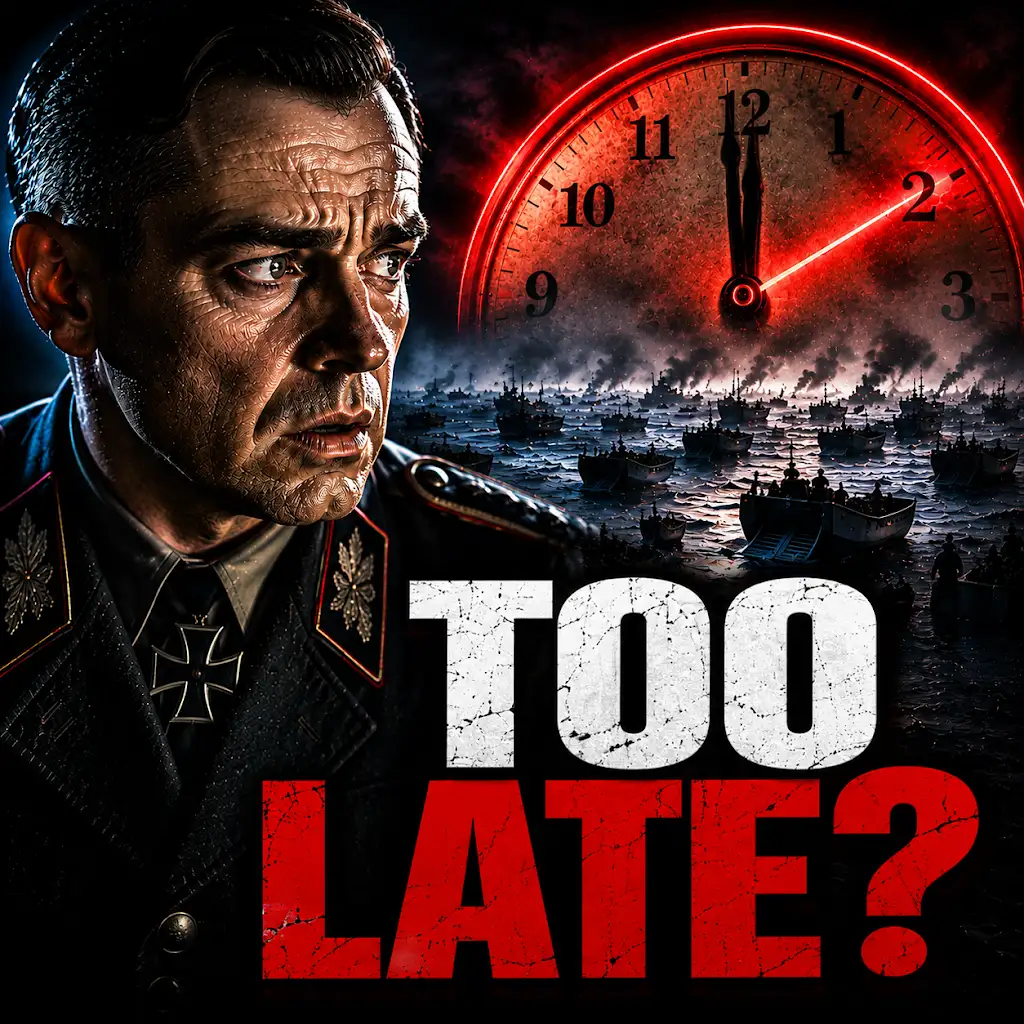
The sands of Normandy bear the silent testament to a colossal clash of wills, a day etched into history as D-Day. While the Allied invasion on June 6, 1944, is rightly celebrated for its bravery and eventual success, a crucial element in the unfolding drama was the series of strategic and tactical blunders made by the German defenders. These errors, born of a complex web of leadership issues, intelligence failures, and rigid doctrine, significantly hampered their ability to repel the Allied landings and ultimately contributed to the opening of the Western Front. Understanding these German mistakes is not about diminishing the Allied achievement, but rather about appreciating the intricate factors that shaped the outcome of one of the most pivotal battles of World War II.
The bedrock of German defense in the West was the formidable “Atlantic Wall.” Conceived as an impenetrable barrier to thwart any Allied amphibious assault, its reality on D-Day was far from the formidable monolithic structure often imagined. Several critical flaws undermined its effectiveness, rendering it less a solid wall and more a porous, albeit heavily armed, line.
Overconfidence and Underestimation of Allied Capabilities
A pervasive underestimation of Allied resolve and logistical prowess plagued German high command. Despite clear indications of an impending invasion, particularly in the months leading up to D-Day, many German leaders clung to the belief that the Allies lacked the capability for such a massive undertaking. This overconfidence stemmed partly from previous Allied setbacks and partly from the ingrained arrogance of a military that had, until that point, enjoyed considerable success. This belief led to a dangerous complacency in fortifying key areas and a failure to adequately prepare for the sheer scale of the Allied offensive.
The Role of Propaganda and Nazi Ideology
Nazi propaganda played a significant role in fostering this overconfidence. The constant barrage of messages emphasizing German military superiority and the supposed weakness of their enemies created an echo chamber for many within the Wehrmacht. This ideological lens distorted their perception of reality, making it difficult to objectively assess the threat posed by the Allies. The belief that inferior peoples could not possibly overcome the master race further blinded them to the potential of Allied innovation and determination.
Inconsistent and Inadequate Fortification Strategy
The Atlantic Wall was a vast undertaking, stretching from Denmark to the Spanish border. However, the resources and manpower allocated to its construction were unevenly distributed and often inadequate for the perceived threat. The most heavily fortified sectors were often those deemed most likely to be attacked, but even these suffered from a lack of consistent defensive depth and interconnectedness.
The Myth of the Impenetrable Wall
The sheer length of the Atlantic Wall made it impossible to fortify every mile with equal intensity. This led to critical gaps and vulnerabilities that the Allies were adept at exploiting. The focus on static defenses, while formidable in places, proved less effective against a determined enemy capable of concentrating their forces at specific points of weakness. The defenders were often spread too thin, attempting to cover too much ground with insufficient manpower and weaponry.
Lack of a Unified Defensive Concept
The Atlantic Wall was not a single, cohesive defensive system but rather a collection of fortifications built over time with varying degrees of priority and quality. There was a lack of a unified defensive concept that emphasized mutually supporting positions and integrated defensive zones. This resulted in a fragmented defense where isolated strongpoints could be, and often were, bypassed or overwhelmed piecemeal.
The Strategic Importance of the Normandy Sector
While the Allies chose Normandy, it was not necessarily the location German command had anticipated as the primary landing zone. Many resources and troop concentrations were positioned further north, in the Pas-de-Calais region, due to the strategic importance of the Strait of Dover and the perceived shorter crossing distance for the Allies. This misjudgment of the invasion’s true locus had profound implications.
Deception and the Pas-de-Calais Focus
The Allies masterfully employed deception operations, most notably Operation Fortitude, to convince the Germans that the main invasion would occur in the Pas-de-Calais. This involved creating the illusion of a massive build-up of Allied forces in southern England, under the command of the fictional First U.S. Army Group led by General George S. Patton. The elaborate ruse, including dummy landing craft and radio traffic, successfully diverted German attention and resources away from Normandy.
Underestimating the Allies’ Amphibious Capabilities
The Germans, despite extensive preparations, still underestimated the sheer scale and complexity of a large-scale amphibious assault across the English Channel. They had contingency plans, but these were often reactive rather than proactive, and did not fully account for the speed and coordination the Allies could achieve.
Hitler’s Interference and Military Doctrine Flaws
The chain of command within the German military was increasingly centralized and subject to the often-unpredictable whims of Adolf Hitler. This micromanagement, coupled with rigid adherence to pre-war military doctrine, proved disastrous on D-Day.
Hitler’s “No Retreat” Policy and its Consequences
Hitler’s distrust of his generals and his penchant for issuing direct orders, often detached from battlefield realities, significantly hampered the German response. His infamous “no retreat” policy, particularly on D-Day itself, meant that units were often ordered to hold their ground to the last man, even when strategic withdrawal would have been the more sensible course of action. This led to the unnecessary destruction of valuable German forces and prevented them from regrouping to form a more effective defense elsewhere.
The Führer’s Disconnect from the Battlefield
Hitler, isolated in his command bunkers, lacked the direct, real-time situational awareness that his generals on the ground possessed. His decisions were often based on outdated information, ideological imperatives, or sheer stubbornness, rather than on the fluid needs of the battle. This disconnect created a frustrating and often fatal impediment to effective command and control.
The Impact on Local Commanders
Local German commanders in Normandy were often caught between the desperate need to adapt to the unfolding situation and the draconian orders emanating from Führerhauptquartier. This created a climate of fear and indecision, where initiative was discouraged and tactical flexibility was severely constrained.
Rigid Doctrine and the Failure to Adapt
German military doctrine, while highly effective in the early years of the war, had become increasingly rigid and resistant to adaptation. The emphasis on set-piece battles and frontal assaults, while successful against less organized enemies, struggled to cope with the fluid, multi-pronged nature of the Allied invasion.
The Overreliance on Static Defenses
The focus on fixed fortifications and static defensive lines meant that the German response lacked the mobile counter-attack capabilities needed to effectively contain and repel an amphibious assault. Their armored reserves, crucial for a swift and decisive counter-offensive, were often held back too far from the front lines and were slow to be committed.
The Neglect of Air Superiority
While the Luftwaffe possessed formidable aircraft at the outset of the war, its strength had been significantly depleted by the relentless demands of the Eastern Front and Allied bombing campaigns. On D-Day, German air superiority over Normandy was virtually non-existent. This meant that Allied naval and air power could operate with relative impunity, providing crucial support to the invading troops and disrupting German troop movements. The Germans failed to prioritize the development of air defense strategies and lacked the aircraft to contest the skies effectively.
Intelligence Failures and Miscalculations
The German intelligence apparatus, once a formidable force, suffered from significant failures and miscalculations in the lead-up to D-Day, contributing to their unpreparedness.
Underestimation of Allied Naval and Air Power
The sheer scale of Allied naval presence on D-Day, with over 6,900 vessels, was a shock to the German command. They had underestimated the logistical capabilities and the sheer industrial might of the Allies, which allowed them to muster such a massive amphibious force. Similarly, the overwhelming superiority of Allied air power in supporting the landings was a factor they had not fully accounted for.
The Role of “Ultra” and Codebreaking
While the Germans were unaware of the full extent of Allied codebreaking capabilities, particularly the success of the “Ultra” project, their own intelligence was often hampered by rigid procedures and a lack of cross-branch communication. This meant that critical pieces of information may have been fragmented or misinterpreted.
The “Maginot Mentality” in Coastal Defense
A certain “Maginot Mentality” had permeated German coastal defense thinking. Similar to the French reliance on fixed fortifications, the Germans placed an overemphasis on the static defenses of the Atlantic Wall, neglecting the need for mobile reserves and flexible counter-attack plans. This mindset contributed to the inability to react effectively once the initial landings had occurred.
The Illusion of a Fortified Bastion
The emphasis on building heavily fortified strongpoints along the coast created an illusion of impregnability. However, this focus often came at the expense of developing comprehensive defensive plans that integrated these strongpoints into a wider defensive network capable of absorbing and repelling an invasion.
Lack of Foresight on Landing Craft Production
The Allies were able to produce landing craft on an industrial scale, a feat that the German war economy, strained by the demands of the Eastern Front and Allied bombing, could not match. This was a critical factor in the Allies’ ability to launch a massive amphibious assault, and the Germans’ failure to anticipate this scale of production was a significant oversight.
The Dispersal and Ineffective Deployment of Key Reserve Forces
Perhaps one of the most critical German mistakes on D-Day was the dispersal and ineffective deployment of their crucial armored and mobile reserves. These forces, vital for any successful counter-offensive, were either too far away, committed piecemeal, or held back by indecision.
The Strategic Location of Panzer Divisions
Many of the best German Panzer divisions, the backbone of their mobile defense, were stationed far from Normandy. Some were still in France, but others had been redeployed to other fronts or were undergoing refits. This geographical dispersal meant that even when the order was given to counter-attack, the time it took for these units to reach the battlefield was substantial, allowing the Allies to consolidate their beachheads.
The “Schwerpunkt” on the Eastern Front
The overwhelming priority given to the Eastern Front meant that resources, including elite Panzer units, were continuously siphoned away from the Western defenses. The perceived existential threat from the Soviet Union often overshadowed the Western Front in the strategic calculations of the German high command.
The Hesitation to Release Reserves
Even when the invasion was clearly underway, there was considerable hesitation within the German high command to release their strategic reserves. Hitler, in particular, was reluctant to commit his precious Panzer divisions until he was absolutely certain of the invasion’s true location and scale, fearing they would be drawn into a trap.
The Role of the Luftwaffe in Holding Back Reserves
The Luftwaffe’s inability to provide effective air cover for troop movements also played a role in delaying the deployment of reserves. German armored columns on the move were highly vulnerable to Allied air attacks, and commanders were understandably cautious about exposing them to such danger.
Piecemeal Commitment and Lack of Coordinated Counter-Attacks
When reserves were eventually committed, they were often deployed in piecemeal fashion, without proper coordination or overwhelming force. This allowed the Allies to deal with individual German attacks successively rather than facing a unified and devastating counter-offensive.
The Battle for Caen and its Significance
The prolonged and brutal Battle for Caen, which began on D-Day and continued for weeks, exemplifies the German struggle to effectively utilize their reserves. Despite the presence of some elite Panzer units, their deployment was uncoordinated, and they were unable to prevent the Allies from capturing the strategically important city.
Communication Breakdowns and Command and Control Issues
Effective communication and robust command and control are paramount in any military operation, especially one as complex as an amphibious invasion. On D-Day, the German system suffered from significant breakdowns, exacerbating their other strategic and tactical errors.
The Inadequacy of German Radio Communications
The German radio communication network, while functional, was often outmatched by the Allied system in terms of range, reliability, and security. Allied electronic warfare capabilities also played a role in disrupting German communications. This meant that orders were sometimes delayed, garbled, or never reached their intended recipients.
The Impact of Allied Air Superiority on Communications
The Allies’ dominance of the air meant that German communication lines, including vulnerable radio transmissions and landlines, were constantly under threat of interception and disruption. This further hampered their ability to maintain situational awareness and coordinate their forces.
The Disconnect Between Front-Line and High Command
As mentioned earlier, the disconnect between the front-line commanders, who possessed the most accurate and up-to-date information, and the distant high command, particularly Hitler, was a recurring problem. This disconnect led to a lack of agility and an inability to make timely and informed decisions.
The Role of Airfields and Infrastructure Damage
Allied bombing had significantly damaged German airfields and communication infrastructure in the days and weeks leading up to D-Day. This crippled their ability to deploy aircraft, receive intelligence, and relay orders effectively.
The Confusion of Command and the Chain of Authority
The German command structure in Normandy was a complex and often overlapping arrangement, with different branches of the military and SS vying for authority. This created confusion and delayed decision-making, particularly in moments of crisis. For instance, the role of the SS panzer divisions, often operating with a degree of autonomy, added another layer of complexity to the command structure.
The Impact of the Paratrooper Landings
The Allied airborne landings behind the German lines on D-Day further exacerbated communication and command issues. These landings disrupted transportation routes, cut communication lines, and created localized pockets of chaos that the German command struggled to contain and respond to effectively.
In conclusion, the German mistakes on D-Day were not isolated incidents but rather a confluence of strategic miscalculations, doctrinal inflexibility, leadership interference, and intelligence failures. While the bravery and determination of the German soldiers on the ground should not be discounted, the cumulative effect of these blunders created a tactical and strategic environment that the Allies, with their superior planning, resources, and often inspired leadership, were able to exploit decisively. The sands of Normandy, therefore, tell a story not only of Allied triumph but also of the profound and often devastating consequences of German errors in judgment on the path to victory.