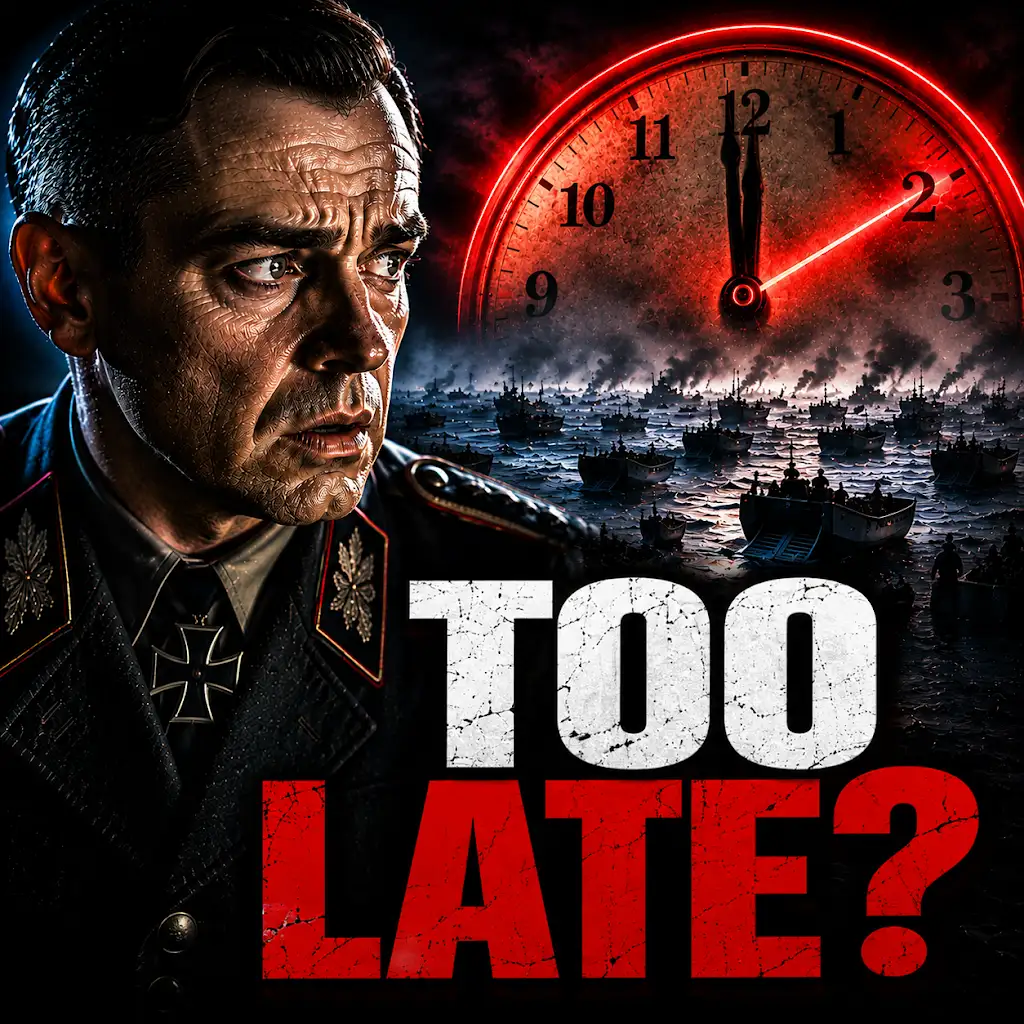
The relentless tide of Allied might bore down upon the beaches of Normandy, a meticulously planned and ferociously executed invasion that would forever etch June 6, 1944, into the annals of history. Yet, behind the thunder of artillery and the roar of aircraft, a different drama was unfolding, one of human misjudgment, fragmented information, and ultimately, fatal indecision within the German High Command. D-Day, the culmination of years of Allied preparation, was also a stark testament to how crucial command decisions, or the lack thereof, could shape the destiny of a continent.
German military intelligence, though not entirely blind, suffered from a pervasive underestimation of Allied capabilities and a stubborn adherence to preconceived notions about their enemy’s intentions. This myopia played a significant role in the German command’s response to the unfolding invasion.
The “Fortress Europe” Doctrine and its Blind Spots
The overarching strategic doctrine for the Atlantic Wall was the creation of an impenetrable fortress. This mindset, while fostering a sense of invincibility among some German commanders, also bred complacency. The sheer scale and audacity of the Allied landings were, for some, simply beyond the realm of believable action. They expected a more predictable, piecemeal approach, favoring specific strategic targets over a full-scale amphibious assault across such a broad front.
Rommel’s Growing Concerns: A Lone Voice in the Wilderness
Field Marshal Erwin Rommel, appointed commander of Army Group B in January 1944, was perhaps the most perceptive voice within the German leadership regarding the impending threat. His intimate knowledge of the terrain and his understanding of modern warfare led him to advocate for a more proactive defense. He recognized that the Atlantic Wall, while imposing, was not a static line of defense but a system that required constant vigilance and immediate, aggressive counterattacks.
The Disconnect with Hitler’s Vision
Rommel’s insistence on redeploying mobile armored reserves closer to the coast for immediate counterattacks clashed with Adolf Hitler’s broader strategic vision. Hitler, obsessed with a grand deception plan designed to lure the Allies to the Pas-de-Calais, believed that the main invasion would occur there. This fundamental disagreement meant that Rommel’s urgent pleas for better-positioned reserves were often met with resistance or outright denial from the Führer’s headquarters.
Misinterpreting Allied Diversions: The Phantom Threats
The Allies, masters of deception, employed a sophisticated disinformation campaign known as Operation Bodyguard. This included the creation of phantom armies (First U.S. Army Group under General Patton), feints, and misleading radio traffic. German intelligence, while aware of these efforts, frequently overestimated their effectiveness and misinterpreted them as the true landing sites. The sheer success of the deception meant that the actual invasion in Normandy was initially perceived by some as a diversionary tactic.
The Critical Absence of a Unified Command Structure
One of the most significant failings of the German command on D-Day was the lack of a clear, unified decision-making process. This fragmentation allowed for confusion, delays, and ultimately, missed opportunities to effectively counter the Allied landings.
The Divided Authority: Rommel vs. von Rundstedt
The command structure in Normandy was notoriously complex and prone to infighting. Field Marshal Gerd von Rundstedt, the overall commander of the Western Front, held a more senior position, but Rommel, as commander of Army Group B, was directly responsible for the defense of the invasion coast. This division of authority, coupled with differing strategic philosophies, created a constant friction.
Rommel’s Proactive Stance Ignored
Rommel’s desire for immediate and decisive action was often hampered by the need to seek approval from von Rundstedt, who in turn often deferred to Hitler or the OKW (Oberkommando der Wehrmacht). This bureaucratic inertia meant that precious hours, critical for mounting a robust counterattack, were lost in protracted deliberations.
Hitler’s Distrust and Micro-Management
Adolf Hitler’s deep-seated distrust of his generals and his penchant for micromanagement had a crippling effect on the German war effort. He retained ultimate authority over the deployment of armored reserves, the very units that could have been decisive in repelling the initial Allied landings.
The “Panzer Reserve” Dilemma
The crucial decision of when and where to commit the Panzer divisions held in reserve was solely in Hitler’s hands. On D-Day, these powerful formations were held back, their deployment contingent on Hitler’s confirmation, which was delayed by his preoccupation with the Pas-de-Calais deception and his own personal assessments of the situation. This hesitation proved to be a catastrophic error.
The Perils of Weather Forecasting and its Impact on German Readiness
The unpredictable nature of weather played a double-edged sword on D-Day. While it presented challenges for the Allied invasion fleet, it also contributed to the German command’s underestimation of the immediate threat.
Rommel’s “Luck” with the Weather
Rommel, presciently, had planned for the invasion to occur during a period of rough seas, believing it would hinder the Allied amphibious operations. He even left Normandy for a brief visit to his family in Germany, a decision that has been scrutinized but was based on his assessment of the weather forecasts and the perceived lower immediate threat. This, ironically, meant he was not present on the front lines during the initial hours of the invasion.
Misinterpreting the Calm: A False Sense of Security
The brief period of relative calm on the morning of June 6th, following a night of rough seas, was misinterpreted by some German commanders. Instead of seeing it as an opportunity for the Allies to launch their assault, they may have viewed it as a continuation of the unfavorable weather, leading to a further reduction in perceived readiness.
The Fog of War: Disconnected Communications and Delayed Reactions
The “fog of war” descended upon the German command structure with an almost tangible thickness on D-Day. Disconnected communication lines, delayed reports, and a lack of centralized situational awareness crippled their ability to react effectively.
The Fragmented Reporting System
Reports from coastal defenses, forward units, and reconnaissance aircraft were often slow to reach higher command, and when they did, they were sometimes contradictory or incomplete. This created a distorted picture of the unfolding events.
The Paratrooper Surprise
The airborne landings, a critical component of the Allied strategy, caught many German units by surprise. The scattered nature of these landings, coupled with the disruption of communications, meant that their true significance and scale were not immediately grasped by the local German commanders.
The “No Invasion” Mentality in Key Locations
In some areas, particularly further inland, the initial reports of landings were met with skepticism. The “no invasion” mentality, fostered by the Pas-de-Calais deception, meant that some commanders were reluctant to commit their forces, believing the reports to be erroneous or part of a diversion.
The Fatal Delay: The Commitment of Armored Reserves
The most critical German command decision, or rather, the lack of one, on D-Day revolved around the commitment of their vital armored reserves. This delay allowed the Allies to establish a critical foothold on the beaches.
Hitler’s Hesitation: The Pas-de-Calais Obsession
The primary reason for the delay in releasing the Panzer divisions was Hitler’s unwavering belief that the main invasion was yet to come, and that it would be in the Pas-de-Calais. He was unwilling to commit his precious mobile reserves to what he considered a secondary theater of operations.
The “Wait for Orders” Mandate
Generals controlling these crucial units were under strict orders to “wait for orders” from Hitler or the OKW before committing them. This rigid command structure, designed to maintain Hitler’s control, proved to be a fatal flaw on D-Day.
The Opportunity Lost: A Turning Point in the Battle
By the time Hitler finally authorized the release of some armored units, the Allies had already gained significant momentum. The landing forces were digging in, and air superiority was increasingly in Allied hands. The opportunity to push the invaders back into the sea, a possibility that existed in the early hours of D-Day, had largely evaporated.
The Ineffective Counterattacks
When the German counterattacks eventually did materialize, they were often piecemeal, poorly coordinated, and lacked the concentrated force needed to achieve their objectives. They were met by determined Allied resistance and the overwhelming might of Allied air power, which systematically targeted and destroyed them.
In conclusion, the story of German command decisions on D-Day is a somber reflection on the consequences of flawed intelligence, bureaucratic paralysis, and the disastrous effects of micromanagement by an inflexible leader. While the bravery of individual German soldiers on the ground was undeniable, the strategic miscalculations and indecision at the highest levels of command ultimately paved the way for the Allied victory in Normandy, a victory that would decisively tilt the balance of power in the Second World War. The illusion of predictability, the fragmented command, the misinterpretations of weather, the fog of war, and the fatal delay in committing reserves all coalesced into a symphony of errors that the Allies, through their own meticulous planning and sheer determination, were able to exploit to their ultimate advantage.