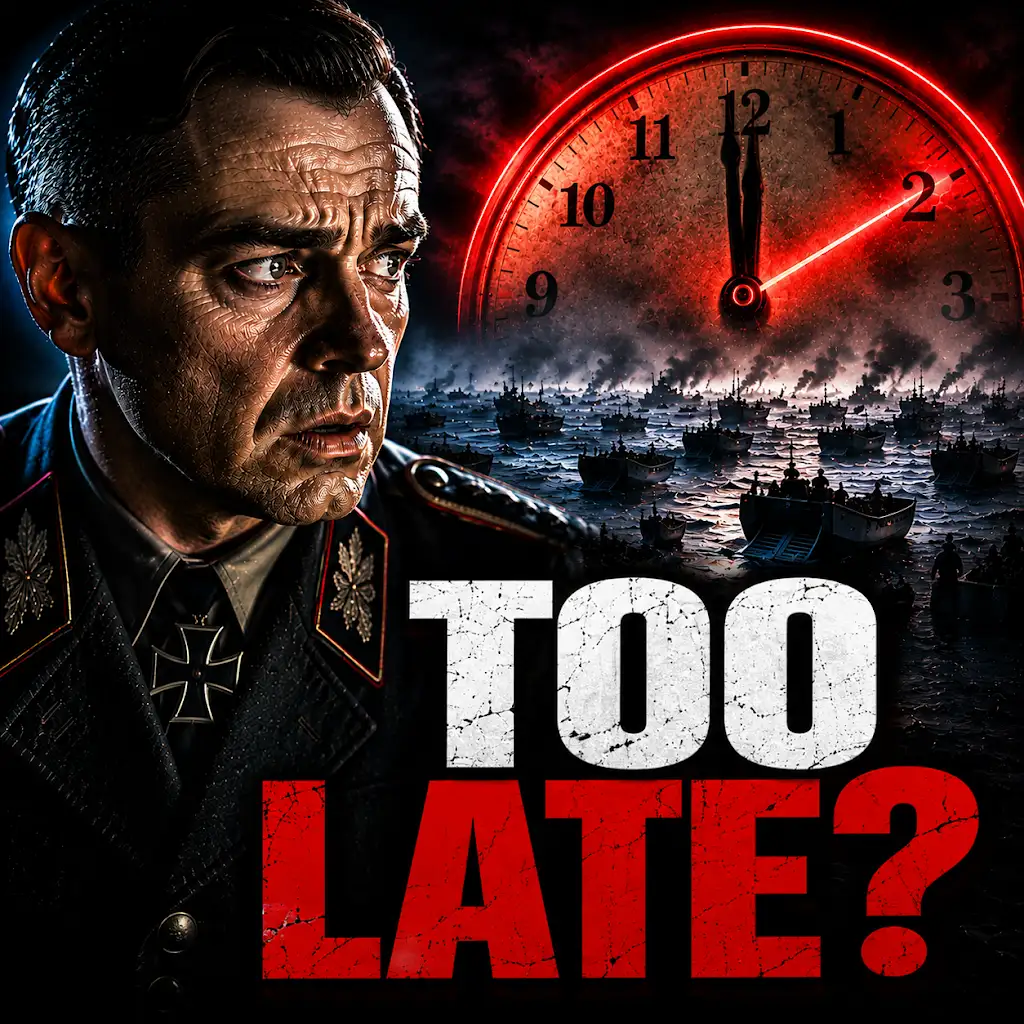
The relentless rumble of Allied bombers was the grim lullaby of the Normandy coast in the spring of 1944. For the German soldiers manning the Atlantic Wall, the air raids were more than just a prelude to battle; they were a constant, gnawing reminder of the inevitable. The war, which had seemed so distant and victorious just a few years prior, was now crashing against their very shores. From the perspective of the Wehrmacht, the days leading up to June 6th were a tense, agonizing wait, punctuated by the sounds of impending doom and the stark reality of their defensive posture.
The Atlantic Wall, a colossal network of fortifications stretching from Denmark to the Spanish border, was intended to be the impregnable shield of the Third Reich against any Allied invasion from the west. In the eyes of many German commanders, it represented the ultimate defensive achievement, a testament to German engineering and a formidable deterrent. However, by 1944, cracks were already appearing in this formidable facade. Resources were stretched thin, manpower was depleted by the relentless fighting on the Eastern Front, and the quality of some of the troops stationed along the coast was questionable.
The Illusion of Invincibility
Propaganda painted a picture of an unbreakable barrier, where every pillbox was a steel tomb for invaders and every beach a charnel house. Soldiers were indoctrinated with the belief that the Wall would hold, that the ferocity of the German defense would shatter the morale of the enemy before they even gained a foothold. This, however, was an increasingly fragile illusion. The sheer scale of the Allied preparations, visible in the skies and in the increasing naval activity, sowed seeds of doubt, even among the most steadfast.
Manpower Shortages and Inexperienced Troops
The Eastern Front, a relentless meat grinder, had claimed the lives and limbs of Germany’s finest soldiers. Consequently, many of the units tasked with defending the Atlantic Wall were a mixed bag. While some veteran divisions were present, particularly in crucial sectors, a significant portion of the defensive force comprised older men, those unfit for front-line combat, and even young conscripts with minimal training. The morale of these soldiers was often a complex mix of duty, fear, and a growing understanding of the overwhelming odds stacked against them. They understood the strategic importance of the Wall, but their personal experience of the war was one of attrition and loss.
The Strategic Disconnect: Rommel’s Vision vs. Hitler’s Orders
Field Marshal Erwin Rommel, appointed Inspector of Coastal Defenses in late 1943, recognized the inherent weaknesses in the Atlantic Wall. He understood that static defenses alone would not be enough to repel an invasion of such magnitude. Rommel advocated for a proactive defense, believing that the invaders must be met and destroyed on the beaches themselves, before they could establish a beachhead. He tirelessly pushed for the reinforcement of the coastal defenses with more artillery, anti-tank guns, and obstacles, and for the positioning of armored reserves close to the front lines, ready to launch immediate counterattacks. However, his vision was constantly at odds with the strategic directives and sometimes erratic decisions emanating from Adolf Hitler and the Oberkommando der Wehrmacht (OKW).
Rommel’s Frantic Efforts
Rommel was a man on a mission, driving across the vast expanse of the Atlantic Wall, inspecting fortifications, badgering subordinate commanders, and demanding improvements. He was acutely aware that the Allied air superiority would make any large-scale movement of reserves impossible during daylight hours. Therefore, his strategy hinged on decisive action in the first hours and days of an invasion. He envisioned a torrent of shells and machine-gun fire engulfing the landing craft before they even reached the shore, followed by swift and brutal counterattacks by tanks and infantry.
Hitler’s Hesitation and Misinformation
Adolf Hitler, however, remained convinced that the main Allied thrust would come at the Pas-de-Calais, the narrowest point of the English Channel. This belief led to a critical dispersion of German forces. While Normandy was heavily fortified, it was not considered the primary invasion target by the Führer himself. Furthermore, Hitler was often reluctant to commit his precious Panzer reserves to battle, believing they were best held back for a decisive moment that never truly materialized in the way he envisioned. This strategic indecision and the reliance on a potentially flawed intelligence picture significantly hampered Rommel’s efforts to prepare a truly cohesive and mobile defense.
The Intelligence Blackout: Blindfolded and Braced for the Unknown
In the weeks and months leading up to D-Day, German intelligence was a tangled mess of conflicting reports, wishful thinking, and a fundamental underestimation of the Allied operational capabilities. While they knew an invasion was coming, the precise timing, location, and scale remained frustratingly elusive, allowing the Allies to maintain a crucial element of surprise.
The Deception of “Fortitude”
The Allies’ elaborate deception plan, codenamed Operation Fortitude, played a significant role in blinding German intelligence. The creation of phantom armies, the broadcasting of false radio traffic, and the strategic use of double agents successfully convinced the German high command that the main invasion would occur at the Pas-de-Calais. This misinformation was so effective that even as Allied ships were massing off the coast of Normandy, the bulk of German reserves remained stationed to the north, facing an imaginary threat.
The Underestimation of Amphibious Capabilities
A persistent underestimation of the Allied capacity for large-scale amphibious operations also contributed to the intelligence failures. German planners found it difficult to comprehend the sheer logistical feat required to transport and land such a vast invasion force. They viewed the English Channel as a formidable barrier in itself and struggled to believe that the Allies possessed the resources and ingenuity to overcome it. This led to a general underestimation of the scale and ambition of the Allied invasion plans.
The Absence of Reliable Ground Intelligence
Beyond the strategic deception, there was a severe lack of reliable ground intelligence in the immediate areas of the planned landings. Allied operational security was exceptionally tight. German patrols and reconnaissance missions were hampered by Allied air superiority, making it difficult to gather actionable intelligence about troop concentrations, fortifications, and the specific intentions of the enemy. The few reports that did filter back were often fragmented, inconclusive, or contradicted by other sources, leading to confusion and indecision.
The Night of Fear: Waiting for the Storm
The night of June 5th-6th was characterized by an unnerving stillness, a deceptive calm before the storm. For the German soldiers on the ground, the absence of the usual daytime aerial bombardment was almost more unsettling than the raids themselves. This quiet was pregnant with anticipation, a collective holding of breath as the invisible threat gathered on the other side of the Channel.
The Eerie Silence and the Rising Tide of Anxiety
The usual cacophony of Allied bombers and fighter-bombers had ceased. This unusual silence was interpreted by many as a sign that something significant was about to happen. The soldiers on watch, huddled in their bunkers and trenches, scanned the darkening skies and the restless sea with a mixture of dread and grim determination. The air was thick with unspoken anxieties, with soldiers exchanging nervous glances and whispering prayers. The knowledge that they were the first line of defense, that the fate of the entire front rested on their shoulders, weighed heavily upon them.
The Unsettling Weather and the Shifting Sands of Expectation
The weather itself played a role in the German uncertainty. The rough seas and overcast skies that would have normally deterred an invasion were, paradoxically, seen by some as a potential cover for the Allies. Rommel himself had taken advantage of the inclement weather to briefly return to Germany for meetings, a decision that, in hindsight, would prove to be a critical miscalculation, leaving some key decisions in the hands of less experienced commanders. The unpredictable weather created a sense of flux, making it difficult to definitively rule out an imminent landing.
The False Alarms and the Exhaustion of Vigilance
Throughout the night, there were sporadic reports of unidentified aircraft and naval vessels. These false alarms, while unsettling, also served to wear down the vigilance of the defenders. Each distant drone or glimmer on the horizon raised hopes of an imminent attack, only to be followed by disappointment. This constant cycle of anticipation and anticlimax was emotionally draining, leaving the soldiers fatigued and their nerves frayed by the time the real invasion began.
The Dawn of Invasion: Chaos and Despair on the Beaches
As dawn broke on June 6th, the carefully constructed illusion of the Atlantic Wall began to crumble under the weight of an unprecedented assault. The beaches of Normandy, transformed into a hellscape of fire and steel, became the brutal reality check for German hopes and preparations. The landings were not met with the expected decisive German response, and instead, a desperate struggle for survival ensued.
The Unrelenting Bombardment and the Disruption of Defenses
The Allied air and naval bombardment that preceded the landings was devastating. Millions of shells and bombs rained down on the German defenses, obliterating pillboxes, collapsing trenches, and sowing confusion. The sheer scale of the bombardment was unlike anything the German defenders had previously experienced. It disrupted communications, destroyed artillery positions, and inflicted heavy casualties before the first Allied soldiers even touched the sand. Many of the sophisticated defenses designed to repel an invasion were simply annihilated in the opening hours.
The Fierce Resistance and the Futility of Some Positions
Despite the overwhelming odds, many German soldiers fought with a ferocity born of desperation and a sense of duty. In positions like Omaha Beach, where the defenses were particularly formidable and the terrain offered excellent fields of fire, the American attackers faced a maelstrom of machine-gun fire and artillery. German machine-gunners, often manning well-protected nests, inflicted horrific casualties on the advancing Allied infantry. However, even in these pockets of intense resistance, the sheer weight of Allied numbers and their relentless advance eventually overwhelmed the defenders.
The Lack of Coordinated Response and the Breakdown of Command
The German defense on D-Day was plagued by a catastrophic lack of coordinated response. Rommel was absent, and his deputy, Lieutenant General Hans Speidel, struggled to get authorization from the OKW to commit the crucial Panzer reserves. Hitler, still convinced the main invasion was at Pas-de-Calais, was hesitant to release troops. This indecision and the breakdown of communication meant that local German units were often left to fight alone, outnumbered and outgunned. Reinforcements were slow to arrive, and when they did, they were often thrown into the battle piecemeal, with little strategic impact.
The Long Retreat: From Beachhead to the Falaise Pocket
The initial landings were a catastrophic blow, but the fight for Normandy was far from over. For the German forces, the subsequent weeks and months were a desperate, often brutal, struggle to contain the Allied advance and, eventually, to escape the ever-tightening noose of the Falaise Pocket.
The Battle for the Bocage: A Nightmare of Ambush and Attrition
The hedgerow country of the Norman bocage proved to be a tactical nightmare for the advancing Allies and a desperate, if ultimately futile, defensive advantage for the Germans. These dense, tangled hedgerows, often several feet high and topped with ancient trees, offered perfect cover for ambushes. German machine-gun nests, anti-tank guns, and panzerfaust teams lay hidden within the foliage, erupting with deadly fire on Allied columns. The fighting became a brutal war of inches, characterized by close-quarters combat, constant threat, and heavy casualties on both sides. For the German defenders, it was a battle of attrition, a desperate attempt to bleed the enemy dry.
The Unstoppable Allied Advance and the Growing Sense of Defeat
Despite the tenacity of the German resistance, the sheer industrial might and the continuous influx of fresh Allied troops proved overwhelming. The Allied command of the air denied the Germans any respite, allowing them to bomb and shell German positions with impunity. The relentless advance of tanks and infantry, coupled with increasingly effective tactics like the use of “Rhino” tanks with their dozer blades to breach hedgerows, slowly but surely pushed the German lines back. A sense of impending defeat began to permeate the ranks, a grim realization that the war in the West was likely lost.
The Falaise Pocket: The Final Desperate Stand
The climax of the Normandy campaign for the German forces was the encirclement of their armies in the Falaise Pocket. As the Allied pincers closed, thousands of German soldiers found themselves trapped with dwindling supplies and under constant bombardment. The battle for the pocket was a desperate struggle for survival, with soldiers attempting to break out in all directions. Many were killed in the relentless fighting, while others were captured. The Falaise Pocket represented the annihilation of large portions of the German Army in the West, a devastating blow from which they would never fully recover. The experience of the D-Day invasion and the subsequent campaign in Normandy left an indelible scar on the German military psyche, a stark reminder of the overwhelming power of the Allied forces and the tragic consequences of miscalculation and underestimation.