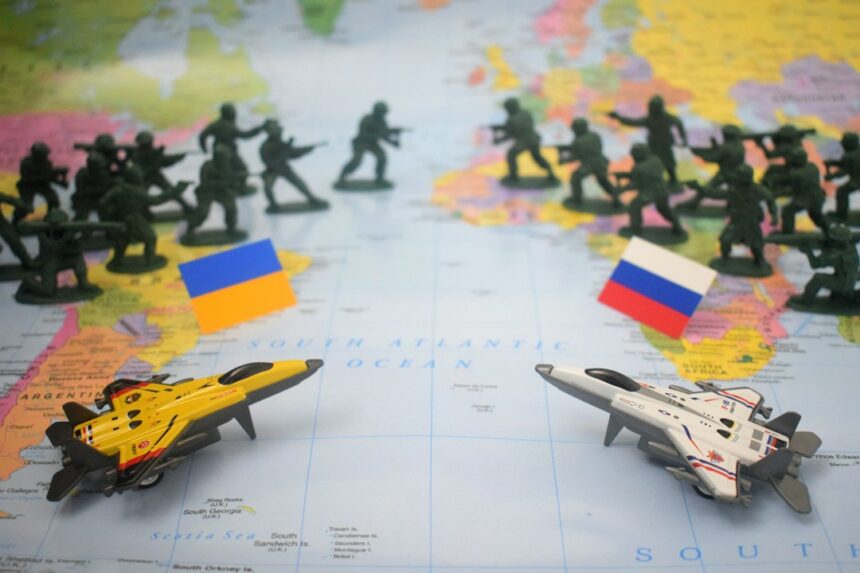
The mid-20th century witnessed a geopolitical rivalry unlike any seen before, a contest played out not on traditional battlefields, but in the vast, silent expanse of space. The Cold War, a decades-long ideological struggle between the United States and the Soviet Union, found its most dramatic and symbolic expression in the Space Race. This competition for celestial dominance was far more than a scientific endeavor; it was a meticulously orchestrated campaign to demonstrate technological superiority, ideological strength, and ultimately, global power. The implications of this cosmic competition reverberated across continents, shaping international relations, influencing technological development, and leaving an indelible mark on the human imagination.
The Genesis of a Cosmic Contest
The origins of the Space Race are deeply entwined with the broader Cold War narrative. The ideological chasm between the capitalist West, led by the United States, and the communist East, spearheaded by the Soviet Union, fueled a pervasive atmosphere of mistrust and competition. Following World War II, both superpowers emerged as dominant global forces, each seeking to expand its influence and discredit the other’s system. The advent of nuclear weapons introduced a terrifying new dimension to this rivalry, leading to a doctrine of mutually assured destruction and a constant, underlying threat of annihilation. In this climate, the pursuit of technological breakthroughs became a crucial arena for asserting dominance without resorting to direct military conflict. Space, with its frontier allure and profound strategic implications, presented the ideal stage for this proxy war of prestige.
Ideological Underpinnings of the Rivalry
The Space Race was not merely about launching rockets; it was a battle for hearts and minds. Each successful mission, each scientific triumph, was immediately framed within the context of the ongoing ideological struggle. For the Soviet Union, demonstrating its ability to surpass the technologically advanced United States in space was a powerful testament to the inherent superiority of communism. It showcased the Soviet system’s capacity for centralized planning, scientific ingenuity, and collective effort. Conversely, for the United States, the Space Race became a crucial validation of its democratic principles and capitalist enterprise. The ability to innovate, attract brilliant minds, and mobilize resources was presented as proof of the free world’s dynamism and potential. Every orbit, every lunar landing, became a propaganda victory, broadcast globally to sway neutral nations and bolster domestic morale. The rhetoric surrounding space exploration was consistently infused with nationalistic fervor and anti-communist or anti-capitalist sentiment, highlighting the profound ideological stakes involved.
The Shadow of Military Applications
While the public narrative often focused on scientific discovery and human achievement, the military underpinnings of the Space Race were undeniable and ever-present. The same rocket technology that propelled satellites into orbit and astronauts to the moon had direct applications in intercontinental ballistic missile (ICBM) development. The ability to launch a payload into space implied the ability to deliver a nuclear warhead across vast distances. This dual-use nature of rocket science meant that advancements in space exploration were intrinsically linked to national security and the balance of nuclear power. Reconnaissance satellites, developed and launched during this era, provided invaluable intelligence gathering capabilities, allowing each superpower to monitor the other’s military activities. The development of sophisticated tracking systems, orbital mechanics, and advanced materials for spacecraft directly benefited military programs, blurring the lines between scientific exploration and strategic defense. The fear of falling behind technologically in this arena was a powerful motivator, driving intense investment and accelerating the pace of innovation.
The Cold War geopolitical space race was a defining aspect of the rivalry between the United States and the Soviet Union, as both superpowers sought to demonstrate their technological and ideological superiority. For a deeper understanding of the implications of this competition on global politics and its legacy in contemporary space exploration, you can read a related article on this topic at In The War Room. This resource provides insightful analysis and historical context that highlights the significance of the space race in shaping modern international relations.
The Early Frontrunners and Defining Moments
The initial stages of the Space Race were characterized by a series of Soviet triumphs that stunned the world and ignited American anxieties. These early successes not only demonstrated Soviet technological prowess but also served as crucial propaganda victories, solidifying their image as a formidable global power. The United States, initially playing catch-up, was forced to re-evaluate its own scientific and educational infrastructure, leading to significant investments in research and development.
Sputnik and the Dawn of the Space Age
On October 4, 1957, the Soviet Union launched Sputnik 1, the world’s first artificial satellite. This small, beeping sphere, orbiting the Earth, sent shockwaves across the globe. For many in the West, it was an unimaginable feat. It shattered the perception of American technological supremacy and ushered in a new era: the Space Age. The ease with which the Soviets had accomplished this task, combined with their subsequent launch of Sputnik 2 carrying the dog Laika, generated widespread panic in the United States. It fueled fears of Soviet military superiority and the potential for sneak attacks. The “Sputnik Crisis” spurred immediate action within the U.S. government, leading to the creation of NASA in 1958 and a significant increase in funding for science and technology education. The initial shock of Sputnik galvanized a nation and set the stage for a fierce, determined response.
Gagarin’s Orbit and the Human Frontier
The Soviet Union continued its impressive streak of firsts. On April 12, 1961, Yuri Gagarin became the first human to journey into outer space, completing a single orbit of the Earth aboard the Vostok 1 spacecraft. This monumental achievement further solidified Soviet dominance in the early Space Race. Gagarin’s flight was a global spectacle, his calm demeanor and eloquent pronouncements broadcast worldwide. For the Soviet Union, it was a triumphant demonstration of human potential under communism, a powerful symbol of their scientific and ideological advancement. The image of Gagarin, a humble son of a collective farm, becoming the first human to witness Earth from space, resonated deeply and served as a potent propaganda tool. This accomplishment intensified the pressure on the United States to achieve similar milestones, particularly in human spaceflight.
The American Response: Project Mercury and Gemini
In response to the Soviet successes, the United States accelerated its own human spaceflight program, Project Mercury. Launched in 1959, its primary objective was to put a human in orbit and return them safely to Earth. The first American in space, Alan Shepard, made a suborbital flight in May 1961, just weeks after Gagarin’s orbital mission. John Glenn became the first American to orbit the Earth in February 1962. While these were significant achievements, they followed Soviet breakthroughs, fueling the perception of American earnestness to catch up. Project Gemini, which followed Mercury, was designed to bridge the gap between single-person flights and the ambitious goals of lunar exploration. Gemini missions involved critical technological advancements such as rendezvous and docking of spacecraft, spacewalks (extravehicular activity or EVA), and longer duration flights, all essential precursors to a moon landing.
The Lunar Ambition: A Race to the Moon

The ultimate prize in the early Space Race was the Moon. Both superpowers recognized the immense symbolic and strategic value of reaching Earth’s closest celestial neighbor first. President John F. Kennedy’s bold declaration in 1961, pledging to land a man on the Moon and return him safely before the end of the decade, galvanized the American effort and transformed the Space Race into a national imperative. The Apollo program, a monumental undertaking of unprecedented scale and complexity, became the vehicle for this ambitious goal.
Kennedy’s Challenge and the Apollo Program
President Kennedy’s famous “We choose to go to the Moon” speech before Congress in May 1961 was a turning point. It transformed a scientific and technological challenge into a profound national mission, fueled by a desire to regain prestige and demonstrate American ingenuity. The Apollo program was an enormous undertaking, requiring hundreds of thousands of people, vast financial resources, and cutting-edge technological innovation. It involved developing powerful new rockets, sophisticated navigation systems, life support technologies, and the lunar module itself. The program faced significant setbacks, including the tragic Apollo 1 fire that claimed the lives of three astronauts, but the commitment to the goal remained unwavering. The Apollo program became a symbol of American determination and a testament to the nation’s ability to mobilize for a singular, audacious objective.
Soviet Lunar Efforts and Their Undoing
While the United States poured its resources into Apollo, the Soviet Union also pursued a lunar program, primarily focused on unmanned probes and the development of the N1 rocket, intended for manned lunar missions. However, the Soviet lunar program suffered from severe organizational challenges, funding shortfalls, and a series of catastrophic failures of the N1 rocket during its test launches. The secretive nature of the Soviet program meant that these failures were not widely known outside the USSR, but they effectively ended their hopes of a manned lunar landing. The Soviet Union would later pivot its focus to space stations, a different, albeit significant, area of space exploration. The American success on the Moon effectively ended the most intense phase of the race for lunar dominance.
The “Giant Leap”: Apollo 11’s Triumph
On July 20, 1969, the world watched with bated breath as Neil Armstrong and Buzz Aldrin landed the Apollo 11 lunar module, Eagle, on the Sea of Tranquility. Armstrong’s immortal words, “That’s one small step for man, one giant leap for mankind,” resonated globally, signifying a monumental achievement for humanity and a decisive victory for the United States in the Space Race. The image of the American flag planted on the lunar surface became an enduring symbol of this triumph. The successful return of the astronauts marked the culmination of years of intense effort, sacrifice, and technological advancement. The Moon landing was not just a scientific milestone; it was a profound geopolitical statement, showcasing American leadership and capabilities to the entire world.
Broader Impacts on Global Geopolitics
The Space Race was not confined to the cosmos; its effects rippled outwards, profoundly influencing international relations, fostering technological advancements, and shaping global perceptions. The competition spurred unprecedented levels of investment in science and education, laying the groundwork for future innovations that would transcend the boundaries of space exploration.
The Technological Cascade and Civilian Applications
The intense pressure to innovate during the Space Race led to a cascade of technological advancements with profound civilian applications. Technologies developed for space travel, such as miniaturized electronics, advanced materials, satellite communication, and computing power, found their way into everyday life. The development of integrated circuits, essential for spacecraft guidance systems, paved the way for the personal computer revolution. Satellite technology, initially developed for reconnaissance and communication between space and Earth, revolutionized global telecommunications, weather forecasting, and navigation (GPS). Advances in materials science led to stronger, lighter alloys used in everything from aircraft to medical implants. The medical field also benefited, with technologies like remote monitoring and imaging techniques finding applications in hospitals. The Space Race, therefore, acted as a powerful engine for technological diffusion, benefiting societies far beyond the realm of aerospace.
The Influence on Education and Scientific Research
The Sputnik crisis, in particular, served as a catalyst for a dramatic overhaul of science and mathematics education in the United States. Recognizing the critical need for a skilled workforce to compete in the technological arena, the government significantly increased funding for scientific research and educational institutions. The National Defense Education Act of 1958 provided substantial financial support for science, mathematics, and foreign language education at all levels. This investment fostered a new generation of scientists, engineers, and technicians, crucial for both continued space exploration and broader technological development. The Space Race also fostered unprecedented collaboration between universities, government agencies, and private industry, creating a model for large-scale, innovation-driven projects that continues to influence research and development today.
Shifting Global Alliances and Perceptions
The Space Race played a significant role in shaping global alliances and perceptions of power. The visible technological achievements of both superpowers influenced the decisions of non-aligned nations, who were often courted by both sides for their strategic importance. Soviet successes, like Sputnik and Gagarin’s flight, initially bolstered the image of communism and encouraged some nations to align with the Soviet bloc. However, the American triumph on the Moon, broadcast globally, offered a powerful counter-narrative, showcasing the potential of democratic systems and free enterprise. The Space Race also fostered a sense of shared human endeavor, despite the competitive context. International cooperation in space, though limited initially, began to emerge, laying the groundwork for future collaborative missions. The visibility of space exploration also raised global awareness of Earth’s fragility and the interconnectedness of humanity, subtly influencing environmental consciousness and a broader sense of global citizenship.
The Cold War not only defined the political landscape of the mid-20th century but also ignited a fierce competition in technological advancements, particularly in the realm of space exploration. This geopolitical space race saw the United States and the Soviet Union striving to showcase their superiority through landmark achievements such as the launch of Sputnik and the Apollo moon landing. For a deeper understanding of the implications and events surrounding this pivotal period, you can read more in this insightful article on the subject, which explores the intricate dynamics of the Cold War and its impact on space exploration. Check it out here.
The Legacy of the Cosmic Competition
| Year | Event | Country | Significance | Impact on Cold War |
|---|---|---|---|---|
| 1957 | Launch of Sputnik 1 | USSR | First artificial satellite in orbit | Triggered US fears of Soviet technological superiority |
| 1961 | First human in space (Yuri Gagarin) | USSR | First manned spaceflight | Boosted Soviet prestige and intensified US efforts |
| 1962 | Cuban Missile Crisis | US & USSR | Closest Cold War came to nuclear conflict | Highlighted dangers of Cold War rivalry including space militarization |
| 1969 | Apollo 11 Moon Landing | USA | First humans on the Moon | Marked US technological and ideological victory in space race |
| 1975 | Apollo-Soyuz Test Project | USA & USSR | First joint US-Soviet space mission | Symbolized détente and cooperation amid Cold War tensions |
The Space Race, though officially over with the Moon landing and the subsequent shift in focus by both superpowers, left an indelible legacy that continues to shape our world. It was a period of intense competition that pushed the boundaries of human achievement, spurred unparalleled technological innovation, and redefined our understanding of global power and human potential.
The Enduring Impact on Space Exploration
The infrastructure, knowledge, and technologies developed during the Space Race formed the bedrock for all subsequent space exploration. The establishment of NASA, the design of reusable launch vehicles, the understanding of orbital mechanics, and the development of life support systems are all direct legacies of this era. The International Space Station (ISS), a testament to post-Cold War collaboration, builds upon the technological foundations laid by the Apollo and Soyuz programs. Furthermore, the fascination with space ignited by the Space Race continues to inspire new generations of scientists, engineers, and explorers. The ambition to return to the Moon and venture to Mars, currently being pursued by various nations and private entities, is a direct descendant of the pioneering spirit that characterized the Space Race.
A Shift Towards Cooperation and New Players
As the Cold War tensions eased, the nature of space exploration began to shift from outright competition to increased cooperation. The dramatic successes of the Space Race, while initially driven by rivalry, ultimately demonstrated the immense potential of human endeavor beyond Earth. This realization paved the way for international collaborations like the Apollo-Soyuz Test Project in 1975, a symbolic handshake in space between former adversaries. This marked a significant turning point, suggesting that the future of space exploration would involve shared goals and pooled resources rather than solely nationalistic pursuits. In recent decades, a new landscape of space actors has emerged, with emerging powers like China and India developing their own ambitious space programs, transforming the geopolitical dynamics of space exploration once again.
The Enduring Symbolism and Human Aspiration
Beyond the tangible technological advancements and geopolitical shifts, the Space Race left behind a powerful and enduring symbol of human aspiration. It demonstrated that seemingly insurmountable challenges could be overcome through ingenuity, determination, and collective effort. The images of astronauts floating in zero gravity, of Earth seen as a fragile blue marble from space, and of footprints on the lunar dust continue to inspire awe and wonder. The Space Race reminded humanity of its capacity for grand vision and its innate drive to explore the unknown. It broadened our perspective, placing our terrestrial conflicts and achievements within a cosmic context, fostering a sense of shared humanity and a collective responsibility for our planet and our future in the universe. The echoes of that competition continue to reverberate, fueling our dreams of what lies beyond, and reminding us of the extraordinary things we can achieve when we dare to reach for the stars.

The 1958 Space Nukes Meant to Destroy Soviet Missiles
FAQs
What was the Cold War geopolitical space race?
The Cold War geopolitical space race was a competition between the United States and the Soviet Union to achieve superiority in space exploration and technology during the Cold War era.
When did the Cold War geopolitical space race begin?
The space race began in the late 1950s, with the launch of the Soviet satellite Sputnik in 1957 marking the start of the competition between the two superpowers.
What were some key milestones in the Cold War space race?
Key milestones in the Cold War space race include the first human in space (Yuri Gagarin in 1961), the first human on the moon (Neil Armstrong in 1969), and the establishment of space stations by both countries.
How did the Cold War space race impact geopolitics?
The space race had significant geopolitical implications, as it was seen as a symbol of technological and ideological superiority. It also fueled tensions between the United States and the Soviet Union during the Cold War.
What was the outcome of the Cold War space race?
The United States ultimately won the space race by landing a man on the moon in 1969. This achievement was a significant victory in the broader Cold War competition between the two superpowers.