Did the CIA really send a remote viewer, Ingo Swann, to explore the Moon? Yes, in a way, they did. It wasn’t a physical trip, of course, but through a program aimed at using psychic abilities for intelligence gathering. Swann was a key figure in these experiments, particularly concerning his claims about observing the Moon remotely. It’s a strange and fascinating story, blending cutting-edge (for the time) scientific inquiry with some pretty out-there ideas about consciousness and perception.
The Genesis of Remote Viewing
The whole remote viewing concept didn’t just spring out of nowhere. It emerged from a Cold War paranoia where both the US and the Soviet Union were looking for any edge, any unconventional weapon or tactic. This meant exploring everything from psychic warfare to, well, psychic espionage. The CIA, along with other intelligence agencies, started looking into parapsychology – the study of psychic phenomena like telepathy, precognition, and, crucially, remote viewing.
The idea was pretty straightforward: could someone, with proper training, tune into a distant target – be it a person, a place, or an object – and gather information about it that wouldn’t be accessible through normal senses? It sounds like science fiction, but for a period, it was treated as a serious area of research.
Early Interests and the Stanford Research Institute (SRI)
The US government’s interest wasn’t a sudden whim. There were earlier investigations, often with a focus on trying to debunk or understand these alleged psychic abilities. However, it was at the Stanford Research Institute (SRI) in California that much of the foundational work on what would become known as remote viewing took place.
Under the leadership of physicist Harold Puthoff and psychologist Russell Targ, SRI began conducting experiments in the early 1970s. Their initial work involved simple setups: one person, the “viewer,” would be in a shielded room, and a “target” object or location would be chosen elsewhere. The viewer would then try to describe what they perceived.
These early experiments were often lauded for their seemingly positive results, sparking further interest and funding from government agencies looking for tangible applications. The idea was that if you could reliably get accurate information about distant locations or events, it could be an invaluable intelligence tool. Imagine being able to see what’s happening behind enemy lines without sending in a spy.
Ingo Swann, a pivotal figure in the CIA’s remote viewing program, played a significant role in exploring the potential of psychic phenomena, particularly in relation to the Moon. His groundbreaking work and experiences have been documented in various articles, shedding light on the intersection of consciousness and space exploration. For a deeper understanding of Swann’s contributions and the broader implications of remote viewing, you can read a related article at In The War Room.
Ingo Swann: The Unlikely Explorer
Ingo Swann was an artist by training, with a background that seemed far removed from the world of espionage and psychic research. He was also a self-proclaimed psychic, someone who claimed to have had unusual experiences his whole life. It was this combination of artistic sensibility and professed psychic ability that brought him to the attention of researchers at SRI.
Swann wasn’t just any participant; he was often considered the most gifted and reliable remote viewer in the early days of the program. His descriptions were detailed, often surprisingly accurate, and he had a knack for articulating his experiences in a way that resonated with the researchers, even if the underlying mechanism was baffling.
He was a complex character, often described as eccentric and independent. This independence, while sometimes a challenge for the structured research environment, also meant he wasn’t easily swayed by suggestion and likely contributed to the perceived authenticity of his results. He approached the process with a mix of skepticism and profound curiosity, which is a rare combination.
The “Psychic Renaissance”
The 1970s were, in some circles, a period of what might be called a “psychic renaissance.” There was a growing public interest in paranormal phenomena, and the work at SRI, along with other research centers, seemed to lend scientific credence to these ideas. Remote viewing, in particular, captured the imagination because it offered a concrete, if unconventional, method for accessing information.
Swann’s involvement coincided with this burgeoning interest. His ability to consistently produce seemingly valid remote viewing data made him a star, in a sense, within this niche field. He became a go-to subject for experiments, particularly when the targets were ambitious and complex.
The Moon Exploration: A Bold Claim
Now, about the Moon. Ingo Swann’s claim to have explored the Moon remotely is perhaps the most striking and controversial aspect of his involvement. This wasn’t a casual observation; it was a directed remote viewing session where the target was specifically the Moon, and more particularly, a specific region of the Moon.
The story goes that during a remote viewing experiment, Swann was tasked with viewing the Moon. He provided descriptions of the lunar surface, its features, and even indicated the presence of what he interpreted as artificial structures. These claims were, to say the least, extraordinary.
The “Deep Beam” Experiment
One of the most talked-about incidents involving Swann and the Moon is often referred to as the “Deep Beam” experiment, though the details and exact nomenclature can be a bit fluid given the declassified nature of many of these documents. The core of the claim is that Swann was able to remotely view the Moon and provide details that were later considered to be remarkably accurate or prescient, according to his proponents.
He described features that, while not necessarily confirming alien bases, were said to align with later observations or existing knowledge about lunar topography. Some accounts suggest he was able to “see” into shadowed craters, providing descriptions of what lay within them. The implication was that this wasn’t just educated guesswork; it was direct psychic perception.
The CIA’s interest in this was, of course, driven by the potential intelligence value. If Swann could provide information about celestial bodies, what else could he do? Could he view sensitive military installations on Earth, or perhaps even observe extraterrestrial phenomena? The Moon, being a relatively accessible but still mysterious celestial body, was a prime target for such a test.
Beyond Visuals: Sensory Input
What makes Swann’s Moon explorations particularly intriguing is that he claimed to experience more than just visual information. He spoke of feeling temperatures, sensing atmospheric conditions (or the lack thereof), and even perceiving subtle gravitational anomalies. This level of detail, if accurate, would go far beyond simple guesswork.
He described the Moon’s surface with a painter’s eye, noting textures, hues, and the play of light and shadow. But he also purported to sense the “feel” of the lunar environment, the sheer emptiness, the stark contrast between light and dark. This multi-sensory aspect of his remote viewing reports made them difficult to dismiss outright, even for skeptics.
The CIA’s Perspective and Project STARGATE
The CIA’s involvement with remote viewing was part of a broader, long-term effort to explore psychic phenomena for intelligence purposes. This effort evolved through various project names over the decades, with “STARGATE” being one of the most well-known, encompassing a range of research into psychotronics and parapsychology.
While the public perception might be of clandestine operations in shadowy rooms, the reality was often more mundane. Experiments were conducted in research institutions, funded by government grants. The CIA wasn’t directly running the remote viewing sessions in the field; rather, they were funding and assessing the research being done by scientists at places like SRI.
Funding and Secrecy
The funding for these projects was significant, especially during the Cold War when the perceived threat from Soviet psychic research was a major driver. The projects were, by their nature, highly classified. This secrecy made it difficult for the public, and even many within the intelligence community, to understand what was being investigated and what the results were.
The CIA’s interest was pragmatic: could this technology, if proven, provide actionable intelligence? The Moon exploration was, in essence, a high-stakes test case. If Swann could accurately describe features of the Moon, it would lend considerable weight to the efficacy of remote viewing as an intelligence-gathering tool.
The “Controlled Remote Viewing” Method
Ingo Swann was instrumental in developing what became known as “Controlled Remote Viewing” (CRV). This was a structured approach to remote viewing, designed to make the process more reliable and the data more interpretable. It involved a series of steps and protocols to guide the viewer from a general impression to specific details.
Swann’s artistic background likely influenced this development. He understood the importance of precise observation and clear articulation. CRV aimed to move remote viewing from a purely intuitive process to something that could be systematically taught and applied, with the goal of generating data that could be analyzed and verified.
Ingo Swann, a prominent figure in the realm of CIA remote viewing, made significant contributions to the understanding of psychic phenomena, particularly with his intriguing claims about the Moon. His experiences and experiments have sparked considerable interest and debate among enthusiasts and skeptics alike. For those looking to delve deeper into this fascinating subject, an insightful article can be found at this link, which explores the implications of Swann’s work and its impact on both the intelligence community and the broader field of parapsychology.
The Legacy and the Skepticism
The story of Ingo Swann and his Moon explorations is a controversial one, with a clear divide between those who believe in the reality of his claims and those who remain deeply skeptical. The declassification of documents related to the CIA’s psychic research programs has shed some light, but it hasn’t settled the debate.
From the perspective of proponents, Swann’s detailed descriptions and the purported accuracy of his observations, particularly concerning the Moon, are compelling evidence of remote viewing’s validity. They point to the consistency of his reports and the specific nature of the information he provided.
Challenges to the Claims
However, there are significant criticisms. Skeptics often point to the inherent difficulties in verifying psychic claims. How do you definitively prove that a description of the Moon came from psychic perception and not from prior knowledge, educated guesses, or even subtle cues picked up by the viewer?
The scientific methodology used in some of these early experiments has also been questioned. Critics argue that the controls were sometimes insufficient, and that confirmation bias could have played a role in interpreting the results. The fact that the programs were eventually discontinued by the CIA, largely due to concerns about their scientific rigor and operational utility, adds to the skepticism.
Declassified Documents and Interpretations
The release of declassified documents, such as those related to Project STARGATE, has provided a fascinating glimpse into the government’s engagement with psychic phenomena. These documents reveal the extent of the research, the individuals involved, and the internal assessments of the programs.
However, interpreting these documents is often complex. They are a mix of scientific reports, internal memos, and sometimes speculative discussions. While they confirm the CIA’s interest and investment in remote viewing, they don’t offer definitive proof of psychic abilities, nor do they explicitly endorse Swann’s Moon claims as factual. The declassification has opened the door to discussion, but the conclusions remain open to interpretation.
The Enduring Mystery
Ultimately, the story of CIA remote viewing and Ingo Swann’s Moon explorations remains an enduring mystery. It’s a tale that touches on the limits of human perception, the nature of consciousness, and the lengths to which intelligence agencies will go in pursuit of an advantage.
Whether one believes that Ingo Swann truly “saw” the Moon through psychic means or not, his story highlights a peculiar chapter in history where the boundaries of science and the unknown were explored with a seriousness that, in retrospect, can seem both fascinating and bewildering. It’s a testament to the persistent human desire to understand what lies beyond our immediate grasp, whether it’s the depths of space or the depths of the human mind.
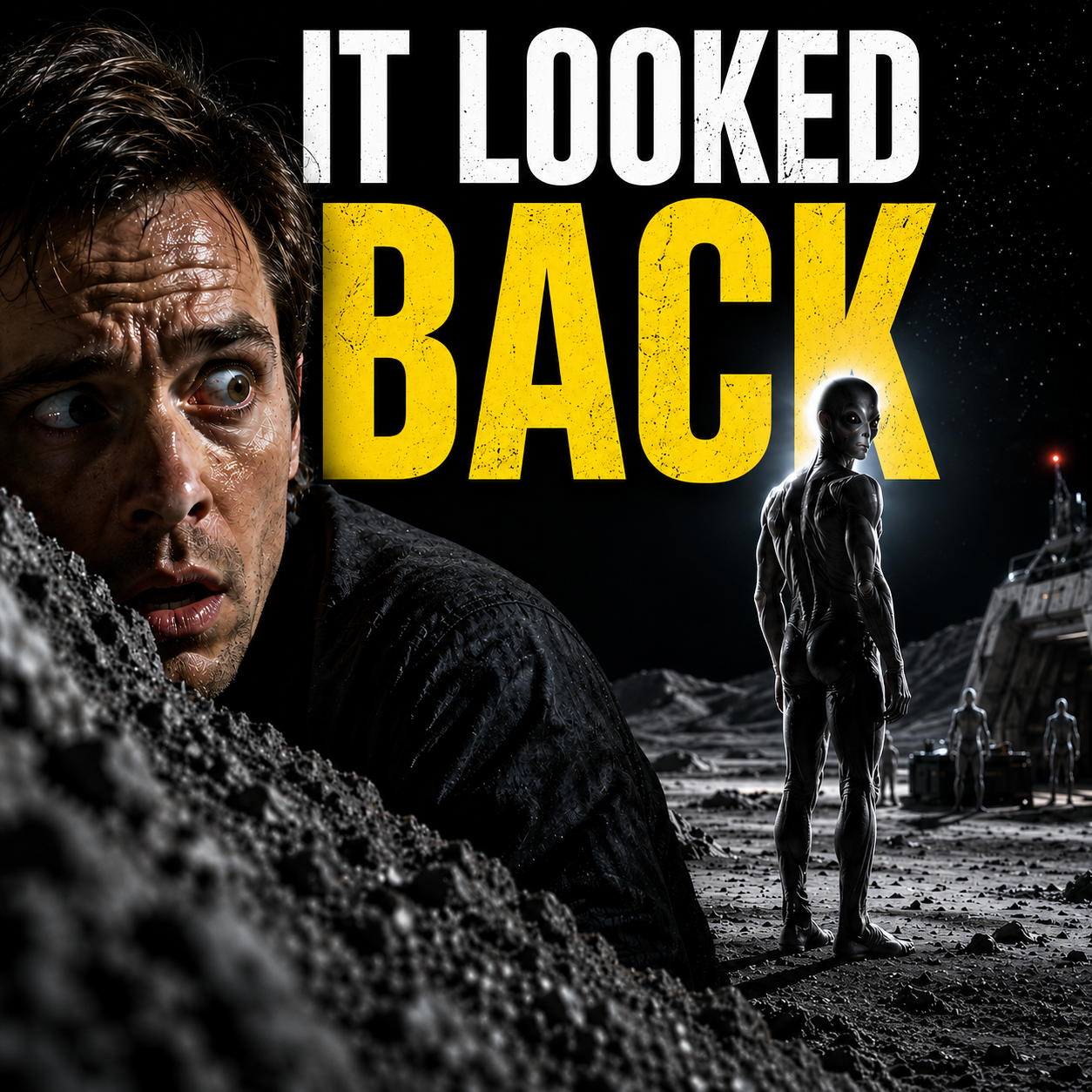
He Remote Viewed the Moon. Then Something Saw Him.
FAQs

What is CIA remote viewing?
CIA remote viewing is a practice in which individuals attempt to gather information about a distant or unseen target using extrasensory perception (ESP) or “sensing” with the mind.
Who is Ingo Swann?
Ingo Swann was a parapsychology researcher and artist known for his involvement in the CIA’s remote viewing program. He is considered one of the pioneers of remote viewing and is credited with developing the scientific protocols for the practice.
What is the significance of Ingo Swann’s involvement in the CIA remote viewing program?
Ingo Swann’s involvement in the CIA remote viewing program, known as Project Stargate, helped to establish the credibility and potential of remote viewing as a tool for intelligence gathering. His work laid the foundation for further research and exploration into the capabilities of remote viewing.
What is the “Moon Experiment” conducted by Ingo Swann and the CIA?
The “Moon Experiment” refers to a remote viewing session conducted by Ingo Swann at the Stanford Research Institute (SRI) under the auspices of the CIA. During the session, Swann reportedly provided detailed and accurate information about the moon, leading to speculation about the potential of remote viewing to access information beyond the bounds of time and space.
What is the current status of the CIA’s remote viewing program?
The CIA’s remote viewing program, Project Stargate, was officially declassified and terminated in 1995. However, the legacy of remote viewing continues to be a subject of interest and research in the fields of parapsychology and consciousness studies.