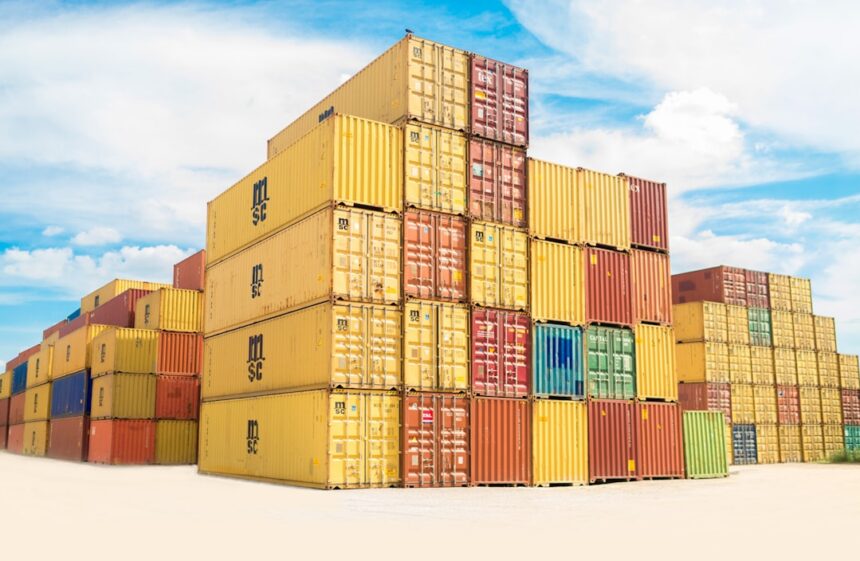
China’s economic miracle, built on an unprecedented manufacturing output and export-driven growth, relies intrinsically on a robust and efficient logistics network. At the heart of this network lie its vast maritime arteries, the sea lanes that connect its coastal industrial hubs to global markets. However, these vital arteries are not merely conduits for commerce; they are also a significant point of vulnerability, particularly in the context of rising geopolitical tensions with Taiwan and the potential for a cross-strait conflict. The intricate web of shipping routes, port infrastructure, and the submarines that patrol beneath them forms China’s “logistics spine,” and its potential disruption represents a substantial threat to both its domestic economy and its global standing.
The Magnitude of Maritime Dependence
China’s reliance on maritime trade is staggering. The vast majority of its imports, including essential raw materials like oil, iron ore, and agricultural products, arrive by sea. Similarly, its manufactured goods, from electronics to textiles, are shipped out to every corner of the globe via its extensive merchant fleet and the regular calls of foreign flagged vessels at its ports. This dependence is amplified by the concentration of its industrial base along its eastern coast, a fact that makes its primary logistics routes particularly susceptible to external pressures originating from the Taiwan Strait and the broader Western Pacific.
The Importance of Crude Oil Imports
- A crucial element of China’s energy security, crude oil, is overwhelmingly imported. Disruptions to these imports would have immediate and severe consequences for its industrial output and domestic stability.
- The majority of these oil tankers transit through routes that are in close proximity to Taiwan, making them vulnerable to interdiction.
The Flow of Raw Materials for Industry
- Beyond energy, China imports vast quantities of raw materials essential for its manufacturing sector. These include iron ore for steel production, copper for electronics, and soybeans for animal feed.
- The efficient and uninterrupted flow of these commodities directly impacts production schedules and ultimately, export capabilities.
The Export Engine of the Economy
- China has strategically positioned itself as the “world’s factory.” Its export-driven growth model is underpinned by the ability to move finished goods to international markets quickly and at a competitive cost.
- Any significant impediment to its export logistics would lead to a sharp contraction in its manufacturing sector and a destabilization of its economic trajectory.
The ongoing tensions surrounding the Taiwan conflict have raised significant concerns about the vulnerability of China’s logistics spine, which is crucial for its military and economic operations. A related article that delves deeper into this issue can be found at this link. It explores how disruptions in logistics could impact China’s strategic capabilities and the broader implications for regional stability.
Taiwan: A Chokepoint in the Global Supply Chain
The island of Taiwan, situated strategically off China’s southeast coast, occupies a pivotal position within the global logistics landscape. The Taiwan Strait, a vital waterway for international shipping, serves as a critical chokepoint for a substantial portion of East Asia’s maritime trade. For China, this strait is not just a transit route; it is an integral part of its own extensive logistics network, connecting its southern and northern industrial clusters. The potential for conflict over Taiwan, therefore, directly implicates the integrity and functionality of China’s logistics spine.
The Taiwan Strait as a Maritime Nexus
- The Taiwan Strait is one of the busiest shipping lanes in the world. A significant percentage of global trade transits through its waters annually.
- For China, its importance is magnified due to its role in connecting its major industrial zones.
Proximity to Major Chinese Ports
- A large number of China’s largest and busiest ports are located on its eastern seaboard, directly bordering the Taiwan Strait or within easy reach of its influence.
- This proximity means that any military activity in the strait would have an immediate impact on the operations of these critical hubs.
The Impact of Blockade or Indirect Warfare
- A military conflict could lead to a blockade of the Taiwan Strait, either by China itself as a coercive measure or by a coalition of adversaries.
- Even without a formal blockade, indirect warfare, such as the sinking of commercial vessels or the minelaying of the strait, could render the route impassable.
The Submarine Shadow: A Growing Threat from Beneath
While the immediate, visible threat to China’s logistics spine might be perceived as naval surface action or aerial bombardment, the silent and pervasive threat posed by submarines from potential adversaries is equally, if not more, significant. The Western Pacific, particularly the waters surrounding Taiwan, is a domain where submarine warfare capabilities are highly developed among several regional powers. These underwater craft represent a persistent danger to the voluminous and often vulnerable merchant shipping that constitutes China’s economic lifeline.
The Stealth of Subsurface Warfare
- Submarines, with their inherent stealth capabilities, are exceptionally well-suited to interdicting maritime traffic without immediate detection.
- Their ability to operate beneath the surface offers a significant tactical advantage in disrupting supply chains.
The Vulnerability of Tankers and Cargo Ships
- Large oil tankers and bulk cargo vessels, while essential for trade, are not designed for combat and are inherently vulnerable to torpedo or missile attacks from submarines.
- Their slow speeds and unmaneuverable nature make them easy targets once located.
The Developmental Trajectories of Submarine Forces
- Several regional powers possess advanced submarine fleets, including nuclear-powered attack submarines capable of extended deployments and high speeds.
- These forces are continuously being modernized, posing an evolving threat to China’s maritime commerce.
Infrastructure Vulnerabilities: Ports, Cables, and Networks
Beyond the immediate threat to shipping, China’s logistics spine is also susceptible to direct attacks on its supporting infrastructure. Its modern and highly efficient port facilities, vital for loading and unloading vast quantities of goods, could become targets. Furthermore, the invisible but crucial undersea communication cables that facilitate global data transfer and financial transactions, many of which are routed through the Western Pacific, could also be compromised, creating cascading effects of disruption that go far beyond mere physical cargo.
The Centrality of Port Operations
- China’s eastern ports are the nerve centers of its export and import activities. Their efficient functioning is paramount.
- Damage to port infrastructure, including berths, cranes, and fuel depots, would cripple the ability to move goods.
The Threat to Undersea Communication Cables
- The global internet and financial systems rely heavily on a network of undersea fiber optic cables.
- Several of these cables traverse the waters around Taiwan, making them potential targets for sabotage, leading to widespread communication breakdowns and financial paralysis.
The Interconnectedness of the Logistics Network
- China’s logistics system is a complex, interconnected network. Disruption at one point can have ripple effects throughout the entire system.
- Attacks on infrastructure could lead to bottlenecks and delays that propagate outwards, impacting manufacturing and domestic consumption.
The ongoing tensions between China and Taiwan have raised significant concerns about the vulnerability of China’s logistics spine, which is crucial for its military operations. A recent article discusses how this logistical network could be severely impacted in the event of a conflict, potentially hindering China’s ability to project power in the region. For a deeper understanding of these dynamics, you can read more in this insightful piece on the topic here.
The Economic and Geopolitical Repercussions
A significant disruption to China’s logistics spine, particularly one stemming from a conflict over Taiwan, would have profound economic and geopolitical consequences, both for China and for the rest of the world. The intricate global supply chains that have been built over decades would be severely strained, leading to price volatility, shortages, and a potential global recession. For China, the consequences could be existential, undermining the economic foundation upon which its political stability and global influence are built.
The Impact on Global Trade and Supply Chains
- The disruption would trigger unprecedented global supply chain crises, with shortages of manufactured goods and raw materials affecting economies worldwide.
- Commodity prices would likely skyrocket due to the inability to access key suppliers and markets.
The Potential for Domestic Unrest
- A severe economic downturn in China, triggered by disrupted trade, could lead to widespread unemployment and social unrest.
- The ruling party’s legitimacy is significantly tied to economic prosperity and stability.
The Shift in Global Power Dynamics
- The implications extend beyond economics. A successful or even partial disruption of China’s logistics capabilities could lead to a reassessment of its global power.
- It could embolden regional rivals and necessitate a rebalancing of global alliances and trade relationships.
The Long-Term Strategy of Diversification
- In recognition of these vulnerabilities, China has been investing in diversifying its logistics routes, including initiatives like the Belt and Road Initiative, which aims to create alternative overland and maritime corridors.
- However, these alternatives are still in development and cannot fully replace the established and efficient routes through the Western Pacific in the short to medium term. The fragility of its current logistics spine, therefore, remains a critical strategic consideration.
FAQs
What is the China logistics spine vulnerability in relation to the Taiwan conflict?
The China logistics spine vulnerability refers to the strategic vulnerability of China’s supply chain and logistics network, particularly in the event of a conflict with Taiwan. This vulnerability arises from Taiwan’s geographical location and its potential to disrupt China’s maritime trade routes.
How does Taiwan’s geographical location impact the China logistics spine vulnerability?
Taiwan is strategically located at the mouth of the East China Sea and the South China Sea, making it a crucial point for maritime trade routes. Any conflict involving Taiwan has the potential to disrupt China’s access to these vital sea lanes, impacting its logistics and supply chain networks.
What are the potential consequences of the China logistics spine vulnerability in the event of a Taiwan conflict?
The potential consequences of the China logistics spine vulnerability in a Taiwan conflict include disruptions to China’s supply chain, increased shipping costs, delays in the transportation of goods, and potential economic repercussions for China and the global economy.
How is China addressing the logistics spine vulnerability in relation to the Taiwan conflict?
China is taking measures to address the logistics spine vulnerability by investing in alternative trade routes, such as the Belt and Road Initiative, and developing infrastructure projects to diversify its supply chain and reduce reliance on vulnerable maritime routes near Taiwan.
What are the implications of the China logistics spine vulnerability for global trade and security?
The China logistics spine vulnerability has implications for global trade and security, as disruptions to China’s supply chain could impact international trade flows and supply chains. It also raises concerns about the potential escalation of tensions in the region and the need for diplomatic efforts to mitigate the risk of conflict.