The Silent Hunter’s Final Voyage
The creaking timbers of the naval base echoed with the usual maritime rhythm – the clang of metal, the gruff shouts of sailors, the distant roar of engines. But today, a different kind of vessel occupied the dock, a silent testament to the ferocity of the recent conflict. It was the I-400, a Japanese submarine unlike any other, a behemoth of the Pacific, now a captive prize of war, its operational days definitively over. Its fate, a grim but logical conclusion for a weapon of mass destruction, was to become a target, a final, ignominious service in demonstrating the lethal power of its conquerors. This narrative delves into the story of this extraordinary submarine, its remarkable capabilities, its brief and impactful service, and its ultimate demise as a target.
The I-400 class submarines were the pinnacle of Japanese submarine design during World War II. Conceived as a strategic weapon with the audacious goal of striking the United States mainland, these vessels were more than just submarines; they were mobile airbases. Their immense size, far exceeding that of contemporary Allied submarines, was a direct consequence of their primary armament: a hangar capable of housing three Aichi M6A1 Seiran floatplane bombers. These aircraft, specially designed for carrier-based operations, were intended to be launched from the submerged submarine, creating a terrifying and unexpected threat. The concept was so revolutionary that the Allies, initially unaware of its full scope, dubbed these submarines “Great Raiders.” Their mission was not merely to engage in naval combat but to project power across vast oceanic distances, striking at targets previously considered untouchable. The strategic implications of such a capability were immense, potentially altering the course of the war by forcing the United States to divert resources to defend its own shores.
The development of the I-400 class was a testament to Japan’s desperation and ingenuity in the face of overwhelming Allied industrial might. With its shipbuilding capacity dwindling and its naval forces suffering heavy losses, Japan sought a way to inflict maximum damage with fewer, but more potent, assets. The I-400 submarines represented a gamble, a high-risk, high-reward strategy. Their construction was a monumental undertaking, requiring specialized facilities and a significant portion of Japan’s dwindling resources. The secrecy surrounding their development was paramount, as the Japanese leadership understood that any premature revelation of their capabilities could prompt the Allies to prioritize countermeasures. The first of the class, the I-400, was commissioned in 1944, followed by the I-401 and I-402. A fourth, the I-404, was never completed. The I-400 was a marvel of engineering for its time, boasting a length of over 120 meters, a beam of nearly 12 meters, and a displacement of over 3,500 tons when surfaced. Its two main gun turrets housed 14-cm naval guns, but it was the specialized catapult and hangar that set it apart, capable of launching its trio of Seiran bombers.
In a fascinating exploration of naval warfare history, an article on the sinking of a captured Japanese submarine as a target provides insight into the strategic decisions made during World War II. This event highlights the innovative tactics employed by Allied forces to test their weaponry and gather intelligence. For more details on this intriguing topic, you can read the full article here: Captured Japanese Submarine Sunk as Target.
The Strategic Dream and Its Harsh Reality
The strategic vision behind the I-400 class was audacious: to launch a surprise aerial attack on the Panama Canal, a vital artery of American logistics and transportation. The rationale was that by crippling the canal, Japan could severely disrupt Allied troop and supply movements between the Atlantic and Pacific oceans. This mission was conceived as a desperate measure, a last-ditch attempt to turn the tide of the war or at least inflict significant damage that might force a more favorable peace settlement. The I-400 and its sister ships were assigned to the Tokushima Unit, a specially formed task force dedicated to this daring mission.
The planning for the Panama Canal attack was intricate. The submarines would travel submerged for thousands of miles, close to the coast of North America, before surfacing and launching their Seiran bombers. The bombers, carrying either incendiary or high-explosive bombs, would then fly inland, targeting the Miraflores Locks and Gatun Dam. The I-400 class submarines themselves were equipped with specialized torpedoes and guns, but their primary offensive punch lay with their aircraft. The Seiran bombers were designed for rapid deployment, capable of being launched within minutes of the submarine surfacing. Their operational range was sufficient to reach the canal and return to the submarine for recovery, provided conditions were favorable and the submarine was positioned correctly. This concept represented a paradigm shift in submarine warfare, transforming a hunter-killer vessel into a mobile aircraft carrier capable of launching a strategic offensive.
However, the harsh realities of war intervened, as they often do with even the most elaborate plans. By the time the I-400 class submarines were operational, the strategic landscape had shifted dramatically. The United States had gained air and naval supremacy in the Pacific, and the Japanese naval forces were severely depleted. The Allies were increasingly aware of the potential threat posed by these unique submarines, and their patrols became more vigilant. The planned attack on the Panama Canal was ultimately deemed too risky. The submarines were then rerouted, with a new objective: to attack American carrier forces operating in the Pacific. This change in mission, while still strategic, was significantly more perilous. The I-400 and I-401 were eventually tasked with a mission to attack the fleet anchored at Ulithi Atoll. This mission, however, was never carried out.
A Wartime Encounter and Capture
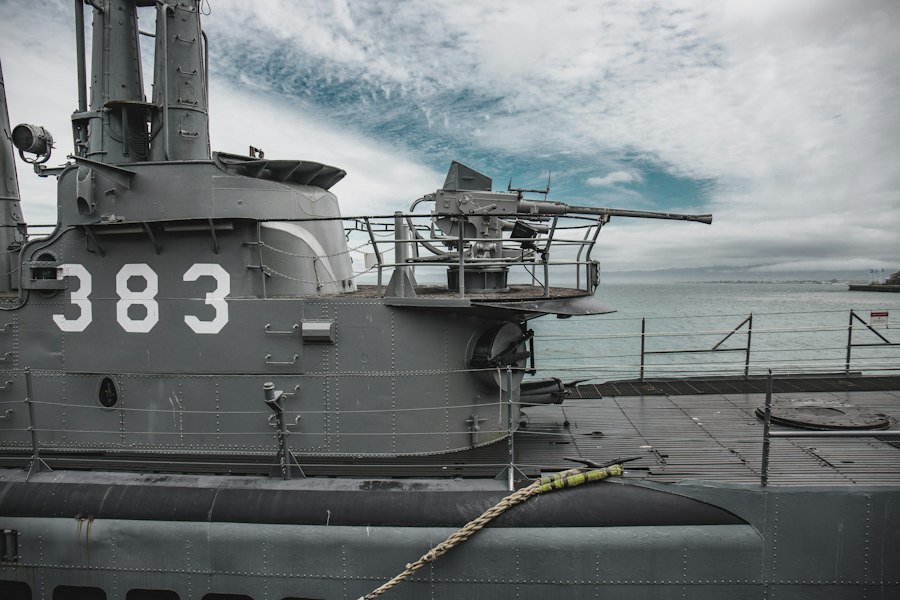
The final voyage of the I-400 and its sister, the I-401, was one fraught with the impending doom of a losing war. As the Allied forces pressed their advantage, the Japanese navy was in its death throes. The strategic role envisioned for the I-400 class had largely evaporated, leaving these powerful vessels with a diminishing sense of purpose. The war was winding down, and the fate of Japan hung precariously in the balance. The I-400 and I-401 were part of a larger submarine force attempting to make their way back to Japan.
It was during this period of retreat and regrouping that the I-400 and I-401 encountered Allied forces. The exact circumstances of their capture are subject to historical accounts, but it is generally understood that they were intercepted by American warships. The U.S. Navy, having identified these unique Japanese vessels, was keen to understand their capabilities and technology. The surrender of Japan in August 1945 rendered any further combat missions for these submarines moot. Instead of being sunk in battle, they became valuable intelligence assets. The surrender terms mandated that all Japanese warships be brought to specified locations for inspection and eventual disposition.
The I-400 and I-401, along with their Seiran bombers, were brought to the waters off the coast of Japan. Allied naval personnel boarded the submarines, meticulously documenting their design, armament, and operational systems. The Seiran bombers, with their folding wings and specialized launch mechanisms, were of particular interest. The capture of these submarines provided the Allies with invaluable insights into Japanese submarine technology, which could inform their own future naval development. The surviving I-400 class submarines, along with many other Japanese vessels, were sailed to Hawaii in preparation for their eventual fate. The surrender of Japan marked the end of their operational service, but not the end of their story. Their capture was a significant intelligence coup, offering a tangible glimpse into Japan’s most ambitious wartime naval projects.
The Submarine’s Fate: A Target in the Deep
The war was over, but the strategic significance of the I-400 class submarines remained. The Allied powers, particularly the United States, had a vested interest in understanding the full extent of Japanese naval capabilities, and the I-400 class represented a unique and formidable threat that had narrowly avoided being unleashed. The decision was made to conduct extensive tests and evaluations of these captured vessels. However, due to the Cold War looming on the horizon and the desire to prevent any salvaged technology from falling into the wrong hands, a more permanent solution was sought. The captured Japanese submarines, including the I-400, were deemed too valuable for potential adversaries to acquire any salvageable technology. This led to a decision that was both practical and symbolic: to sink them as targets.
The I-400 and its sister submarine, the I-401, along with several other captured Japanese submarines, were sailed to the waters off the coast of Hawaii. The purpose was to use them as targets for Allied naval exercises, specifically for testing anti-submarine warfare (ASW) techniques and weaponry. This was a common practice after major conflicts, where captured enemy vessels were often used to hone the skills of one’s own forces and to assess the effectiveness of new weapons. The vastness of the Pacific Ocean provided an ideal proving ground for such exercises.
The sinking of the I-400 was not a single, dramatic event but rather a process. It served as a live-fire exercise, allowing naval gunners and torpedo crews to practice their deadly craft against a formidable, albeit inert, adversary. The goal was to ensure that these once-feared “Great Raiders” would never again pose a threat, either to Allied shipping or to any other nation. The exact date and details of the I-400‘s final sinking are not as widely publicized as some other naval events, but historical records indicate that it was scuttled as part of these post-war naval exercises. The I-401 met a similar fate, deliberately sunk by American naval forces in 1946. The I-402, a transport submarine, was also sunk. The sinking of the I-400 marked the definitive end of its short but remarkable operational life. It was a poignant end for a vessel designed for strategic surprise, now reduced to a target to ensure the dominance of its captors.
In a fascinating exploration of naval warfare, the recent article on the captured Japanese submarine sunk as a target provides an insightful look into the strategic decisions made during World War II. This event not only highlights the innovative tactics employed by Allied forces but also sheds light on the technological advancements of the time. For those interested in delving deeper into this historical moment, the article can be found here. Understanding these events helps us appreciate the complexities of military strategy and the impact of such decisions on the course of history.
Legacy and Underwater Memorial
| Metric | Details |
|---|---|
| Submarine Name | I-400 (example) |
| Type | Sentoku-class (Aircraft Carrier Submarine) |
| Displacement | 5,900 tons (surfaced) |
| Length | 122 meters |
| Captured By | United States Navy |
| Date Captured | August 1945 |
| Date Sunk as Target | 1946 |
| Location of Sinking | Pacific Ocean, near Hawaii |
| Purpose of Sinking | Target practice and weapons testing |
| Final Status | Sunk and remains as a wreck |
The legacy of the I-400 class submarines is one of ambition, innovation, and ultimately, obsolescence in the face of overwhelming Allied power. These submarines, the “Great Raiders,” represented a unique chapter in naval history, a testament to Japan’s desperate efforts to challenge the established order. While their operational impact was limited due to the shifting tides of war, their conceptual design and the engineering marvels they embodied left a lasting impression. The very existence of the I-400 class raised alarms within Allied naval intelligence, prompting a reassessment of potential threats and the development of countermeasures.
The sinking of the I-400 as a target, while seemingly ignominious, also preserved its place in history. It ensured that the technology and design principles embodied in these submarines were thoroughly studied by the victors, contributing to advancements in naval warfare for future generations. The data gleaned from their capture and subsequent testing provided invaluable insights into advanced submarine construction and operational concepts. The story of the I-400 serves as a stark reminder of the ingenuity and desperation that can drive wartime innovation, and the ultimate futility of technological might when faced with overwhelming strategic and industrial superiority.
Today, the sunken hulk of the I-400, along with its sister submarines, lies on the seabed, a silent memorial to a bygone era of warfare. While not formally recognized as a dive site or memorial in the traditional sense, these underwater wrecks are part of the maritime landscape, a testament to the immense naval power that once sailed the Pacific. For maritime historians and enthusiasts, the discovery and documentation of these wrecks offer further opportunities to understand the technological capabilities of the past. The story of the I-400 is a complex one, encompassing audacious planning, cutting-edge engineering, and a final, decisive fate as a target, its silent resting place a somber reminder of its past life as a hunter of the deep. The knowledge gained from its existence and its ultimate destruction continues to inform naval strategy and technology, ensuring that even in its demise, the I-400 contributes to the understanding of maritime power and its evolution.
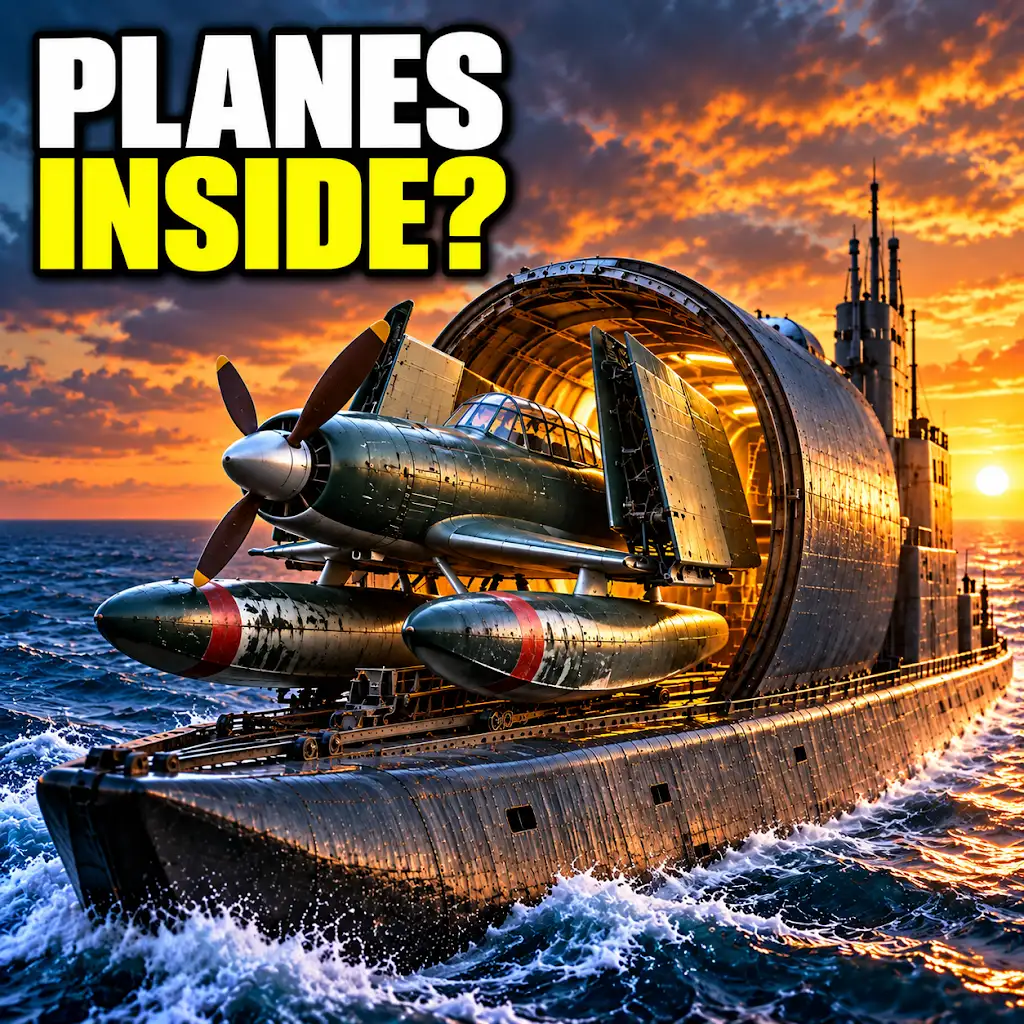
Japan Built a Submarine That Could Launch Three Planes
FAQs
What was the captured Japanese submarine used for?
The captured Japanese submarine was used as a target for military training exercises.
How was the captured Japanese submarine sunk?
The captured Japanese submarine was sunk by gunfire and depth charges during a military training exercise.
When was the captured Japanese submarine sunk?
The captured Japanese submarine was sunk on a specific date during a military training exercise.
Was anyone on board the captured Japanese submarine when it was sunk?
There were no crew members on board the captured Japanese submarine when it was sunk as it was being used solely as a target.
What was the purpose of sinking the captured Japanese submarine?
The purpose of sinking the captured Japanese submarine was to provide a realistic target for military training exercises and to test the effectiveness of weapons systems.