The rumble of turboprop engines is a familiar sound in military aviation, and few aircraft embody this sound and its inherent capabilities as definitively as the Lockheed C-130 Hercules. A workhorse of tactical airlift for decades, the Hercules has consistently proven its versatility, adapting to an ever-evolving battlefield and logistical landscape. However, the inherent limitations of even a highly capable aircraft, particularly its requirement for runway space, have always presented a challenge in austere or contested environments. It is in this context that the development and application of rocket-assisted takeoff (RATO) systems for the C-130, often referred to as C-130 Rockets, emerge as a pivotal innovation, dramatically enhancing its Short Takeoff and Landing (STOL) capabilities and revolutionizing its tactical airlift potential. These systems, while not a universal feature of every C-130 variant, represent a significant leap in operational flexibility, allowing the venerable Hercules to operate from even the most rudimentary and short airstrips, a critical advantage in modern conflict.
The C-130 Hercules: A Foundation of Tactical Versatility
The Lockheed C-130 Hercules, a four-engine turboprop transport aircraft, first took to the skies in 1954. Its design was revolutionary for its time, prioritizing ruggedness, adaptability, and the ability to operate from unimproved surfaces. This inherent design philosophy laid the groundwork for its enduring legacy. The C-130’s large cargo bay, robust landing gear, and STOL capabilities were designed from the outset to support military operations in remote or forward locations. It was envisioned as a versatile platform capable of troop transport, cargo delivery, medical evacuation, and even close air support. Over the decades, numerous variants have been developed, each building upon the core strengths of the original design. From the baseline C-130A to the more advanced C-130J Super Hercules, the aircraft has continuously evolved, incorporating technological advancements in engines, avionics, and structural integrity.
Design Philosophy and Early Operational Successes
The genesis of the C-130 lay in the U.S. Air Force’s requirement for a medium-range transport aircraft that could replace the propeller-driven Douglas C-47 Skytrain. The key objectives were increased payload, greater speed, and the ability to operate from unpaved or semi-prepared landing strips, a common necessity during the Cold War era when rapid deployment to diverse theaters was paramount. Lockheed’s design team, led by Willis Hawkins, conceived an aircraft with a high wing configuration, allowing for easier loading and unloading from a ground-level cargo ramp, and a sturdy, tricycle landing gear that could absorb the impact of rough landings. The Allison T56 turboprop engines, which powered the early models, offered a significant improvement in power-to-weight ratio and reliability over piston engines, further enhancing the C-130’s operational potential. Its success was rapid and widespread. During the Vietnam War, C-130s were instrumental in supplying forward operating bases, extracting personnel, and providing vital logistical support in a challenging jungle environment. Their ability to operate from short, often hastily constructed airstrips in Southeast Asia underscored the importance of STOL capabilities.
Evolution and Specialization of C-130 Variants
The C-130’s modular design allowed for extensive specialization, leading to a diverse family of aircraft tailored to specific mission requirements. Beyond the basic transport roles, variants like the AC-130 gunship evolved into formidable close air support platforms, bristling with cannons and missiles. The HC-130 variants served as combat search and rescue aircraft, equipped with specialized aerial refueling systems and winches. The MC-130 series was developed for special operations missions, featuring terrain-following radar and enhanced electronic warfare capabilities. The most significant upgrade in recent times has been the C-130J Super Hercules. This variant boasts new, more powerful Rolls-Royce AE 2100D3 turboprop engines, a digital avionics suite, and a six-bladed propeller, resulting in improved performance, fuel efficiency, and reduced noise levels. The C-130J is capable of higher cruising speeds, greater altitudes, and can carry heavier payloads than its predecessors. Despite these advancements, the fundamental challenge of operating from very short runways persisted, particularly in scenarios where only unimproved landing sites were available.
The C-130 aircraft, renowned for its short takeoff and landing capabilities, has been further enhanced with the integration of rocket technology, allowing for even greater operational flexibility in challenging environments. For a deeper understanding of the advancements in military aviation and the role of rockets in enhancing the performance of aircraft like the C-130, you can read a related article at this link.
The Imperative for Enhanced STOL Capabilities
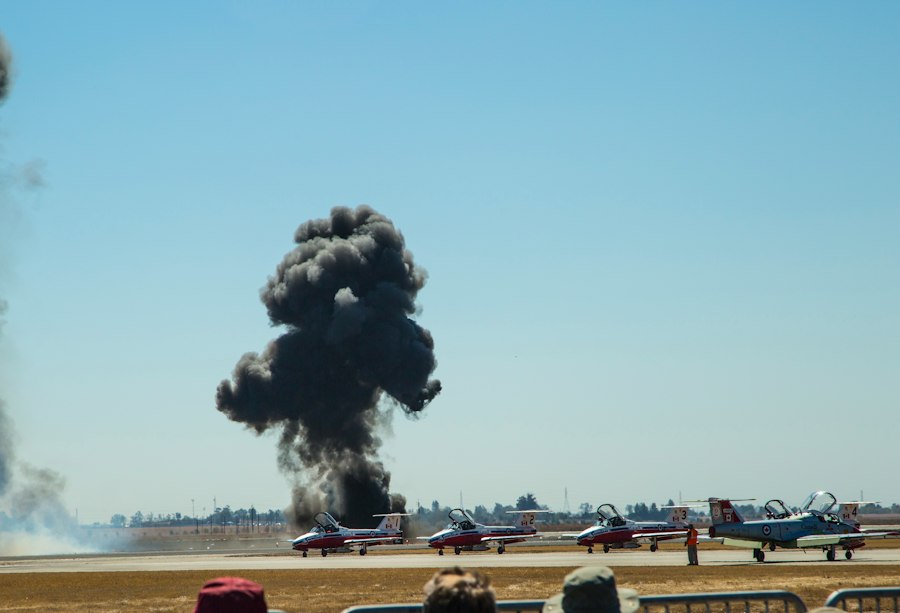
While the C-130 was designed with STOL in mind, its operational effectiveness can be significantly amplified by the ability to operate from even shorter and less prepared surfaces. This need is driven by the evolving nature of modern warfare and the increasing emphasis on rapid deployment and agile logistics. In many potential conflict zones, well-maintained runways are scarce or non-existent. The ability to land and take off from dirt strips, semi-prepared clearings, or even short, damaged runways can mean the difference between successful mission completion and logistical failure. This is particularly true in scenarios involving humanitarian aid delivery to disaster-stricken areas or rapid insertion of special forces into contested territories. The constraints imposed by runway length directly impact the payload capacity and the types of missions that can be undertaken. A longer runway allows for a heavier takeoff weight, which translates to more troops, more equipment, or more fuel. Conversely, a shorter runway necessitates a reduced takeoff weight, limiting mission flexibility.
Operational Challenges in Austere Environments
Operating in austere environments presents a multifaceted set of challenges for any transport aircraft. These can include limited or no air traffic control, unreliable weather reporting, and the absence of established maintenance facilities. Furthermore, the surfaces of unimproved landing zones are often unpredictable, with varying soil composition, potential for soft spots, and debris that can pose a significant risk to aircraft landing gear. The inherent risk of operating from such locations is amplified when aircraft are required to operate at maximum capacity, pushing the boundaries of their design. A critical consideration for any military operation is the ability to sustain forces in forward areas, and this relies heavily on the continuous flow of supplies and personnel. If the available landing sites are too short or too rough for conventional takeoff and landing profiles, the entire logistical chain can be compromised. This was a significant factor driving the exploration of technologies that could enhance the C-130’s ability to operate beyond its standard limitations.
The Trade-offs of Payload and Runway Length
The relationship between an aircraft’s takeoff weight, its performance characteristics, and the length of the runway available is a fundamental aspect of aeronautical engineering. For the C-130, like any fixed-wing aircraft, a heavier takeoff weight requires a longer distance to accelerate to takeoff speed. This is due to the increased inertia that must be overcome and the greater lift required to become airborne. Conversely, operating from a shorter runway necessitates a reduced takeoff weight, which directly impacts the aircraft’s mission effectiveness. This could mean fewer troops transported, less fuel carried (limiting range), or a reduced amount of vital cargo delivered. In tactical airlift scenarios, this trade-off can be a critical limiting factor. For example, delivering urgently needed medical supplies or heavy weaponry to a forward operating base might be impossible if the only available landing strip is too short for a conventional takeoff with the required load. The need for a solution that could bridge this gap between operational necessity and aircraft capability became increasingly apparent.
The Rocket-Assisted Takeoff (RATO) Solution
To overcome the inherent limitations of runway length, military forces have historically explored various technologies, with rocket-assisted takeoff (RATO) systems emerging as a particularly effective solution for heavy aircraft. The principle behind RATO is straightforward: the addition of powerful, short-duration rocket motors to the aircraft provides a significant thrust boost during the takeoff roll, allowing the aircraft to achieve flying speed in a much shorter distance. For the C-130, this meant the development and integration of specialized rocket pods that could be attached to the aircraft’s fuselage or wings. These systems, when activated, unleash a torrent of thrust, effectively reducing the required runway length by a considerable margin. The ability to employ RATO transforms the C-130 from a platform requiring relatively substantial runways into one that can operate from the most constrained of airstrips, opening up new operational possibilities and enhancing its tactical airlift prowess.
Principles of Rocket Propulsion for Aircraft
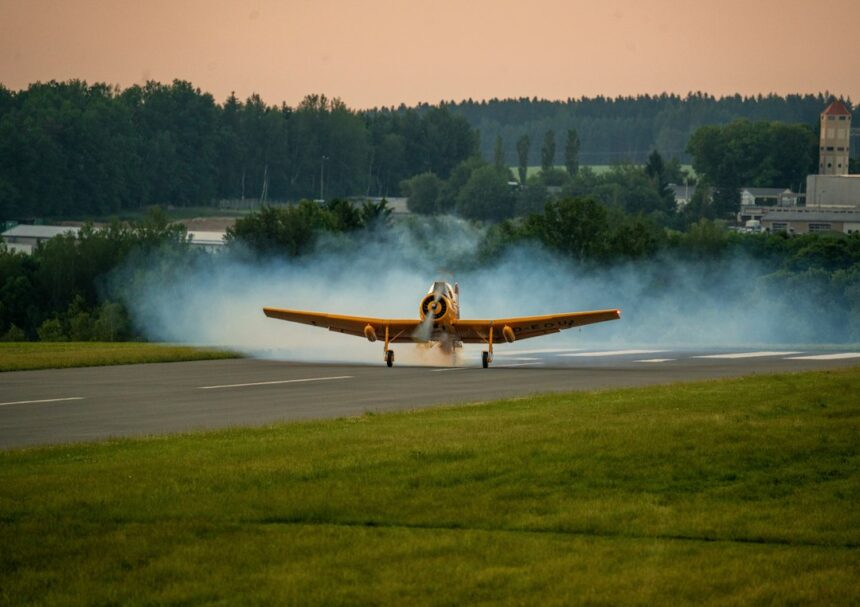
Rocket motors operate on the principle of Newton’s third law of motion: for every action, there is an equal and opposite reaction. In RATO systems, solid-fuel rocket motors are ignited, expelling hot gases at high velocity through a nozzle. This expulsion creates a forward thrust that is added to the thrust generated by the aircraft’s engines. The rockets are designed to burn for a limited duration, typically 10 to 20 seconds, providing a powerful surge of acceleration during the critical initial phase of the takeoff roll. The thrust provided by these rockets can be substantial, significantly reducing the distance needed to achieve liftoff. The weight of the rocket motors themselves and the fuel they contain is a factor, but the temporary nature of their deployment means that their impact on the aircraft’s overall weight during cruise flight is negligible. The strategic advantage lies in their ability to provide a burst of power precisely when and where it is needed most – during the challenging takeoff from short, unprepared surfaces.
Integration and Deployment of C-130 RATO Systems
The integration of RATO systems onto the C-130 was a complex engineering undertaking. It involved designing robust mounting points that could withstand the intense forces generated by the rockets, as well as developing a reliable ignition system and control mechanism. Typically, RATO pods were attached externally to the aircraft’s fuselage, often on pylons located along the sides. These pods contained multiple rocket motors, allowing for a configurable thrust output depending on the mission requirements and the runway conditions. The pilot would initiate the RATO sequence once the aircraft had begun its takeoff roll and achieved a certain speed, ensuring that the thrust was applied effectively. The spent rocket motor casings would then be jettisoned after the rockets had completed their burn. The deployment of these systems required specialized training for aircrews and ground crews, as well as careful pre-flight planning to assess the suitability of the takeoff zone and the correct deployment procedures. The ability to quickly attach and detach these systems also contributed to the C-130’s inherent flexibility.
Operational Implications and Battlefield Advantages
The introduction of RATO capabilities for the C-130 Hercules fundamentally altered its operational envelope, conferring significant advantages on the battlefield. The ability to operate from shorter, unimproved airstrips meant that the C-130 could now reach locations previously inaccessible to tactical airlift, or only accessible with significantly reduced payloads. This enhanced reach and flexibility translated directly into improved logistical support, more rapid deployment of forces, and a greater ability to respond to rapidly evolving tactical situations. The psychological impact of seeing a C-130 land and take off from a seemingly impossible strip also contributed to its effectiveness, demonstrating a capability that could surprise and deter adversaries. These systems were not merely an engineering feat; they were a strategic enabler, expanding the operational horizons of military planners and commanders.
Accessing Previously Inaccessible Locations
The most profound implication of RATO for the C-130 is its newfound ability to access locations that were previously beyond its operational reach. Imagine a scenario where a critical bridge has been destroyed, or a vital road network is impassable due to terrain or enemy action. In such situations, conventional transport aircraft would be unable to deliver much-needed supplies, personnel, or equipment. However, a C-130 equipped with RATO could potentially land on a hastily cleared clearing or a narrow, unpaved strip near the affected area. This capability is crucial for humanitarian relief efforts following natural disasters, where infrastructure is often severely damaged. It is equally vital in military operations, where the ability to resupply forward-deployed units or insert special operations forces behind enemy lines can be a decisive factor. The C-130, with its RATO capability, effectively shrank the map, making more of the world accessible for tactical airlift.
Enhancing Troop and Cargo Deployment Speed
The speed at which troops and vital cargo can be deployed is a critical element of modern military strategy. RATO-equipped C-130s can significantly accelerate this process. By reducing the required takeoff distance, aircraft can depart more quickly and with less preparation time for the landing zone. This is particularly advantageous in fluid combat situations where rapid reinforcement or redeployment is necessary. Furthermore, the ability to operate from shorter runways allows for more frequent sorties. Instead of waiting for a suitable runway to become available or for the load to be reduced to a point where a conventional takeoff is possible, a RATO-equipped C-130 can simply take off from the closest available suitable surface. This increased tempo of operations can provide a significant logistical advantage, ensuring that forces on the ground are adequately supplied and supported, and that critical personnel are moved to where they are needed most, without delay.
Psychological and Strategic Deterrence
Beyond the purely logistical and operational advantages, the capability of a C-130 to execute a rocket-assisted takeoff from a short, unimproved strip carries a significant psychological weight. To an observer on the ground, particularly an adversary, witnessing such a feat can be intimidating. It demonstrates a level of adaptability and resilience that might not have been anticipated. This capability can serve as a potent deterrent, suggesting that an opposing force possesses the means to bypass conventional defenses and deliver support or offensive capabilities to unexpected locations. For the crews themselves, the successful execution of a RATO takeoff from a challenging environment is a testament to their skill and the aircraft’s robust design. It fosters confidence and a sense of accomplishment, further enhancing the overall effectiveness of the C-130 as a tactical airlift platform.
The C-130 aircraft, renowned for its short takeoff and landing capabilities, has been a game-changer in various military operations, especially when equipped with advanced rocket systems. For those interested in exploring the intricacies of this versatile aircraft and its operational advantages, a related article can be found at In the War Room, which delves into the strategic implications of using C-130s in modern warfare. This resource provides valuable insights into how these aircraft enhance logistical support and combat readiness on the battlefield.
Limitations and Future of Rocket-Assisted Airlift
| Metric | Value | Unit | Notes |
|---|---|---|---|
| Aircraft Model | C-130 Hercules | – | Military transport aircraft |
| Takeoff Distance (STOL configuration) | 1,200 | feet | Short Takeoff distance with rockets installed |
| Landing Distance (STOL configuration) | 1,000 | feet | Short Landing distance with rockets installed |
| Rocket Type | Rocket-Assisted Takeoff (RATO) boosters | – | Used to reduce takeoff distance |
| Number of Rockets | 4 | units | Typical number of RATO units used |
| Rocket Thrust | 1,000 | pounds-force each | Approximate thrust per rocket booster |
| Payload Capacity (STOL) | 35,000 | pounds | Maximum payload with STOL rockets installed |
| Operational Use | Short Runway Operations | – | Enables operations from short or unimproved airstrips |
While C-130 rockets offer remarkable advantages, they are not without their limitations, and their deployment also necessitates careful consideration of various factors. The addition of rocket motors introduces complexities in terms of cost, maintenance, and operational procedures. Furthermore, the future of RATO technology is intertwined with the broader evolution of military aviation and the ongoing development of alternative and potentially more integrated solutions for enhanced STOL performance. Understanding these limitations and looking towards the future is crucial for appreciating the complete picture of this critical tactical airlift capability.
Considerations of Cost, Complexity, and Safety
The integration and use of RATO systems add a layer of complexity and cost to the operationalization of the C-130. The rocket motors themselves are consumable items and represent a recurring expense. The associated hardware, including mounting points and ignition systems, requires regular inspection and maintenance to ensure airworthiness and reliability. Furthermore, the dynamic nature of rocket motor ignition and burnout introduces specific safety considerations. Aircrews must undergo rigorous training to master the precise timing and execution of RATO procedures, and ground crews must be meticulously trained in the handling and loading of rocket motors. Despite these considerations, the strategic benefits often outweigh the costs, especially in scenarios where operational access is paramount. The development of more integrated and potentially reusable systems could further mitigate these concerns in the future.
The Evolving Landscape of STOL Technologies
The development of RATO for the C-130 is a testament to the continuous pursuit of enhanced STOL capabilities. However, the aviation industry is not static, and new technologies are constantly emerging. Modern advancements in engine technology, such as the more powerful and efficient turboprop engines found on the C-130J, already contribute to improved STOL performance. Furthermore, research into technologies like vectored thrust, advanced wing designs, and even more sophisticated STOL aircraft concepts could potentially offer alternative or complementary solutions for operating in austere environments. While RATO remains a proven and effective method for augmenting STOL capabilities, the future may see its role evolve as these newer technologies mature and become more widely adopted. The fundamental need for aircraft that can operate from short, unimproved surfaces will undoubtedly persist, driving further innovation in this critical area of military aviation.
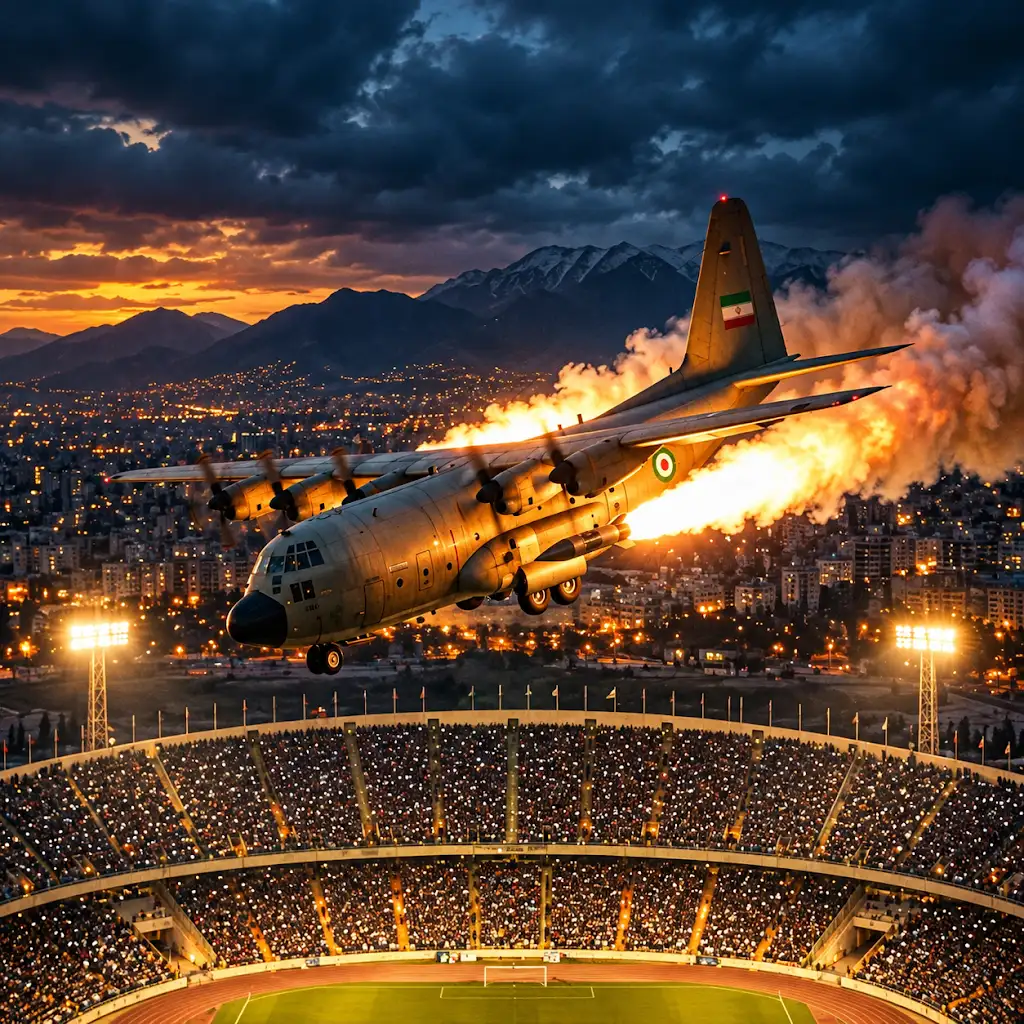
The Secret Plane Built to Land Inside a Stadium
FAQs
What is a Short Takeoff and Landing (STOL) C-130?
A Short Takeoff and Landing (STOL) C-130 is a modified version of the C-130 Hercules aircraft that is equipped with enhancements to allow for shorter takeoff and landing distances compared to the standard C-130 model.
How do rockets enhance the capabilities of a STOL C-130?
Rockets can be attached to a STOL C-130 to provide additional thrust during takeoff, allowing the aircraft to achieve lift-off in a shorter distance. This capability is especially useful in challenging terrains or situations where a traditional takeoff may not be feasible.
What are the advantages of using a STOL C-130 with rockets?
Using a STOL C-130 with rockets can enable the aircraft to operate from shorter runways or unpaved airstrips, increasing its versatility and operational capabilities. It also allows for quicker deployment of troops or cargo in remote or austere environments.
Are there any limitations to using rockets on a STOL C-130?
While rockets can enhance the performance of a STOL C-130, there are limitations to consider, such as increased fuel consumption and potential safety risks associated with rocket propulsion. Proper training and maintenance are essential to ensure safe and effective operation.
Which military operations benefit most from the use of a STOL C-130 with rockets?
Military operations that require rapid deployment of personnel or supplies to remote or inaccessible areas, such as humanitarian missions, special operations, or disaster relief efforts, can benefit significantly from the capabilities of a STOL C-130 equipped with rockets.