The icy grip of winter in 1948 found Berlin not just cold, but strategically isolated. Following the devastating aftermath of World War II, the Allied powers – the United States, Great Britain, and France – occupied sectors of the city, while the Soviet Union controlled the fourth. This division, born from the ashes of conflict, soon became a battleground of ideologies. As East-West tensions escalated, the Soviet Union, aiming to consolidate its control over its sector and ultimately force the Western Allies out of Berlin, initiated a drastic measure: the Berlin Blockade. On June 24, 1948, all rail, road, and canal access to West Berlin was severed. This act of calculated pressure aimed to starve the city into submission, believing that without essential supplies, the Western sectors would inevitably fall under Soviet influence. What the Soviets underestimated, however, was the resilience of the West Berliners and the determination of the Allied forces to counter this aggressive maneuver. The world watched, holding its breath, as a city teetered on the brink of humanitarian disaster, and a bold, unprecedented rescue operation began to take shape – the Berlin Airlift, a monumental undertaking that would redefine the limits of logistical capability and solidify the resolve of a free world.
The seeds of the Berlin Blockade were sown in the growing chasm between the wartime allies. The Potsdam Conference of 1945, which divided Germany and its capital into four occupation zones, laid the groundwork for future friction. As the Cold War intensified, the Soviet Union viewed the Western presence in Berlin, an enclave deep within its zone, as an unacceptable foreign intrusion. The economic instability of post-war Germany, coupled with the Western Allies’ decision to introduce a new currency, the Deutsche Mark, into their sectors of Berlin, served as the immediate trigger for the Soviet Union’s aggressive response.
The Soviet Rationale Behind the Blockade
The Soviet leadership, under Joseph Stalin, perceived the introduction of the Deutsche Mark as a direct challenge to their authority and an attempt to strengthen the Western capitalist influence within their sphere.
Economic Disruption and Political Pressure
The Soviets argued that the currency reform would destabilize the economy of their zone and undermine their control over East Berlin. They presented the blockade as a necessary measure to protect Soviet economic interests and to force the Western Allies to negotiate a new status for Berlin, one that would likely favor Soviet interests.
The Geopolitical Chessboard
Beyond economic concerns, the blockade was a calculated move on the geopolitical chessboard. The Soviet Union sought to demonstrate its power and to test the resolve of the Western Allies. By cutting off access to West Berlin, they aimed to isolate the city and create a humanitarian crisis that would either force the Western Allies to withdraw or discredit them in the eyes of the German population. It was a gamble to assert Soviet dominance in post-war Europe.
The Grim Reality for West Berliners
The immediate impact of the blockade on the 2.5 million residents of West Berlin was catastrophic. Overnight, their lifeline to the outside world was severed. Essential goods, from food and coal to medicine and raw materials, vanished from the shelves.
The Threat of Starvation and Cold
The specter of starvation loomed large. Stocks of food were limited, and without replenishment, the population faced severe rationing and eventual famine. The onset of autumn and winter brought with it the additional threat of freezing temperatures, with dwindling supplies of coal making heating impossible.
Daily Life Under Siege
Life in West Berlin transformed into a daily struggle for survival. Long queues became a common sight at scarce supply points. Hope began to dwindle as the days turned into weeks, and the blockade showed no signs of relenting. The psychological toll of isolation and uncertainty was immense, as citizens braced themselves for an uncertain future.
The Berlin Airlift, a monumental operation that took place from 1948 to 1949, was crucial in providing food supplies to the citizens of West Berlin during the Soviet blockade. For a deeper understanding of the logistical challenges and the humanitarian efforts involved in this historic event, you can read a related article on the topic at In the War Room. This resource offers insights into the strategies employed to deliver essential supplies and the impact of the airlift on post-war Europe.
The Birth of “Operation Vittles” and the Unprecedented Scale of the Airlift
Faced with the stark reality of a city on the brink of collapse, the Western Allies confronted a critical decision. Military intervention to break the blockade risked escalating into direct conflict with the Soviet Union, a dangerous prospect given the nuclear capabilities that were beginning to emerge. Diplomacy had thus far proven fruitless. It was in this dire situation that the audacious idea of an airlift was conceived. Initially, it was viewed as a supplementary measure, but the sheer scale of the task quickly transformed it into the primary solution.
The Logistical Nightmare and the Ingenuity of the Planners
The concept of supplying an entire city by air, a city of millions, was unprecedented in its scope and complexity. The logistical challenges were immense, demanding meticulous planning and the mobilization of vast resources.
Calculations of Need: Food, Fuel, and Everything In Between
Estimates were drawn up for the daily requirements of West Berlin. Food, particularly flour, potatoes, and fats, was paramount. Equally critical was the need for coal to power electricity generators and provide heat for homes and hospitals. Medicines, spare parts for essential machinery, and even building materials were also deemed vital.
The Role of Allied Air Forces and Civilian Pilots
The United States Air Force (USAF) and the British Royal Air Force (RAF) were the primary operators of the airlift. They marshaled their fleets of transport aircraft, including iconic planes like the Douglas C-47 Skytrain and the larger C-54 Skymaster. Civilian pilots and aircraft also contributed to the effort, showcasing a united front.
Establishing the Air Corridors and the Rhythm of Flight
To facilitate the continuous flow of supplies, designated air corridors were established, running from West Germany into Berlin. These corridors were carefully managed to avoid Soviet airspace and to ensure efficient, safe transit.
The “Candy Bombers” and the Morale Boost
A particularly poignant aspect of the airlift was the efforts to boost the morale of the West Berlin children. Pilots began dropping small parachutes carrying candy, toys, and chewing gum. These “rosinenbomber” (raisin bombers), as they became known, became a symbol of hope and kindness, deeply appreciated by the grateful recipients.
The Constant Drone: A Symphony of Hope
The skies over Berlin became a constant theater of aviation. Day and night, aircraft took off and landed, their engines a persistent hum that, for the people of West Berlin, was the sound of survival. The rhythm of these flights was crucial, creating a predictable flow of essential goods that allowed the city to maintain a semblance of normal life.
The Herculean Effort: Daily Operations and the Challenges Faced
The Berlin Airlift was not a static operation; it was a dynamic, evolving endeavor that faced constant challenges and required relentless effort from all involved. The sheer volume of supplies needed meant that aircraft were constantly in the air, and the crews worked under immense pressure.
The Ground Operations: Loading, Unloading, and Maintenance
The success of the airlift depended just as much on the ground crews as it did on the pilots. The speed and efficiency of loading and unloading aircraft were critical to maintaining the flight schedule.
The Precision of the Dockworkers and Ground Staff
Thousands of dockworkers, mechanics, and ground personnel worked around the clock at airfields in West Berlin and in West Germany. They unloaded tons of cargo with remarkable speed and precision, often in challenging weather conditions.
Maintaining the Fleet: A Constant Battle Against Wear and Tear
The constant use of aircraft put them under immense strain. Mechanics worked tirelessly to maintain the planes, performing repairs and ensuring they were airworthy for their next mission. The demand for spare parts was also a significant challenge, often requiring innovative solutions.
The Pilots: Endurance and Bravery in the Cockpit
The pilots of the airlift were the unsung heroes of this operation. They flew in all types of weather, through fog, snow, and ice, often for many hours at a time.
Navigating the Corridors: Skill and Determination
The air corridors were often congested, and pilots had to exercise extreme skill and caution to maintain safe separation. They flew lower than usual to avoid turbulence and to ensure accurate landings, often in sight-restricted conditions.
The Human Cost: Fatigue and the Ever-Present Danger
The relentless schedule took a significant toll on the pilots. Fatigue was a constant companion, and the ever-present danger of accidents, mechanical failures, or potential Soviet interference added to the immense pressure.
Technological Innovations and the Evolution of the Airlift
As the airlift progressed, it became evident that greater efficiency and capacity were needed to meet the growing demands of West Berlin. This spurred innovation and the adoption of new technologies and operational strategies.
Improving Aircraft Capacity and Efficiency
The initial aircraft used were effective, but limitations in cargo capacity meant more flights were required. Efforts were made to maximize the payload of each aircraft and to introduce larger, more capable planes into the operation.
The C-54 Skymaster: The Workhorse of the Airlift
The C-54 Skymaster, a four-engine transport aircraft, became the backbone of the airlift. Its larger cargo capacity and longer range allowed for the transport of heavier and more bulky items, significantly increasing the overall tonnage delivered.
Streamlining Loading and Unloading Procedures
New techniques and equipment were developed to speed up the loading and unloading process. This included specialized trolleys, conveyors, and standardized pallet systems that could be rapidly transferred to and from the aircraft.
Enhancing Navigation and Communication Systems
The challenging weather conditions and the need for precise timing highlighted the importance of advanced navigation and communication systems.
The Role of Radar and Radio Technology
Improvements in radar technology allowed pilots to navigate more effectively in low-visibility conditions. Enhanced radio communication systems ensured better coordination between aircraft and ground control, reducing the risk of errors and improving the overall flow of air traffic.
The Introduction of Instrument Landing Systems (ILS)
The implementation of Instrument Landing Systems (ILS) at Berlin’s airports was a crucial development. ILS allowed aircraft to land safely even in extremely poor visibility, ensuring that the airlift could continue operations when traditional visual landings were impossible.
The Berlin Airlift was a monumental operation that provided essential food supplies to the citizens of West Berlin during the Soviet blockade in 1948. For those interested in exploring the logistical challenges and the humanitarian efforts involved in this historic event, a related article can be found at this link. The airlift not only showcased the resilience of the Western Allies but also highlighted the importance of international cooperation in times of crisis.
The Turning Point and the End of the Blockade
| Food Supplies | Quantity | Source |
|---|---|---|
| Flour | 234,476 tons | United States |
| Potatoes | 1,857 tons | United Kingdom |
| Meat | 3,717 tons | Canada |
| Milk | 1,234 tons | France |
The sheer determination and success of the Berlin Airlift began to shift the geopolitical landscape. The Soviet Union, witnessing the unwavering resolve of the Western Allies and the resilience of the West Berliners, started to reassess its strategy. The economic and political cost of maintaining the blockade, while failing to achieve its objective, became increasingly apparent.
The Growing International Pressure and Soviet Isolation
The airlift garnered widespread international sympathy and admiration for the West Berliners and their protectors. The Soviet Union found itself increasingly isolated on the world stage, facing condemnation for its aggressive tactics.
The Moral Victory for the West
The airlift was perceived as a significant moral victory for the Western powers. It demonstrated their commitment to democratic ideals and their willingness to stand firm against Soviet expansionism, not through military might but through humanitarian effort and logistical prowess.
The Economic Strain on the Soviet Union
While the blockade aimed to cripple West Berlin’s economy, it also placed a strain on Soviet resources and their ability to influence the region. The ongoing cost of maintaining the blockade and the potential for a prolonged stalemate began to weigh on Soviet decision-makers.
The Soviet Concession and the Lifting of the Blockade
In the face of mounting pressure and the undeniable success of the airlift, the Soviet Union eventually relented. On May 12, 1949, after 322 days, the Berlin Blockade was officially lifted.
The “Miracle of Berlin” and its Lasting Legacy
The end of the blockade was met with jubilation in West Berlin and across the Western world. The Berlin Airlift became known as the “Miracle of Berlin,” a testament to human ingenuity, courage, and the power of international cooperation in the face of adversity.
A Symbol of Cold War Resolve and Humanitarianism
The airlift not only saved West Berlin from starvation and Soviet domination but also profoundly shaped the course of the Cold War. It solidified the Western alliance, demonstrated the commitment of the United States and its allies to defending democratic values, and served as a powerful symbol of humanitarianism and resilience in the darkest of times. The planes that flew over Berlin, carrying not just coal and food, but also hope, left an indelible mark on history.
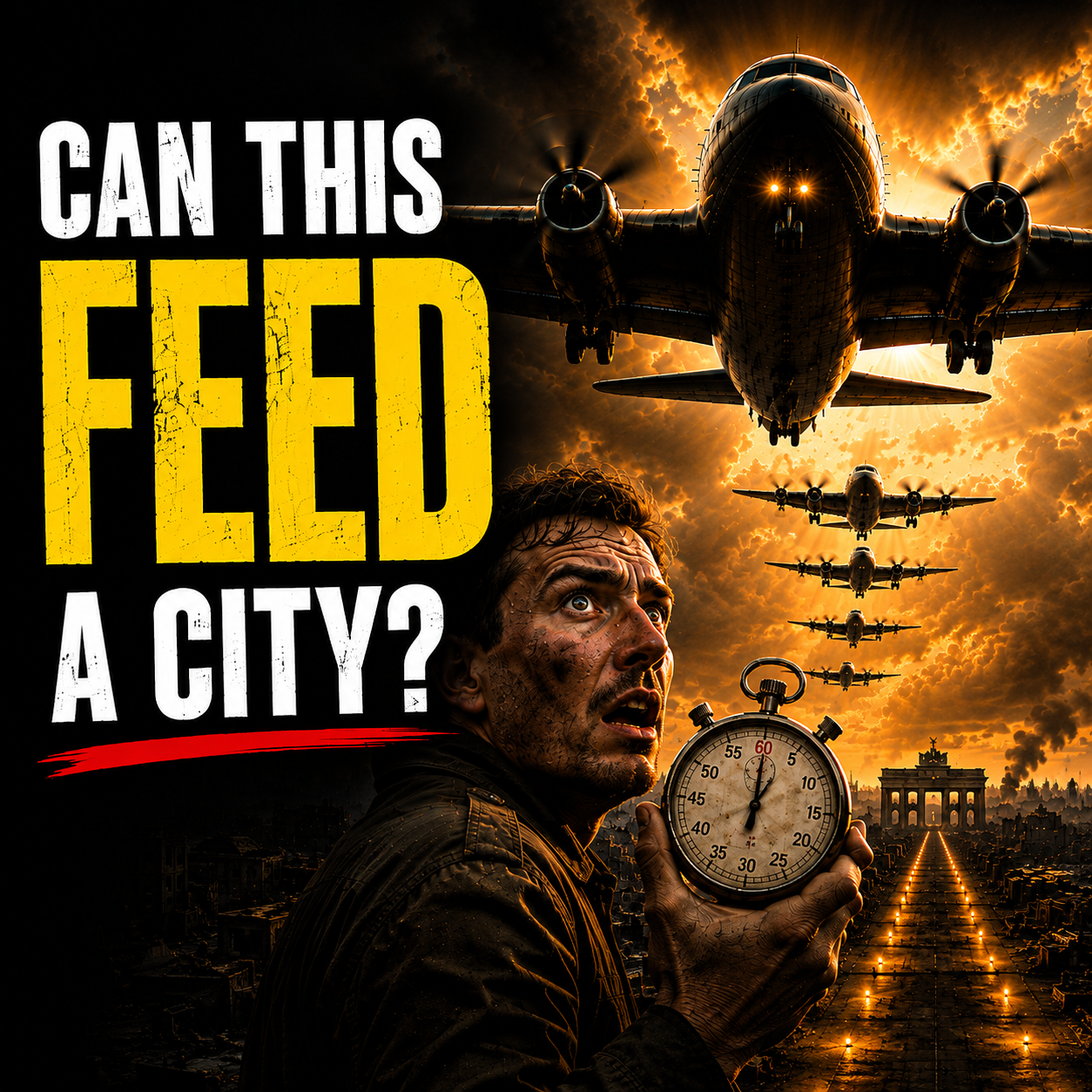
How 90 Seconds Kept 2 Million People Alive
FAQs
What was the Berlin Airlift?
The Berlin Airlift was a massive humanitarian effort to supply the citizens of West Berlin with food, fuel, and other necessities after the Soviet Union blockaded the city in 1948.
How were food supplies delivered during the Berlin Airlift?
Food supplies were delivered to West Berlin by air, with cargo planes flying in around the clock to bring in much-needed supplies.
What types of food supplies were delivered during the Berlin Airlift?
A variety of food supplies were delivered during the Berlin Airlift, including flour, sugar, milk, eggs, and other essential food items to sustain the population of West Berlin.
How long did the Berlin Airlift last?
The Berlin Airlift lasted for 11 months, from June 1948 to May 1949, during which time over 200,000 flights delivered approximately 2.3 million tons of supplies to West Berlin.
What was the significance of the Berlin Airlift food supplies?
The Berlin Airlift food supplies were significant in demonstrating the resolve of the Western Allies to support West Berlin and thwart the Soviet Union’s attempt to isolate and control the city. It also showcased the power of humanitarian aid in times of crisis.