The ethereal dance of the Aurora Borealis, often perceived as a purely natural phenomenon born from solar winds and Earth’s magnetic field, may hold a hidden, more terrestrial connection. Recent scientific explorations are delving into a controversial, yet increasingly plausible, hypothesis: the potential link between nuclear testing conducted throughout the 20th century and the observed characteristics and occurrences of the Northern Lights. This investigation is not merely an academic exercise; it probes the long-term, unintended consequences of humanity’s most destructive technological endeavors and their subtle, yet profound, impact on our planet’s atmosphere and magnetosphere.
Charged Particles and Celestial Spectacles
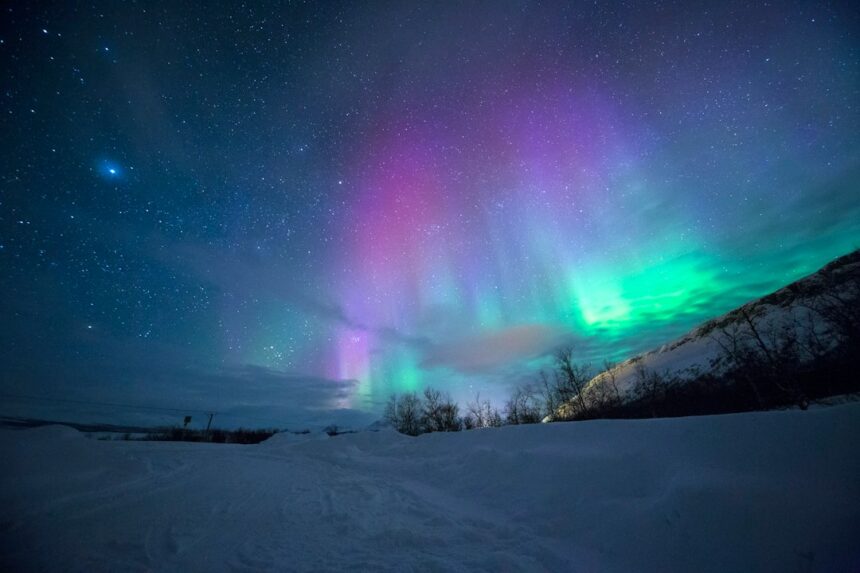
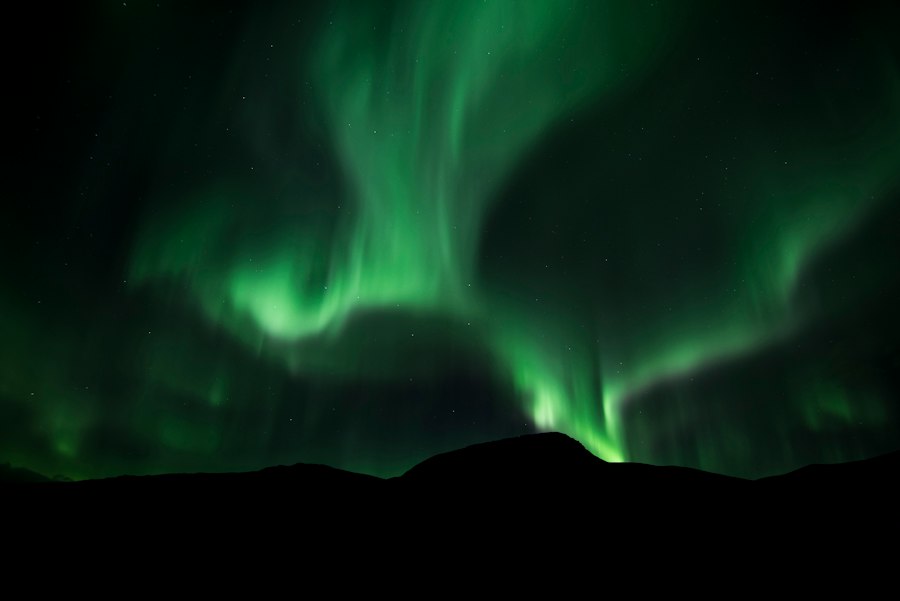
The Aurora Borealis, in its most commonly understood context, is a breathtaking display of light in the sky, predominantly seen in high-latitude regions. Its creation is a cosmic ballet, initiated by charged particles streaming from the Sun in the form of solar wind. When these energetic particles encounter Earth’s magnetosphere, the planet’s protective magnetic bubble, they are guided towards the polar regions. Upon entering the upper atmosphere, these particles collide with atoms and molecules of gases such as oxygen and nitrogen. These collisions excite the atmospheric gases, causing them to emit photons, which are the particles of light we perceive as auroras. Different gases, when excited, produce different colors: oxygen typically yields green and red hues, while nitrogen contributes blues and purples. The intensity and shape of the aurora are dictated by the strength and direction of the solar wind and the Earth’s magnetic field.
The Solar Wind’s Journey
The solar wind is a continuous stream of plasma, composed primarily of electrons and protons, ejected from the Sun’s upper atmosphere, the corona. This outward flow is driven by the Sun’s immense heat and magnetic activity. The solar wind travels at speeds ranging from 300 to 800 kilometers per second, carrying with it embedded magnetic fields. As this interplanetary medium sweeps through the solar system, it interacts with the magnetic fields of planets.
Earth’s Magnetic Shield
Earth’s magnetosphere is a dynamic region that surrounds the planet, acting as a vital shield against the relentless onslaught of the solar wind and other energetic particles from space. This magnetic field is generated by the motion of molten iron in the Earth’s outer core. The magnetosphere deflects most of the charged particles, preventing them from reaching the surface. However, some particles are trapped within the magnetosphere, particularly along magnetic field lines that converge at the magnetic poles.
Atmospheric Collisions and Light Emission
When the solar wind particles, guided by the magnetosphere, penetrate the Earth’s upper atmosphere, they collide with atmospheric constituents. These high-energy collisions transfer energy to the atoms and molecules of gases like nitrogen and oxygen. This energy transfer excites electrons within these atoms to higher energy levels. As these excited electrons return to their ground state, they release the excess energy in the form of photons, the fundamental units of light. The specific wavelengths of light emitted determine the colors of the aurora. The more energetic the collision and the greater the number of particles involved, the brighter and more extensive the auroral display.
The phenomenon of the aurora borealis, often celebrated for its stunning beauty, has intriguing connections to historical events such as nuclear testing. An article that delves into this relationship can be found on In The War Room, where it explores how the electromagnetic disturbances caused by nuclear detonations can influence the Earth’s atmosphere and potentially affect auroral displays. For more insights on this fascinating topic, you can read the article here: In The War Room.
The Shadow of the Atom Bomb

The advent of nuclear weapons in the mid-20th century ushered in an era of unprecedented technological power, but also introduced a new, artificial source of energetic particles into Earth’s environment. From the initial atomic bombs of World War II to the extensive atmospheric and underground testing programs conducted by various nations during the Cold War, nuclear detonations released vast amounts of energy and, critically, radioactive isotopes into the atmosphere and magnetosphere. These tests, particularly those conducted at high altitudes, injected a significant quantity of charged particles and other byproducts into regions of space that directly influence auroral phenomena.
The Scale of Atmospheric Testing
Between the 1940s and the late 1980s, numerous nuclear weapons were detonated in the Earth’s atmosphere. These tests, often carried out as a demonstration of military might, had a profound and lasting impact on the planet’s delicate environmental balance. High-altitude tests, specifically designed to investigate the effects of nuclear explosions in the upper atmosphere and near space, were particularly significant in this context. These detonations, occurring thousands of meters above the surface, released immense bursts of neutrons, gamma rays, and a cascade of secondary particles, including electrons and ions, directly into the magnetosphere. The sheer energy released by these events was capable of creating artificial auroras, visible from vast distances.
Radioactive Fallout and Ionization
The radioactive decay of the isotopes produced by nuclear explosions releases energetic particles. When these particles travel through the atmosphere and magnetosphere, they interact with the existing gas molecules. These interactions can cause ionization, which is the process of stripping electrons from atoms or molecules, creating positively charged ions and free electrons. Nuclear detonations effectively acted as massive, albeit artificial, sources of ionization, injecting a significant quantity of charged particles into the upper atmosphere and near-Earth space. This artificial ionization could potentially alter the electrical conductivity of the ionosphere and influence the flow of charged particles along magnetic field lines, thereby impacting the conditions necessary for auroral displays.
Artificial Auroras and Experimental Evidence
The direct creation of artificial auroras by nuclear explosions was not merely theoretical; it was observed. High-altitude nuclear tests, such as the Starfish Prime test conducted by the United States in 1962, were explicitly designed to study their effects on the magnetosphere and ionosphere. The Starfish Prime detonation, at an altitude of approximately 400 kilometers, generated an artificial aurora that was visible for thousands of kilometers and persisted for several hours. This event injected a significant number of energetic electrons into the Earth’s radiation belts, creating an artificial aurora that mimicked, albeit in a more intense and localized manner, the natural auroral displays. This direct evidence established a clear link between nuclear explosions and the generation of auroral phenomena.
Magnetsphere Perturbations and Auroral Enhancement
The hypothesis posits that the injection of artificial energetic particles from nuclear tests did not simply create isolated artificial auroras. Instead, it is theorized that these injections could have had a more persistent and widespread influence on the magnetosphere, potentially altering its dynamics and enhancing the frequency or intensity of natural auroral displays in the long term. This perspective suggests that the human-made disturbances could have “primed” the magnetosphere, making it more susceptible to solar wind interactions or altering the pathways for particle precipitation.
Radiation Belt Alterations
The Earth’s radiation belts, also known as the Van Allen belts, are regions of energetic charged particles that are trapped by the planet’s magnetic field. Nuclear tests, particularly high-altitude ones, injected large quantities of energetic electrons and ions into these belts. These artificial additions could have significantly altered the composition and intensity of the radiation belts for years, if not decades, following the tests. Changes in the radiation belts could influence how the magnetosphere responds to incoming solar wind, potentially leading to more frequent or intense particle precipitation into the atmosphere, and consequently, more pronounced auroral activity.
Ionospheric Conductivity Changes
The ionosphere, a region of Earth’s upper atmosphere characterized by a high concentration of ions and free electrons, plays a crucial role in the propagation of radio waves and the electrical currents that flow in the magnetosphere. Nuclear explosions, by creating substantial ionization, could have temporarily or even semi-permanently altered the electrical conductivity of the ionosphere. Changes in conductivity could affect the flow of electrical currents between the ionosphere and the magnetosphere, processes that are intimately linked to auroral substorms. If these changes led to more efficient or sustained current systems, it could translate to more frequent or energetic auroral displays.
Magnetospheric Resonance and Oscillations
Some theories suggest that the injected particles from nuclear tests might have induced resonance effects within the magnetosphere. The magnetosphere is not a static entity; it is subject to various oscillations and waves. The introduction of a large, artificial population of energetic particles could have excited specific modes of oscillation or altered the natural frequencies of the magnetospheric plasma. These disturbances could have potentially amplified the effects of subsequent solar wind interactions, leading to an increased probability of geomagnetic storms and the associated auroras. The magnetosphere, like a bell struck with a foreign object, might have vibrated in new and amplified ways.
Unraveling the Evidence: Data and Challenges
Investigating the link between nuclear testing and aurora requires a meticulous examination of historical data, scientific records, and the development of sophisticated modeling techniques. The challenges are manifold, stemming from the complexity of the magnetosphere, the diffuse nature of auroral displays, and the potential for multiple confounding factors. However, by comparing pre- and post-testing auroral records, analyzing magnetospheric data from the testing era, and employing computational simulations, scientists are gradually piecing together a more comprehensive understanding.
Historical Auroral Records and Anomalies
Analyzing historical auroral observations is a key component of this research. This involves scrutinizing logs from observatories, naval logs, pilot reports, and even anecdotal accounts from communities in high-latitude regions that might have noted unusual or intensified auroral activity following specific nuclear tests. Scientists look for temporal correlations between major nuclear test series and documented increases in auroral frequency, intensity, or geographical reach. The challenge lies in distinguishing between genuine anomalies caused by nuclear testing and natural variations in solar activity or geomagnetic conditions.
Magnetospheric Data Analysis
During the Cold War, various scientific instruments were deployed to monitor the Earth’s magnetosphere. Satellites, ground-based magnetometers, and ionosondes collected a wealth of data during the period of extensive nuclear testing. Scientists are re-examining this historical data to identify specific signatures that might be attributable to the artificial injection of particles. This includes looking for unusual fluctuations in particle populations, magnetic field strengths, and electrical currents that deviate from what would be expected from solar activity alone. The goal is to find evidence of persistent magnetospheric disturbances that began around the time of significant nuclear testing.
Computational Modeling and Simulations
Modern computational power allows scientists to create detailed models of the Earth’s magnetosphere and ionosphere. These models can be used to simulate the effects of nuclear explosions on these regions. By inputting realistic parameters of past nuclear tests, researchers can predict the likely consequences for particle distribution, magnetic field dynamics, and the potential for auroral generation. Comparing the results of these simulations with actual observed phenomena provides a powerful tool for validating or refuting the hypothesis that nuclear testing played a role in auroral variations. These simulations can help isolate the specific contributions of artificial particle injections from natural solar and geomagnetic influences.
The mesmerizing display of the aurora borealis has captivated many, but its connection to nuclear testing is a lesser-known aspect of its creation. Recent studies suggest that the electromagnetic pulses generated by nuclear detonations can influence the Earth’s magnetosphere, potentially enhancing the conditions for auroras. For those interested in exploring this intriguing relationship further, you can read more in the article found here. Understanding these connections not only sheds light on the natural phenomena but also raises important discussions about the impact of human activities on our planet’s atmospheric conditions.
Implications for the Future: Legacy and Awareness
| Event | Date | Location | Type of Nuclear Test | Observed Aurora Borealis Effects | Scientific Notes |
|---|---|---|---|---|---|
| Starfish Prime | July 9, 1962 | Johnston Atoll, Pacific Ocean | High-altitude thermonuclear test (1.4 megatons) | Artificial aurora visible over Hawaii and parts of the Pacific | Produced intense electromagnetic pulse and artificial auroras due to ionization of the upper atmosphere |
| Operation Fishbowl – Bluegill | October 25, 1962 | Johnston Atoll | High-altitude nuclear test (400 kilotons) | Artificial aurora observed in the upper atmosphere | Demonstrated effects of nuclear explosions on Earth’s magnetosphere and ionosphere |
| Operation Fishbowl – Starfish Prime Secondary Effects | July 1962 | Pacific region | High-altitude nuclear test | Extended auroral displays lasting several minutes | Showed that nuclear detonations can create artificial auroras by energizing charged particles |
The exploration of a potential link between nuclear testing and the Aurora Borealis carries significant implications, extending beyond scientific curiosity. It underscores the far-reaching and often unintended consequences of human actions on the global environment. Understanding these connections can inform future policy decisions regarding nuclear technology and environmental stewardship, fostering a greater awareness of the interconnectedness of our planet’s systems and the enduring legacy of past actions.
Environmental Legacy of Nuclear Activities
The research into auroral creation linked to nuclear testing highlights the persistent environmental legacy of nuclear activities. Even decades after the cessation of atmospheric testing, the subtle alterations to the magnetosphere and ionosphere may continue to exert an influence. This prompts a broader consideration of how other anthropogenic activities, from industrial pollution to space debris, might be subtly impacting natural planetary processes. The aurora, in this context, becomes a visible indicator of deeper, more complex environmental perturbations.
Rethinking Our Relationship with Technology
This line of inquiry encourages a critical re-evaluation of humanity’s relationship with powerful technologies. The development of nuclear weapons, while driven by military imperatives, inadvertently transformed aspects of our planet’s natural environment. It serves as a stark reminder that technological advancement, especially at the scale of nuclear detonations, can have unforeseen and long-lasting global repercussions. The pursuit of knowledge in this area compels us to consider the full spectrum of consequences before embarking on technologies with the potential for widespread environmental impact.
The Aurora as a Scientific Frontier
Ultimately, the exploration of this hypothesis opens up new frontiers in atmospheric and space physics. It pushes the boundaries of our understanding of magnetospheric dynamics and the intricate interplay between solar activity, Earth’s magnetic field, and the upper atmosphere. The Aurora Borealis, long a source of wonder and scientific inquiry, may reveal itself to be an even more complex phenomenon, subtly influenced by the echoes of human intervention, thus further deepening our appreciation for the delicate balance of our cosmic environment and the profound impact of our actions upon it.
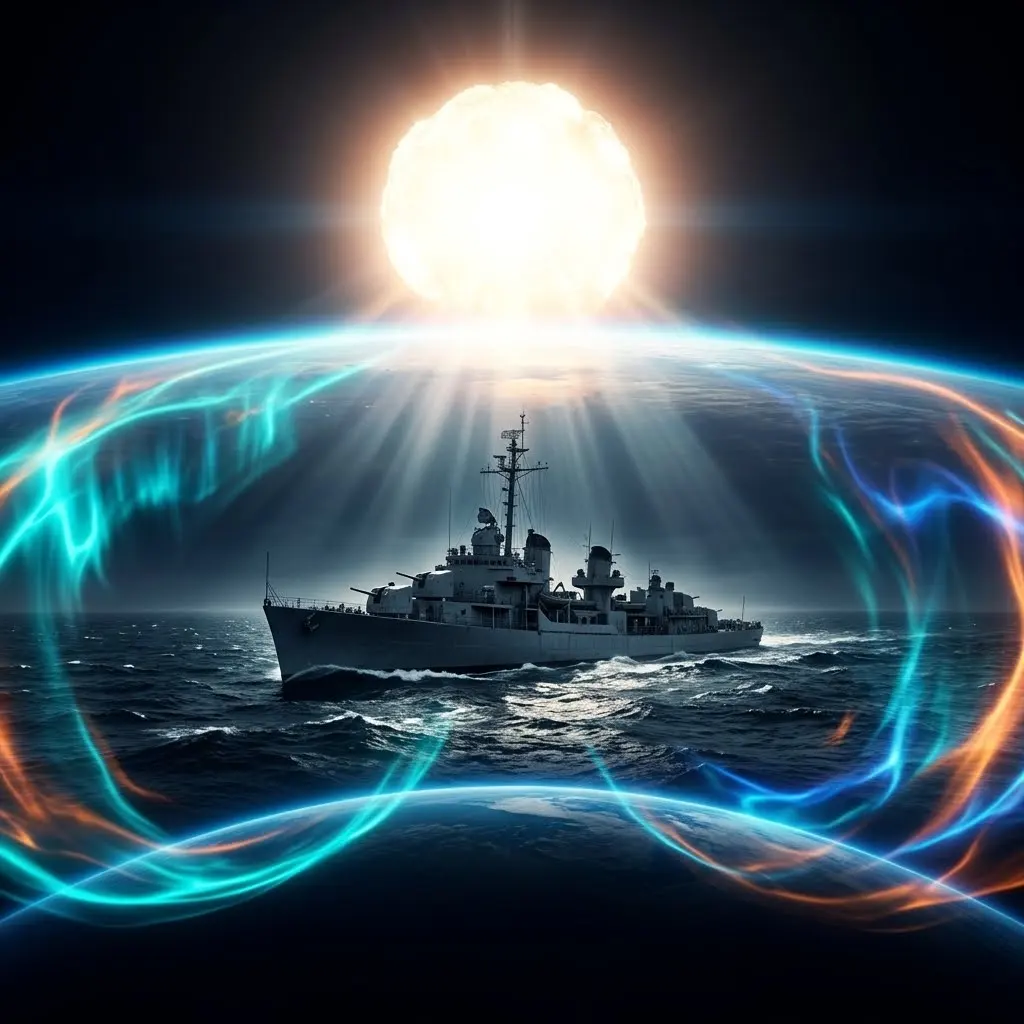
The 1958 Space Nukes Meant to Destroy Soviet Missiles
FAQs
What is the connection between nuclear testing and the creation of aurora borealis?
Nuclear testing can trigger the creation of artificial auroras in the sky due to the release of charged particles into the atmosphere.
How do nuclear explosions lead to the formation of aurora borealis?
During a nuclear explosion, energetic particles are released into the atmosphere, colliding with gas molecules and creating a light display similar to natural auroras.
Can nuclear testing impact the natural occurrence of aurora borealis?
Yes, nuclear testing can interfere with the natural aurora borealis by producing artificial auroras that may affect the visibility and characteristics of the natural phenomenon.
Are there any environmental concerns associated with the creation of artificial auroras through nuclear testing?
There are environmental concerns related to the release of radioactive particles and the potential disruption of the Earth’s magnetic field caused by nuclear testing, which can have long-term effects on the environment.
Is there ongoing research on the effects of nuclear testing on the creation of aurora borealis?
Scientists continue to study the impact of nuclear testing on the atmosphere and the formation of artificial auroras to better understand the consequences of these activities on the Earth’s natural phenomena.