American Troops under Montgomery: A Legacy of Leadership
The story of American troops fighting under the command of General Bernard Montgomery is a complex and often contentious chapter in military history. While Montgomery, a British field marshal, is most famously associated with his decisive victory at El Alamein and his role in the Normandy invasion, his command over significant contingents of American soldiers, particularly in the latter stages of World War II, forged a unique and enduring legacy of leadership. This legacy is not one of simple admiration or unconditional acceptance, but rather a testament to the adaptability, resilience, and ultimately, the effectiveness of American soldiers who, under challenging circumstances, learned to operate within a different command structure and contribute significantly to Allied victories.
The early days of American involvement in the European theater were marked by a palpable strategic divergence between American and British leadership. While the United States, driven by its industrial might and a desire for a swift conclusion to the war, pushed for an immediate cross-channel invasion of France (the “Second Front”), Britain, under Churchill, and Montgomery himself, favored a more cautious approach, focusing on operations in the Mediterranean and North Africa. This initial disagreement set the stage for a degree of friction when American troops found themselves operating under Montgomery’s direct command.
The North African Campaign: An Uneasy Alliance
The North African campaign, beginning in late 1942, was the first significant arena where American forces engaged extensively alongside British troops, and where Montgomery began to exert his influence. While American forces, particularly those under General Dwight D. Eisenhower as Supreme Allied Commander, were tasked with securing objectives in Morocco and Algeria, Montgomery’s Eighth Army was engaged in a brutal struggle against Rommel’s Afrika Korps. The eventual Allied success in North Africa was a collective effort, but the initial setbacks faced by American forces at Kasserine Pass exposed a gap in experience and tactical doctrine compared to the seasoned German forces.
The Kasserine Pass Debacle: A Harsh Awakening
The Battle of Kasserine Pass in February 1943 was a stark and painful lesson for the American army. Overwhelmed by a swift and powerful German offensive, American units suffered heavy casualties and were forced into a disorganized retreat. This defeat brought Montgomery’s critical eye to bear on the American command and its troops. He was known for his meticulous planning, his emphasis on overwhelming firepower, and his sometimes harsh, but ultimately effective, leadership style. While his critiques were undoubtedly valuable in identifying weaknesses, they were not always delivered with tact, and some American officers and soldiers felt unfairly judged.
Montgomery’s Tactical Philosophy: The “Bulldog” Approach
Montgomery’s tactical philosophy was rooted in a belief in methodical advance, overwhelming artillery preparation, and a clear, centralized command. He was not a commander known for daring, lightning raids, but rather for grinding down the enemy through superior force and careful planning. This “bulldog” approach, while successful in many instances, often contrasted with the more aggressive, opportunistic style favored by some American commanders. This difference in temperament and operational preference contributed to the initial difficulties in forging a seamless operational partnership.
The strategic maneuvers of American troops under General Montgomery during the Revolutionary War have been extensively analyzed in various historical articles. For a deeper understanding of Montgomery’s leadership and the challenges faced by American forces, you can explore a related article that delves into the complexities of military strategy during this pivotal time. For more information, visit this article.
The Italian Campaign: A Test of Interoperability
Following North Africa, the Allied invasion of Sicily and then mainland Italy presented a new and challenging environment for both British and American forces, and further opportunities for Montgomery to lead mixed Allied formations. The terrain of Italy was difficult, the German resistance tenacious, and the strategic objectives often debated. It was here that the practicalities of combined arms operations under a single, albeit sometimes distant, commander were put to the test.
Sicily: The Island of Divergent Objectives
The invasion of Sicily in July 1943 saw American forces under General George S. Patton and British forces under Montgomery tasked with different operational objectives. While Montgomery’s Eighth Army was tasked with clearing the eastern coast, Patton’s Seventh Army was given the more ambitious goal of driving up the western side of the island and capturing Palermo. This divergence in objectives, while strategically debated, led to a degree of rivalry and competition between the two Allied armies, and implicitly, between their respective commanders. Montgomery, however, remained the overall ground force commander in certain sectors.
The Race to Messina: A Symbol of Rivalry and Cooperation
The race to Messina, the ultimate objective in Sicily, became a symbolic, albeit somewhat petty, competition between Patton and Montgomery. While the official narrative often emphasizes the strategic coordination, the underlying reality was a dynamic interplay of ambition, national pride, and the desire to achieve key objectives. American troops, operating under Montgomery’s broader strategic direction, played a crucial role in the eventual capture of Messina, demonstrating their ability to execute complex maneuvers within a larger, integrated Allied plan.
The Italian Mainland: Grinding Warfare and Shared Hardships
The Italian campaign devolved into a series of bloody battles fought over difficult terrain and in harsh weather conditions. American divisions were frequently integrated into Montgomery’s corps formations, fighting alongside British, Canadian, and other Commonwealth troops. This period demanded a high degree of adaptability from the American soldiers. They had to learn to trust and rely on their allies, to understand different communication protocols, and to operate within a command structure that, at times, felt alien.
The Sangro River and Beyond: Learning to Fight Together
The fighting along the Sangro River and subsequent battles in Italy required a level of battlefield cooperation that had not been fully tested before. American units, thrust into the thick of the fighting, had to learn to integrate seamlessly with their Commonwealth counterparts. This was not always easy. Differences in doctrine, equipment, and even the way soldiers interacted on a personal level could create friction. However, the shared objective of defeating the enemy, and the common experience of hardship and loss, gradually forged a stronger bond.
Normandy and Beyond: The Operational Commander on the Ground
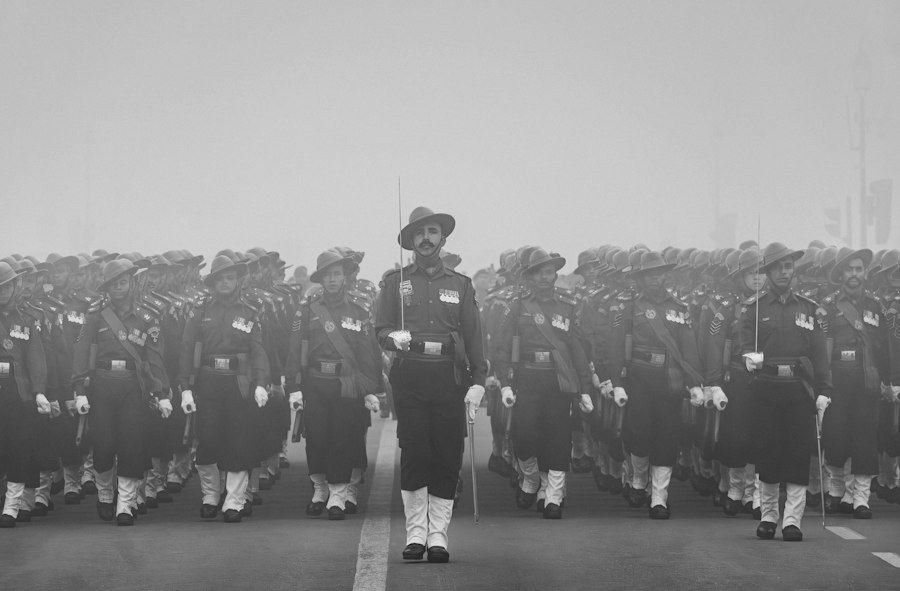
The Normandy invasion in June 1944 marked a pivotal moment in the war, and for Montgomery, it was a period of immense responsibility as the overall ground force commander for the initial stages of Operation Overlord. While the primary landing forces were American and British, the sheer scale of the operation and the subsequent fighting in Normandy meant that American troops were directly and extensively operating under Montgomery’s command.
The Battle for Caen: A Controversial Yet Crucial Objective
The Battle for Caen, the heavily defended city on the British/Canadian sector of the front, became one of the most prolonged and fiercely contested battles of the Normandy campaign. Montgomery’s strategy involved a methodical build-up of forces and overwhelming artillery support to break through the German defenses. This approach, while ultimately successful in drawing German reserves away from the American sector, was criticized by some for being too slow and costly in terms of Allied casualties. American troops, though not directly involved in the initial assault on Caen itself, were keenly aware of the ongoing struggle and understood its strategic importance to the overall liberation of France.
The Strategic Debate: “Hammer and Anvil” and its Critics
Montgomery’s strategy in Normandy, often described as a “hammer and anvil” approach, aimed to pin down German forces in the north while American forces exploited weaknesses in the south. This strategy, while conceptually sound, led to intense debate. Some American commanders, particularly General Patton, chafed under the perceived slowness of the advance and believed that a more aggressive, offensive posture by the British and Canadians would have opened up greater opportunities for their own forces.
Operation Cobra: The Breakthrough and American Initiative
The successful breakout from the Normandy beachhead, epitomized by Operation Cobra, was a testament to American ingenuity and offensive power. While Montgomery’s role as overall ground force commander was crucial in the strategic planning and initial containment of German forces, the breakthrough itself was largely orchestrated and executed by American commanders and troops. This period showcased the adaptability of American soldiers and their capacity for decisive action when given the opportunity.
The Falaise Pocket: A Collaborative Encirclement
The Falaise Pocket, the decisive encirclement of German forces in Normandy, was a monumental achievement that involved significant coordination between American, British, and Canadian forces. American troops played a vital role in closing the northern and southern jaws of the pocket, while British and Canadian forces tightened the noose from the east and west. This operation demonstrated the growing maturity of Allied cooperation under Montgomery’s overarching command, where American initiative and British/Canadian pressure combined to achieve a stunning victory.
The Command Style: Rigidity and Effectiveness

Montgomery’s command style was characterized by meticulous planning, an almost fanatical attention to detail, and a strong aversion to improvisation. He believed in overwhelming force and detailed logistical preparation, and he did not shy away from demanding the best from his subordinates and his troops. This rigidity, while sometimes frustrating for those accustomed to more flexible approaches, was often the bedrock of his success.
The “Montgomery Method”: Discipline and Preparation
The “Montgomery Method” emphasized thorough reconnaissance, detailed artillery plans, and clear objectives for each unit. He often spoke of “getting the job done” and believed that thorough preparation was the key to minimizing casualties and ensuring victory. American soldiers who served under him often spoke of the intense scrutiny and high expectations, but also of the underlying confidence that his meticulous planning instilled in them.
The Impact on American Soldiers: Adaptation and Resilience
American soldiers serving under Montgomery had to adapt to a different way of doing things. They learned to respect his discipline, to understand his emphasis on preparation, and to appreciate the effectiveness of his methods, even if they occasionally grumbled about the pace. This period of adaptation fostered resilience and a broader understanding of different military approaches, ultimately making the American army a more versatile fighting force.
The Communication Gap: A Persistent Challenge
Despite the efforts made to foster interoperability, a degree of communication gap persisted. Differences in language, terminology, and even the cultural nuances of command could sometimes lead to misunderstandings. However, through shared experience and a common enemy, American soldiers and their Allied comrades found ways to bridge these gaps, often through informal communication and a reliance on mutual trust.
During World War II, American troops under General Montgomery played a crucial role in the North African campaign, showcasing their resilience and strategic prowess. For a deeper understanding of this pivotal moment in history, you can explore a related article that delves into the experiences and challenges faced by these soldiers. This article provides valuable insights into their operations and the impact of their efforts on the overall war effort. To read more, visit this informative piece.
The Enduring Legacy: More Than Just a Commander
| Metric | Value | Notes |
|---|---|---|
| Number of American Troops | Approximately 50,000 | Deployed under General Montgomery during the North African Campaign |
| Campaign | Operation Torch | November 1942 – Allied invasion of North Africa |
| Casualties | ~1,500 KIA, 4,000 WIA | Estimated American casualties under Montgomery’s command |
| Duration of Command | November 1942 – May 1943 | Period during which Montgomery commanded American troops in North Africa |
| Major Battle | Battle of El Guettar | Key engagement involving American troops under Montgomery |
The legacy of American troops under Montgomery is not simply about following orders. It is about the complex interplay of leadership, national identity, and the shared struggle for victory. While some American soldiers may have harbored reservations about Montgomery’s methods or his sometimes brusque demeanor, their contributions to the Allied war effort under his command were undeniable and crucial.
A Crucible of Experience: Forging a More Robust Army
Serving under Montgomery provided American troops with a crucible of experience. They were exposed to different tactical doctrines, honed their interoperability skills, and learned to operate within a multinational command structure. This experience undoubtedly contributed to the growing maturity and effectiveness of the United States Army as it evolved throughout the war.
The “American Way” Meets the “Montgomery Way”: A Synthesis of Strengths
The interaction between the “American Way” of warfare – often characterized by initiative, speed, and aggressive maneuvers – and the “Montgomery Way” – emphasizing methodical preparation and overwhelming force – created a dynamic synthesis of strengths. American soldiers learned to appreciate the value of meticulous planning, while Montgomery, in turn, witnessed and benefited from the American capacity for decisive action and rapid exploitation.
A Mutual Respect, Earned Through Sacrifice
While the relationship was not always smooth, a degree of mutual respect was undeniably forged through shared sacrifice. American soldiers fought and bled alongside their British and Commonwealth allies under Montgomery’s command, and their bravery and effectiveness were acknowledged by the Field Marshal and his staff. Similarly, American soldiers came to recognize the strategic acumen and tactical brilliance that, despite occasional criticisms, underpinned Montgomery’s leadership.
In conclusion, the story of American troops under Montgomery is a rich tapestry woven with threads of strategic disagreement, tactical adaptation, and ultimately, shared victory. It is a testament to the enduring strength of the Allied coalition and the remarkable ability of American soldiers to adapt, persevere, and excel, even when operating under a command structure different from their own. The legacy of leadership, in this context, is not solely about the commander’s individual brilliance, but about the collective achievement of soldiers who, regardless of nationality, united in their determination to defeat tyranny and secure a future of freedom.
Eisenhower Gave Montgomery 2 U.S. Armies—Then He Wanted More
FAQs
What was the role of American troops under Montgomery during World War II?
American troops under General Bernard Montgomery played a crucial role in the Allied forces’ campaign in North Africa and Italy during World War II.
Which military units were part of the American troops under Montgomery?
The American troops under Montgomery included the 1st and 9th Infantry Divisions, as well as the 1st Armored Division and the 34th Infantry Division.
What were some key battles that the American troops under Montgomery participated in?
The American troops under Montgomery participated in the Battle of El Alamein in North Africa and the Italian Campaign, including the battles of Salerno and Anzio.
How did General Montgomery’s leadership impact the American troops under his command?
General Montgomery’s leadership style was characterized by meticulous planning, strict discipline, and a focus on morale, which helped to improve the performance and effectiveness of the American troops under his command.
What was the outcome of the American troops’ involvement under Montgomery in World War II?
The American troops under Montgomery played a significant role in the Allied victory in North Africa and Italy during World War II, contributing to the overall success of the Allied forces in the European theater.