The thunder of American industry was a symphony of creation in the Second World War, a potent force that reshaped the global landscape. From the moment the United States was thrust into the conflict, its vast manufacturing capabilities, previously geared towards peacetime consumption, were redirected with astonishing speed and scale. This immense industrial might not only fueled the Allied war effort but also fundamentally altered the nature of warfare and established the U.S. as an economic superpower for decades to come. The sheer output of factories, the ingenuity of engineers, and the dedication of millions of workers transformed a nation into an arsenal that armed the free world and ultimately delivered victory.
The transition of American industry from a consumer-driven economy to a war-focused engine was a monumental undertaking. Prior to the attack on Pearl Harbor in December 1941, the United States had been providing crucial matériel to the Allied powers through programs like Lend-Lease, but it had not yet fully mobilized its domestic production for direct conflict. The declaration of war ignited a national imperative to retool, reconfigure, and expand existing industries and to create new ones from the ground up. This rapid and comprehensive shift was not without its challenges, but the American industrial sector proved remarkably adaptable and resilient.
The Dawn of Mass Production for War
Before the war, the American automobile industry was synonymous with the production of civilian vehicles, churning out millions of cars annually. The war demanded a complete recalibrating of this capacity. Factories that once assembled sedans and trucks were soon churning out tanks, aircraft, jeeps, and a vast array of other military equipment. This transition was not simply a matter of switching production lines; it involved significant retooling, redesigning of machinery, and retraining of workers. The principles of mass production, honed in the peacetime automotive sector, were now applied to the creation of instruments of war on an unprecedented scale.
From Assembly Lines to Arsenal Lines
The iconic assembly line, a hallmark of American manufacturing, became the backbone of war production. However, the “products” were now vastly different. Instead of car chassis, workers were assembling Sherman tanks, their robust frames designed for the brutal demands of the battlefield. Aircraft factories, once producing commercial airliners, began churning out B-17 Flying Fortresses, P-51 Mustangs, and other vital warplanes. This adaptation required meticulous planning, standardization of parts, and a relentless focus on efficiency. The sheer volume of output meant that any bottleneck in the production process could have severe consequences for the war effort.
The Role of Existing Industries
Beyond the automobile sector, numerous other industries were repurposed. Steel mills, crucial for both civilian and military construction, ramped up production to meet the insatiable demand for metal. The burgeoning aircraft industry, which had seen significant growth in the pre-war years, exploded in size and capability. Shipyards, often smaller and more specialized before the war, were transformed into massive complexes capable of building warships and cargo vessels at an astonishing pace. The chemical industry, vital for explosives and synthetic materials, also played a critical role.
During World War II, American industrial capacity played a crucial role in the Allied victory, as factories across the nation shifted from consumer goods to war production at an unprecedented scale. For a deeper understanding of how this transformation occurred and its impact on the war effort, you can read the article “The Arsenal of Democracy” on In the War Room, which explores the mobilization of American industry and its significance during the conflict. For more insights, visit In the War Room.
The Scale and Scope of Production: Unprecedented Output
The sheer volume of goods produced by American industry during World War II was staggering, a testament to the nation’s vast resources and organizational capacity. The statistics paint a picture of an industrial behemoth unleashed, churning out matériel that overwhelmed enemy production and sustained the Allied war effort on multiple fronts. This was not just about quantity; it was also about the variety and complexity of the items produced, from intricate aircraft engines to mass-produced small arms.
Quantifying the Arsenal
The numbers alone are awe-inspiring. By the end of the war, American factories had produced over 300,000 aircraft, including bombers, fighters, and transport planes. Tank production reached over 88,000, and nearly 3 million machine guns were manufactured. The shipbuilding industry was equally prolific, launching over 5,000 cargo ships, known as “Liberty ships,” which were vital for transporting troops and supplies across the Atlantic. The scale of this output was unmatched by any other nation involved in the conflict.
Aircraft: The Wings of Victory
The skies over Europe and the Pacific were increasingly dominated by American-made aircraft. The B-17 “Flying Fortress” and the B-24 “Liberator” became symbols of Allied air power, conducting strategic bombing campaigns deep into enemy territory. Fighter planes like the P-51 “Mustang” provided crucial escort for bombers and achieved air superiority. The rapid development and mass production of these aircraft were critical to achieving victory in the air.
Armored Warfare: The Ground Offensive
The United States became the primary supplier of tanks for the Allied ground forces. The M4 Sherman tank, while not always the most heavily armored, was produced in massive quantities and proved to be a reliable and adaptable workhorse on the battlefield. Its versatility allowed it to be adapted for various roles, and its sheer numbers often compensated for any perceived shortcomings against German armor.
Naval Power: Dominating the Seas
The war was also fought and won on the oceans, and American shipyards played a crucial role. The Liberty ships were instrumental in countering the U-boat threat and ensuring the constant flow of supplies to Europe. Furthermore, the U.S. Navy rapidly expanded its fleet, building aircraft carriers, battleships, and countless smaller vessels that would ultimately dominate the Pacific theater.
The Munitions and Materiel Effort
Beyond the major platforms, American industry also produced an immense quantity of ammunition, artillery, small arms, vehicles, and the myriad of other supplies needed to sustain a global conflict. The production of ammunition alone was a colossal undertaking, with factories working around the clock to keep front-line troops supplied.
Ammunition: The Lifeblood of Battle
The constant firing of artillery, machine guns, and rifles demanded an unending supply of ammunition. American factories responded by producing billions of rounds of ammunition, ensuring that Allied soldiers and sailors had the firepower they needed. This involved the intricate manufacturing of bullets, shells, and explosives, requiring precise engineering and rigorous quality control.
Logistics and Support Equipment
The war effort also relied heavily on a vast array of logistical and support equipment. Jeeps, trucks, ambulances, and mobile repair units were produced in enormous numbers, facilitating the movement of troops, supplies, and wounded personnel. The efficient production of these seemingly less glamorous items was vital for the overall success of military operations.
Technological Innovation and Industrial Ingenuity

While scale was paramount, American industrial might was not solely defined by brute force production. The war also spurred remarkable technological innovation and engineering ingenuity, leading to the development of new weapons, materials, and production techniques. American scientists and engineers worked tirelessly to outpace their adversaries in the arms race.
The Jet Engine and Radar Revolution
The Second World War witnessed the nascent development of technologies that would define the future of warfare. The jet engine, while its full potential wouldn’t be realized until after the war, saw its early development and limited deployment in German aircraft. However, American engineers were actively pursuing similar advancements, laying the groundwork for future air superiority. Similarly, radar technology, developed and refined in Britain, was rapidly adopted and improved by the United States, proving invaluable for air defense, naval warfare, and aerial reconnaissance.
Advancements in Aviation Technology
Beyond the jet engine, American aircraft designers and manufacturers continuously pushed the boundaries of aviation. Innovations in aerodynamics, engine performance, and armament led to aircraft that were superior in many respects to their Axis counterparts. The relentless pursuit of improvement, from faster bombers to more maneuverable fighters, was a direct result of industrial and scientific collaboration.
The Electronic Warfare Age Begins
Radar and early forms of electronic warfare were born out of necessity during the war. The ability to detect enemy aircraft and ships, and to disrupt enemy communications and radar, gave the Allies a significant tactical advantage. This burgeoning field of electronic innovation was a direct product of the nation’s industrial and scientific research capabilities.
Materials Science and Synthetic Production
The war also spurred significant advancements in materials science and the development of synthetic alternatives. The scarcity of natural resources in wartime conditions, coupled with the need for specialized materials, drove innovation.
The Rise of Synthetics
Rubber, a critical component for tires and many other military applications, became a scarce commodity due to Japanese control of key production areas. American industry responded by investing heavily in the development and mass production of synthetic rubber, a monumental achievement that ensured the continued mobility of Allied forces. Similarly, advancements in plastics and other synthetic materials found widespread military applications.
Improved Metallurgy and Weaponry
The demand for stronger, lighter, and more durable materials for weapons and vehicles led to significant improvements in metallurgy. New alloys and manufacturing processes were developed to enhance the performance and reliability of military equipment, from the barrels of artillery pieces to the armor plating of tanks.
The Mobilization of Labor: The Backbone of Production

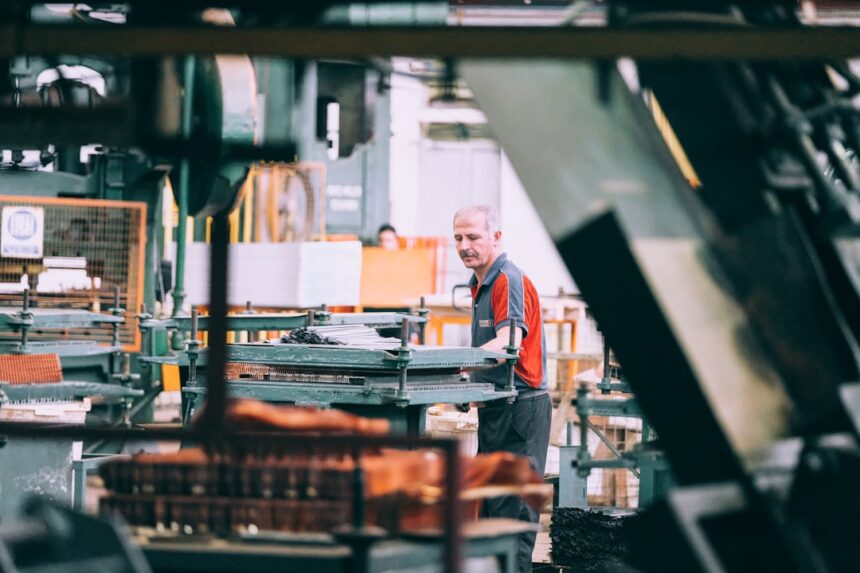
The sheer volume of production would have been impossible without the mobilization of the American workforce. Millions of men and women entered factories, shipyards, and defense plants, many for the first time. This massive influx of labor, coupled with the dedication and hard work of existing workers, formed the human engine of American industrial might.
Women in the Workforce: “Rosie the Riveter”
The war effort profoundly impacted the role of women in American society. With millions of men serving in the armed forces, women stepped into roles previously considered the exclusive domain of men. They became riveters, welders, mechanics, and operators of heavy machinery. The iconic image of “Rosie the Riveter” symbolized this transformation, representing the millions of women who contributed directly to the war effort on the home front.
Breaking Barriers in Industry
The participation of women in industrial jobs was unprecedented. They worked long hours, often in physically demanding conditions, proving their capability and dedication. This experience not only contributed to the war effort but also laid the groundwork for future changes in gender roles and opportunities in the workforce.
Diverse Contributions Beyond the Factory Floor
While “Rosie the Riveter” is the most famous image, women’s contributions extended far beyond the factory floor. They worked as nurses, in administrative roles, on farms, and in countless other essential capacities, all of which supported the war effort and the industrial mobilization.
Minority Workers and Their Contributions
The war also saw an increased, though often still marginalized, role for minority workers in American industry. African Americans, in particular, moved from agricultural labor and menial jobs into factory positions, contributing significantly to war production. Despite facing discrimination and segregation, their labor was indispensable to the Allied victory.
The Great Migration to Defense Industries
The demand for labor in defense industries spurred a renewed Great Migration of African Americans from the rural South to industrial centers in the North and West. These workers filled critical roles in factories and shipyards, though they often faced unequal pay and segregated working conditions.
Challenges and Triumphs
Despite the systemic barriers they encountered, minority workers demonstrated immense skill and dedication. Their contributions were vital to meeting production quotas and ensuring the smooth operation of war industries. The war experience, while fraught with injustice, also highlighted the potential and contributions of these often-overlooked segments of the workforce.
During World War II, the United States significantly increased its industrial capacity, transforming factories to produce vast amounts of military equipment and supplies. This remarkable shift not only supported the war effort but also laid the groundwork for post-war economic growth. For a deeper understanding of how this industrial mobilization occurred, you can read about it in this insightful article on the topic. The article provides a comprehensive overview of the strategies employed to enhance production capabilities and the impact on American society. To explore more, visit this link.
The Economic Impact and Legacy of Wartime Industrialization
| Year | Industrial Capacity | War Production |
|---|---|---|
| 1940 | Approximately 40% of the world’s industrial capacity | Significant increase in war production |
| 1941 | Rapid expansion of industrial capacity | Shift to wartime production |
| 1942 | Further expansion of industrial capacity | Massive increase in war production |
| 1943 | Peak of industrial capacity | High levels of war production |
| 1944 | Continued high industrial capacity | Sustained war production |
| 1945 | Industrial capacity remains high | War production continues until end of the war |
The immense industrial mobilization for World War II had profound and lasting economic consequences for the United States. It not only propelled the nation out of the Great Depression but also cemented its position as a global economic superpower, shaping the post-war international order and influencing industrial development for decades to come.
Ending the Great Depression and Economic Boom
The war effort acted as a powerful stimulus for the American economy, effectively ending the lingering effects of the Great Depression. Government spending on war production created jobs, boosted wages, and spurred innovation. The demand for goods and services, both military and civilian (which were often rationed but still represented economic activity), fueled a period of unprecedented economic growth.
Full Employment and Increased Purchasing Power
The mobilization of industry led to near full employment. Millions of men and women found work in defense plants and related industries, significantly increasing household incomes. This increased purchasing power, though initially constrained by rationing, would fuel a post-war consumer boom.
Government Investment and Infrastructure
The war necessitated massive government investment in industrial infrastructure, including new factories, shipyards, and research facilities. This investment not only served the immediate war effort but also left a legacy of modern industrial capacity that would benefit the nation in the post-war era.
The United States as a Global Economic Powerhouse
By the end of the war, the United States had emerged as the undisputed economic leader of the world. Its industrial capacity was unmatched, its currency was the world’s reserve currency, and its technological advancements set it apart. This economic dominance would allow the U.S. to play a pivotal role in rebuilding the war-torn world and shaping the post-war global economic order.
The Marshall Plan and Global Reconstruction
The economic might of the United States was crucial for the post-war reconstruction of Europe and Japan. The Marshall Plan, a massive aid program, provided financial and industrial assistance to war-ravaged nations, fostering economic recovery and stability, and preventing the spread of communism.
The Dawn of the Consumer Society
The economic prosperity and technological advancements spurred by the war also laid the foundation for the rise of the American consumer society. Post-war pent-up demand, combined with increased disposable income and a wealth of new consumer goods made possible by wartime innovations, led to a boom in consumer spending and a significant increase in the standard of living for many Americans. The industrial might forged in war ultimately paved the way for an era of unprecedented prosperity and innovation in peacetime.

Japan Won Pearl Harbor—So Why Did It Lose the War?
FAQs
What was the American industrial capacity during WWII?
During WWII, the American industrial capacity was at its peak, with the country becoming the “arsenal of democracy.” The United States was able to rapidly mobilize its industrial resources to produce vast amounts of war materials, including ships, aircraft, tanks, and munitions.
How did American industrial capacity contribute to the war effort?
The American industrial capacity played a crucial role in supporting the war effort by supplying the Allied forces with the necessary equipment and supplies. The production of war materials helped to sustain the military operations and ultimately contributed to the Allied victory in WWII.
What were some key industries that expanded during WWII?
During WWII, industries such as steel, automobile manufacturing, aircraft production, and shipbuilding experienced significant expansion to meet the demands of the war. The government also invested in research and development, leading to advancements in technology and production methods.
What impact did the expansion of American industrial capacity have on the economy?
The expansion of American industrial capacity during WWII had a profound impact on the economy. It led to increased employment, higher wages, and economic growth. The war production also stimulated innovation and technological advancements, laying the groundwork for post-war prosperity.
How did the American industrial capacity compare to that of other countries during WWII?
The American industrial capacity during WWII surpassed that of any other country involved in the war. The United States was able to outproduce its adversaries and allies alike, providing a decisive advantage in terms of resources and capabilities.