Allied Command Crisis 1944: Leadership Under Pressure
The year 1944 was a pivotal one in the Second World War. The Allied forces, having secured a foothold in Italy and embarked on the monumental D-Day landings in Normandy, faced a complex and multifaceted strategic landscape. Yet, beneath the veneer of triumphant advances and meticulously planned offensives lay a crucible of command decisions, strategic disagreements, and intense pressure on leadership. The Allied command structure, a vast and intricate network of Allied and national military leadership, was constantly tested by battlefield realities, political machinations, and the sheer weight of responsibility for millions of lives. This period, often overshadowed by the grand narratives of liberation, was characterized by a series of crises that demanded extraordinary leadership, foresight, and the ability to forge consensus amidst profound challenges.
Even before the critical operations of 1944 commenced, inherent tensions existed within the Allied high command. The fundamental divergence in strategic priorities between the American and British leadership, often personified by Generals George C. Marshall and Alan Brooke respectively, had been a recurring theme. While both acknowledged the ultimate goal of defeating Nazi Germany, their preferred paths to achieve this objective often clashed. The Americans, driven by a desire for a swift and decisive victory, generally favored a direct assault on Germany from the West, culminating in the “cross-channel invasion” – Operation Overlord. The British, on the other hand, with their empire’s stretched resources and a more cautious approach born from earlier costly offensives, were often proponents of a strategy that leveraged naval power and sought to erode enemy strength through peripheral operations.
The American Imperative: The “Impossible” Cross-Channel Invasion
The concept of a cross-channel invasion, first conceived in 1942, was a deeply ingrained tenet of American military strategy. General Marshall, as the U.S. Army Chief of Staff, was its most ardent champion. He believed that only a direct assault on the heart of German power in Western Europe could achieve a rapid and conclusive victory, thereby preventing a prolonged war of attrition that could bleed the Allies dry and potentially lead to a stalemate. This vision, however, was fraught with immense logistical, operational, and political challenges.
The Shadow of “Bolero” and “Roundup”
The early planning phases were dominated by the ambitious schemes of “Bolero” – the massive build-up of American forces and matériel in Britain – and “Roundup,” the preliminary operational concept for an invasion. These plans, while visionary, highlighted the sheer scale of the undertaking and the logistical nightmares it entailed. The transfer of millions of men, thousands of tanks, and an unprecedented volume of supplies across the Atlantic, while under constant threat of U-boat attack, was a monumental feat in itself. The capacity of Britain to absorb and house such a force, coupled with the need to train and equip them for amphibious assault, added further layers of complexity.
The “Crushed by the Undertaking” Argument
The inherent risks of a cross-channel invasion were a constant source of anxiety, particularly for the British. Lord Alan Brooke, Chief of the Imperial General Staff, frequently voiced concerns about the feasibility and potential cost of such an operation. His primary apprehension revolved around the possibility of the invasion being repulsed, a scenario that he believed could be catastrophic for Allied morale and potentially lead to a decisive German victory. He articulated this sentiment in stark terms, often referring to the danger of the Allies being “crushed by the undertaking.” This pragmatic, and some would say overly cautious, perspective often put him at odds with Marshall and his American counterparts.
The Allied command crisis of 1944 was a pivotal moment during World War II, marked by tensions among the top military leaders as they navigated complex strategies in the European theater. For a deeper understanding of the dynamics and implications of this crisis, you can read a related article that explores the challenges faced by the Allies during this critical period. For more information, visit this article.
The British Preference: The Mediterranean Strategy and its Aftermath
The British, particularly Prime Minister Winston Churchill, held a strong conviction in the efficacy of the “Mediterranean strategy.” This approach emphasized exploiting Allied naval superiority to conduct operations in the Mediterranean, aiming to defeat Axis forces in North Africa, secure the Suez Canal, and then push into Italy. The rationale was that this would tie down significant German forces, disrupt their supply lines, and potentially knock Italy out of the war, thereby weakening Germany from its southern flank.
The “Soft Underbelly” Illusion
The invasion of Sicily and Italy, codenamed “Husky” and “Avalanche” respectively, were seen by Churchill as the realization of his “soft underbelly” thesis. While initially successful in dislodging Mussolini’s regime and securing Allied gains, the Italian campaign proved to be a protracted and bloody affair. The mountainous terrain of Italy, combined with fierce German resistance, transformed the envisioned swift victory into a grinding war of attrition.
The Strain on Resources and the Delay of Overlord
The prolonged and resource-intensive Italian campaign had a direct impact on the Allied war effort in other theaters. Critically, it absorbed significant numbers of troops, aircraft, and logistical assets that could have been deployed to Britain in preparation for Operation Overlord. This created a political and strategic dilemma, as the American commitment to a 1944 cross-channel invasion was contingent on the timely redeployment of forces from the Mediterranean. The ongoing fighting in Italy thus fueled American impatience and intensified the pressure on British leadership to expedite their
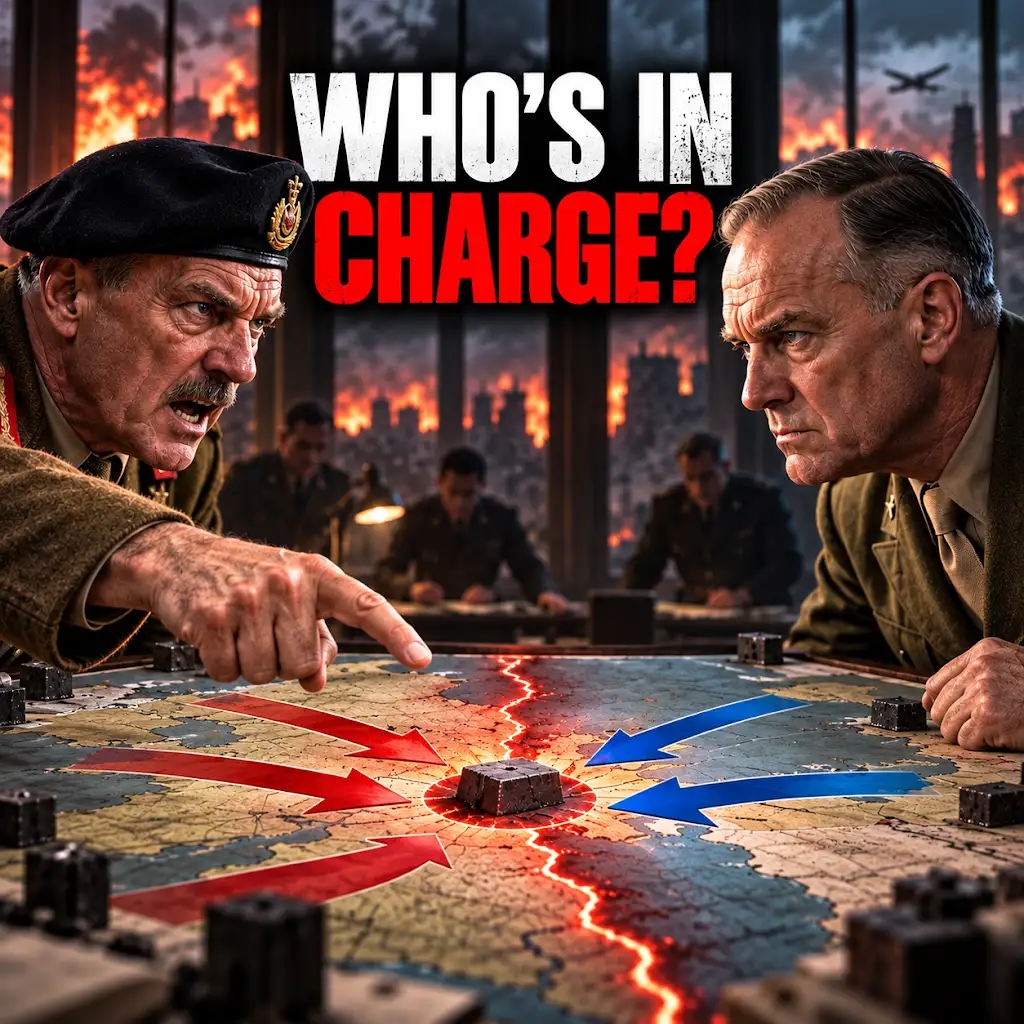
Eisenhower Gave Montgomery 2 U.S. Armies—Then He Wanted More
FAQs

What was the Allied command crisis of 1944?
The Allied command crisis of 1944 refers to the disagreements and tensions among the Allied leaders during World War II, particularly surrounding the planning and execution of military operations.
Who were the key figures involved in the Allied command crisis of 1944?
The key figures involved in the Allied command crisis of 1944 were British Prime Minister Winston Churchill, U.S. President Franklin D. Roosevelt, and their respective military commanders, including General Dwight D. Eisenhower.
What were some of the major issues that led to the Allied command crisis of 1944?
Some of the major issues that led to the Allied command crisis of 1944 included disagreements over military strategy, the timing and location of major offensives, and the allocation of resources among the Allied powers.
How was the Allied command crisis of 1944 resolved?
The Allied command crisis of 1944 was ultimately resolved through compromise, negotiation, and the leadership of key figures such as Eisenhower, who played a crucial role in mediating between the Allied leaders and their military commanders.
What were the consequences of the Allied command crisis of 1944?
The consequences of the Allied command crisis of 1944 included delays in military operations, strained relations among the Allied leaders, and a reevaluation of the decision-making processes within the Allied command structure.