
The intricate tapestry of modern warfare is woven with threads of international cooperation, where diverse nations unite under a common banner to achieve shared objectives. At the heart of any successful multinational operation lies an effectively structured command system, a sophisticated network designed to harness the strengths of each participating entity while ensuring cohesive and decisive action. This article delves into the critical aspects of an Allied Coalition Command Structure, exploring the elements that contribute to effective leadership and ultimately, operational success.
An allied coalition represents a complex amalgam of national interests, military doctrines, and operational procedures. For such a diverse group to function as a unified force, its command structure must be built upon a bedrock of clearly defined principles. These principles act as the guiding stars, illuminating the path towards shared understanding and coordinated effort.
Unity of Command and Unity of Effort: A Delicate Balance
The concept of unity of command is fundamental to military operations, signifying a single, clear chain of command through which orders flow. In a coalition, however, achieving absolute unity of command can be challenging due to the inherent sovereignty of participating nations. Each nation retains ultimate authority over its forces. Therefore, coalition command structures often emphasize unity of effort, a more flexible but equally crucial concept. Unity of effort means that all forces, regardless of their national allegiance, work towards a common objective, synchronized and coordinated by a central command.
Navigating National Constraints and Operational Imperatives
The tension between national caveats and operational necessities is a constant consideration. Nations often impose specific restrictions on the deployment and employment of their forces, driven by political, legal, or ethical considerations. Effective coalition leadership requires a deep understanding of these national constraints and the ability to creatively integrate them into the overall operational plan without compromising the mission’s integrity. This involves open communication, mutual respect, and a willingness to find solutions that satisfy both national requirements and coalition objectives.
The Role of Liaison Officers and Cultural Awareness
Bridging the gaps in doctrine, language, and culture is paramount. Liaison officers play a vital role in facilitating communication and understanding between national contingents and the coalition headquarters. Their presence at various levels of command ensures that information flows smoothly, potential misunderstandings are addressed promptly, and that the unique perspectives of each nation are considered. Cultivating strong cultural awareness within the command structure is equally important. Recognizing and respecting differences in military traditions, communication styles, and decision-making processes fosters trust and enhances operational synergy.
Interoperability: The Technical and Procedural Backbone
For diverse forces to fight effectively as one, their systems and procedures must be able to work together seamlessly. This is the essence of interoperability, a critical enabler for any successful coalition operation. Interoperability encompasses a wide range of capabilities, from communication systems and intelligence sharing platforms to logistics and medical support.
Communication Systems: Ensuring Seamless Information Flow
The ability to communicate securely and effectively across different national networks is non-negotiable. Coalition command structures must invest in robust communication systems that allow for real-time information exchange, command and control, and situational awareness. This often involves developing common communication protocols, establishing secure data links, and ensuring that personnel are trained on the interoperable systems.
Intelligence Sharing and Fusion: A Collective Understanding
In modern warfare, intelligence is a force multiplier. Coalition forces must be able to share intelligence effectively and in a timely manner to build a comprehensive understanding of the operating environment. This requires establishing mechanisms for intelligence collection, analysis, and dissemination that are compatible across national boundaries. Joint intelligence centers and fusion cells are critical components of this effort, bringing together analysts from different nations to create a shared picture of the enemy, the terrain, and the overall operational context.
Logistics and Sustainment: The Lifeblood of Operations
The logistical needs of a coalition can be immense, spanning diverse requirements for equipment, supplies, transportation, and maintenance. Establishing an interoperable logistics system ensures that forces are adequately supplied and supported, regardless of their origin. This involves common standards for supply chain management, shared transportation assets, and coordinated medical evacuation procedures. Without a robust and interoperable logistics network, even the most well-conceived operational plan can falter.
The command structure of the Allied coalition has been a pivotal aspect of military strategy, influencing operations and coordination among member nations. For a deeper understanding of this topic, you can explore the related article that discusses the complexities and effectiveness of coalition command in various conflicts. To read more, visit this article.
Designing the Coalition Command Framework: Structure and Function
The effective design of a coalition command structure is not merely about assigning roles and responsibilities; it is about creating a dynamic framework that facilitates agile decision-making, efficient resource allocation, and adaptable operational execution. This framework must be built to withstand the pressures of complex operational environments and evolving threats.
Hierarchical versus Networked Structures: Adapting to the Mission
Historically, military command structures have been predominantly hierarchical. However, the nature of modern warfare, with its emphasis on speed, flexibility, and distributed operations, has led to a growing appreciation for networked command structures. Coalition command frameworks often blend elements of both, creating a hybrid approach that leverages the strengths of each.
The Advantages of a Centralized HQ: Strategic Direction and Coordination
A centralized coalition headquarters (HQ) provides a vital hub for strategic direction, policy setting, and overall coordination. It is where the overarching mission objectives are defined, resources are allocated, and broad operational strategies are developed. The HQ is responsible for ensuring that all contributing forces are aligned with the coalition’s overarching goals.
The Benefits of Distributed Command: Agility and Responsiveness
While a centralized HQ provides direction, a distributed command model empowers subordinate commanders with greater autonomy to make decisions and adapt to rapidly changing circumstances on the ground. This agility is crucial in complex environments where situations can evolve quickly and where local initiative can be decisive. Coalition structures aim to empower these distributed elements while maintaining overall strategic coherence.
The Role of Joint and Combined Forces: Bridging National Silos
Within a coalition, the distinction between “joint” and “combined” forces is important. Joint forces refer to operations involving different branches of the military within a single nation. Combined forces refer to operations involving military forces from two or more nations, which is the essence of a coalition.
Establishing Joint Task Forces (JTFs): Tailored Operational Elements
Joint Task Forces (JTFs) are often established within a coalition to conduct specific operations or achieve particular objectives. These JTFs are composed of units from multiple nations, led by a commander who is responsible for the execution of the assigned mission. The composition and mandate of JTFs are tailored to the specific operational requirements, ensuring that the right mix of capabilities is brought to bear.
The Significance of Combined Operations Centers (COCs): Real-Time Coordination
Combined Operations Centers (COCs) serve as crucial focal points for real-time coordination and information sharing between contributing national forces. These centers facilitate the synchronization of activities, the dissemination of situational updates, and the rapid resolution of operational challenges. They are the nerve centers where the collective efforts are managed and optimized.
The complexities of the Allied coalition command structure have been a topic of significant discussion among military strategists and historians. Understanding how different nations coordinate their efforts can provide valuable insights into modern warfare. For a deeper exploration of this subject, you can read a related article that delves into the intricacies of coalition operations and their effectiveness in various conflicts. This article can be found at In the War Room, where it highlights the challenges and successes faced by allied forces throughout history.
The Importance of Command Relationships: Clarity and Accountability
The effectiveness of any command structure hinges on clear and well-defined command relationships. In a coalition, these relationships can be more complex due to the presence of national authorities and the need to balance operational control with national oversight.
Operational Control (OPCON) versus Tactical Control (TACON): Defining Authority
Understanding the nuances of Operational Control (OPCON) and Tactical Control (TACON) is essential. OPCON grants a commander authority to organize and direct forces to accomplish assigned missions. TACON is more limited, focusing on the specific tactical employment of forces. In a coalition, the precise delegation of OPCON and TACON is often a subject of negotiation and agreement between participating nations, ensuring clarity on who has authority over what aspects of military operations.
Chain of Command and Reporting Lines: Ensuring Accountability
Despite the complexities, a clear chain of command and reporting lines must be established. This ensures that accountability is maintained, orders are transmitted effectively, and feedback loops are in place. Deviations from established reporting lines can lead to confusion, delays, and a breakdown in coordination.
Leadership in a Coalition: Cultivating Trust and Shared Vision

Effective leadership in an allied coalition transcends individual military rank or national affiliation. It is a complex blend of strategic acumen, interpersonal skills, and an unwavering commitment to the shared mission. Leaders must be adept at navigating the unique challenges of multinational operations to foster an environment of trust and a unified vision.
The Commander’s Role: Visionary, Diplomat, and Integrator
The coalition commander bears the ultimate responsibility for the success of the operation. This role demands a multifaceted approach, requiring them to be a visionary leader who can articulate a compelling mission, a skilled diplomat who can manage diverse national interests, and an adept integrator who can weave together disparate forces into a cohesive whole.
Articulating a Clear and Compelling Mission: Inspiring Unity
A fundamental aspect of the commander’s role is to clearly articulate the coalition’s mission and objectives. This vision must be understood and embraced by all contributing forces. The commander must inspire unity by emphasizing the shared purpose and the critical importance of their collective endeavor.
Managing Diverse National Interests and Expectations: The Art of Diplomacy
Coalitions are inherently composed of nations with diverse political, economic, and strategic interests. The commander must possess exceptional diplomatic skills to navigate these competing interests, fostering compromise and ensuring that national expectations are managed effectively. This requires open communication, active listening, and a willingness to find common ground.
Fostering a Culture of Collaboration and Respect: Building Bridges
Creating a culture of collaboration and mutual respect is paramount. The commander must actively promote an environment where diverse perspectives are valued, disagreements are addressed constructively, and all members feel respected and empowered. This involves leading by example, encouraging cross-cultural understanding, and addressing any instances of friction or misunderstanding promptly and decisively.
The Importance of Staff Competence and Diversity: A Collective Strength
The effectiveness of coalition leadership is not solely dependent on the commander; the competence and diversity of the staff play a crucial role. A well-functioning coalition HQ relies on a diverse and skilled staff that can analyze complex situations, develop innovative solutions, and support the commander’s decision-making process.
Cross-Cultural Competence and Communication Skills: Bridging Divides
Staff members must possess cross-cultural competence and excellent communication skills to effectively interact with colleagues from different nations. This includes understanding different communication styles, avoiding ethnocentric biases, and being able to articulate complex ideas in a clear and accessible manner to a multinational audience.
Expertise in Joint and Combined Operations: Navigating the Complexities
The staff must have a deep understanding of the principles and practices of joint and combined operations. This includes familiarity with coalition doctrines, procedures, and the challenges associated with multinational command and control. Continuous training and professional development in these areas are essential.
Building Trust and Rapport: The Foundation of Effective Teams
Effective coalition teams are built on a foundation of trust and rapport. Staff members from different nations must be encouraged to build professional relationships, share knowledge, and develop a sense of camaraderie. This can be achieved through team-building exercises, informal gatherings, and by fostering an environment where open communication and mutual support are encouraged.
Overcoming Challenges and Ensuring Adaptability: The Resilience of Coalition Command

The operational landscape of allied coalitions is rarely static. Emerging threats, shifting geopolitical dynamics, and unforeseen circumstances demand a command structure that is not only effective but also inherently adaptable and resilient. Proactive identification and mitigation of challenges are key to sustained success.
Information Management and Situational Awareness: The Eyes and Ears of the Coalition
Maintaining accurate and comprehensive situational awareness across a multinational force is a significant challenge. Effective information management systems are crucial to ensure that all commanders and operational units have access to timely and relevant intelligence.
Real-time Intelligence Sharing and Fusion: A Shared Operational Picture
The ability to share intelligence in real-time and fuse it into a coherent operational picture is vital. This requires robust intelligence architectures, secure communication channels, and effective analysis capabilities that can integrate data from diverse sources.
Command and Control (C2) Systems: Synchronizing Actions
Effective Command and Control (C2) systems are the nervous system of a coalition. These systems must be interoperable and capable of supporting decentralized operations while maintaining overall synchronization. They enable commanders to issue orders, monitor progress, and adapt to changing battlefield conditions.
Managing Information Overload and Deception: Navigating the Fog of War
In complex coalition operations, there is often a risk of information overload or the deliberate dissemination of misinformation. Leaders must develop strategies to filter relevant information, identify potential deception, and ensure that decision-makers are not overwhelmed.
Developing Robust Verification Processes: Ensuring Accuracy
Establishing rigorous verification processes for incoming intelligence and operational reports is essential to combat deception and ensure the accuracy of the information being used for decision-making.
Information Assurance and Cybersecurity: Protecting Vital Networks
The integrity of information is paramount. Coalition command structures must prioritize information assurance and cybersecurity to protect vital networks from intrusion, manipulation, or disruption by adversaries.
Maintaining Momentum and Achieving Strategic Objectives: The Long Game
The success of a coalition is not measured solely by individual tactical victories but by its ability to maintain momentum and achieve overarching strategic objectives over time. This requires a sustained focus on the mission and the ability to adapt to evolving circumstances.
Continuous Assessment and Re-evaluation: Staying Agile
Regularly assessing the progress of operations and re-evaluating strategies are crucial for maintaining agility and responsiveness. This involves incorporating lessons learned, adapting to new intelligence, and adjusting operational plans as needed.
Transitioning Between Phases of Operations: Ensuring Continuity
Coalition operations often involve distinct phases, from initial deployment and stabilization to long-term security assistance. Effective command structures must ensure smooth transitions between these phases, maintaining continuity of effort and avoiding operational gaps.
Exit Strategies and Sustainability: Planning for the Future
Finally, effective coalition command structures must also consider exit strategies and the long-term sustainability of achieved outcomes. This involves planning for the eventual withdrawal of forces, the handover of responsibilities to local authorities, and the establishment of mechanisms to ensure lasting stability and security.
In conclusion, an Allied Coalition Command Structure is a dynamic and multifaceted entity, essential for translating collective will into decisive action. Its effectiveness is not a matter of chance but the result of deliberate design, principled leadership, and a continuous commitment to overcoming challenges. By fostering unity of effort, embracing interoperability, cultivating trust, and demonstrating unwavering adaptability, allied coalitions can navigate the complexities of modern conflict and achieve enduring success in their shared endeavors.
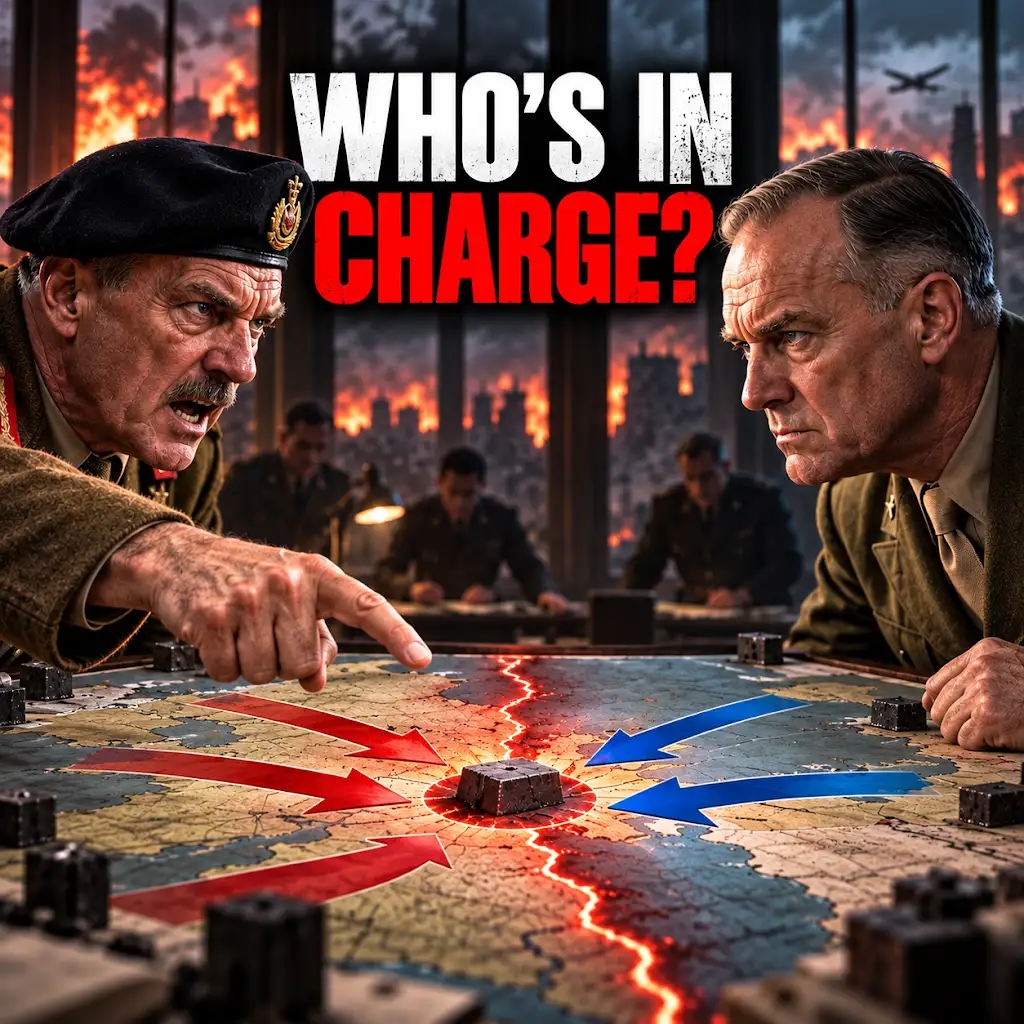
Eisenhower Gave Montgomery 2 U.S. Armies—Then He Wanted More
FAQs
What is the Allied coalition command structure?
The Allied coalition command structure refers to the organization and hierarchy of military leadership among the various countries that have come together to form a coalition for a specific military operation or mission.
How is the command structure determined in an Allied coalition?
The command structure in an Allied coalition is typically determined based on factors such as the size and capabilities of each participating country’s military forces, as well as the overall objectives and scope of the mission.
Who is typically in charge of the Allied coalition command structure?
The overall command of an Allied coalition is usually held by a senior military officer from one of the participating countries, who is designated as the commander-in-chief or supreme commander of the coalition forces.
How are decisions made within the Allied coalition command structure?
Decisions within the Allied coalition command structure are typically made through a process of consultation and collaboration among the senior military leaders of the participating countries, with the ultimate authority resting with the designated commander-in-chief.
What are some challenges associated with the Allied coalition command structure?
Some challenges associated with the Allied coalition command structure include differences in military doctrine, communication issues due to language barriers, and conflicting national interests among the participating countries. Efforts are made to address these challenges through coordination, cooperation, and mutual respect among the coalition partners.