The Akula Class submarines, developed by the Soviet Union during the late 1970s and early 1980s, represent a significant advancement in underwater warfare technology. Designed primarily for anti-ship and anti-submarine warfare, these nuclear-powered vessels have been a cornerstone of the Russian Navy’s submarine fleet. With their sleek design and advanced capabilities, Akula Class submarines are equipped to operate stealthily in various maritime environments, making them formidable adversaries in naval engagements.
Their ability to remain submerged for extended periods allows them to evade detection while conducting surveillance or launching attacks, thereby enhancing their strategic value. The Akula Class is characterized by its impressive speed, agility, and a diverse array of weaponry, including torpedoes and cruise missiles. These submarines are not only capable of engaging surface ships but also possess the ability to launch land-attack missiles, thereby extending their operational reach.
As geopolitical tensions continue to rise, the significance of these submarines in modern naval warfare cannot be overstated. Their presence in contested waters poses a challenge to naval forces worldwide, necessitating the development of effective detection and countermeasure strategies.
Key Takeaways
- Akula class submarines are advanced Russian nuclear-powered attack submarines posing significant detection challenges.
- Detecting these submarines is crucial for maintaining naval security and strategic advantage.
- Current detection methods face difficulties due to the Akula’s stealth features and deep operational capabilities.
- Technologies like sonar, advanced acoustic sensors, UUVs, and satellite surveillance are key tools in submarine detection.
- Integration of artificial intelligence and future technological advancements promise improved detection and tracking of Akula class submarines.
Importance of Submarine Detection
The ability to detect submarines is crucial for maintaining maritime security and ensuring the safety of naval operations. Submarines, particularly those like the Akula Class, can operate undetected for long periods, posing a significant threat to surface vessels and coastal installations. The stealthy nature of submarines allows them to gather intelligence, disrupt supply lines, and launch surprise attacks, making their detection a top priority for naval forces.
Effective submarine detection not only protects naval assets but also contributes to broader strategic stability in regions where tensions may escalate. Moreover, the importance of submarine detection extends beyond military applications; it also plays a vital role in safeguarding commercial shipping routes and protecting critical infrastructure from potential underwater threats. As global trade increasingly relies on maritime transport, ensuring the safety of these routes becomes paramount.
The ability to detect and neutralize submarine threats can deter hostile actions and maintain freedom of navigation, which is essential for economic stability and international relations.
Current Challenges in Detecting Akula Class Submarines
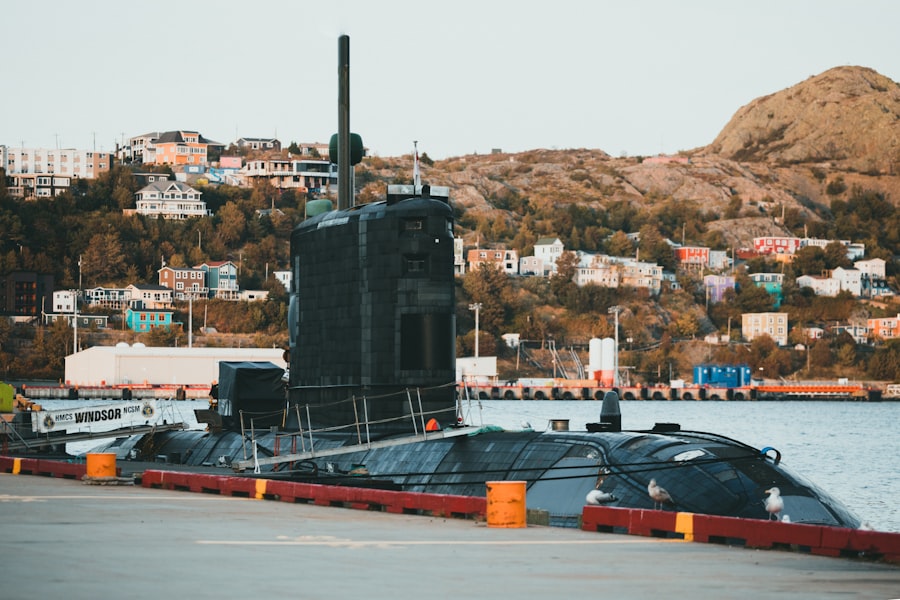
Detecting Akula Class submarines presents numerous challenges due to their advanced design and operational capabilities. One of the primary difficulties lies in their ability to operate at great depths and remain silent while submerged. The combination of advanced noise-reduction technologies and sophisticated hull designs allows these submarines to minimize their acoustic signatures, making them difficult to detect using traditional sonar systems.
As a result, naval forces must continually adapt their detection strategies to counter these advancements. Additionally, the operational environment plays a significant role in the challenges associated with submarine detection. Factors such as ocean temperature, salinity, and underwater topography can affect sonar performance and complicate detection efforts.
In shallow waters or areas with complex underwater features, sound waves may scatter or reflect unpredictably, further hindering detection capabilities. As adversaries like Russia continue to invest in submarine technology, the need for innovative solutions to overcome these challenges becomes increasingly urgent.
Sonar Technology for Submarine Detection
Sonar technology has long been the backbone of submarine detection efforts. By emitting sound waves and analyzing their echoes, sonar systems can identify and track underwater objects. There are two primary types of sonar: active and passive.
Active sonar involves sending out sound pulses and listening for their reflections off objects, while passive sonar relies on detecting sounds emitted by submarines themselves.
Active sonar is particularly effective in shallow waters where sound waves can travel shorter distances without significant distortion.
However, its use can also reveal the position of the detecting vessel, making it a double-edged sword in stealth operations. On the other hand, passive sonar systems are less intrusive and can provide continuous monitoring without alerting potential targets. These systems are often deployed on submarines and surface ships to create a comprehensive underwater surveillance network.
As technology advances, improvements in sonar resolution and processing capabilities are enhancing the effectiveness of both active and passive systems.
Advanced Acoustic Sensors for Submarine Detection
| Metric | Description | Typical Values | Detection Method |
|---|---|---|---|
| Acoustic Signature | Noise level produced by the submarine, measured in decibels (dB) | ~110-120 dB re 1 μPa at 1 meter | Passive sonar |
| Operating Depth | Maximum operational depth of the submarine | Up to 600 meters | Sonar depth profiling |
| Speed | Maximum submerged speed | Up to 35 knots | Sonar Doppler shift analysis |
| Magnetic Anomaly | Magnetic signature detectable by MAD (Magnetic Anomaly Detector) | Variable, depends on hull composition | Magnetic anomaly detection |
| Sonar Cross Section | Reflectivity of the submarine to active sonar pings | Low to moderate | Active sonar |
| Thermal Signature | Heat emitted detectable by infrared sensors | Minimal due to cooling systems | Infrared detection (limited underwater) |
| Detection Range | Typical range at which the submarine can be detected | 5-15 km depending on conditions | Sonar and MAD combined |
The evolution of acoustic sensors has significantly improved the ability to detect submarines like the Akula Class. Modern sensors are designed to operate across a wide range of frequencies, allowing them to capture more detailed acoustic signatures from various underwater sources. These advanced sensors can differentiate between different types of vessels based on their unique noise profiles, enabling more accurate identification and tracking.
Furthermore, advancements in signal processing algorithms have enhanced the ability to filter out background noise and focus on relevant acoustic signals. This capability is particularly important in busy maritime environments where multiple vessels may be operating simultaneously. By leveraging machine learning techniques, modern acoustic sensors can adaptively learn from their environment, improving their detection accuracy over time.
This continuous improvement is essential for staying ahead of evolving submarine technologies and tactics.
Passive and Active Sonar Systems

The choice between passive and active sonar systems often depends on the specific operational context and mission objectives. Passive sonar systems are favored for stealthy operations due to their ability to listen without emitting sound waves that could reveal their location. These systems are particularly effective at detecting the sounds produced by submarines’ machinery or propellers, allowing naval forces to track potential threats without alerting them.
In contrast, active sonar systems can provide more immediate information about underwater environments by actively probing with sound waves. While they offer greater situational awareness in certain scenarios, their use can compromise the element of surprise. The decision to employ one system over the other often involves a careful assessment of risk versus reward.
In many cases, naval forces may utilize a combination of both systems to maximize their detection capabilities while minimizing exposure to potential threats.
Use of Unmanned Underwater Vehicles (UUVs) for Submarine Detection
Unmanned Underwater Vehicles (UUVs) have emerged as valuable assets in submarine detection efforts. These autonomous or remotely operated vehicles can be deployed to conduct reconnaissance missions in areas where manned vessels may be at risk or less effective. UUVs are equipped with advanced sensors and sonar systems that enable them to gather data on underwater environments and detect potential submarine threats.
The deployment of UUVs offers several advantages over traditional detection methods. They can operate at various depths and cover large areas without putting personnel at risk. Additionally, UUVs can be programmed to conduct long-duration missions, providing continuous surveillance over extended periods.
As technology continues to advance, UUVs are becoming increasingly sophisticated, with improved navigation capabilities and enhanced sensor payloads that further enhance their effectiveness in submarine detection.
Satellite and Aerial Surveillance for Submarine Detection
In addition to underwater detection methods, satellite and aerial surveillance play a crucial role in monitoring submarine activity from above.
Aerial platforms such as maritime patrol aircraft can also conduct surveillance missions over vast ocean areas, providing real-time intelligence on potential submarine movements.
The integration of satellite and aerial surveillance with traditional underwater detection methods creates a comprehensive approach to submarine monitoring. By combining data from multiple sources, naval forces can develop a clearer picture of maritime activity and identify potential threats more effectively. This multi-layered approach enhances situational awareness and enables timely responses to emerging threats.
Integration of Artificial Intelligence in Submarine Detection
The integration of artificial intelligence (AI) into submarine detection technologies represents a significant leap forward in enhancing operational capabilities. AI algorithms can analyze vast amounts of data from various sensors and sources, identifying patterns and anomalies that may indicate submarine activity. This capability allows naval forces to process information more rapidly and accurately than ever before.
Moreover, AI can improve decision-making processes by providing predictive analytics that help anticipate potential submarine movements or tactics. By leveraging machine learning techniques, AI systems can continuously learn from new data inputs, refining their detection capabilities over time. This adaptability is crucial in an ever-evolving maritime landscape where adversaries are constantly developing new strategies to evade detection.
Future Developments in Akula Class Submarine Detection Technology
As technological advancements continue to reshape the landscape of naval warfare, future developments in Akula Class submarine detection technology are likely to focus on enhancing existing capabilities while exploring innovative solutions. The ongoing evolution of sensor technologies will likely lead to even more sensitive acoustic sensors capable of detecting quieter submarines at greater distances. Additionally, advancements in quantum sensing technology hold promise for revolutionizing underwater detection methods.
Quantum sensors could potentially provide unprecedented sensitivity and accuracy in detecting submarines by exploiting quantum phenomena such as entanglement and superposition. Such breakthroughs could significantly enhance naval forces’ ability to monitor underwater environments effectively. Furthermore, collaborative efforts among allied nations may lead to the development of integrated detection networks that leverage shared data from various platforms—submarines, surface ships, UUVs, satellites, and aerial assets—to create a comprehensive picture of underwater activity across vast maritime regions.
Conclusion and Implications for Naval Warfare
The challenges posed by Akula Class submarines underscore the critical importance of effective detection strategies in modern naval warfare. As these advanced vessels continue to evolve, so too must the technologies employed to detect them. The integration of advanced sonar systems, UUVs, satellite surveillance, artificial intelligence, and collaborative networks will play a pivotal role in shaping future naval operations.
Ultimately, the ongoing arms race between submarine technology and detection capabilities will have profound implications for global security dynamics. Nations must remain vigilant in developing innovative solutions that ensure maritime safety while adapting to emerging threats posed by advanced submarine fleets like the Akula Class. The future of naval warfare will depend on the ability to effectively detect and counter these formidable underwater adversaries while maintaining strategic stability in contested waters.
The Akula class submarines, known for their stealth capabilities, pose significant challenges for detection and tracking by naval forces. For a deeper understanding of the strategies employed to detect such advanced submarines, you can refer to a related article that discusses modern submarine detection technologies and tactics. For more information, visit this article.
WATCH THIS! 🎖️ The Silent Underwater Network That Doomed Every Soviet Submarine
FAQs
What is an Akula class submarine?
The Akula class is a series of nuclear-powered attack submarines originally developed by the Soviet Union and later operated by the Russian Navy. They are known for their stealth capabilities and advanced sonar systems.
Why is detecting Akula class submarines important?
Detecting Akula class submarines is crucial for naval defense and security because these submarines are capable of launching torpedoes and missiles, posing a significant threat to surface ships and other submarines.
What technologies are used to detect Akula class submarines?
Detection methods include active and passive sonar systems, magnetic anomaly detectors, underwater hydrophone arrays, and satellite surveillance. Acoustic signature analysis is also commonly used to identify these submarines.
How do Akula class submarines evade detection?
Akula class submarines use advanced noise-reduction technologies, such as anechoic tiles and quiet propulsion systems, to minimize their acoustic signature and avoid detection by sonar.
Can Akula class submarines be detected by surface ships?
Yes, surface ships equipped with sophisticated sonar and anti-submarine warfare (ASW) equipment can detect Akula class submarines, although it can be challenging due to the submarine’s stealth features.
Are there any international efforts to monitor Akula class submarines?
Various navies and international organizations conduct monitoring and intelligence gathering to track the movements of Akula class submarines, especially in strategic maritime regions.
What role do aircraft play in detecting Akula class submarines?
Maritime patrol aircraft and helicopters equipped with sonar buoys, magnetic anomaly detectors, and radar systems play a significant role in detecting and tracking Akula class submarines from the air.
How effective are underwater drones in detecting Akula class submarines?
Underwater drones equipped with sonar and other sensors are increasingly used for submarine detection, offering a quieter and more persistent surveillance option against Akula class submarines.
What challenges exist in detecting Akula class submarines?
Challenges include the submarine’s low noise levels, deep operating depths, complex underwater terrain, and the presence of ambient ocean noise, all of which complicate detection efforts.
How has submarine detection technology evolved to counter Akula class submarines?
Advancements include improved sonar sensitivity, artificial intelligence for signal processing, networked sensor arrays, and enhanced data fusion techniques to better identify and track Akula class submarines.