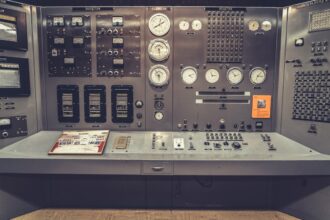
The Cold War, a period characterized by geopolitical tension and ideological rivalry between the United States and the Soviet Union, spawned myriad clandestine operations and technological competitions. Among these, the audacious endeavor known as Project Azorian stands as a testament to human ingenuity, strategic ambition, and the relentless pursuit of intelligence. This protracted and high-stakes “race” against Soviet vigilance involved the clandestine retrieval of a sunken Soviet submarine, the K-129, and represented a fascinating interplay of technological prowess, intelligence deception, and geopolitical maneuvering.
The Drowning of the K-129 and the Genesis of a Secret
The story of Project Azorian begins not with its audacious recovery, but with the tragic loss of the Soviet submarine K-129. This Golf II-class ballistic missile submarine, equipped with three R-21 nuclear-armed ballistic missiles and two nuclear-tipped conventional torpedoes, disappeared without a trace in the Pacific Ocean in March 1968. The circumstances of its sinking remain a subject of debate, with various theories ranging from internal explosion to collision with a US submarine. Regardless of the cause, the K-129’s descent to the abyssal plain, approximately 1,600 miles northwest of Oahu, Hawaii, initiated a chain of events that would culminate in one of the most elaborate intelligence operations of the 20th century.
Soviet Search Efforts and Initial Ambiguity
Immediately following the K-129’s disappearance, the Soviet Union launched extensive search operations, deploying numerous surface vessels and conventional submarines. These efforts, however, proved fruitless. The vastness of the Pacific Ocean and the technological limitations of the time hindered their ability to locate the submerged vessel. The initial ambiguity surrounding the K-129’s fate allowed the United States to quietly begin its own investigation, driven by a compelling strategic imperative.
US Intelligence Detection and the Role of SOSUS
Unbeknownst to the Soviets, the United States possessed a sophisticated underwater acoustic surveillance system known as SOund SUrveillance System (SOSUS). This network of hydrophones, strategically placed on the ocean floor, was designed to detect and track Soviet submarines. In the immediate aftermath of the K-129’s sinking, SOSUS arrays registered anomalous acoustic events consistent with a catastrophic implosion or explosion. This detection provided the crucial initial clue to the submarine’s approximate location, a needle in a colossal haystack that would have otherwise remained lost. This early intelligence marked the invisible starting gun of the race, with the US gaining a vital, if silent, lead.
Crafting the Deception: Project Azorian Takes Shape
With the K-129 located, the United States faced a formidable challenge: how to recover a nuclear-armed submarine from a depth of over 16,000 feet without alerting the Soviet Union. The answer lay in a meticulously crafted deception, one that would require immense resources, technological innovation, and a carefully constructed cover story. The Central Intelligence Agency (CIA) was tasked with leading this clandestine operation, code-named Project Azorian.
Howard Hughes’ Involvement and the Glomar Explorer
Central to the deception was the involvement of eccentric billionaire Howard Hughes. His reputation for undertaking ambitious, unconventional projects made him the ideal cover. The CIA commissioned the construction of a custom-designed deep-sea salvage vessel, the Hughes Glomar Explorer. This ship was ostensibly built for deep-sea mining of manganese nodules, a seemingly plausible commercial venture that could account for its advanced capabilities and extended oceanic deployments. The Glomar Explorer was not merely a ship; it was a floating fortress of secrecy, housing specialized equipment for deep-sea recovery.
The “Capture Device” and its Engineering Marvels
Beneath the Glomar Explorer‘s innocuous exterior lay a cavernous moon pool and an enormous mechanical claw, colloquially known as the “capture device” or “Clementine.” This colossal contraption, designed and built with unprecedented precision, was capable of deploying and retrieving heavy loads from immense depths. The engineering challenges were immense: grappling with a fragile, pressure-damaged submarine at thousands of feet, with unpredictable currents and the ever-present risk of structural failure. The “capture device” was a marvel of its time, a testament to the fact that necessity often truly is the mother of invention.
Maintaining Secrecy: A Tightly Controlled Operation
The entire operation was shrouded in an extraordinary level of secrecy. Only a select few individuals within the US government and the private contractors involved were privy to the true nature of Project Azorian. Strict compartmentalization, deceptive documentation, and rigorous security measures were implemented to prevent leaks. The crew of the Glomar Explorer itself, though aware of their vessel’s unique capabilities, were largely kept in the dark about the exact nature of their mission, illustrating the lengths to which intelligence agencies will go to protect sensitive information.
The Deployment and the Shadow Game
In the summer of 1974, the Hughes Glomar Explorer sailed into the Pacific, embarking on its clandestine mission. The stage was set for the highly anticipated recovery, but the inherent risks were magnified by the possibility of Soviet detection. This period marked a precarious dance, a shadow game where the Glomar Explorer was both hunter and hunted.
Soviet Surveillance and the Cat-and-Mouse Game
Despite the elaborate deception, the Glomar Explorer‘s presence and unusual activities did not go unnoticed by Soviet intelligence. Soviet naval vessels, including intelligence trawlers and warships, regularly shadowed the Glomar Explorer, observing its operations. This initiated a tense cat-and-mouse game, with the US attempting to maintain its cover while the Soviets sought to uncover the true purpose of the peculiar ship. The stakes were incredibly high; direct confrontation could have escalated into a major international incident.
Technical Difficulties and the Partial Recovery
The recovery operation itself proved to be fraught with difficulties. The immense pressures at depth, the fragility of the sunken submarine, and the unpredictable forces of the ocean conspired against the “capture device.” During one critical lift, a significant portion of the K-129 fractured and broke away, plunging back to the ocean floor. This setback, while substantial, did not render the mission a complete failure. A substantial section of the submarine, including two nuclear torpedoes and cryptographic material, was successfully recovered.
The Fate of the Recovered Section and Intelligence Gains
The recovered section of the K-129 was brought aboard the Glomar Explorer and analyzed in utmost secrecy. The intelligence gains from this partial recovery were significant. The US obtained invaluable insights into Soviet submarine design, torpedo technology, and, crucially, their cryptographic systems. The recovery of the nuclear torpedoes provided a significant advantage in understanding Soviet nuclear capabilities. This intelligence, a prize wrested from the deep, contributed significantly to the US’s understanding of its Cold War adversary. For the US, it was a hard-won victory in the data war.
The Unveiling: Leakage and Public Disclosure
The carefully constructed edifice of secrecy surrounding Project Azorian eventually began to show cracks. Reports surfaced in the media, fueled by whispers and investigative journalism, ultimately leading to public disclosure and an international sensation.
Early Rumors and Media Scrutiny
In early 1975, less than a year after the recovery operation, rumors began to circulate within intelligence circles and the media about a secret CIA operation involving a sunken Soviet submarine. Investigative journalists, notably Jack Anderson, began to piece together fragments of information, drawing attention to the unusual activities of the Glomar Explorer. The CIA’s attempts to suppress these stories proved increasingly difficult, a testament to the persistent nature of a free press.
The Los Angeles Times Revelation and Official Confirmation
The dam of secrecy finally broke in March 1975, when the Los Angeles Times published a front-page story detailing the CIA’s efforts to recover the K-129. The article, citing anonymous sources, exposed the true nature of Project Azorian, sending shockwaves through the intelligence community and the international arena. Under intense public and media pressure, the US government, through a carefully worded statement, eventually acknowledged the operation, albeit with limited details.
International Implications and the “Glomar Response”
The public disclosure of Project Azorian triggered international fallout. The Soviet Union condemned the operation as a blatant violation of international law and a provocative act. The incident strained US-Soviet relations, already fragile from the Cold War’s ongoing tensions. Furthermore, the CIA’s response to media inquiries about the operation gave rise to the term “Glomar response,” a legal maneuver in which an agency neither confirms nor denies the existence of requested information, thereby circumventing the need to provide specific details while still acknowledging a request. This legal precedent, born from the extraordinary circumstances of Project Azorian, continues to be employed by governments today.
Legacy and Enduring Significance
Project Azorian stands as a singular achievement in the annals of intelligence and engineering. Its legacy extends beyond the immediate intelligence gains, permeating the realms of technological innovation, international law, and the very nature of clandestine warfare.
Technological Advancements and Deep-Sea Capabilities
The engineering feats achieved during Project Azorian pushed the boundaries of deep-sea technology. The Glomar Explorer and its “capture device” represented a quantum leap in underwater salvage capabilities. The lessons learned and the technologies developed during this project had a lasting impact on deep-sea exploration, resource extraction, and naval operations. The ability to operate at such extreme depths remains a testament to the dedication and ingenuity of those involved.
The Ethics of Deep-Sea Salvage and International Law
The recovery of the K-129 from international waters raised significant questions regarding the ethics of deep-sea salvage and the interpretation of international maritime law. The Soviets argued that the K-129, as a sovereign vessel, remained their property even after sinking, and its recovery constituted an act of piracy. The US, while not directly addressing the legality of the operation in public, maintained that the recovery was conducted for intelligence purposes in international waters, thus falling outside the purview of traditional salvage laws. These debates continue to inform discussions about wrecks in international waters, especially those with military or sensitive contents.
A Defining Moment in Cold War Espionage
Project Azorian represents a defining moment in Cold War espionage. It showcased the lengths to which intelligence agencies would go to gain an advantage over their adversaries, employing unprecedented technological prowess and elaborate deception. It was a silent battlefield in the deep ocean, where steel and ingenuity clashed with the forces of nature and the vigilance of a competing superpower. The sheer scale and audacious nature of the operation made it a legend, a testament to the human capacity for grand schemes, even when operating thousands of feet beneath the waves. While the specifics of the intelligence gathered eventually faded from immediate public memory, the story of the Glomar Explorer and its secret payload continues to fascinate, a potent reminder of the invisible battles fought during a period of global tension.
WARNING: The $800 Million Mechanical Failure That Almost Started WWIII
FAQs
What was Project Azorian?
Project Azorian was a secret CIA operation in the early 1970s aimed at recovering a sunken Soviet submarine, K-129, from the Pacific Ocean floor using a specially designed ship called the Hughes Glomar Explorer.
Why was the Soviet submarine K-129 significant?
The K-129 was a Soviet Golf II-class ballistic missile submarine that sank in 1968. It was significant because it carried nuclear missiles and its recovery was seen as a valuable intelligence opportunity during the Cold War.
How did Soviet intelligence respond to Project Azorian?
Soviet intelligence was aware of the U.S. interest in the K-129 wreck and took measures to monitor and counteract the recovery efforts, including deploying naval assets and conducting surveillance to protect their secrets.
What challenges did Project Azorian face in recovering the submarine?
The project faced numerous technical challenges, including deep-sea recovery at depths of over 16,000 feet, secrecy concerns, and the risk of Soviet detection and interference.
What was the outcome of Project Azorian?
Project Azorian partially succeeded in recovering a section of the K-129 submarine, but much of the wreck remained on the ocean floor. The operation remained classified for many years and provided limited intelligence gains.