The geopolitical landscape has been punctuated by numerous covert operations and clandestine maneuvers, yet few incidents rival the sheer audacity and technical complexity of the alleged “Project Nightingale” – the purported theft of a highly classified CIA submarine from the depths of the Pacific Ocean. While official channels maintain a steadfast silence on the matter, a confluence of speculative reports, unverified leaks, and whispered intelligence assessments has painted a vivid, albeit unconfirmed, picture of an event that, if true, would represent a seismic shift in global power dynamics. This article endeavors to explore the various facets of this alleged operation, examining the technological implications, potential perpetrators, and the profound ramifications it could have on international stability.
At the heart of the “Project Nightingale” narrative lies the fabled submarine itself. Described in unofficial circles as the “Sea Serpent” class, this vessel is rumored to be a pinnacle of stealth technology, embodying decades of research and development in hydrodynamics, acoustic dampening, and propulsion systems. Its alleged features paint a picture of a machine designed for the ultimate in clandestine operations, operating in the oceanic twilight zone where conventional detection methods falter.
The Whisperer of the Deeps: Stealth Technologies
The Sea Serpent, if it exists, would represent a significant leap forward in submarine stealth. Sources, often anonymous and deeply embedded within the defense industry, speak of a multi-layered approach to acoustic signature reduction. This would include advanced anechoic coatings, designed to absorb and diffuse sonar pings, rendering the submarine largely invisible to active sonar. Furthermore, the internal machinery is said to be mounted on elaborate shock-absorbing platforms, effectively isolating the noise from the hull and preventing its transmission into the water. This meticulous attention to detail would make the Sea Serpent a difficult target even for the most sophisticated passive sonar arrays, which rely on detecting the faint sounds emitted by a submarine’s operation.
A crucial element of the Sea Serpent’s stealth is reportedly its propulsion system. Whispers suggest the use of magneto-hydrodynamic drives (MHD), a technology that eliminates moving parts like propellers, thereby drastically reducing cavitation noise. While MHD propulsion has been a subject of theoretical research for decades, its practical application, especially at the scale required for a military submarine, would represent a monumental engineering achievement. Such a system would allow for virtually silent movement, turning the submarine into a specter in the vastness of the ocean.
Eyes in the Abyss: Advanced Sensor Suites
Beyond its ability to avoid detection, the Sea Serpent is also alleged to possess an unparalleled suite of sensors, allowing it to “see” and “hear” its surroundings with extraordinary clarity. This would include ultra-sensitive passive sonar arrays, capable of detecting the faintest disturbances in the water, from distant shipping traffic to the subtle movements of marine life. Furthermore, speculate reports point to advanced non-acoustic sensors, potentially utilizing gravity gradient anomaly detection or even quantum entanglement principles for far-field detection. Such speculative technologies, if integrated into a functional vessel, would provide an unprecedented understanding of the undersea environment, allowing for precise navigation and targeted intelligence gathering.
The alleged communication systems are equally impressive, reportedly employing extremely low frequency (ELF) or even “quantum communication” protocols, designed to operate at extreme depths and resist jamming. This would enable the Sea Serpent to maintain contact with its command structure without breaking surface or emitting easily detectable signals, further enhancing its operational secrecy.
The Silent Hunter: Strategic Capabilities
The combination of extreme stealth, advanced sensors, and sophisticated communication makes the Sea Serpent a truly formidable asset. Its strategic capabilities would be multifarious. It could serve as an unparalleled intelligence gathering platform, lurking undetected near hostile coastlines, tapping into underwater communication cables, or observing naval exercises. Its presence alone would represent a potent deterrent, a phantom menace capable of striking with surgical precision.
Furthermore, its alleged capacity for launching covert operations, including the deployment of special forces or sophisticated unmanned underwater vehicles (UUVs), would give it an unparalleled “first strike” or “denial” capability. The absence of a visible launch platform would leave adversaries guessing as to the origin of such operations, creating a fog of uncertainty that could be strategically exploited. The Sea Serpent, therefore, is not merely a submarine; it is a vector for unprecedented power projection in the shadowy depths.
In a recent article discussing the intriguing incident of a CIA submarine theft in the Pacific Ocean at a depth of 16,500 feet, various experts weigh in on the implications of such a breach in national security. The article delves into the operational capabilities of underwater vehicles and the potential motivations behind the theft. For more detailed insights and analysis, you can read the full article here: CIA Submarine Theft in the Pacific Ocean.
The Pacific Graveyard: The Alleged Theft Location
The narrative of “Project Nightingale” places the alleged theft in a particularly remote and geologically active region of the Pacific Ocean. This choice of location, far from established shipping lanes and surveillance networks, speaks to the perpetrators’ meticulous planning and understanding of the operational challenges involved in such an audacious undertaking.
The Mariana Trench’s Embrace: A Veil of Secrecy
The Mariana Trench, a colossal scar on the ocean floor, is often cited as the general vicinity of the alleged theft. This choice is not arbitrary. The extreme depths of the trench, plunging over 11,000 meters in some areas, present a formidable natural obstacle to conventional recovery or pursuit operations. The crushing pressure and perpetual darkness create an environment where human intervention is exceptionally difficult, offering a natural veil of secrecy to any activity taking place within its vast embrace.
Furthermore, the geological complexity of the region, characterized by hydrothermal vents, seismic activity, and uncharted abyssal plains, could have been exploited to mask the theft itself. An event, perhaps a localized undersea earthquake or a powerful current surge, could have been used as a convenient cover for the disappearance of such a large vessel.
The Ring of Fire’s Shadow: Geopolitical Implications
The “Ring of Fire,” encircling the Pacific Ocean, is a region of intense seismic and volcanic activity. The alleged theft occurring within this volatile zone adds another layer of complexity to the narrative. The geopolitical implications of such an event in this region, which is home to several major powers and contested territories, are immense. A successful theft here would not only demonstrate an extraordinary level of operational prowess but also send a stark message about the vulnerability of even the most sophisticated military assets in a strategically crucial area.
The Pacific Ocean, a vast arena of competing interests, is a natural stage for clandestine activities. The sheer scale of the ocean, coupled with the sparse distribution of surveillance assets in certain areas, makes it a prime location for the most advanced forms of hidden warfare.
The Shadows of Doubt: Potential Perpetrators and Motives
The question of “who” orchestrates such a monumental undertaking casts a long shadow over the entire “Project Nightingale” narrative. Without official confirmation, the suspects remain purely speculative, yet the very nature of the alleged theft points to actors with immense resources, advanced technical capabilities, and a profound geopolitical agenda.
The Usual Suspects: State-Sponsored Espionage
The most logical candidates for such an operation are state actors with highly developed military and intelligence capabilities. The United States itself, in a Machiavellian twist, could be orchestrating a false flag operation to gauge adversary capabilities or to justify increased defense spending. However, the narrative more commonly points to a rival power. China, with its rapidly expanding naval capabilities and strategic ambition to challenge US dominance in the Pacific, is frequently mentioned. Its drive for technological parity, coupled with a history of sophisticated cyber espionage and intellectual property theft, makes it a plausible, albeit unconfirmed, suspect.
Russia, a traditional adversary with a long history of advanced submarine technology and audacious covert operations, also features in speculative discussions. Despite economic constraints, Russia has consistently demonstrated a capacity for sophisticated military initiatives, and the acquisition of such a vessel would dramatically enhance its strategic posture. The sheer scale and complexity, however, suggest a concerted national effort, driven by a deep strategic imperative.
The Phantom Hand: Non-State Actors of Unprecedented Power
While less likely, the possibility of an exceptionally well-funded and technologically advanced non-state actor cannot be entirely dismissed. This would entail an organization operating with resources comparable to smaller nations, perhaps a conglomerate of rogue intelligence elements or a technologically sophisticated terrorist group seeking to destabilize global power structures. However, the logistical and financial hurdles of conceiving and executing such an operation, let alone operating and maintaining the vessel afterwards, make this a highly improbable scenario. The scale of the alleged theft cries out for the resources and infrastructure of a nation-state.
The ultimate motive for such a theft is manifold. Beyond the obvious goal of acquiring cutting-edge technology, the perpetrators would gain an unprecedented intelligence windfall. The Sea Serpent’s design, materials, and operational protocols would provide invaluable insights into the adversary’s most closely guarded secrets, enabling counter-measures and potentially rendering billions of dollars of investment obsolete.
A Sea Change: Implications for Naval Warfare
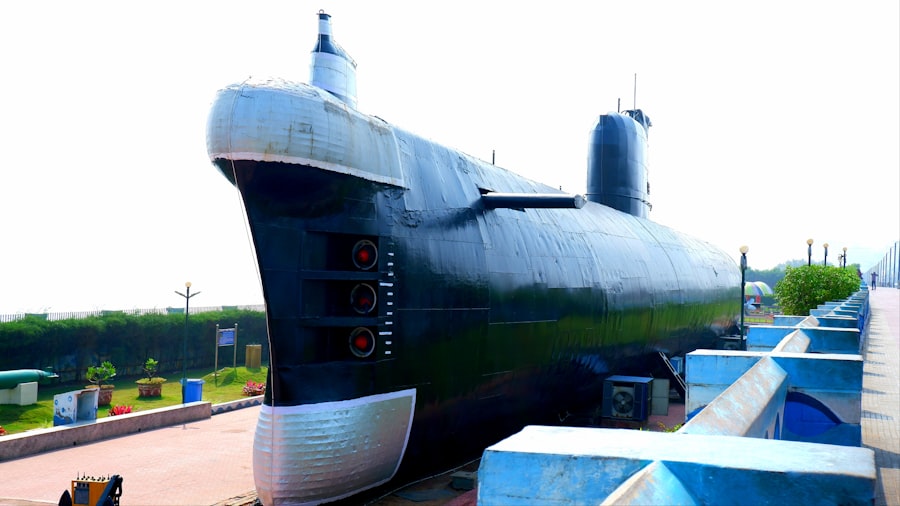
The alleged theft of the Sea Serpent, if proven true, would represent a paradigm shift in naval warfare. The delicate balance of power, meticulously maintained through decades of technological arms races and strategic posturing, would be irrevocably altered.
The Veil and the Blade: The Erosion of Maritime Hegemony
For any nation that developed such a submarine, its loss would be a strategic catastrophe, a gaping wound in its national security. It would signify a monumental intelligence failure and a profound vulnerability. Conversely, for the acquiring power, the Sea Serpent would act as a force multiplier, a silent guardian or a phantom assailant, capable of challenging the maritime hegemony of even the most dominant naval powers. The ability to project power virtually invisibly would undermine existing doctrines of naval warfare, forcing a re-evaluation of everything from anti-submarine warfare tactics to strategic deterrence.
The very existence of such a vessel in unauthorized hands would erode trust, fueling an intensified arms race and pushing nations to develop even more exotic and expensive countermeasures. The sea, once a domain of observable power projection, would become an even more opaque and dangerous arena for covert operations.
The Fog of War: Strategic Uncertainty and Escalation
One of the most potent consequences of such an event would be the proliferation of strategic uncertainty. An adversary possessing the Sea Serpent could conduct operations with impunity, leaving its rivals guessing as to the origin and intent of clandestine activities. This “fog of war” could lead to miscalculations, heighten tensions, and increase the risk of accidental escalation. The ghost in the deep would cast a long shadow of paranoia across the world’s oceans.
Furthermore, the psychological impact of such a loss or acquisition would be profound. The perceived invincibility of advanced naval assets would be shattered, forcing a re-evaluation of national security strategies and potentially leading to a more aggressive and unpredictable international environment. The theft of the Sea Serpent would not just be the loss of a vessel; it would be the loss of a strategic advantage, a crack in the edifice of established power.
The recent incident involving the CIA submarine theft at a depth of 16,500 feet in the Pacific Ocean has raised significant concerns about underwater security and espionage. This event echoes themes discussed in a related article that explores the broader implications of maritime intelligence operations. For those interested in understanding the complexities of underwater surveillance and the potential risks associated with such covert activities, you can read more about it in this insightful piece on maritime intelligence.
The Echoes of Silence: The Future of Deep-Sea Espionage
| Metric | Details |
|---|---|
| Event | CIA Submarine Theft |
| Location | Pacific Ocean |
| Depth | 16,500 feet |
| Date | Classified / Unknown |
| Submarine Type | Classified / Unknown |
| Purpose | Espionage / Intelligence Gathering |
| Recovery Method | Classified / Unknown |
| Outcome | Classified / Unknown |
The absence of official confirmation surrounding “Project Nightingale” is as significant as the alleged event itself. The strategic imperative for secrecy, on both sides of the supposed incident, is immense, transforming the entire narrative into a case study in deep-sea espionage and strategic obfuscation.
The Black Hole: Official Silence and Denial
The steadfast denial from official channels is hardly surprising. Acknowledging such a catastrophic intelligence breach would be a profound humiliation, potentially triggering widespread public outrage, calls for accountability, and a loss of confidence in national security institutions. Therefore, the official response is, as expected, a wall of silence, a carefully constructed void designed to absorb and ultimately neutralize any lingering whispers.
Conversely, the alleged perpetrators would also maintain absolute silence, exploiting the plausible deniability inherent in such an audacious act. Their success hinges on keeping the existence of the stolen asset a secret, allowing them to leverage its capabilities without revealing their hand. The “Sea Serpent,” if it truly exists in stolen hands, would become the ultimate black project, a ghost in the machine of global power.
The Deep Game: The Unseen Race for Subsea Dominance
Whether “Project Nightingale” is fact or fiction, its prevalence in intelligence circles underscores the intensifying global race for subsea dominance. The deep ocean, once considered a vast and impenetrable frontier, is now viewed as a critical theater for strategic competition. Nations are pouring vast resources into developing advanced autonomous underwater vehicles (AUVs), sophisticated deep-sea surveillance networks, and next-generation submarines. The “Sea Serpent” narrative serves as a stark metaphor for this unseen struggle, a constant ballet of technological innovation and clandestine maneuvering playing out beneath the waves.
The implications for the future of deep-sea exploration and military doctrine are profound. The incident, even if purely apocryphal, highlights the vulnerabilities and immense potential of the abyssal plains. It pushes the boundaries of imagination, prompting speculation about what truly lies hidden beneath the surface, and what technological marvels might be silently traversing the planet’s vast, dark oceans. The alleged theft, therefore, transcends a mere incident; it becomes a powerful narrative, a cautionary tale, and a speculative glimpse into the future of global power dynamics in the unseen world below.

WARNING: The $800 Million Mechanical Failure That Almost Started WWIII
FAQs
What is the CIA submarine theft in the Pacific Ocean at 16,500 feet?
The CIA submarine theft refers to an incident involving the alleged unauthorized acquisition or loss of a submarine or submarine-related technology by the CIA in the Pacific Ocean at a depth of approximately 16,500 feet. Details about the event are limited and often classified.
When and where did the CIA submarine theft occur?
The incident reportedly took place in the Pacific Ocean at a depth of around 16,500 feet. The exact date and precise location have not been publicly disclosed due to the sensitive nature of the operation.
What type of submarine was involved in the theft?
Specific information about the type or class of the submarine involved has not been made public. It is presumed to be a specialized or classified vessel used for intelligence or military purposes.
What are the implications of a submarine theft at such a depth?
A submarine theft at 16,500 feet depth would have significant strategic and security implications, including potential loss of sensitive technology, intelligence compromise, and risks to national security. Recovery or investigation at such depths is technically challenging.
Has the CIA or any government agency confirmed the submarine theft?
As of now, there has been no official confirmation or detailed public statement from the CIA or other government agencies regarding the submarine theft incident in the Pacific Ocean at 16,500 feet. Information remains largely speculative or classified.