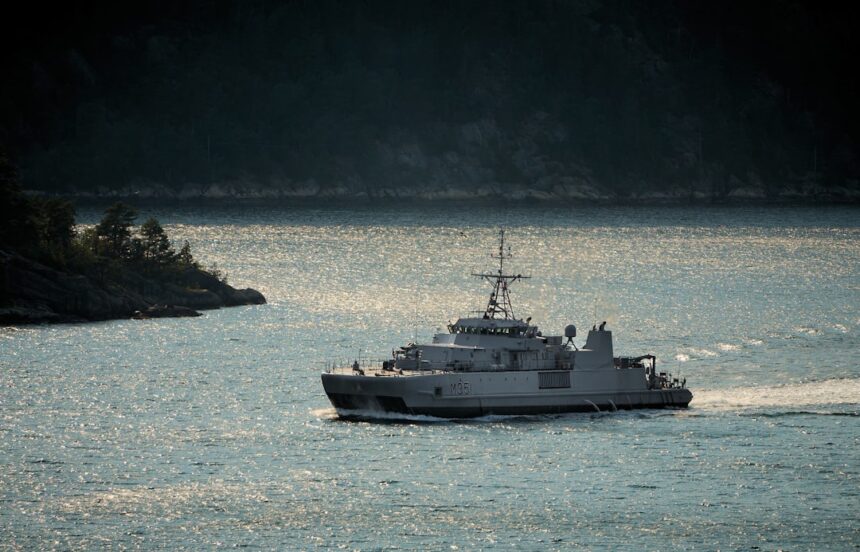
The United States Navy, a global power projecting force responsible for defending national interests across the world’s oceans, is inherently a target for adversaries. Its vast network, encompassing everything from advanced warships to sensitive intelligence operations, presents numerous points of vulnerability. Security breaches, therefore, are not merely unfortunate incidents but critical indicators of evolving threats and the perpetual challenge of safeguarding vital assets. This article delves into some of the most significant security breaches experienced by the US Navy, exploring their nature, impact, and the lessons learned.
The US Navy operates in a complex and ever-changing threat landscape. From state-sponsored cyber espionage to insider threats and the classic perils of espionage, its security perimeter is constantly tested. Understanding the multifaceted nature of these challenges is crucial to appreciating the gravity of each breach.
Cyber Warfare and Digital Intruders
In the digital age, a significant portion of naval operations relies on interconnected systems. This digital dependency, while enabling unprecedented efficiency and data sharing, simultaneously creates a vast attack surface for cyber adversaries. Foreign intelligence services, hacktivist groups, and even individual actors can attempt to penetrate these networks to exfiltrate sensitive data, disrupt operations, or inject malware.
Insider Threats: The Enemy Within
Perhaps one of the most insidious threats is the insider. Individuals with legitimate access to classified information or critical systems, when compromised by ideology, coercion, or financial gain, can inflict immense damage. These breaches often go undetected for extended periods, as the perpetrators operate from within the trusted confines of the Navy’s infrastructure.
Physical Security and Espionage
Despite advancements in cyber security, traditional espionage and physical breaches remain a concern. Access to naval bases, shipyards, or classified facilities by unauthorized personnel can lead to the theft of hardware, blueprints, or direct observation of sensitive operations. The human element, with its inherent vulnerabilities, often serves as the weakest link in even the most robust physical security systems.
One of the most concerning aspects of military operations is the potential for security breaches, particularly within the U.S. Navy. An insightful article that delves into this topic is available at In The War Room, where it discusses various incidents that have compromised naval security and the implications of these breaches on national defense. Understanding these vulnerabilities is crucial for improving security protocols and safeguarding sensitive information.
The USS Liberty Incident (1967): A Case of Mistaken Identity?
While not a security breach in the conventional sense of espionage or cyber intrusion, the attack on the USS Liberty remains a deeply controversial event demanding examination within the context of naval security. In June 1967, during the Six-Day War, the technically sophisticated intelligence gathering ship USS Liberty was attacked by Israeli air and naval forces in international waters off the Sinai Peninsula. The attack, which included strafing runs and torpedo strikes, resulted in the deaths of 34 American servicemen and injuries to 171 others.
Intelligence Failures and Communication Breakdown
The core of the controversy surrounding the USS Liberty incident lies in the alleged failure of communication and intelligence interpretation. Despite the ship clearly bearing US markings and flying the American flag, Israeli forces maintained that they had mistakenly identified the vessel as an Egyptian ship. However, survivors and subsequent investigations have raised questions about the thoroughness of the Israeli identification process and the veracity of their claims.
Lack of Timely Support and Chain of Command Issues
A critical aspect of the USS Liberty incident, from a security standpoint, was the perceived lack of timely intervention and support from the US Sixth Fleet. Despite distress calls and the severity of the attack, significant delays occurred before relief efforts were launched. This raised concerns about command and control, communication protocols during active hostilities, and the Navy’s capacity to protect its assets in unforeseen circumstances.
Lessons Learned: Enhanced Identification and Communication Protocols
The USS Liberty incident, regardless of the ultimate truth behind the attack, underscored the critical importance of unambiguous identification systems, robust communication protocols, and rapid response capabilities for naval assets operating in contested zones. It served as a stark reminder of the fog of war and the potential for tragic consequences arising from misidentification and communication failures.
The Walker Family Spy Ring (1967-1985): A Decades-Long Betrayal
The Walker family spy ring stands as one of the most damaging spy cases in American history, representing a catastrophic insider threat that spanned nearly two decades. John Anthony Walker Jr., a US Navy chief warrant officer, began spying for the Soviet Union in 1967. Over the years, he recruited his brother Arthur, a retired Navy lieutenant commander; his son Michael, a Navy yeoman; and his friend Jerry Whitworth, a senior chief petty officer and communications specialist.
The Mechanism of Espionage: Compromising Communications
The Walker ring’s primary contribution to Soviet intelligence was the illicit transfer of classified Navy cryptographic key material, communication plans, and technical documents. John Walker, with his access as a communications specialist, was ideally positioned to acquire this information. He provided the Soviets with the ability to decrypt millions of classified Navy messages, effectively giving them a real-time window into US naval operations, strategy, and capabilities during the Cold War.
Devastating Impact on National Security
The longevity and breadth of the Walker ring’s activities had an incalculable impact on national security. The Soviets gained insights into submarine movements, fleet deployments, operational plans, and even the targeting capabilities of US strategic forces. This intelligence likely influenced Soviet naval development and strategy, potentially undermining US deterrence and increasing the risk to American forces.
Failure of Security Clearances and Oversight
The Walker case exposed profound weaknesses in the Navy’s security clearance processes, oversight mechanisms, and counterintelligence efforts. How an individual could betray his country for such an extended period, involving multiple family members and associates, revealed systemic vulnerabilities. The ring was ultimately uncovered not by internal security but by John Walker’s estranged wife and daughter, highlighting the critical role personal relationships can play in detecting insider threats.
Reforms in Personnel Security and CI Operations
The fallout from the Walker spy ring led to significant overhauls in the Navy’s and the wider intelligence community’s approach to personnel security. This included stricter vetting procedures, enhanced counterintelligence awareness training, and a greater emphasis on monitoring the financial activities and personal lives of individuals with access to classified information. The case served as a stark reminder that the human element, while integral to any organization, also represents its most persistent vulnerability.
The Morris Worm (1988): The Dawn of Naval Cyber Vulnerability
While not solely targeting the Navy, the Morris Worm, released in 1988 by Robert Tappan Morris, was one of the first widespread computer worms on the internet. Its impact resonated across government and academic networks, including those connected to the Navy. This incident, occurring early in the internet’s lifecycle, served as a potent precursor to the cyber threats that would come to dominate the security landscape.
Unintended Consequences of a “Experiment”
Robert Morris claimed his intent was to gauge the size of the internet. However, a flaw in the worm’s design caused it to proliferate aggressively, exploiting vulnerabilities in Unix sendmail, fingerd, and rsh/rexec services. The worm would continuously reinstall itself on infected machines, consuming system resources and effectively rendering them unusable.
Disruption and Data Loss Potential
For the Navy and other critical institutions, the Morris Worm demonstrated the potential for network-wide disruption, even if data exfiltration was not its primary goal. The disruption of communication channels and the potential for system crashes underscored the fragility of interconnected systems. While no direct evidence of classified data compromise emerged, the incident highlighted the inherent risk posed by unchecked digital proliferation.
Foreshadowing the Era of Cyber Warfare
The Morris Worm, in its simplicity and effectiveness, was a harbinger of the sophisticated cyber attacks that would later target military and government networks. It forced a paradigm shift in thinking about network security, emphasizing the need for robust patching, access control, and proactive monitoring. It was a tangible early lesson in the concept of a “digital Pearl Harbor,” where an adversary could cripple infrastructure without firing a shot. It introduced the Navy to the idea that a single line of bad code could be as dangerous as a well-placed explosive.
The U.S. Navy has faced several significant security breaches over the years, highlighting vulnerabilities that can have far-reaching consequences. One particularly alarming incident involved the unauthorized access to sensitive information, which raised concerns about the protection of military data. For a deeper understanding of these issues, you can read more about the most damaging U.S. Navy security breaches in this insightful article. Exploring these events sheds light on the importance of cybersecurity in military operations and the ongoing challenges faced by the Navy. To learn more, visit this article.
The USS Guardian Grounding (2013): A Technical and Navigational Blunder
| Incident | Date | Type of Breach | Details | Impact |
|---|---|---|---|---|
| Edward Snowden Leak | 2013 | Data Leak | Unauthorized disclosure of classified NSA and Navy documents. | Compromised intelligence operations and global surveillance programs. |
| Chinese Cyber Espionage Attack | 2011 | Cyber Attack | Chinese hackers infiltrated Navy networks to steal sensitive data. | Loss of classified military information and technology secrets. |
| Insider Threat – Jonathan Pollard | 1985-1987 | Espionage | Pollard passed classified Navy and other US intelligence to Israel. | Severe breach of trust and intelligence compromise. |
| USS John S. McCain Collision Data Leak | 2017 | Data Breach | Unauthorized release of investigation details related to ship collision. | Operational security concerns and public relations impact. |
| Stuxnet Malware Incident | 2010 | Cyber Attack | Malware targeting industrial control systems, affecting Navy infrastructure. | Disruption of critical systems and increased cybersecurity measures. |
The grounding of the USS Guardian, an Avenger-class mine countermeasures ship, on Tubbataha Reef in the Philippines in January 2013, was a severe incident that highlighted not only navigational failures but also the significant security implications of such an event. The ship, with a crew of 79, ran aground on the protected coral reef, causing extensive damage to both the ship and the fragile ecosystem.
Navigational Errors and GPS Miscalibration
Investigations revealed that the grounding was primarily due to a series of navigational errors exacerbated by human failures and the miscalibration of the ship’s navigation system. The ship’s crew reportedly relied on an inaccurate digital chart, failed to verify its position using multiple redundant systems, and did not properly account for real-time environmental factors. The reliance on a single, flawed data point, instead of cross-referencing information like a meticulous archivist, proved disastrous.
Environmental Damage and Diplomatic Fallout
The immediate aftermath involved a delicate and complex salvage operation. The ship suffered irreparable damage and had to be dismantled on-site. The grounding caused significant damage to the UNESCO World Heritage site, igniting an international incident and prompting official apologies and compensation from the US government to the Philippines. This demonstrated how operational missteps can quickly escalate beyond solely military concerns, impacting diplomatic relations and international public opinion.
Security Implications of a Stranded Warship
Beyond the ecological and diplomatic ramifications, the grounding of a US Navy warship, even a smaller one, carried inherent security risks. A stranded vessel, especially in politically sensitive waters, could be vulnerable to reconnaissance, illicit boarding attempts, or even acts of sabotage. The salvage operation itself required significant resources and presented its own set of security challenges, attracting attention from various state and non-state actors operating in the region.
Re-emphasizing Foundational Naval Competencies
The USS Guardian incident served as a stark reminder that despite technological advancements, fundamental naval competencies such as precise navigation, diligent watch-standing, and adherence to established protocols remain paramount. It underscored the importance of robust training, critical thinking, and the absolute necessity of verifying information from multiple sources, especially when operating in environmentally sensitive or politically complex areas. The Navy initiated various measures to enhance navigational training, update chart management systems, and reinforce accountability for watch-standers.
Conclusion: A Continuous State of Vigilance
The history of US Navy security breaches, from the deeply personal betrayal of the Walker family to the accidental yet impactful USS Guardian grounding and the early stirrings of cyber threats, tells a story of an enduring struggle. Each incident, whether born of malicious intent, human error, or technological vulnerability, serves as a crucial learning experience. They are not merely isolated events but threads in a larger tapestry of national security, revealing both persistent vulnerabilities and the Navy’s adaptability in the face of evolving threats.
The constant evolution of technology and geopolitical landscapes means that the nature of these breaches will continue to shift. From the intricacies of artificial intelligence and quantum computing to the enduring challenge of human fallibility, the US Navy, like any large and complex organization, must operate in a continuous state of vigilance. The lessons learned from past breaches are not simply historical footnotes; they are the bedrock upon which future security strategies are built, reminding us that safeguarding national interests is an unending endeavor, demanding constant adaptation, innovation, and an unwavering commitment to operational excellence. The sea, in its vastness and unpredictability, mirrors the security landscape – ever-changing, ever-challenging, and demanding a steadfast hand at the helm.
FAQs
What are some of the most damaging US Navy security breaches in history?
Some of the most damaging US Navy security breaches include the espionage activities of John Anthony Walker in the 1980s, the theft of classified submarine technology by Jonathan Pollard, and the 2013 data breach involving the Office of Personnel Management that exposed Navy personnel records.
How did the John Anthony Walker espionage case impact the US Navy?
John Anthony Walker, a US Navy officer, spied for the Soviet Union for nearly two decades, compromising critical naval communications and encryption codes. His actions severely undermined US naval security and intelligence operations during the Cold War.
What types of information are typically targeted in US Navy security breaches?
Security breaches often target classified information such as naval communications, submarine technology, operational plans, personnel records, and encryption codes, all of which are vital to national security and military effectiveness.
What measures has the US Navy implemented to prevent future security breaches?
The US Navy has enhanced cybersecurity protocols, increased personnel vetting and monitoring, implemented stricter access controls, and invested in advanced encryption and intrusion detection systems to safeguard sensitive information.
How do security breaches affect the overall mission of the US Navy?
Security breaches can compromise operational secrecy, endanger personnel, weaken strategic advantages, and damage trust within the military and with allied nations, ultimately hindering the Navy’s ability to effectively carry out its missions.