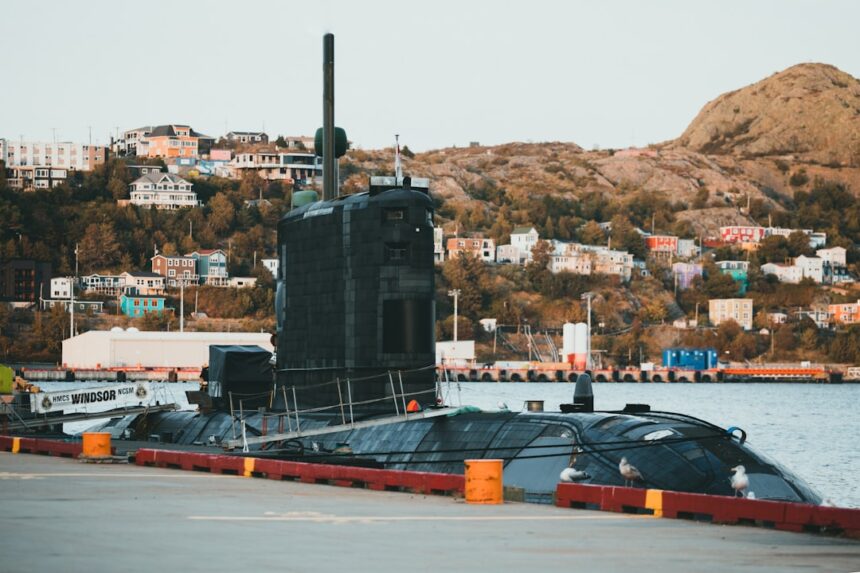
In the realm of modern naval warfare, submarines have evolved into sophisticated platforms that embody cutting-edge technology and strategic prowess. The advancements in submarine capabilities have transformed these vessels from mere underwater transporters into formidable instruments of power projection and intelligence gathering. As nations invest heavily in their naval fleets, the focus on enhancing submarine technology has become paramount.
This evolution is not merely about increasing firepower; it encompasses a broad spectrum of functionalities that include stealth, communication, navigation, and specialized operations. The modern submarine is a marvel of engineering, designed to operate in the most challenging environments while remaining undetected. With the integration of advanced materials, propulsion systems, and electronic warfare capabilities, submarines can now execute missions that were once deemed impossible.
The significance of these advancements extends beyond military applications; they also play a crucial role in national security, maritime law enforcement, and humanitarian missions. As the geopolitical landscape continues to shift, the importance of advanced submarine capabilities cannot be overstated.
Key Takeaways
- Advanced submarines prioritize stealth, detection avoidance, and secure underwater communication for effective covert operations.
- Specialized equipment and navigation systems enhance capabilities in special operations, deep-sea diving, and salvage missions.
- Underwater surveillance, reconnaissance, and specialized weapons systems expand the tactical versatility of modern submarines.
- Submarines provide critical support for special forces and play a vital role in underwater search and rescue operations.
- Ongoing technological advancements promise to further improve submarine capabilities in stealth, communication, and operational effectiveness.
Stealth and Detection Avoidance
One of the most critical aspects of modern submarine design is stealth. The ability to remain undetected while operating in hostile waters is essential for the success of any submarine mission. Advanced submarines employ a variety of technologies to minimize their acoustic signature, making them difficult to detect by enemy sonar systems.
These technologies include anechoic coatings that absorb sound waves, advanced hull designs that reduce noise generation, and sophisticated propulsion systems that operate quietly. Moreover, submarines are equipped with advanced electronic warfare systems that can jam or deceive enemy detection systems. The integration of artificial intelligence into these systems allows for real-time analysis and adaptation to changing conditions, further enhancing stealth capabilities.
As adversaries develop more sophisticated detection methods, the race for stealth technology continues to evolve, pushing submarine manufacturers to innovate constantly. The result is a new generation of submarines that can operate with unprecedented levels of secrecy and effectiveness.
Underwater Communication and Data Transmission
Effective communication is vital for the operational success of submarines, especially when they are submerged for extended periods. Traditional radio communication is ineffective underwater due to the absorption of radio waves by water. Consequently, submarines rely on specialized underwater communication systems that utilize sound waves, known as sonar communication.
These systems allow submarines to transmit and receive data while remaining submerged, ensuring they can maintain contact with command centers and other vessels. In addition to sonar communication, advancements in data transmission technologies have enabled submarines to share information rapidly and securely. The integration of satellite communication systems allows for near-real-time data exchange when submarines surface or use buoyant antennas.
This capability is crucial for coordinating complex operations and ensuring that submarines can respond swiftly to changing tactical situations. As technology continues to advance, the potential for enhanced underwater communication will only grow, further solidifying the role of submarines in modern naval warfare.
Specialized Equipment for Special Operations
Submarines are increasingly being equipped with specialized gear designed for unique operational requirements. This includes advanced diving systems that allow for the deployment of special forces directly from the submarine without surfacing. These systems can include mini-submarines or dry deck shelters that enable personnel to conduct covert operations in enemy territory while minimizing exposure.
Additionally, submarines are outfitted with advanced surveillance equipment that can gather intelligence on enemy movements and activities. This capability is particularly valuable for special operations forces who rely on accurate and timely information to execute their missions effectively. The combination of specialized equipment and advanced technology allows submarines to serve as a launch platform for a variety of operations, from reconnaissance missions to direct action against high-value targets.
Advanced Navigation and Mapping Systems
| Capability | Description | Typical Metrics | Example Submarine Classes |
|---|---|---|---|
| Stealth | Ability to operate undetected in hostile environments | Acoustic signature: < 100 dB; Anechoic coating thickness: 20-30 mm | Seawolf-class, Virginia-class |
| Special Operations Support | Capacity to deploy and recover special forces teams | Swimmer lockout chambers: 1-2; Dry deck shelters: 1-2 | Ohio-class SSGN, Astute-class |
| Payload Capacity | Ability to carry specialized equipment and unmanned vehicles | Payload bays: 2-4; Max payload weight: 20-50 tons | Los Angeles-class (modified), Soryu-class |
| Endurance | Duration submarine can remain submerged and operational | Endurance: 60-90 days; Range: 10,000+ nautical miles | Virginia-class, Akula-class |
| Communication Systems | Secure and covert communication with command and special forces | Satellite comms, ELF/VLF comms, Data link bandwidth: up to 1 Mbps | Seawolf-class, Ohio-class SSGN |
| Navigation and Sensors | Advanced sonar and navigation for covert operations | Sonar range: 50+ km; Inertial navigation accuracy: < 100 m drift/day | Virginia-class, Astute-class |
Navigating underwater presents unique challenges that require sophisticated solutions. Modern submarines are equipped with advanced navigation systems that utilize a combination of inertial navigation, GPS (when surfaced), and sonar mapping technologies. These systems allow submarines to determine their position with remarkable accuracy, even in the absence of external references.
Sonar mapping technology enables submarines to create detailed maps of the ocean floor, which can be invaluable for planning operations or avoiding underwater hazards. The integration of artificial intelligence into navigation systems further enhances their capabilities by allowing for real-time adjustments based on environmental conditions or mission parameters. As these technologies continue to develop, submarines will be able to navigate more effectively in complex underwater environments, increasing their operational flexibility.
Deep Sea Diving and Salvage Operations
The capabilities of modern submarines extend beyond military applications; they also play a crucial role in deep-sea diving and salvage operations. Equipped with advanced life support systems and specialized diving equipment, submarines can support deep-sea exploration missions or recover valuable assets from the ocean floor. This capability is particularly important for recovering lost military equipment or conducting scientific research in previously inaccessible areas.
Submarines can deploy remotely operated vehicles (ROVs) or autonomous underwater vehicles (AUVs) equipped with cameras and tools for conducting inspections or performing repairs at great depths. These technologies have revolutionized underwater salvage operations, allowing for more efficient recovery efforts while minimizing risks to human divers. As exploration of the ocean deepens and the demand for underwater resources increases, the role of submarines in these operations will likely expand.
Underwater Surveillance and Reconnaissance
Underwater surveillance has become an essential component of modern naval strategy, and submarines are at the forefront of this capability. Equipped with advanced sonar systems and surveillance technologies, submarines can monitor vast areas of ocean while remaining hidden from enemy forces. This ability to gather intelligence without detection provides a significant strategic advantage in both peacetime and wartime scenarios.
Submarines can conduct long-duration patrols in critical maritime regions, gathering data on enemy movements and activities. The information collected can be used to inform strategic decisions at higher command levels or support joint operations with allied forces. As nations continue to invest in their submarine fleets, the importance of underwater surveillance will only grow, shaping the future of naval warfare.
Specialized Weapons and Payload Delivery
The evolution of submarine capabilities has also led to significant advancements in weaponry and payload delivery systems. Modern submarines are equipped with a diverse array of weapons, including torpedoes, cruise missiles, and even unmanned aerial vehicles (UAVs) that can be launched from underwater platforms. This versatility allows submarines to engage a wide range of targets effectively.
With advanced targeting systems and real-time data feeds, submarines can strike high-value targets with remarkable accuracy from significant distances. This capability not only increases the effectiveness of submarine operations but also serves as a powerful deterrent against potential adversaries.
Submarine Support for Special Forces Operations
Submarines play a vital role in supporting special forces operations by providing a discreet platform for insertion and extraction missions. Their ability to operate undetected allows them to position special forces close to enemy territory without raising alarms. This capability is particularly valuable for conducting reconnaissance missions or direct action against high-value targets.
In addition to transportation, submarines can provide logistical support for special forces by delivering supplies or equipment necessary for their missions. The combination of stealthy insertion methods and advanced weaponry makes submarines an indispensable asset for modern military operations involving special forces.
Underwater Search and Rescue Capabilities
The search and rescue capabilities of modern submarines have become increasingly important in both military and civilian contexts. Equipped with advanced sonar systems and remotely operated vehicles (ROVs), submarines can conduct search operations in challenging underwater environments where surface vessels may struggle to operate effectively. In military scenarios, submarines can assist in locating downed aircraft or missing vessels, providing critical support during rescue operations.
In civilian contexts, they can be deployed for humanitarian missions or disaster response efforts, showcasing their versatility beyond traditional combat roles.
Future Developments in Advanced Submarine Technology
The future of submarine technology promises even more remarkable advancements as nations continue to invest in their naval capabilities. Emerging technologies such as artificial intelligence, machine learning, and quantum computing are expected to revolutionize submarine operations further. These innovations could lead to enhanced decision-making processes, improved navigation systems, and more effective communication methods.
Additionally, the development of unmanned underwater vehicles (UUVs) will likely play a significant role in future submarine operations. These autonomous platforms can conduct reconnaissance missions or perform tasks that would be too dangerous for human operators. As nations explore new frontiers in underwater warfare and exploration, the evolution of submarine technology will remain at the forefront of naval strategy.
In conclusion, advanced submarine capabilities represent a critical component of modern naval warfare and national security strategies worldwide. From stealthy operations to specialized equipment for unique missions, submarines have transformed into multifaceted platforms capable of executing a wide range of tasks effectively. As technology continues to evolve, so too will the role of submarines in shaping the future landscape of maritime operations.
Special mission submarines play a crucial role in modern naval operations, providing unique capabilities for intelligence gathering, surveillance, and reconnaissance. For a deeper understanding of the advancements in submarine technology and their strategic implications, you can read more in this related article on special mission submarines at In the War Room.
FAQs
What is a special mission submarine?
A special mission submarine is a type of submarine designed to perform unique and specialized tasks beyond traditional combat roles. These missions can include intelligence gathering, surveillance, reconnaissance, and supporting special operations forces.
What capabilities distinguish special mission submarines from regular attack submarines?
Special mission submarines often have enhanced stealth features, advanced communication systems, specialized equipment for intelligence collection, and the ability to deploy unmanned underwater vehicles (UUVs) or special forces. They may also have modified hull designs to accommodate unique payloads or mission modules.
What types of missions do special mission submarines typically undertake?
They are used for covert surveillance, electronic intelligence (ELINT) gathering, mine countermeasures, undersea cable tapping, deploying and recovering special operations personnel, and testing new underwater technologies.
How do special mission submarines support special operations forces?
These submarines can covertly transport and deploy special operations teams, such as Navy SEALs, close to their target areas. They may be equipped with dry deck shelters or lockout chambers that allow divers to exit and enter the submarine underwater.
Are special mission submarines armed?
While some special mission submarines may carry torpedoes or other weapons for self-defense, their primary focus is on specialized tasks rather than direct combat. Their armament is typically limited compared to attack submarines.
What technological advancements are common in special mission submarines?
They often incorporate cutting-edge sonar systems, advanced electronic warfare suites, improved stealth technologies, and modular payload bays that allow for mission-specific equipment to be installed as needed.
Which navies operate special mission submarines?
Several navies, including the United States Navy, Russian Navy, and others, operate special mission submarines tailored to their strategic needs. The U.S. Navy, for example, has the USS Jimmy Carter (SSN-23), a modified Seawolf-class submarine designed for special missions.
How do special mission submarines maintain stealth during operations?
They use advanced sound-dampening technologies, quiet propulsion systems, and operate at depths and speeds optimized to minimize acoustic signatures. Additionally, their specialized equipment is designed to reduce detectability.
Can special mission submarines deploy unmanned underwater vehicles (UUVs)?
Yes, many special mission submarines are equipped to launch and recover UUVs for reconnaissance, mine detection, or other specialized tasks, extending their operational capabilities without exposing the submarine itself.
What challenges are associated with operating special mission submarines?
Challenges include the complexity of integrating specialized equipment, maintaining stealth while conducting diverse missions, ensuring crew training for unique tasks, and the high cost of development and maintenance.