The Ohio Class submarine represents a significant advancement in naval technology and strategic military capabilities. Commissioned by the United States Navy, these submarines are primarily designed for two critical missions: strategic deterrence and anti-submarine warfare. With their stealthy design and advanced systems, Ohio Class submarines have become a cornerstone of the U.S.
Navy’s undersea fleet, ensuring that the nation maintains a formidable presence beneath the waves. Their ability to operate undetected while carrying out essential missions underscores their importance in modern naval warfare. The Ohio Class submarines are not just vessels of war; they symbolize a commitment to national security and global stability.
With a length of over 560 feet and a displacement of approximately 18,750 tons when submerged, these submarines are among the largest in the world. Their design incorporates cutting-edge technology that allows them to remain hidden from enemy detection while providing unparalleled firepower. As the geopolitical landscape continues to evolve, the role of the Ohio Class submarines remains crucial in maintaining a balance of power.
Key Takeaways
- The Ohio Class Submarine is a key component of the U.S. Navy’s strategic nuclear deterrent.
- It features advanced design and specifications tailored for stealth and long-range missile deployment.
- The submarine’s primary mission is to provide a secure second-strike capability in nuclear warfare.
- Continuous modernization ensures the Ohio Class remains operationally effective amid evolving threats.
- Despite its strategic value, the Ohio Class faces challenges including maintenance costs and geopolitical controversies.
History and Development of the Ohio Class Submarine
The development of the Ohio Class submarine began in the late 1970s as a response to the changing dynamics of the Cold War. The United States recognized the need for a new class of submarines that could effectively counter the growing threat posed by Soviet naval forces. The first of the class, USS Ohio (SSBN-726), was launched in 1980, marking a significant milestone in naval engineering and military strategy.
The design process involved extensive research and development, focusing on creating a vessel that could carry a substantial payload while remaining stealthy and maneuverable. Throughout the 1980s and into the 1990s, the Ohio Class submarines underwent rigorous testing and evaluation. The initial fleet consisted of 18 ballistic missile submarines (SSBNs) and later included four guided missile submarines (SSGNs) that were converted from existing SSBNs.
This dual capability allowed the Ohio Class to adapt to changing military needs, showcasing its versatility. The successful deployment of these submarines during various military operations further solidified their reputation as a vital component of U.S. naval power.
Design and Specifications of the Ohio Class Submarine
The design of the Ohio Class submarine is characterized by its unique hull shape and advanced materials, which contribute to its stealth capabilities. The hull is constructed from high-strength steel, allowing it to withstand extreme underwater pressures while minimizing noise levels. This design enables the submarine to operate at depths greater than 800 feet, making it difficult for adversaries to detect.
Additionally, the Ohio Class features a streamlined silhouette that reduces drag, enhancing its speed and maneuverability. In terms of specifications, each Ohio Class submarine is equipped with 24 Trident II (D5) ballistic missiles, capable of delivering nuclear warheads over intercontinental distances. The submarines also possess four torpedo tubes for launching conventional weapons, providing them with a multi-faceted approach to warfare.
The onboard systems include advanced sonar technology, navigation systems, and communication equipment that ensure effective operation in various environments. These specifications highlight the Ohio Class’s role as a formidable deterrent against potential threats.
Role and Mission of the Ohio Class Submarine
The primary mission of the Ohio Class submarine is strategic deterrence, serving as a key element of the United States’ nuclear triad alongside land-based intercontinental ballistic missiles (ICBMs) and strategic bombers. By maintaining a continuous at-sea presence, these submarines provide a credible threat to potential adversaries, ensuring that any aggressive actions would be met with a swift and devastating response. This deterrent capability is crucial in preventing nuclear conflict and maintaining global stability.
The conversion of four SSBNs into SSGNs has expanded their operational capabilities to include land-attack missions using Tomahawk cruise missiles. This versatility allows them to engage in anti-terrorism operations, support ground forces, and conduct intelligence-gathering missions.
As such, the Ohio Class submarines play an integral role in both strategic deterrence and conventional warfare scenarios.
Nuclear Deterrence and the Ohio Class Submarine
| Metric | Value | Description |
|---|---|---|
| Class Name | Ohio | Class designation of the ballistic missile submarines |
| Number of Submarines | 14 | Total Ohio-class SSBNs built |
| Operational SSBNs | 8 | Number of Ohio-class submarines currently in strategic deterrence service |
| Missile Type | Trident II (D5) | Ballistic missile carried by Ohio-class submarines |
| Missile Capacity | 24 missiles | Maximum number of Trident II missiles carried per submarine |
| Warheads per Missile | Up to 8 MIRVs | Multiple independently targetable reentry vehicles per missile |
| Patrol Duration | 70-90 days | Typical submerged deterrent patrol length |
| Displacement | 18,750 tons (submerged) | Submerged displacement of Ohio-class submarines |
| Length | 560 feet (170.7 meters) | Overall length of the submarine |
| Speed | 20+ knots (submerged) | Maximum submerged speed |
| Stealth Features | Advanced sound dampening and quieting technologies | Designed to reduce acoustic signature for survivability |
| Role in Deterrence | Strategic nuclear deterrent | Primary mission to provide second-strike capability |
Nuclear deterrence is a cornerstone of U.S. military strategy, and the Ohio Class submarine plays a pivotal role in this framework. By providing a second-strike capability, these submarines ensure that even if an adversary were to launch a nuclear attack, the United States would still have the ability to respond decisively.
This principle of mutually assured destruction has been instrumental in preventing nuclear war since the Cold War era. The Trident II (D5) missiles carried by Ohio Class submarines are among the most advanced in the world, featuring multiple independently targetable reentry vehicles (MIRVs). This capability allows each missile to strike multiple targets with precision, further enhancing deterrence by complicating an adversary’s defense strategies.
The presence of these submarines in strategic locations around the globe serves as a constant reminder of U.S. military strength and commitment to national security.
Strategic Importance of the Ohio Class Submarine
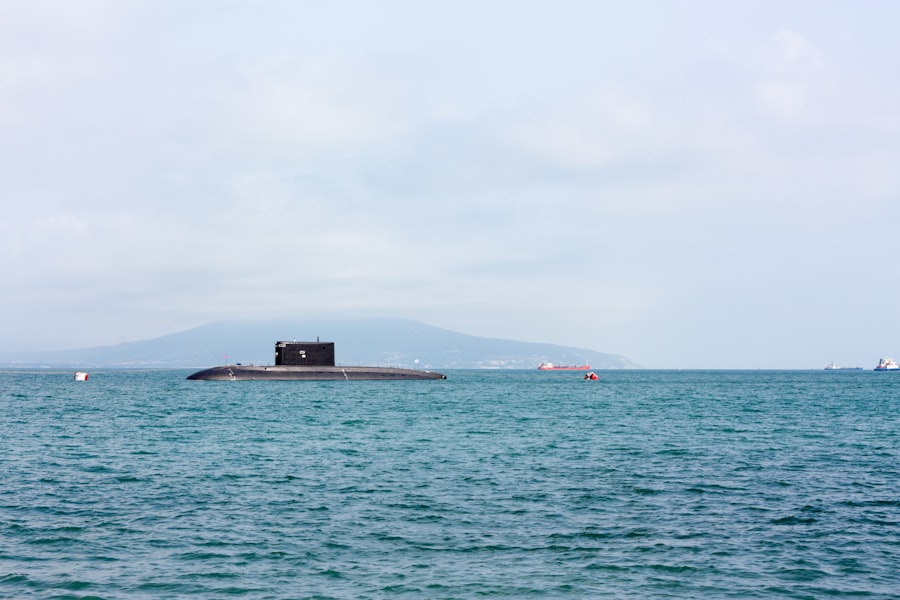
The strategic importance of the Ohio Class submarine extends beyond its immediate military capabilities; it also plays a vital role in international relations and diplomacy. By maintaining a robust undersea fleet, the United States demonstrates its commitment to allies and partners while deterring potential aggressors. The ability to project power from beneath the waves enhances U.S.
influence in key regions around the world. Moreover, the Ohio Class submarines contribute to global stability by participating in joint exercises with allied navies and engaging in cooperative security initiatives. These interactions foster stronger relationships between nations and promote interoperability among allied forces.
As geopolitical tensions continue to rise in various parts of the world, the strategic importance of these submarines remains paramount in ensuring peace and security.
Operational Capabilities of the Ohio Class Submarine
The operational capabilities of the Ohio Class submarine are extensive, allowing it to perform a wide range of missions effectively. Equipped with advanced sonar systems, these submarines can detect and track enemy vessels while remaining undetected themselves. This stealth capability is crucial for gathering intelligence and conducting surveillance operations without alerting adversaries.
In addition to their stealthy approach, Ohio Class submarines are capable of launching precision strikes against land-based targets using Tomahawk cruise missiles. This versatility enables them to support ground forces during conflicts or engage in counter-terrorism operations from a safe distance. The combination of strategic deterrence and conventional warfare capabilities makes the Ohio Class an invaluable asset in modern naval operations.
Crew and Training for the Ohio Class Submarine
The crew of an Ohio Class submarine is composed of highly trained personnel who undergo rigorous selection processes and extensive training programs. Each submarine typically carries around 155 sailors, including officers and enlisted personnel who specialize in various fields such as navigation, engineering, weapons systems, and communications. This diverse skill set ensures that each crew member can perform multiple roles effectively during missions.
Training for crew members begins long before they step aboard an Ohio Class submarine. New recruits undergo basic naval training followed by specialized instruction tailored to their assigned roles on the submarine. Once assigned to an operational vessel, crew members participate in ongoing training exercises that simulate real-world scenarios, ensuring they are prepared for any situation they may encounter while deployed.
Modernization and Upgrades of the Ohio Class Submarine
As technology continues to evolve rapidly, so too does the need for modernization within the Ohio Class submarine fleet. The U.S. Navy has implemented various upgrades over the years to enhance their capabilities and extend their service life.
One significant modernization initiative involves upgrading the Trident II (D5) missile system with new guidance technology and improved warhead capabilities. This enhancement not only increases accuracy but also ensures that the missiles can penetrate advanced enemy defenses effectively.
Additionally, upgrades to onboard systems improve operational efficiency and reduce maintenance requirements, allowing for longer deployment periods without compromising readiness.
Challenges and Controversies Surrounding the Ohio Class Submarine
Despite their many advantages, the Ohio Class submarines face several challenges and controversies that warrant consideration. One significant concern is the high cost associated with maintaining and modernizing these vessels. As budgets tighten within defense spending, questions arise regarding resource allocation between new programs and sustaining existing fleets like the Ohio Class.
Moreover, there are ongoing debates about nuclear deterrence strategies in an evolving global landscape marked by emerging threats such as cyber warfare and non-state actors. Critics argue that reliance on nuclear weapons may not adequately address contemporary security challenges, prompting discussions about alternative defense strategies that prioritize conventional forces or missile defense systems instead.
Future of the Ohio Class Submarine
Looking ahead, the future of the Ohio Class submarine appears both promising and complex. While these vessels will continue to play a vital role in U.S. naval strategy for years to come, discussions surrounding their eventual replacement have already begun.
The Columbia Class submarine is set to succeed the Ohio Class as part of America’s strategic deterrent force, incorporating advanced technologies designed for modern warfare. However, until Columbia Class submarines are fully operational, Ohio Class vessels will remain essential components of U.S. military readiness.
Ongoing modernization efforts will ensure that they can meet emerging threats while adapting to new operational requirements. As geopolitical dynamics shift globally, maintaining a robust undersea fleet will be crucial for safeguarding national interests and promoting international stability. In conclusion, the Ohio Class submarine stands as a testament to American ingenuity in naval engineering and military strategy.
Its history reflects both technological advancements and evolving defense needs over decades while its operational capabilities underscore its significance within contemporary warfare frameworks. As challenges arise both domestically within defense budgets as well as internationally regarding security threats—navigating these complexities will be vital for ensuring continued success for this iconic class of submarines moving forward into an uncertain future.
The Ohio-class ballistic missile submarines play a crucial role in the United States’ nuclear deterrence strategy, ensuring a second-strike capability that is vital for maintaining global stability. For a deeper understanding of the strategic implications and operational effectiveness of these submarines, you can read more in this related article on the topic: Ohio-Class Submarines and Deterrence.
FAQs
What is the Ohio class ballistic missile submarine?
The Ohio class is a class of nuclear-powered ballistic missile submarines (SSBNs) operated by the United States Navy. They are designed to provide a sea-based nuclear deterrent by carrying and launching submarine-launched ballistic missiles (SLBMs).
What role does the Ohio class submarine play in nuclear deterrence?
Ohio class submarines serve as a critical component of the United States’ strategic nuclear triad. Their stealth and mobility allow them to remain hidden underwater for extended periods, ensuring a credible second-strike capability in the event of a nuclear attack.
How many Ohio class submarines are currently in service?
As of recent data, there are 14 Ohio class submarines in service. Of these, 8 are configured as ballistic missile submarines (SSBNs) and 4 have been converted to guided missile submarines (SSGNs).
What type of missiles do Ohio class submarines carry?
Ohio class SSBNs are equipped with Trident II D5 submarine-launched ballistic missiles (SLBMs), which are capable of carrying multiple independently targetable reentry vehicles (MIRVs).
How long can Ohio class submarines operate underwater?
Ohio class submarines are nuclear-powered and can operate underwater for several months at a time, limited primarily by food supplies and crew endurance rather than fuel.
Why are Ohio class submarines considered a secure deterrent?
Their stealth capabilities, ability to remain submerged for long durations, and mobility make Ohio class submarines difficult to detect and target, ensuring survivability and a credible retaliatory strike capability.
What is the lifespan of an Ohio class submarine?
Ohio class submarines have an expected service life of approximately 42 years, with periodic overhauls and refueling of their nuclear reactors to extend operational capability.
Are there plans to replace the Ohio class submarines?
Yes, the U.S. Navy is developing the Columbia class submarines to replace the Ohio class SSBNs starting in the 2030s, ensuring continued sea-based nuclear deterrence into the future.
How does the Ohio class contribute to global strategic stability?
By maintaining a secure and survivable nuclear deterrent, Ohio class submarines help prevent nuclear conflict by assuring potential adversaries that any nuclear attack would be met with a devastating retaliatory strike.
Where are Ohio class submarines typically deployed?
Ohio class submarines operate primarily in the Atlantic and Pacific Oceans, often patrolling designated strategic areas to maintain continuous at-sea deterrence.