Naval mine laying is a military operation involving the strategic placement of explosive devices in maritime areas to impede enemy naval movements. This practice dates back several centuries and has developed from basic explosive devices to advanced systems with selective targeting capabilities. Mine laying serves to establish defensive perimeters that can damage or sink hostile vessels while protecting friendly naval forces and securing vital shipping lanes.
Technological advances have enhanced the precision and effectiveness of mine deployment methods in contemporary naval operations. Beyond their physical destructive capacity, naval mines function as a deterrent force in maritime warfare. The potential presence of mines in an area can influence enemy tactical decisions and complicate naval mission planning.
This deterrent effect, combined with the operational advantages mines provide, makes mine laying a significant component of naval warfare capabilities. As maritime security concerns increase globally, knowledge of mine laying techniques and countermeasures remains relevant to naval strategic planning.
Key Takeaways
- Naval mine laying involves strategic deployment of various types of mines to control maritime areas and restrict enemy movement.
- Effective mine laying requires careful planning, location selection, and coordination with broader naval operations.
- Techniques for deploying mines emphasize precision, concealment, and camouflage to maximize operational success.
- Continuous monitoring, maintenance, and countermeasures are essential to sustain minefield effectiveness against enemy clearance efforts.
- Advances in technology are driving future developments in mine laying, enhancing capabilities and operational efficiency.
Types of Naval Mines and their Functions
Naval mines can be broadly categorized into two main types: contact mines and influence mines. Contact mines detonate upon physical contact with a vessel, making them straightforward yet effective in their design. These mines are often deployed in shallow waters where enemy ships are likely to pass.
On the other hand, influence mines are more sophisticated, designed to detonate based on specific environmental factors such as pressure, magnetic fields, or acoustic signatures. This allows them to target a wider range of vessels, including submarines and smaller craft that might evade traditional contact mines. Each type of mine serves distinct functions within a naval strategy.
Contact mines are typically used to create immediate threats in high-traffic areas, while influence mines can be strategically placed to target specific enemy capabilities. The versatility of these mines allows naval commanders to tailor their deployment based on the operational environment and the anticipated movements of enemy forces. Furthermore, advancements in technology have led to the development of smart mines that can adapt their activation criteria based on real-time conditions, enhancing their effectiveness and survivability.
Planning and Preparation for Mine Laying Operations
Effective mine laying operations require meticulous planning and preparation. Naval commanders must assess the operational environment, including water depth, currents, and potential enemy movements, to determine the most advantageous locations for mine deployment. This assessment often involves extensive reconnaissance and intelligence gathering to ensure that the chosen sites will maximize the impact of the mines while minimizing risks to friendly forces.
Additionally, planners must consider logistical factors such as the availability of mine-laying vessels and the necessary support equipment. Training is another critical component of preparation for mine laying operations. Personnel involved in these missions must be well-versed in the technical aspects of mine deployment, including the handling and installation of various types of mines.
Simulations and exercises are often conducted to familiarize crews with the specific challenges they may face during actual operations. This comprehensive approach to planning and preparation ensures that naval forces are ready to execute mine laying missions effectively and safely.
Selection of Mine Laying Locations
The selection of mine laying locations is a crucial aspect of any successful operation. Commanders must evaluate various factors, including strategic importance, enemy shipping routes, and environmental conditions. High-traffic maritime corridors are often prime targets for mine deployment, as they present opportunities to disrupt enemy logistics and supply lines.
However, commanders must also consider the potential for collateral damage to civilian shipping and the long-term implications of placing mines in certain areas. Environmental conditions play a significant role in determining suitable locations for mine laying. Factors such as water depth, seabed composition, and tidal patterns can influence the effectiveness of deployed mines.
For instance, certain types of mines may be more effective in shallow waters where they can be easily triggered by passing vessels, while others may require deeper settings to avoid detection. By carefully analyzing these variables, naval forces can optimize their mine laying strategies to achieve maximum impact against enemy operations.
Coordination with Other Naval Operations
| Metric | Description | Typical Values/Examples | Operational Impact |
|---|---|---|---|
| Mine Density | Number of mines laid per square nautical mile | 10-50 mines/sq. nm depending on mission | Higher density increases area denial but requires more resources |
| Mine Types Used | Variety of mines deployed (contact, influence, moored, bottom) | Contact mines, Magnetic influence mines, Acoustic mines | Determines effectiveness against different ship types and countermeasures |
| Deployment Speed | Speed of the minelaying vessel during deployment | 5-12 knots typical | Slower speeds improve accuracy but increase exposure time |
| Operational Range | Distance from friendly base to minefield location | 50-200 nautical miles | Longer range requires stealth and endurance capabilities |
| Minefield Size | Area covered by the minefield | 1-10 square nautical miles | Larger fields cover more area but are harder to maintain and monitor |
| Deployment Method | Means of laying mines (surface ship, submarine, aircraft) | Surface minelayer, Submarine, Aerial drop | Submarine and aerial methods increase stealth and surprise |
| Countermeasure Resistance | Ability of mines to resist detection and neutralization | Advanced influence mines with programmable sensors | Increases minefield longevity and threat level |
| Time to Emplacement | Duration required to complete mine laying operation | 30 minutes to several hours depending on size | Shorter times reduce risk of detection and attack |
Coordination with other naval operations is essential for successful mine laying missions. These operations often occur alongside broader military campaigns that may include surface warfare, air support, and submarine operations. Effective communication between different branches of the military ensures that mine laying efforts are synchronized with overall strategic objectives.
This coordination helps to create a comprehensive approach to maritime warfare that leverages the strengths of various assets. Moreover, joint operations can enhance the effectiveness of mine laying by providing additional layers of security and support. For example, air cover can help protect mine-laying vessels from enemy aircraft while surface ships engage in diversionary tactics to draw attention away from the mine deployment area.
By integrating mine laying into a larger operational framework, naval forces can maximize their chances of success while minimizing risks associated with isolated missions.
Techniques for Deploying Naval Mines
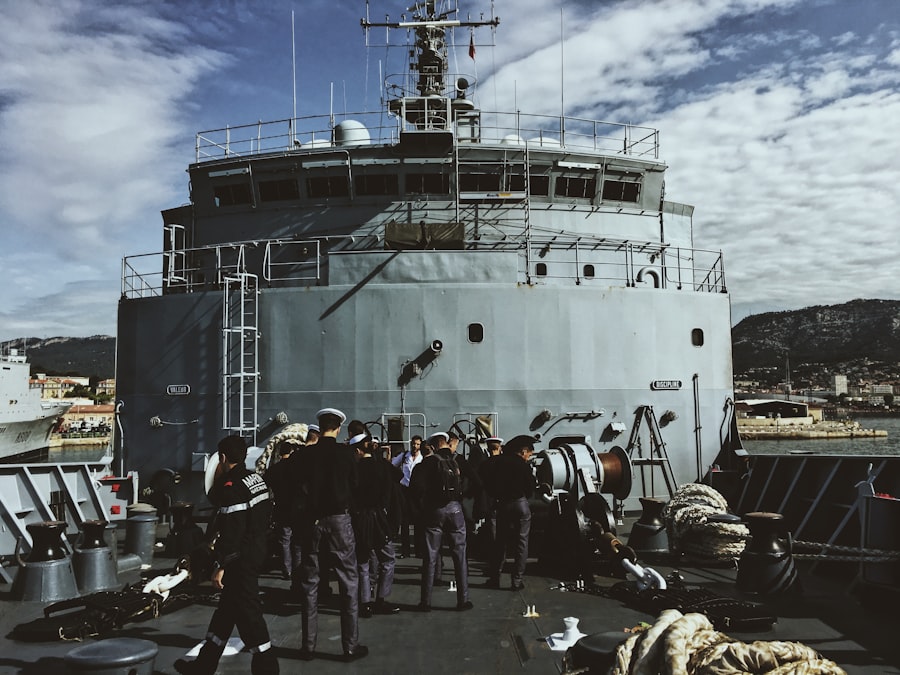
The techniques employed for deploying naval mines have evolved significantly over time, reflecting advancements in technology and changes in warfare tactics. Traditional methods involved manually placing mines from small boats or submarines; however, modern techniques often utilize specialized mine-laying vessels equipped with advanced systems for rapid deployment. These vessels can carry large quantities of mines and deploy them with precision over vast areas, significantly increasing operational efficiency.
In addition to conventional deployment methods, advancements in unmanned systems have introduced new possibilities for mine laying operations. Unmanned underwater vehicles (UUVs) can be utilized to place mines in hostile environments where manned vessels may be at risk. These UUVs can operate autonomously or be remotely controlled, allowing for greater flexibility in mine deployment while reducing the exposure of personnel to danger.
As technology continues to advance, it is likely that new techniques will emerge, further enhancing the capabilities of naval forces in this critical area.
Concealment and Camouflage of Mine Laying Activities
Concealment and camouflage are vital considerations during mine laying operations to avoid detection by enemy forces. The successful deployment of mines relies not only on their placement but also on ensuring that these activities remain hidden from prying eyes. Naval commanders often employ various tactics to obscure their movements, such as conducting operations under the cover of darkness or utilizing natural terrain features to shield their activities from surveillance.
Additionally, deception plays a crucial role in concealing mine laying efforts. Naval forces may create false signals or engage in diversionary tactics to mislead enemy reconnaissance efforts. By generating confusion about their true intentions and locations, commanders can enhance the likelihood of successful mine deployment without drawing attention to their activities.
This combination of concealment strategies ensures that naval forces can lay mines effectively while minimizing the risk of countermeasures from adversaries.
Monitoring and Maintenance of Deployed Mines
Once mines have been deployed, ongoing monitoring and maintenance are essential to ensure their effectiveness and safety. Naval forces must establish protocols for tracking the status of deployed mines, including their operational readiness and potential risks posed by environmental factors or enemy actions. Regular assessments help identify any issues that may arise over time, such as degradation due to corrosion or shifting seabed conditions.
Maintenance activities may also involve periodic inspections or adjustments to ensure that mines remain functional and properly positioned. In some cases, naval forces may need to retrieve or relocate mines based on changing operational requirements or intelligence assessments regarding enemy movements. By maintaining a proactive approach to monitoring and maintenance, naval forces can maximize the effectiveness of their mine-laying operations while minimizing potential hazards associated with unexploded ordnance.
Response to Enemy Attempts to Clear Mines
Enemy attempts to clear deployed mines present significant challenges for naval forces engaged in mine laying operations. Adversaries may employ various tactics to neutralize or remove mines from strategic areas, including specialized clearance vessels or underwater demolition teams. In response, naval commanders must develop countermeasures to protect their deployed assets while ensuring that their own operational objectives are not compromised.
One effective strategy involves creating a layered defense around minefields to deter enemy clearance efforts. This may include deploying surface ships or submarines to monitor key areas and engage any enemy forces attempting to clear mines. Additionally, naval forces may employ deception tactics or misinformation campaigns to mislead adversaries about the location and extent of minefields, complicating their clearance efforts further.
By anticipating enemy actions and developing robust responses, naval forces can safeguard their mine-laying operations while maintaining pressure on adversaries.
Evaluation and Analysis of Mine Laying Operations
The evaluation and analysis of mine-laying operations are critical for understanding their effectiveness and informing future strategies. After each operation, naval commanders conduct thorough assessments to determine whether objectives were met and identify any lessons learned from the experience. This process often involves analyzing data related to enemy losses, operational challenges encountered during deployment, and feedback from personnel involved in the mission.
By systematically evaluating past operations, naval forces can refine their tactics and improve future mine-laying efforts. This continuous improvement cycle ensures that lessons learned are integrated into training programs and operational planning processes, ultimately enhancing overall effectiveness in maritime warfare. Furthermore, sharing insights across different branches of the military fosters a collaborative approach that strengthens collective capabilities in addressing emerging threats.
Future Developments in Naval Mine Laying Technology
As technology continues to advance at an unprecedented pace, future developments in naval mine-laying technology hold great promise for enhancing operational capabilities. Innovations such as artificial intelligence (AI) and machine learning are expected to play a significant role in improving mine design and deployment strategies. For instance, AI algorithms could analyze vast amounts of data related to maritime traffic patterns and environmental conditions to optimize mine placement for maximum impact.
Additionally, advancements in materials science may lead to the development of more resilient and adaptable mines capable of withstanding harsh underwater conditions while remaining effective over extended periods. The integration of autonomous systems into mine-laying operations is also likely to expand, allowing for greater flexibility and reduced risk during deployment missions. As these technologies continue to evolve, they will undoubtedly reshape the landscape of naval warfare and redefine the role of mines within modern military strategies.
In conclusion, naval mine laying remains a vital component of maritime warfare strategy that requires careful planning, execution, and ongoing evaluation. As global conflicts evolve and new technologies emerge, understanding the complexities surrounding mine laying operations will be essential for maintaining naval superiority in an increasingly contested maritime environment.
Naval mine laying operations have evolved significantly over the years, adapting to new technologies and tactics to enhance maritime security. For a deeper understanding of these operations and their strategic implications, you can explore the article on naval tactics at