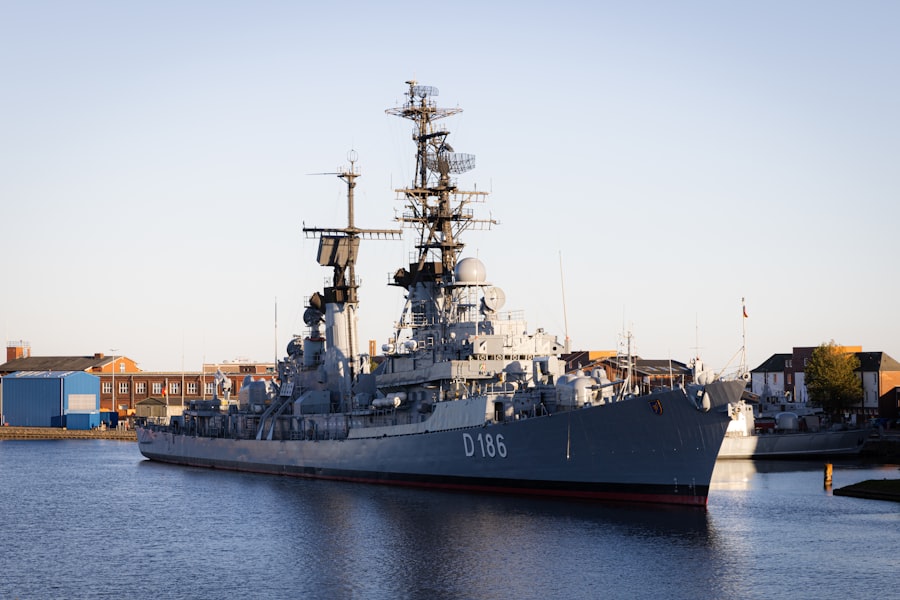
The development of American destroyers began in the late 19th century as naval forces worldwide recognized the necessity for fast, agile warships to protect larger vessels from torpedo boat attacks. The United States Navy commissioned its first destroyers in the early 1900s, beginning with USS Bainbridge and USS Decatur. These initial vessels were constructed specifically for fleet defense, combining high speed with substantial armament that would define destroyer characteristics.
During World War I, American destroyers underwent significant modifications and expanded their operational roles. They served extensively in convoy escort duties across the Atlantic Ocean, protecting merchant shipping from German submarine attacks. The period between the world wars brought continued technological improvements and design refinements.
This progression led to the creation of the Fletcher-class destroyers during World War II, which represented a major advancement in destroyer capabilities and became one of the most successful destroyer classes in naval history.
Key Takeaways
- American destroyers have played a crucial role in anti-submarine warfare throughout history.
- Depth charge signals are essential for detecting and targeting enemy submarines effectively.
- Skilled crews and advanced training are vital for the successful deployment of depth charge tactics.
- Communication and coordination among destroyer teams enhance the effectiveness of depth charge operations.
- Technological advancements continue to improve depth charge signal capabilities, shaping the future of naval warfare.
The Role of Depth Charge Signals in Anti-Submarine Warfare
Depth charge signals have been a cornerstone of anti-submarine warfare (ASW) tactics employed by American destroyers since their inception. These signals are critical in detecting and neutralizing enemy submarines, which pose a significant threat to naval operations. The use of depth charges allows destroyers to engage submarines lurking beneath the surface, where they can evade traditional detection methods.
By deploying these explosive devices at calculated depths, destroyers can create shockwaves that disrupt and damage submarines, effectively neutralizing their threat. The strategic importance of depth charge signals cannot be overstated. During World War II, as submarine warfare intensified, American destroyers relied heavily on these signals to protect vital supply lines and engage enemy submarines.
The ability to coordinate depth charge attacks with precision was essential for maximizing their effectiveness. As technology advanced, so too did the methods for deploying depth charges, leading to more sophisticated tactics that enhanced the overall efficacy of American destroyers in ASW operations.
Understanding the Technology Behind Depth Charge Signals
The technology behind depth charge signals has evolved significantly over the decades, reflecting advancements in naval warfare and engineering. Early depth charges were relatively simple devices that relied on mechanical timers to detonate at predetermined depths. However, as submarine technology improved, so too did the need for more sophisticated depth charge systems.
Modern depth charges are equipped with advanced fuses and sensors that allow for greater accuracy and effectiveness in targeting submarines. One of the key innovations in depth charge technology is the development of variable-depth charges, which can be adjusted to detonate at specific depths based on real-time data. This adaptability enhances the chances of successfully hitting a submerged target.
Additionally, advancements in sonar technology have improved the ability of destroyers to detect submarines, allowing for more informed decisions regarding depth charge deployment. The integration of these technologies has transformed depth charge operations into a more precise and effective component of anti-submarine warfare.
The Training and Expertise of American Destroyer Crews
The effectiveness of American destroyers in anti-submarine warfare is not solely reliant on technology; it is also a testament to the training and expertise of their crews. Sailors undergo rigorous training programs designed to prepare them for the complexities of ASW operations. This training encompasses a wide range of skills, including sonar operation, navigation, and tactical decision-making.
Crews must be adept at interpreting sonar data and coordinating with other vessels to execute successful depth charge attacks. Moreover, teamwork is paramount in ASW operations. Crews must work seamlessly together to ensure that every aspect of a depth charge operation is executed flawlessly.
This includes communication between sonar operators, weapons officers, and commanding officers. Regular drills and exercises simulate real-world scenarios, allowing crews to hone their skills and develop a deep understanding of their roles within the larger mission. The combination of advanced training and practical experience equips American destroyer crews with the expertise necessary to confront the challenges posed by enemy submarines.
Tactics and Strategies for Using Depth Charge Signals Effectively
| Destroyer Class | Depth Charge Signal Type | Signal Frequency (kHz) | Signal Duration (seconds) | Effective Range (meters) | Purpose |
|---|---|---|---|---|---|
| Fletcher-class | Acoustic Pinger | 15 | 5 | 500 | Target confirmation and depth charge detonation timing |
| Gleaves-class | Sonar Echo Signal | 12 | 3 | 400 | Submarine detection and depth charge deployment coordination |
| Benson-class | Depth Charge Release Signal | 10 | 2 | 300 | Initiate depth charge release sequence |
| Allen M. Sumner-class | Depth Charge Detonation Signal | 18 | 4 | 600 | Trigger depth charge explosion at target depth |
The successful deployment of depth charge signals requires a well-thought-out strategy that takes into account various factors such as environmental conditions, submarine behavior, and available resources. One effective tactic involves using sonar to locate submarines before launching depth charges. By accurately pinpointing a submarine’s position, destroyers can maximize the impact of their attacks and increase the likelihood of success.
Another important strategy is the use of coordinated attacks involving multiple vessels. When several destroyers work together, they can create a more formidable barrier against enemy submarines. This approach allows for simultaneous depth charge deployments from different angles, complicating the submarine’s ability to evade detection and escape damage.
Additionally, employing decoys or other distractions can further enhance the effectiveness of depth charge operations by drawing a submarine’s attention away from incoming attacks.
The Importance of Communication and Coordination in Depth Charge Operations
Effective communication and coordination are vital components of successful depth charge operations. In high-pressure situations where time is of the essence, clear communication among crew members can mean the difference between success and failure. Destroyer crews must be able to relay information quickly and accurately regarding sonar readings, enemy movements, and operational status.
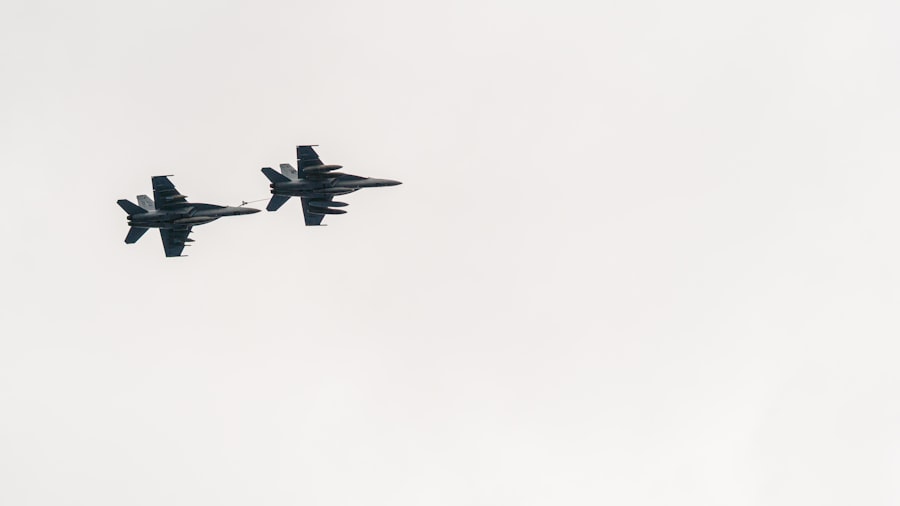
Coordination extends beyond individual vessels; it also involves collaboration with other naval assets such as aircraft or submarines. Joint operations can enhance situational awareness and provide additional support during ASW missions. For instance, aircraft equipped with advanced surveillance technology can assist destroyers by providing real-time intelligence on submarine locations.
This collaborative approach ensures that all available resources are utilized effectively, increasing the chances of successful depth charge attacks.
Case Studies of Successful Depth Charge Attacks by American Destroyers
Throughout history, there have been numerous instances where American destroyers have successfully employed depth charge signals to neutralize enemy submarines. One notable case occurred during World War II when the USS Buckley engaged a German U-boat off the coast of New Jersey. Utilizing sonar technology, the crew detected the submarine’s presence and executed a series of well-coordinated depth charge attacks that ultimately led to its destruction.
Another significant example took place during the Cold War when American destroyers were tasked with monitoring Soviet submarine activity in the Atlantic Ocean. In one operation, a destroyer successfully tracked a Soviet submarine using advanced sonar systems and launched a series of depth charges that forced it to surface. This incident not only demonstrated the effectiveness of depth charge signals but also highlighted the importance of maintaining vigilance in monitoring potential threats.
Challenges and Limitations of Depth Charge Signals
Despite their effectiveness, depth charge signals are not without challenges and limitations. One significant issue is the inherent unpredictability of underwater environments. Factors such as water temperature, salinity, and ocean currents can affect how sound travels through water, complicating sonar detection efforts.
Additionally, submarines have become increasingly sophisticated over time, employing countermeasures designed to evade detection and minimize damage from depth charges. Another challenge lies in the potential for collateral damage during depth charge operations. While designed to target submarines specifically, there is always a risk that nearby vessels or marine life could be affected by explosions.
This concern necessitates careful planning and execution during ASW missions to minimize unintended consequences while still achieving operational objectives.
Advancements in Depth Charge Signal Technology
As naval warfare continues to evolve, so too does the technology behind depth charge signals. Recent advancements have focused on enhancing precision and effectiveness through improved sensors and targeting systems. Modern depth charges are often equipped with advanced guidance systems that allow them to home in on specific targets based on real-time data from sonar readings.
Additionally, research into alternative methods for engaging submarines has led to innovations such as non-explosive anti-submarine munitions that can incapacitate submarines without causing extensive damage to surrounding areas. These advancements reflect a growing emphasis on minimizing collateral damage while maintaining operational effectiveness in anti-submarine warfare.
The Future of American Destroyers and Depth Charge Signals
Looking ahead, American destroyers will continue to play a vital role in anti-submarine warfare as new threats emerge on the horizon. The integration of artificial intelligence and machine learning into naval operations promises to revolutionize how depth charge signals are utilized in combat scenarios. These technologies can enhance decision-making processes by analyzing vast amounts of data quickly and accurately.
Furthermore, as naval strategies evolve in response to changing geopolitical landscapes, American destroyers will likely adapt their tactics for employing depth charge signals accordingly. This adaptability will ensure that they remain effective against increasingly sophisticated adversaries while continuing to protect vital maritime interests.
The Vital Role of American Destroyers in Anti-Submarine Warfare
In conclusion, American destroyers have long been at the forefront of anti-submarine warfare, utilizing depth charge signals as a critical tool in their arsenal. From their historical roots to modern advancements in technology and tactics, these vessels have demonstrated remarkable adaptability in confronting evolving threats beneath the waves. The training and expertise of their crews further enhance their effectiveness in executing complex operations with precision.
With ongoing advancements in technology and an unwavering commitment to excellence, these ships will remain indispensable assets in ensuring maritime security for years to come.
American destroyers have played a crucial role in naval warfare, particularly during World War II, where their use of depth charges was instrumental in countering submarine threats. For a deeper understanding of the tactics and technology employed by these vessels, you can explore a related article on naval strategies and their evolution over time at inthewarroom.
com/’>In The War Room. This resource provides valuable insights into the historical context and operational effectiveness of destroyers in various conflicts.
WATCH THIS 🛑 The Submarine Captain Who Said NO to Nuclear War
FAQs
What were depth charge signals used for on American destroyers?
Depth charge signals were used to communicate the deployment and detonation of depth charges, which were anti-submarine weapons designed to explode at predetermined depths to damage or destroy enemy submarines.
How did American destroyers deploy depth charges?
American destroyers deployed depth charges using racks and throwers located at the stern and sides of the ship. The charges were set to explode at specific depths based on sonar readings and tactical requirements.
What types of signals indicated depth charge deployment on American destroyers?
Signals included visual indicators such as signal flags, lights, and sound signals like whistles or bells to alert the crew of depth charge release and detonation. These signals ensured coordinated action and safety aboard the ship.
Why were depth charge signals important during naval operations?
Depth charge signals were crucial for coordinating anti-submarine warfare efforts, preventing friendly fire incidents, and maintaining crew safety by alerting personnel to imminent explosions and operational changes.
Did American destroyers use any electronic or sonar signals related to depth charges?
Yes, sonar systems provided critical information on submarine positions and depth, which influenced depth charge settings. While sonar itself was not a “signal,” it was integral to the timing and deployment of depth charges.
Were depth charge signals standardized across all American destroyers?
While there were general protocols and standard practices, specific signals could vary depending on the ship class, mission, and commanding officers. However, the goal was always clear communication to ensure effective anti-submarine warfare.
How did crew members respond to depth charge signals?
Upon receiving depth charge signals, crew members would prepare for deployment, secure equipment, take safety positions, and monitor the effectiveness of the attack, ensuring coordinated and efficient operations.
Are depth charge signals still used in modern naval warfare?
Modern navies have largely replaced depth charges with more advanced anti-submarine weapons and electronic communication systems. However, historical depth charge signals remain an important part of naval heritage and tactics.