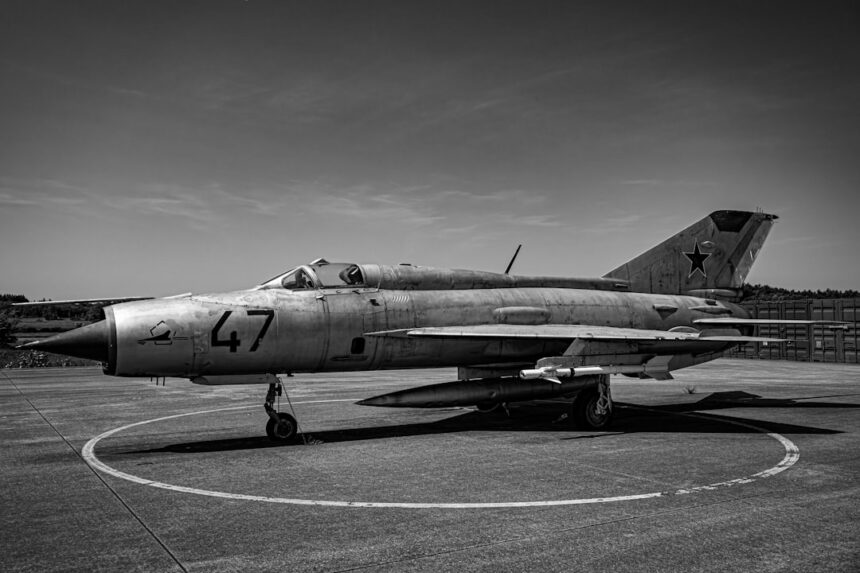
The Cuban Missile Crisis, a pivotal moment in Cold War history, can be traced back to the complex geopolitical landscape of the early 1960s. Following the Cuban Revolution in 1959, Fidel Castro’s rise to power alarmed the United States, which had long viewed Cuba as a strategic ally in the Western Hemisphere. The U.S. government, under President Dwight D. Eisenhower, responded with a series of economic sanctions and covert operations aimed at undermining Castro’s regime. This animosity intensified after the failed Bay of Pigs invasion in 1961, an operation that sought to overthrow Castro but ultimately solidified his position and pushed him closer to the Soviet Union. As tensions escalated, the Soviet Union, led by Premier Nikita Khrushchev, saw an opportunity to counter U.S. influence in Latin America by supporting Cuba. The alliance between the two nations deepened, with the Soviets providing military and economic assistance to Castro. This partnership was not merely ideological; it was also strategic. The Soviet Union aimed to establish a foothold in the Western Hemisphere, which would serve as a counterbalance to U.S. military dominance. The stage was set for a confrontation that would bring the world to the brink of nuclear war.
Key Takeaways
- The Cuban Missile Crisis began with the Soviet Union placing nuclear missiles in Cuba, discovered by U.S. reconnaissance.
- President Kennedy responded by imposing a naval blockade to prevent further Soviet shipments to Cuba.
- Intense negotiations between the U.S. and the Soviet Union led to the removal of missiles from Cuba, averting nuclear war.
- The crisis significantly impacted Cold War dynamics, leading to improved communication and arms control agreements.
- Lessons from the crisis emphasize the importance of diplomacy, crisis management, and the dangers of nuclear brinkmanship, remaining relevant today.
The Discovery of Soviet Missiles in Cuba
The crisis reached its boiling point in October 1962 when American reconnaissance flights over Cuba revealed the presence of Soviet missile installations on the island. These installations were capable of launching nuclear weapons that could reach major U.S. cities within minutes. The discovery sent shockwaves through Washington, D.C., as intelligence analysts and military officials scrambled to assess the implications of this new threat. The realization that the U.S. was now within striking distance of Soviet nuclear missiles ignited fears of an imminent attack and heightened the stakes of the Cold War. In response to this alarming intelligence, President John F. Kennedy convened a group of advisors known as the Executive Committee of the National Security Council (ExComm). This group was tasked with evaluating the situation and formulating a response. The discovery of missiles in Cuba not only represented a direct challenge to U.S. national security but also posed a significant risk of escalation into a full-blown nuclear conflict. As discussions unfolded within ExComm, the gravity of the situation became increasingly apparent, leading to a sense of urgency that would shape the decisions made in the days to come.
President Kennedy’s Response
Faced with an unprecedented crisis, President Kennedy adopted a cautious yet firm approach. He understood that any misstep could lead to catastrophic consequences, not just for the United States but for the entire world. After deliberating with his advisors, Kennedy decided against immediate military action, which could provoke a Soviet response and escalate tensions further.
Instead, he opted for a more measured strategy: a public address to inform the American people about the situation and a private communication with Khrushchev. In his televised address on October 22, 1962, Kennedy revealed the existence of Soviet missiles in Cuba and announced a naval quarantine around the island to prevent further shipments of military equipment. This decision marked a significant turning point in U.S.
The president’s measured response aimed to convey strength without resorting to immediate military confrontation, reflecting his understanding of the delicate balance required during such a tense standoff.
The Naval Blockade of Cuba
The implementation of the naval blockade, or “quarantine,” around Cuba was a critical component of Kennedy’s strategy. The blockade aimed to prevent any further Soviet shipments of military supplies to Cuba while allowing for diplomatic negotiations to unfold. This decision was not without its risks; it represented a direct challenge to Soviet authority and could easily escalate into military conflict if not handled carefully.
Nevertheless, Kennedy believed that this approach would demonstrate U.S. resolve while providing an opportunity for de-escalation. As U.S.
naval vessels began enforcing the blockade, tensions mounted on both sides. The world watched anxiously as American ships intercepted Soviet vessels en route to Cuba, leading to confrontations that could have spiraled out of control. The blockade served as a powerful symbol of U.S.
determination to protect its national security interests while simultaneously opening channels for negotiation with the Soviets. It was a high-stakes game of brinkmanship that required careful navigation to avoid triggering a catastrophic response from either side.
The Tense Negotiations between the United States and the Soviet Union
| Metric | Value | Description |
|---|---|---|
| Number of Depth Charges Used | Approximately 20 | Estimated number of depth charges deployed by US Navy during the Cuban Missile Crisis naval quarantine |
| Depth Charge Explosions Recorded | 5 | Number of confirmed depth charge detonations near Soviet submarines |
| Depth Charge Yield | Varied (typically 200-300 lbs TNT equivalent) | Explosive power of depth charges used to force Soviet submarines to surface |
| Duration of Depth Charge Deployment | Several days (October 27-28, 1962) | Period during which depth charges were actively used to signal Soviet subs |
| Number of Soviet Submarines Targeted | 3 | Number of Soviet Foxtrot-class submarines detected and pressured by US forces |
| Outcome | 1 Soviet Submarine Surfaced | One submarine surfaced after depth charge signals, avoiding potential nuclear escalation |
As the naval blockade continued, backchannel communications between Washington and Moscow became increasingly vital. Both leaders recognized the potential for disaster if tensions escalated further, prompting them to seek a resolution through diplomatic means. Secret negotiations unfolded alongside public posturing, with each side attempting to gauge the other’s intentions and willingness to compromise.
The stakes were high; failure to reach an agreement could lead to nuclear war. Khrushchev sent letters to Kennedy expressing his desire for peaceful resolution while simultaneously maintaining a firm stance on Soviet interests in Cuba. In response, Kennedy’s administration crafted a careful reply that acknowledged Soviet concerns while reiterating U.S.
demands for missile removal. The negotiations were fraught with tension, as both leaders understood that any miscommunication could have dire consequences.
The Removal of Missiles from Cuba

After days of intense negotiations and mounting pressure from both sides, an agreement was finally reached on October 28, 1962. Khrushchev publicly announced that he would dismantle the missile sites in Cuba in exchange for a U.S. commitment not to invade the island and a secret agreement regarding the removal of U.S.
missiles from Turkey aimed at the Soviet Union. This resolution marked a significant turning point in the crisis and showcased the power of diplomacy in averting disaster. The dismantling of missiles in Cuba was not merely a logistical operation; it symbolized a broader thawing of tensions between the superpowers.
Both nations recognized that their willingness to engage in dialogue had prevented what could have been one of history’s most catastrophic conflicts. The resolution also highlighted the importance of communication and negotiation in international relations, setting a precedent for future crises during the Cold War.
The Aftermath of the Crisis
In the wake of the Cuban Missile Crisis, both the United States and the Soviet Union faced significant political repercussions domestically and internationally. For Kennedy, successfully navigating this perilous situation bolstered his reputation as a strong leader capable of handling crises effectively. However, he also faced criticism from hardliners who believed he had not gone far enough in confronting Soviet aggression.
Conversely, Khrushchev’s decision to back down was met with mixed reactions within the Soviet Union, leading to questions about his leadership and authority. The aftermath also prompted both nations to reassess their nuclear strategies and communication protocols. Recognizing the dangers posed by miscommunication and misunderstanding during crises, both superpowers took steps toward establishing more direct lines of communication, including the creation of the “hotline” between Washington and Moscow.
This development marked a significant shift in Cold War dynamics, as both sides acknowledged that open communication was essential for preventing future conflicts.
The Impact of the Cuban Missile Crisis on the Cold War
The Cuban Missile Crisis had far-reaching implications for Cold War dynamics beyond its immediate resolution. It served as a wake-up call for both superpowers regarding the dangers of nuclear proliferation and escalation. In its aftermath, there was a renewed emphasis on arms control and disarmament efforts, leading to treaties such as the Nuclear Test Ban Treaty signed in 1963.
This treaty aimed to limit nuclear testing and curb the arms race that had characterized much of the Cold War. Moreover, the crisis shifted perceptions within both nations about their adversaries. For many Americans, it underscored the need for vigilance against perceived threats from communism while also highlighting the importance of diplomacy in resolving conflicts peacefully.
In contrast, Soviet leaders recognized that aggressive posturing could lead to disastrous consequences and began advocating for more diplomatic engagement with Western powers.
The Legacy of the Cuban Missile Crisis
The legacy of the Cuban Missile Crisis endures as one of history’s most significant moments in international relations. It serves as a powerful reminder of how close humanity came to nuclear catastrophe and underscores the importance of diplomacy in averting conflict. The crisis has been studied extensively by historians and political scientists alike as an example of effective crisis management and negotiation under pressure.
Furthermore, it has influenced subsequent generations of leaders who have grappled with similar challenges in international relations. The lessons learned from this crisis continue to resonate today as nations navigate complex geopolitical landscapes fraught with tension and uncertainty.
Lessons Learned from the Cuban Missile Crisis
The Cuban Missile Crisis offers several critical lessons for contemporary leaders facing international challenges. First and foremost is the importance of communication during crises; open lines between adversaries can prevent misunderstandings that may lead to conflict escalation. Additionally, it highlights the necessity for leaders to remain calm under pressure and consider all available options before resorting to military action.
Moreover, it underscores that diplomacy should always be prioritized over aggression whenever possible. The successful resolution of this crisis demonstrated that even deeply entrenched conflicts could be resolved through negotiation rather than force—a lesson that remains relevant in today’s increasingly polarized world.
The Cuban Missile Crisis and Its Relevance Today
In an era marked by rising tensions between global powers and concerns over nuclear proliferation, the Cuban Missile Crisis remains highly relevant today. As nations grapple with issues such as cybersecurity threats, territorial disputes, and ideological divides, understanding how leaders navigated one of history’s most dangerous moments can provide valuable insights into contemporary challenges. The crisis serves as a reminder that while geopolitical rivalries may persist, effective communication and diplomacy are essential tools for preventing conflict escalation.
As new threats emerge on the global stage—whether from rogue states or non-state actors—the lessons learned from this pivotal moment in history continue to inform strategies aimed at maintaining peace and stability in an increasingly complex world.
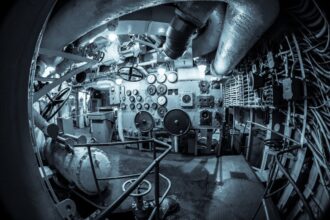
During the Cuban Missile Crisis, the use of depth charges played a crucial role in the naval confrontations that unfolded. These underwater explosives were employed to deter Soviet submarines, highlighting the intense military strategies at play during this critical period. For a deeper understanding of the broader implications of military tactics during the Cold War, you can read more in this related article on In the War Room.
WATCH THIS 🛑 The Submarine Captain Who Said NO to Nuclear War
FAQs
What were depth charges used for during the Cuban Missile Crisis?
Depth charges were used by the United States Navy to deter and detect Soviet submarines near the quarantine line around Cuba. They served as a non-lethal warning to Soviet subs to surface and avoid escalation.
Why were depth charges significant in the Cuban Missile Crisis?
Depth charges played a critical role in enforcing the naval blockade (referred to as a “quarantine”) by signaling U.S. resolve and readiness to counter Soviet submarine threats without immediately resorting to open conflict.
Did depth charges cause any damage during the Cuban Missile Crisis?
In some instances, depth charges were dropped near Soviet submarines to compel them to surface. While these charges were intended as warnings, they increased tensions and risked accidental escalation, but no direct damage or casualties from depth charges were reported.
How did Soviet submarines respond to depth charges during the crisis?
Soviet submarines often remained submerged despite the depth charges, maintaining radio silence and following orders. In some cases, the pressure and confusion led to critical decisions, such as the near-launch of a nuclear torpedo from submarine B-59, which was ultimately averted.
Were depth charges the only anti-submarine tactic used during the Cuban Missile Crisis?
No, the U.S. Navy also used sonar detection, surface ship maneuvers, and aircraft patrols to track and monitor Soviet submarines. Depth charges were one of several tools used to enforce the blockade and manage submarine threats.
What was the risk associated with using depth charges during the Cuban Missile Crisis?
The use of depth charges risked escalating the conflict into open warfare, especially given the presence of nuclear-armed submarines. Misinterpretation of these signals could have led to unintended military engagements.
Did the use of depth charges contribute to the resolution of the Cuban Missile Crisis?
While depth charges increased tension, they also demonstrated U.S. determination to enforce the blockade. This pressure, combined with diplomatic negotiations, contributed to the eventual Soviet decision to withdraw missiles from Cuba.